







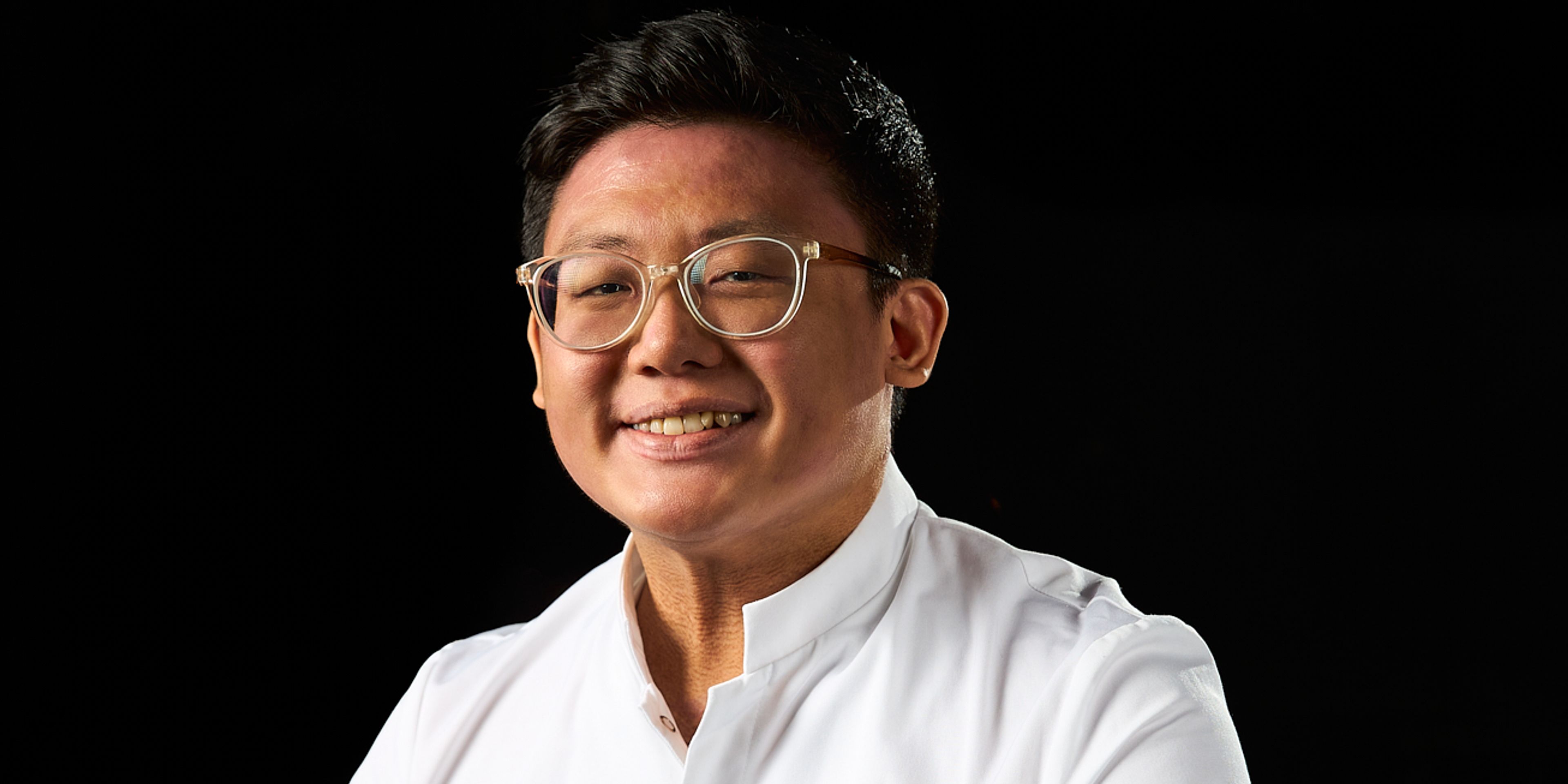
Everyone has certain foods they don’t like. Whether it’s the flavor, the texture, the smell, or the mere sight of them conjuring some feeling of repulsion, eating those dishes is out of the question. Vietnamese cuisine, like all cuisines around the world, contains polarizing elements. Mắm tôm (fermented shrimp paste). Sầu riêng (Durian fruits). Trứng vịt lộn (Balut). Some love these and can’t get enough of them. Some hate these and can’t stand the thought of them. Most will try them once, although in many cases, only once. It’s these finicky eaters which can sometimes pose the biggest challenges to chefs. There’s an ongoing battle between the two. On one end, people have natural preferences. On the other, chefs want to expand the horizons of your taste buds by showcasing local, occasionally divisive fare. Chef Ezekiel Tan is someone who revels in overcoming obstinate taste buds no matter where in the world he is cooking.
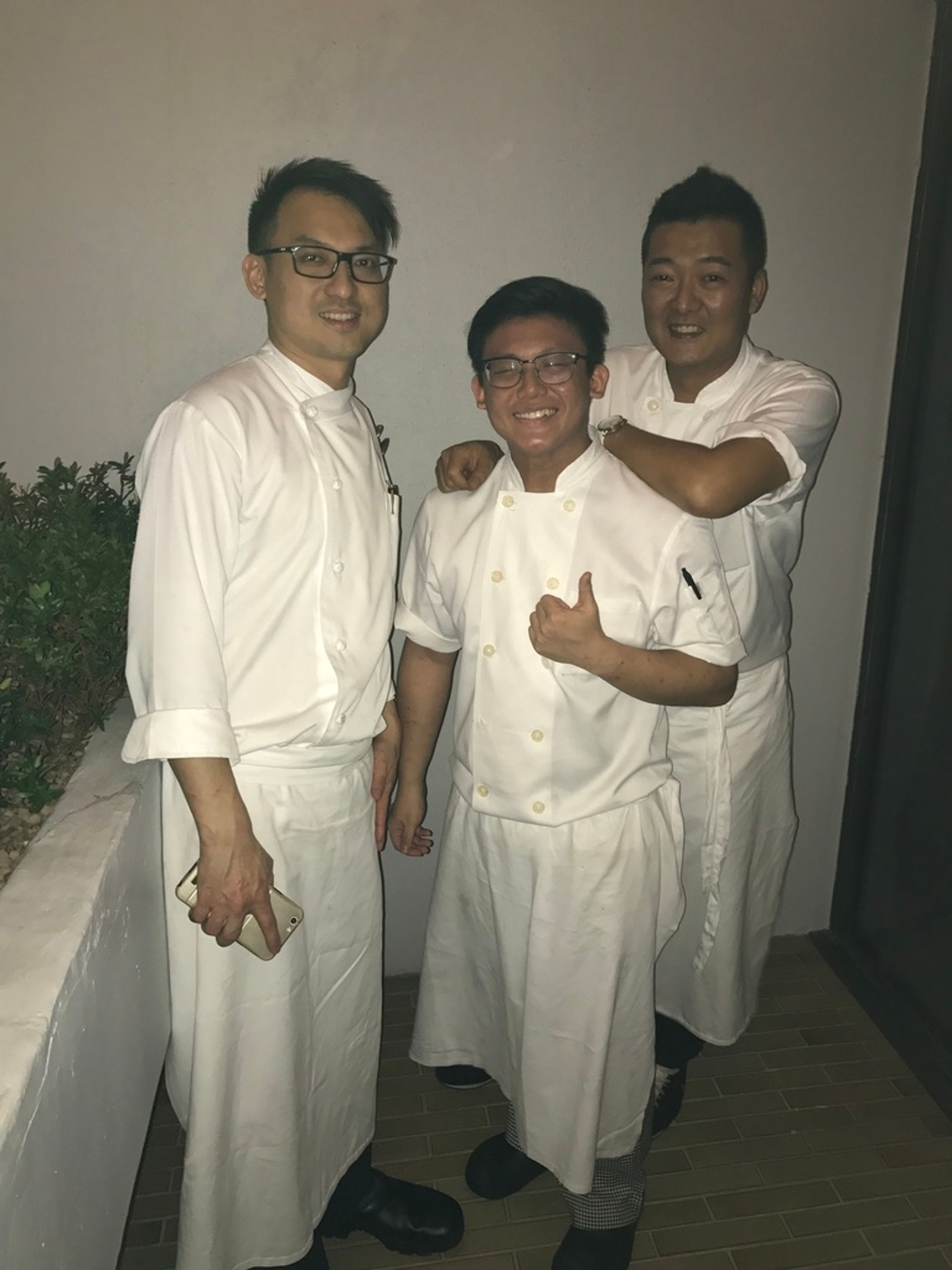
Ezekiel was born in Singapore and has lived there his whole life. Unlike in Vietnam, where cooking and eating meals at home with your family is common, Ezekiel said Singapore is different. The Singaporean diet is a reflection of its dining culture in that he grew up predominantly eating out at restaurants rather than cooking at home. Known for its countless open-air hawker centers (similar to street food stalls), food options are incredibly cheap, convenient, and deeply embedded in the country’s urban layout. Given this culinary identity, the time and effort required to cook a tasty-home cooked meal is often viewed as troublesome. Thus, Ezekiel grew accustomed to going out with his parents and older brother for meals. He recalls his favorite as a kid was the quintessential Singaporean dish, Bak Kut Teh. Anytime Ezekiel returns to Singapore after an overseas trip, a bowl of rich, savory pork soaked in herbal, garlicky broth makes him feel like a kid at home again.
Ezekiel described his early childhood as fairly normal. He went to school on the weekdays and hung out with friends on the weekend. However, by the time he turned 13 years old, boredom hit a breaking point. He was young, restless, and besides a few random extracurriculars at school, he felt he had nothing to do. In Singapore, Ezekiel explained that it’s common for many kids to start working at a young age. In fact, Singaporean law permits kids to start working as young as 13. While most kids don’t actually find a job until high school—working part-time at a hawker stall, coffee shop or convenience store—Ezekiel couldn’t wait that long. Desperately craving for something to do, he started working part-time at an ice cream shop.
At first, he was assigned the basic task of scooping ice cream for customers. While the work gave him an outlet to channel his restless energy, the repetitive mechanics of scooping ice cream quickly became dull. Finding himself with a bit of free time because of what little was required of him at the start, Ezekiel began a casual exploration of basic cooking right there in the shop, treating the downtime as an opportunity to try things out. Although rare, when his family did cook meals at home they were simple dishes like stir-fried vegetables, braised chicken, and curry chicken. So, that’s what Ezekiel practiced preparing for his co-workers. Despite how little experience he had in the kitchen, he received positive reviews. That wasn’t the only good news. While Ezekiel started cooking these dishes as a means of stifling his boredom, the senior members of the ice cream shop recognized his drive and initiative and decided to reward him with an even larger responsibility.
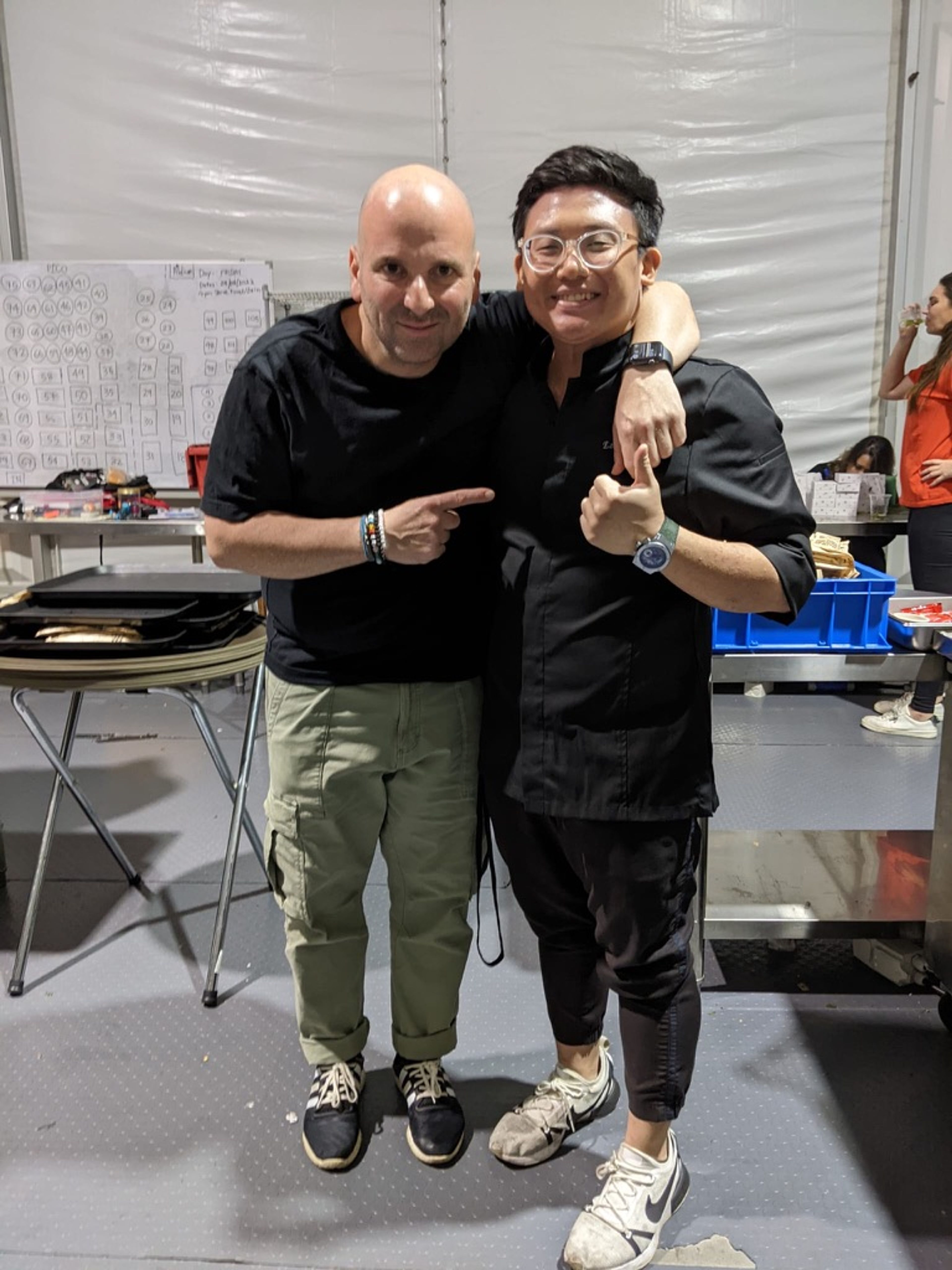
The menu was expanding into offering dishes beyond just ice cream, and they wanted Ezekiel to develop these new items. Two years after he’d begun working at the shop and only 15, Ezekiel was tasked with a project that harnessed all his curiosity. From his perspective, constructing something new meant deconstructing something old. He began this foundational food journey by experimenting with the ice cream itself, breaking it down to its core components—milk, sugar, and cream—to observe how the taste could change based on ingredients. This methodology proved vital when the shop eventually transitioned into a broader, cafe-style establishment that introduced hot Singaporean breakfast and brunch dishes. Ezekiel applied his newfound philosophy to these savory additions, looking at the list of ingredients for a classic dish, breaking it apart, and putting it back together to create something new. From tinkering with various kinds of cold desserts to re-engineering warm meals like Mee Rebus—a traditional Singaporean dish consisting of noodles drenched in a thick, spicy, sweet curry sauce—he slowly cultivated his ability to understand how different components work together as a whole.
Around this time, Ezekiel moved on to high school and had to make his next decision. Beyond the core curriculum including English, Math, and Language studies, he had to choose his major elective track to fill in the rest of his classes. By now, Ezekiel was fully committed to the idea of cooking as a means of making a living. That’s why Food and Nutrition was the only course that interested him. It helped him in more ways than one. First, while he had no real interest in his other subjects, F&N kept him interested in his studies. Second, it helped broaden his knowledge of food and helped him land his next part-time job at a catering company cooking buffet style platters for events and weddings. Third, it paved the way for him to eventually attend Temasek Polytechnic, a highly technical, industry-based institution that students attend before university. There, he pursued a diploma in Baking and Culinary Science. From his perspective, earning a food science qualification rather than a purely hospitality-focused path would result in more career opportunities after graduation.
During his three years of studying, Ezekiel’s mind expanded in a multitude of ways. Every semester his cohort was assigned to study various sectors of culinary techniques—baking, grilling, Asian and Western cuisine, as well as the chemistry, biology, and history behind different ingredients. Beyond his studies, what really changed Ezekiel’s mindset was an internship at an Italian restaurant during the final six months of earning his diploma. However, it wasn’t the cooking which molded him, it was more the mentoring he got from the owners and fellow staff about what he should do after school. They informed him that when it comes to job security and discovering opportunities in the F&B industry, what matters most is your skillset in the kitchen, not a university degree.
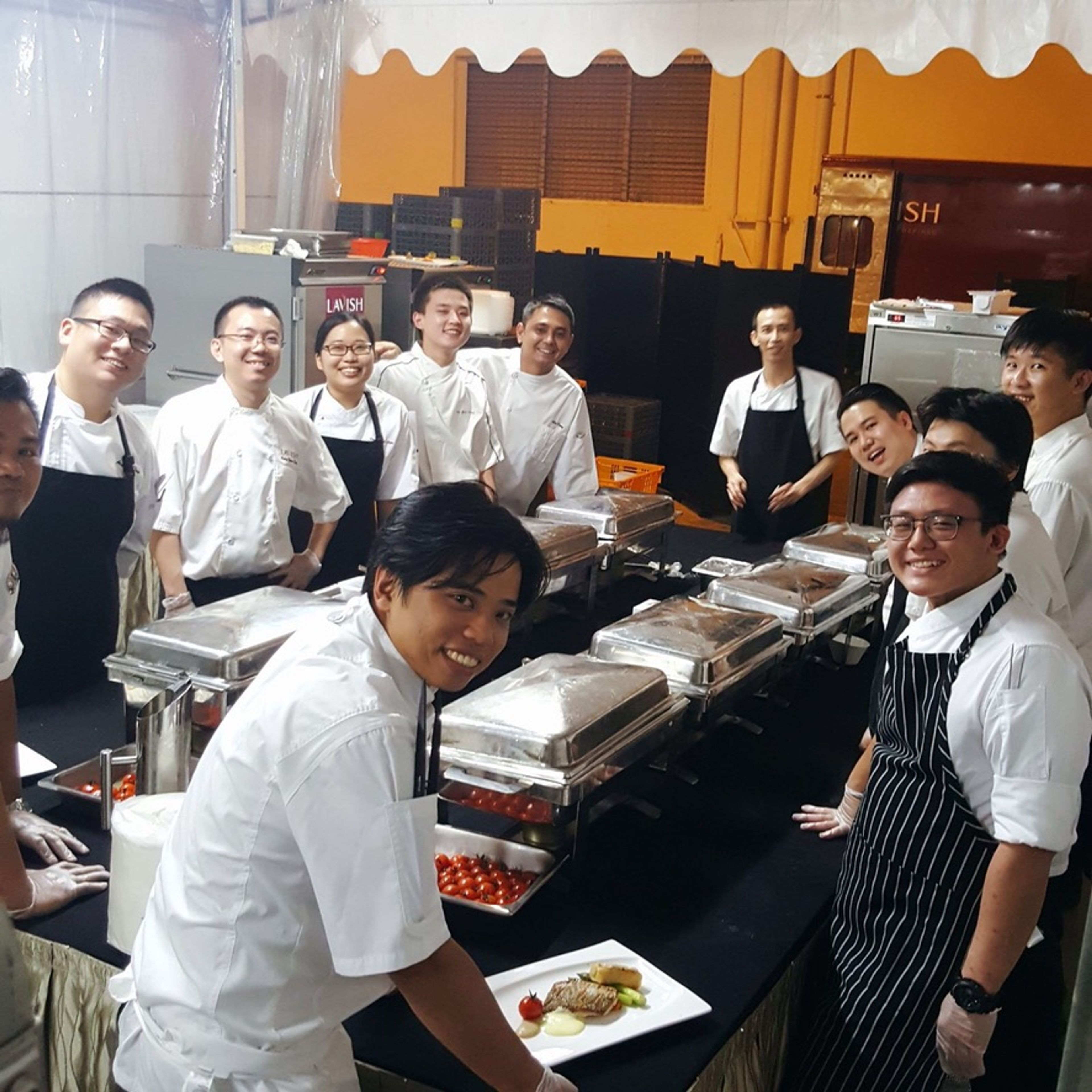
Although many Polytechnic graduates matriculate into local universities afterwards, before he finished his Baking and Culinary Science diploma, Ezekiel made up his mind to heed his mentors’ advice and go straight into the workforce. That said, no matter which path he decided to follow later on, Singaporeans are legally required to enlist for the National Service. So, upon receiving his Polytechnic diploma, Ezekiel set off to join the Air Force where he would serve 24 months of full-time duty. Unbeknownst to young Ezekiel, who wanted nothing more than to get to work right away, spending two years focused on learning the intricacies of air traffic control would prove to be beneficial to his future career as a chef and business owner.
Thanks to his service, Ezekiel noted how much his planning skills improved. As he explained, when working as an air traffic controller there’s an order of operations for everything. Each problem that occurs must be followed by a specific list of steps in order to reach a solution. In that sense, even though that type of work cultivates a constant sense of urgency due to margins for error being incredibly small, there’s never a need to panic. More specifically, micromanaging is unnecessary. Even when conflict arises such as sudden shifts in the weather, one is trained to stay calm, stick to protocol, and stay focused until the issue is resolved. Years later, when he became head chef of the restaurant Synthesis, those years of service translated to his efficacy as a leader in the kitchen.

Following his two years in the service, at 21 years old, Ezekiel returned to the F&B industry as a junior chef at a fine dining catering company. Due to the skillset he built at his Polytechnic, he was well-versed in both the cooking and business side of F&B. This proved invaluable once he was promoted to commis chef. In this role, not only was he helping by preparing food and landing clients for future events, he was also spending his free time outside of work consulting for other companies. In the process of helping one of his clients develop a menu at their restaurant, one of the owners asked Ezekiel if he would be interested in helping him open a new restaurant together. After years of working in catering, Ezekiel recognized the opportunity for what it was: the chance of working at a legitimate restaurant and creating a brand new menu from scratch.
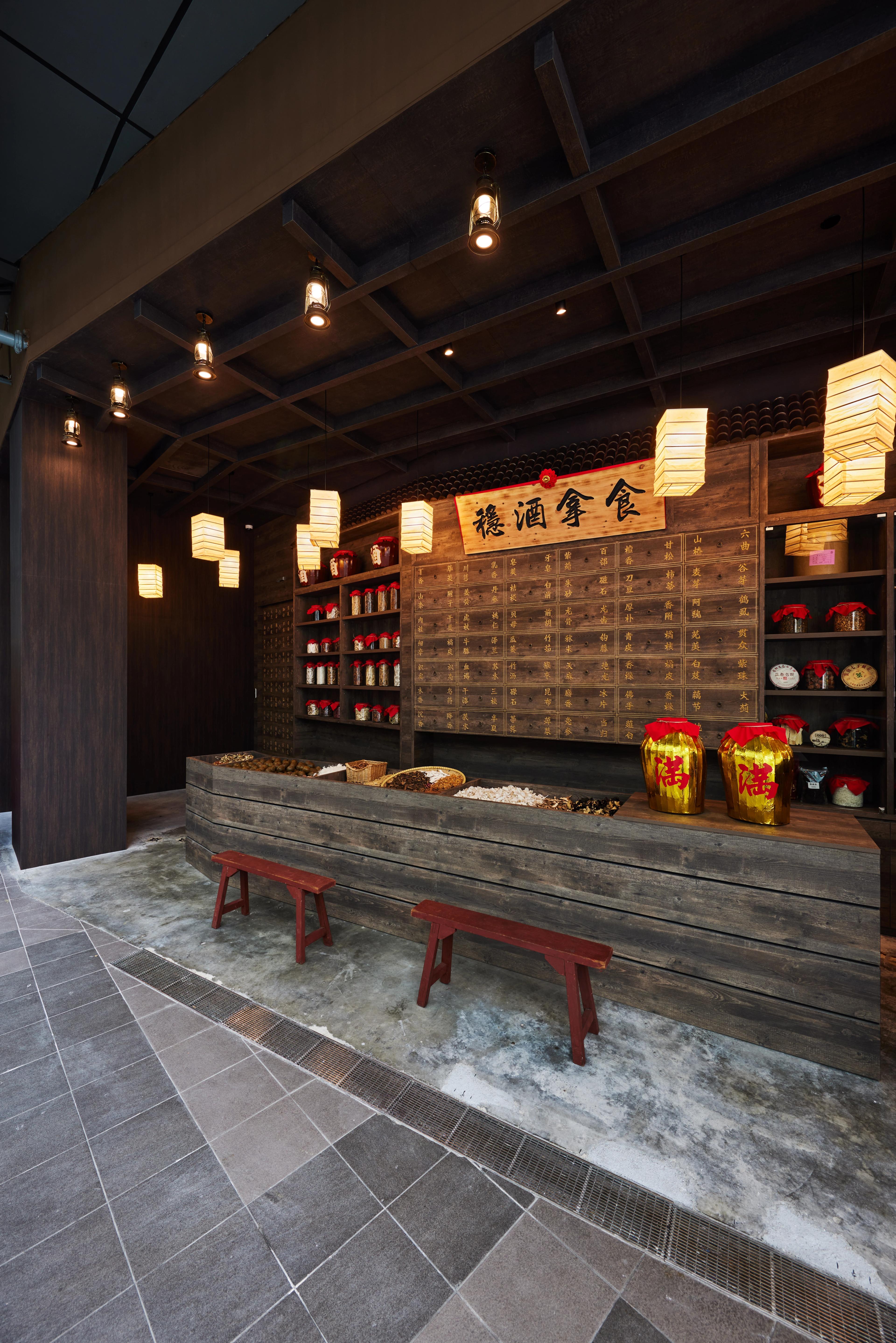
The owner’s vision for the place involved retaining the culture of a Singaporean speakeasy while adding on a twist. From their perspective, the knowledge and practices that make up Traditional Chinese Medicine (TCM) was becoming less popular and so in response they wanted to focus on developing TCM more. TCM is a holistic system that has evolved over thousands of years. In short, rather than isolating and treating separate symptoms in the body, TCM emphasizes restoring and maintaining harmony within the body. Deeply rooted in classic Chinese philosophy, TCM’s core principles revolve around achieving internal harmony. First is Qi, the fundamental life force flowing through internal pathways. This is balanced by Yin and Yang, the concept of opposing yet complementary forces within the body, as well as The Five Elements—Wood, Fire, Earth, Metal, and Water—each of which correspond to different internal organs. Ezekiel noted that although TCM has a long history, few restaurants focus on it given its vast complexity. However, he saw an opportunity to dive into studying everything he could, resulting in an increased curiosity to try things he’s never done before in a kitchen.
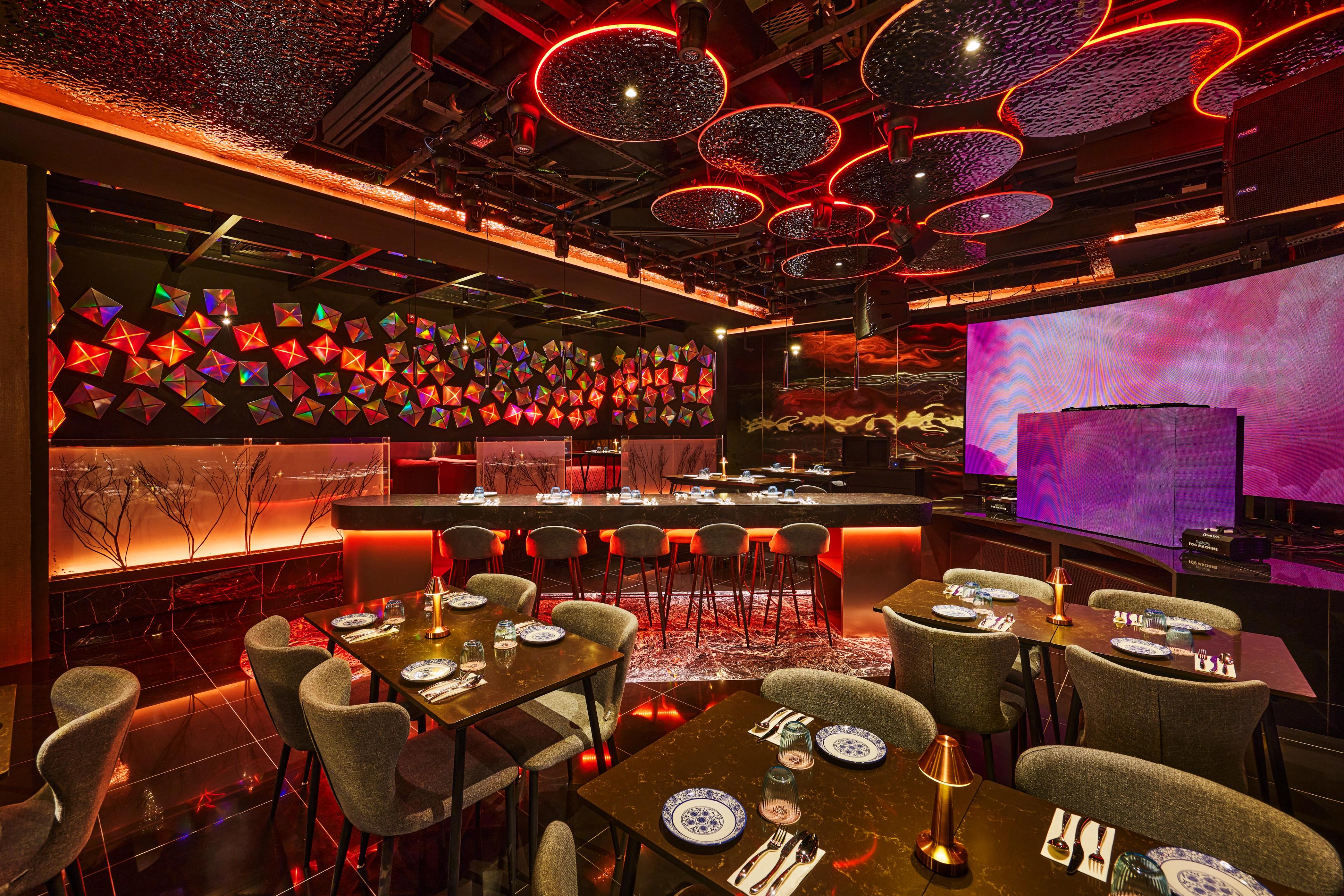
Researching and developing Synthesis’ TCM-inspired menu began at the onset of 2023. From inception to doors officially opening at their spot in Suntec City, Ezekiel and his team spent roughly three months testing. What he came to understand is “TCM is everywhere, but people don’t know about it.” And because most aren’t familiar with the culture of TCM, the task of preserving and modernizing its system became a larger task than what he previously imagined. One of the main obstacles as to why more restaurants and bars don’t choose to adopt TCM’s methods is because of a stigma regarding flavor. Although many dishes consist of ingredients that are already hidden in plain sight—like the goji berries and red dates found in traditional Tangshui (Chinese dessert soup) or Chè (Vietnamese sweet soup), or the dried mushrooms used to deepen savory broths—it is the bitter, medicinal herbs that easily overpower the palate. This initial resistance people sometimes express in response to herbal-infused dishes is music to Ezekiel’s ears. Instead of shying away, Ezekiel and his team have worked tirelessly to create dishes that ensure the herbs add a unique experience to Singaporean dishes while also retaining a lot of their traditional flavor.
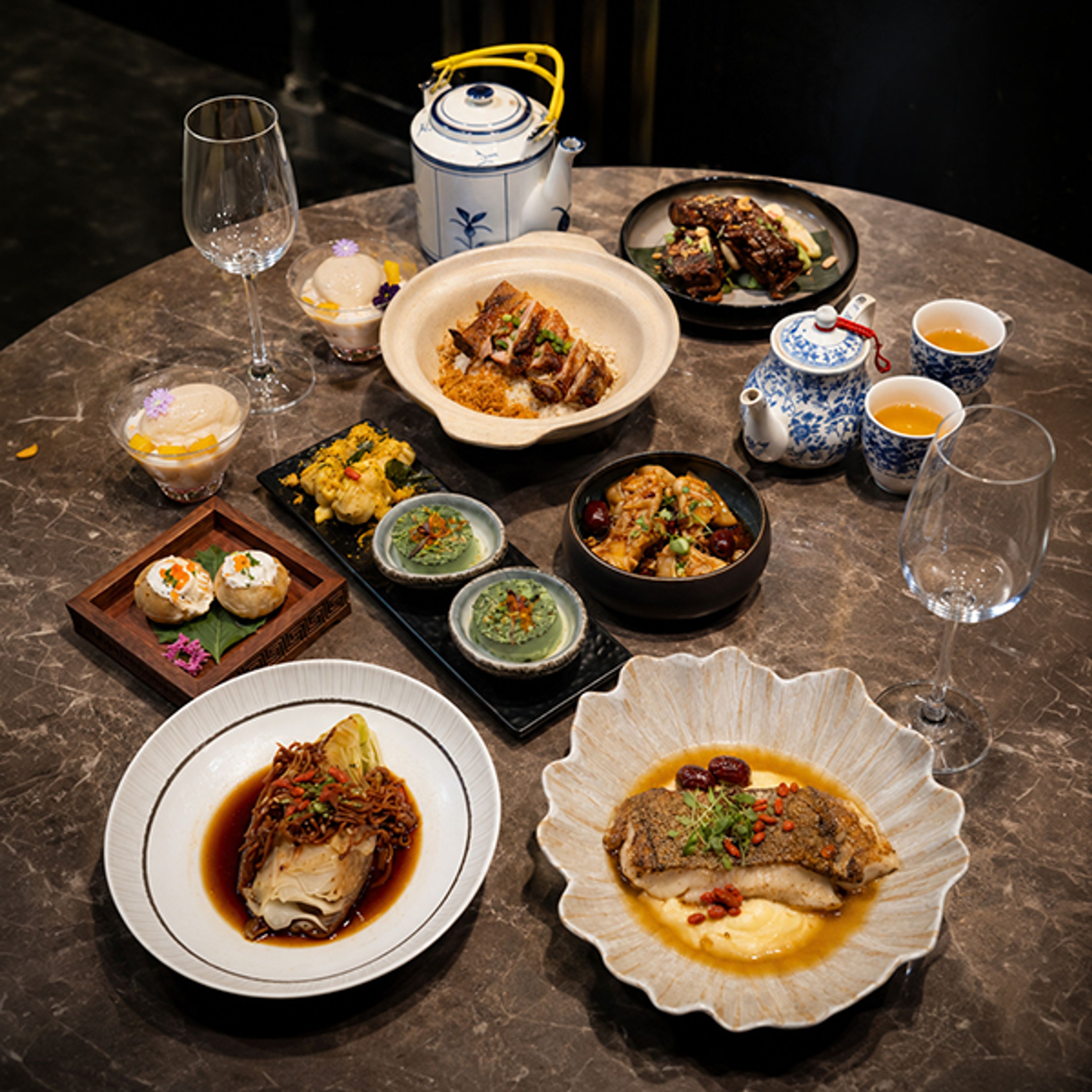
Nowadays, Synthesis’ menu has evolved due to ambitious efforts to combine TCM with various other cuisines such as Chinese and Mediterranean fare. Offering both single-person portions as well as dishes that are made to be shared around the table, Synthesis is making TCM more accessible to diners. Hallmarks of their menu have since included Collagen Seafood Pao Fan, a comforting interpretation of the classic Teochew Pao Fan, featuring premium seafood served in a slow-simmered collagen-rich broth infused with carefully selected Chinese herbs. Crafted to nourish while delivering deep umami flavors, the broth is naturally rich in collagen and designed to support skin health and overall wellness. Another staple is their Double-Boiled Herbal Chicken Consommé, a refined consommé inspired by traditional Cantonese double-boiled soups. Prepared with free-range chicken, premium Chinese herbs, and hours of slow extraction, the result is a clear, intensely flavorful broth that celebrates nourishment, warmth, and balance. Designed to be both comforting and restorative, it reflects Synthesis' philosophy of modernizing traditional wellness through contemporary dining.
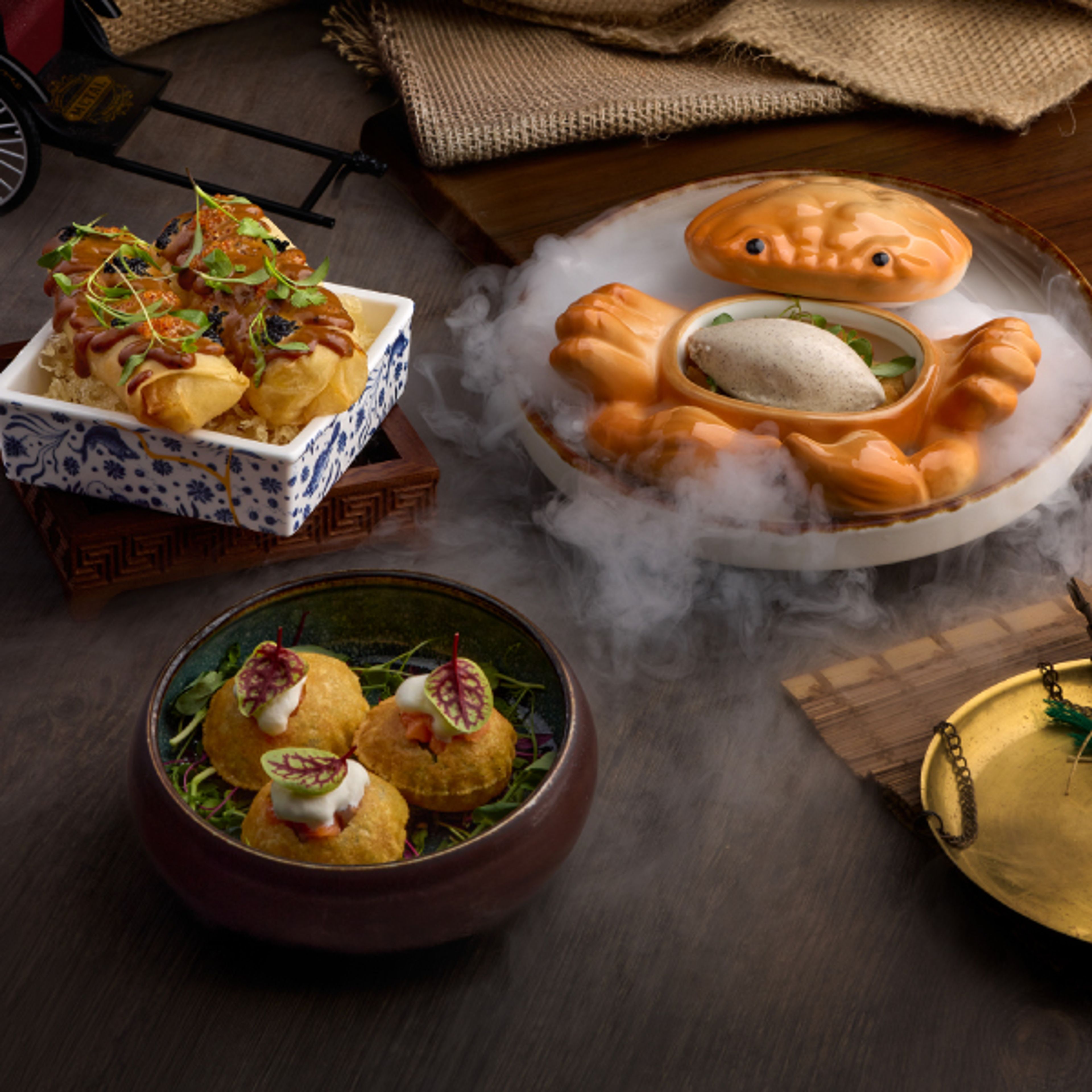
Not to mention, Synthesis has recently developed their own TCM-inspired ice cream line, featuring up to eight different flavors and counting, led by their Snow Fungus Herbal Ice Cream. This signature dessert transforms snow fungus—long celebrated in Chinese culinary traditions for its hydrating properties—into a silky artisanal ice cream that is light, elegant, and refreshing. As Ezekiel noted, it’s a modern dessert that balances indulgence with wellness. About a year into working as head chef at Synthesis, a friend of Ezekiel’s invited him to travel to Vietnam and collaborate with another restaurant called DẠ 夜 Dining. Seeing that his goal is to make TCM enjoyable to as many people as possible, traveling to another country to alter a different set of people’s mindset excited him.
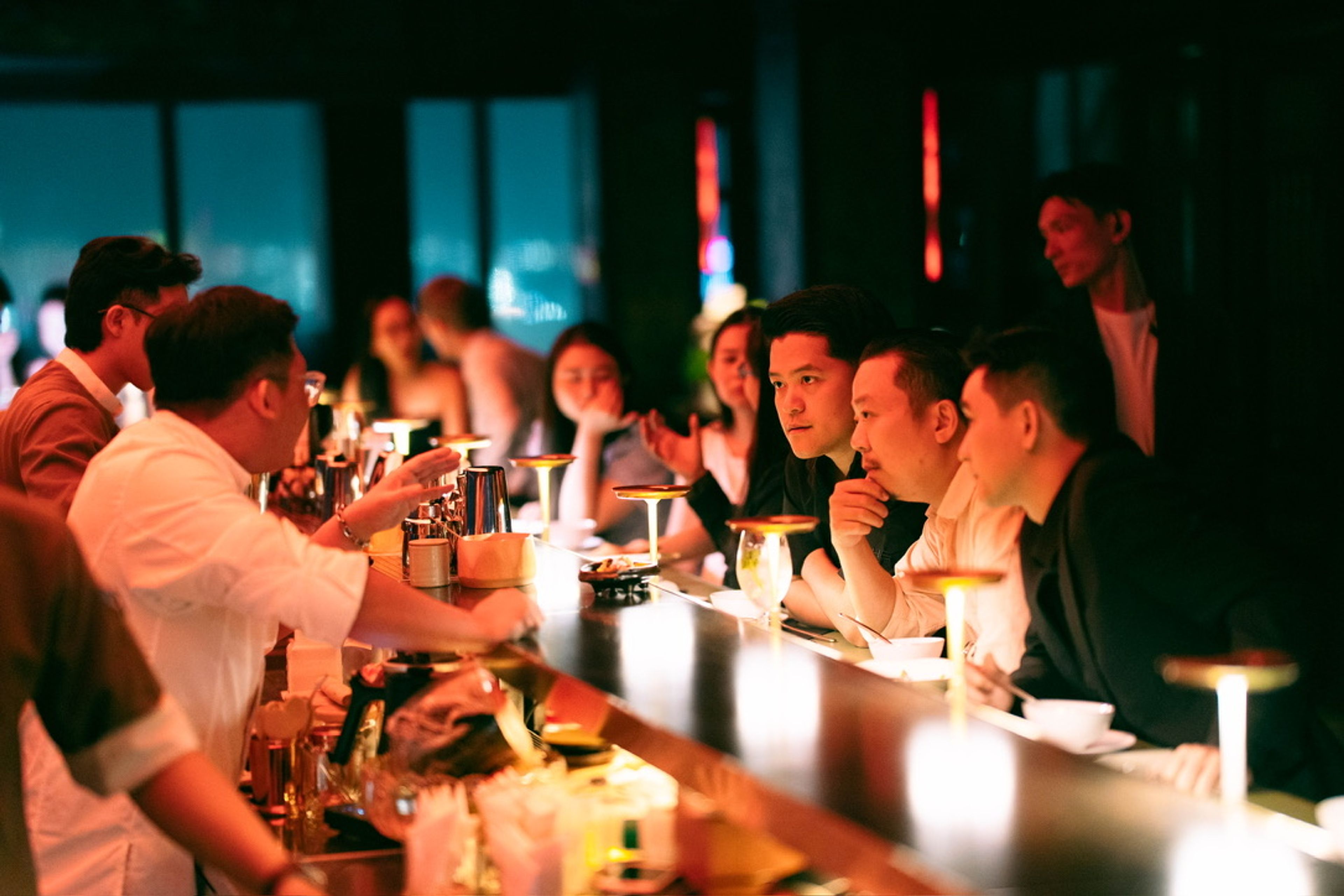
It’s only when you step away from what you’re normally doing that you’ll gain a new perspective. Or, as Ezekiel put it, “You can only see things when you’re out.” When he first arrived in Vietnam, he expected people to eagerly embrace new culinary ideas simply because Vietnamese cuisine already has such a rich history of herbs and fresh ingredients. Instead, he found something surprisingly familiar. Whether he was speaking to local chefs or diners, everyone held strong opinions about what belonged on a plate and what didn't. That realization fundamentally changed the way Ezekiel approached creativity. Innovation, he learned, revolves around understanding why people hold onto tradition before trying to introduce something new. Collaborating with local restaurants like DẠ 夜 Dining heavily reinforced this belief. Working alongside Vietnamese chefs taught him that the best ideas come from respecting each culture's unique identity, then working to find the natural common ground between them. Those pivotal experiences continue to shape how Ezekiel thinks about flavors, plating, and storytelling.
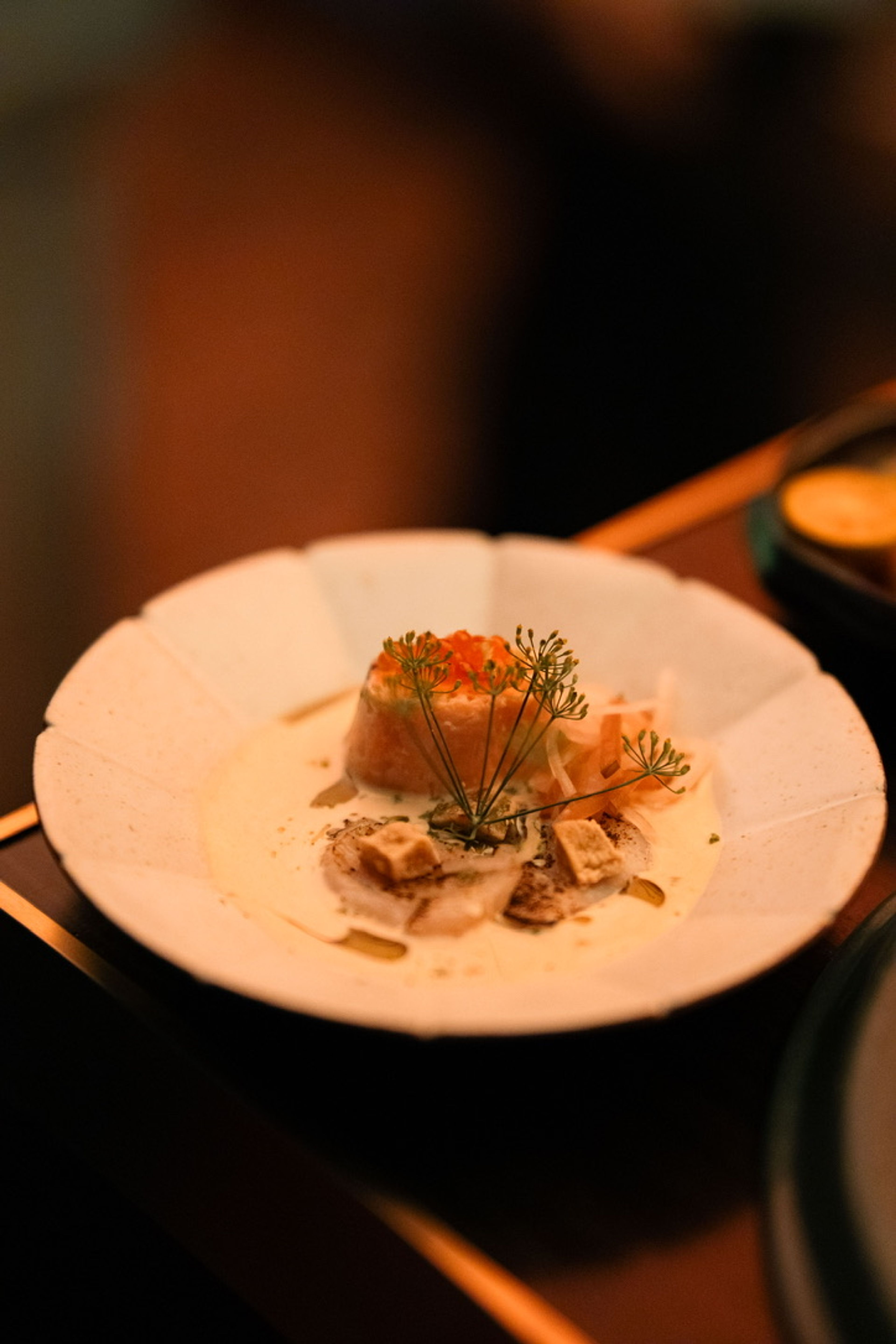
Since traveling to Vietnam for the first time in 2024, Ezekiel has collaborated with a number of venues across the country. In Saigon, he’s done pop-ups with Minh Đức at Adau Kitchen, Minh Tâm at NEO-, Kien Pham at BỜM Kitchen & Wine Bar, and bars such as Thirty 59, ASMR, Tamarind Bar, and UNU Eatery and Bar. He even traveled to Hanoi last year to collaborate with CULTRA, a local taproom restaurant. Along the way, each collaboration became an opportunity to test a core belief that has shaped his cooking: people often reject certain flavors before they actually taste them.
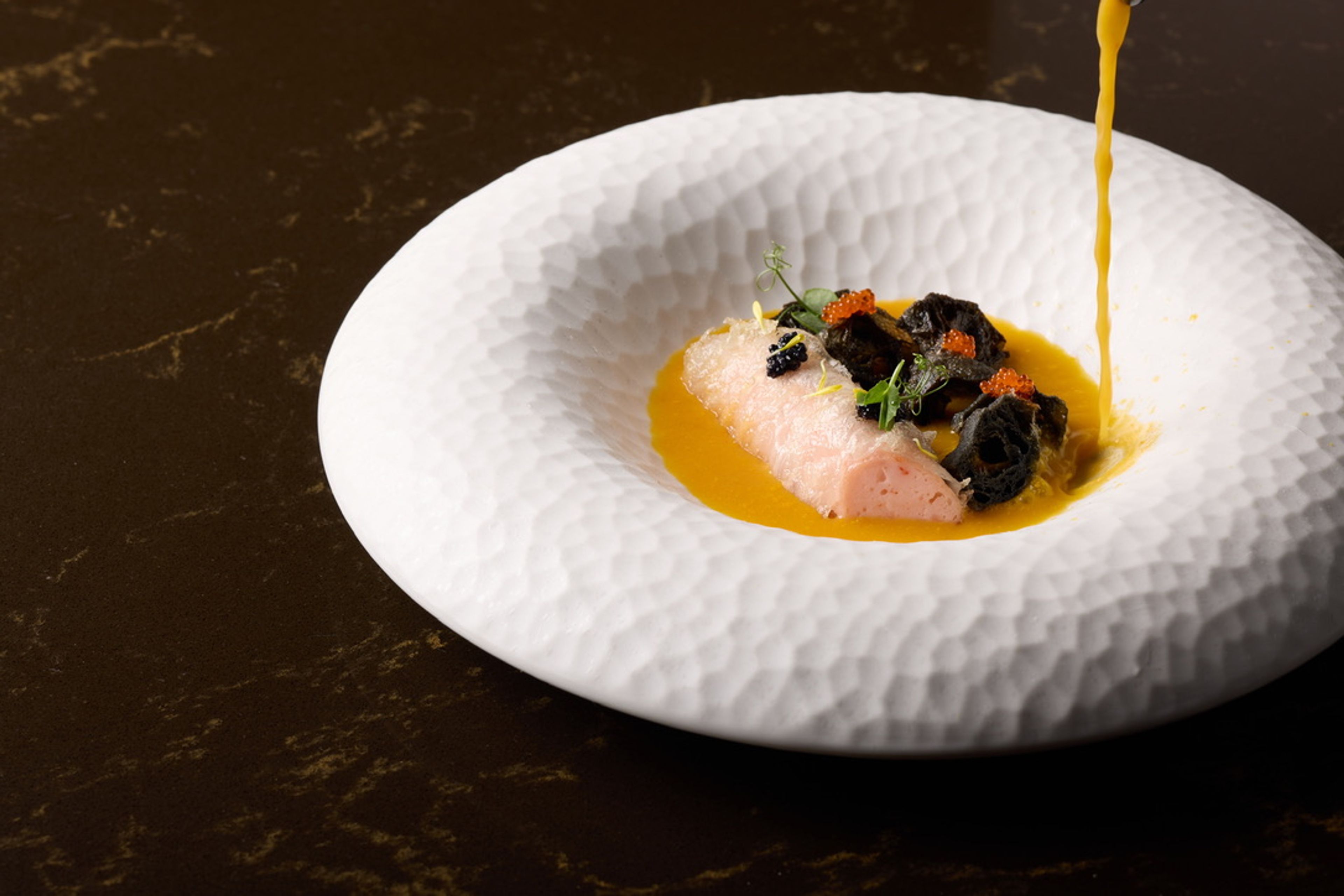
When including ingredients like durian, fish sauce, and shrimp paste, Ezekiel quickly recognized a divide. For local Vietnamese diners, these flavors are a beloved, comforting part of daily life. For many international diners, however, they are a source of hesitation, often associated with overpowering aromas or simple unfamiliarity. Rather than hiding these contentious ingredients, Ezekiel chose to present them in different contexts. He began incorporating fish sauce into refined, modern sauces, balancing the intense depth of shrimp paste with hits of fresh herbs and acidity, and reimagining durian through contemporary techniques. His goal was never to make the food unrecognizable to locals, but to demonstrate to skeptics that ingredients judged heavily by reputation can become elegant, balanced, and deeply approachable when treated with care.
As he explained, accepting the fact that people carry these deep-seated aversions creates the motivation to construct a dish that might completely flip their perspective. It’s that very moment—where you see someone take a hesitant bite, their eyes flicker, their head bops up and down—where you can witness a mind changing right in front of you. These collaborations reinforced a vital lesson: changing someone's perspective doesn't require changing the ingredient necessarily. More so, it requires changing the experience around it.
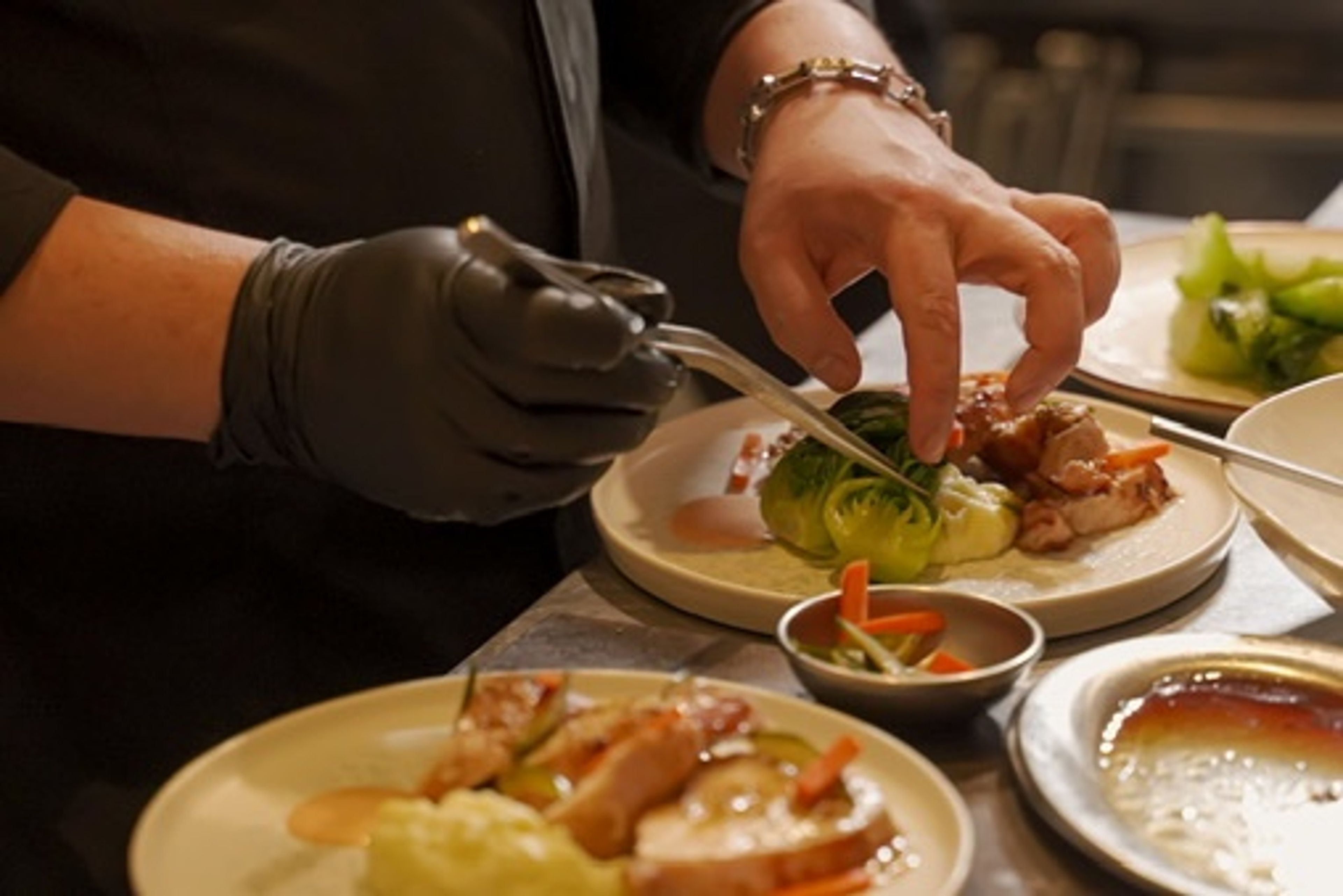
From my perspective, what makes such experiences memorable is the subtle power Ezekiel wields in the kitchen. In the past, I’ve stopped by to try his menu for the night at Thirty 59 and UNU Eatery and Bar and have noticed he works quietly. He mostly keeps his head down, focused on assembling the dishes for the night, all before making his way over to the guests to explain what the dish consists of. Although there is always a sense of urgency when you are at the helm of the kitchen, he simply goes about his business, following his operations to a tee.
During these dinners, Ezekiel noted, guests often discover flavors they never expected to enjoy. A diner who claims they dislike shrimp paste finds themselves enjoying it because it has been balanced with fresh herbs and acidity. Someone hesitant about fish sauce tastes it not as a pungent condiment, but as the backbone of a refined sauce that adds depth rather than overpowering the dish. Even ingredients like black sesame, snow fungus, or medicinal herbs—often associated with traditional desserts or home remedies—are reimagined into contemporary dishes and ice creams that feel familiar, yet completely new. For Ezekiel, the goal is simply to create enough curiosity for someone to take that first bite, because once they do, preconceived ideas often disappear. It is as a direct result of having such positive experiences working and collaborating with others in Vietnam that Ezekiel has decided to set up a more permanent venture. His latest creation: Nhà Thảo.
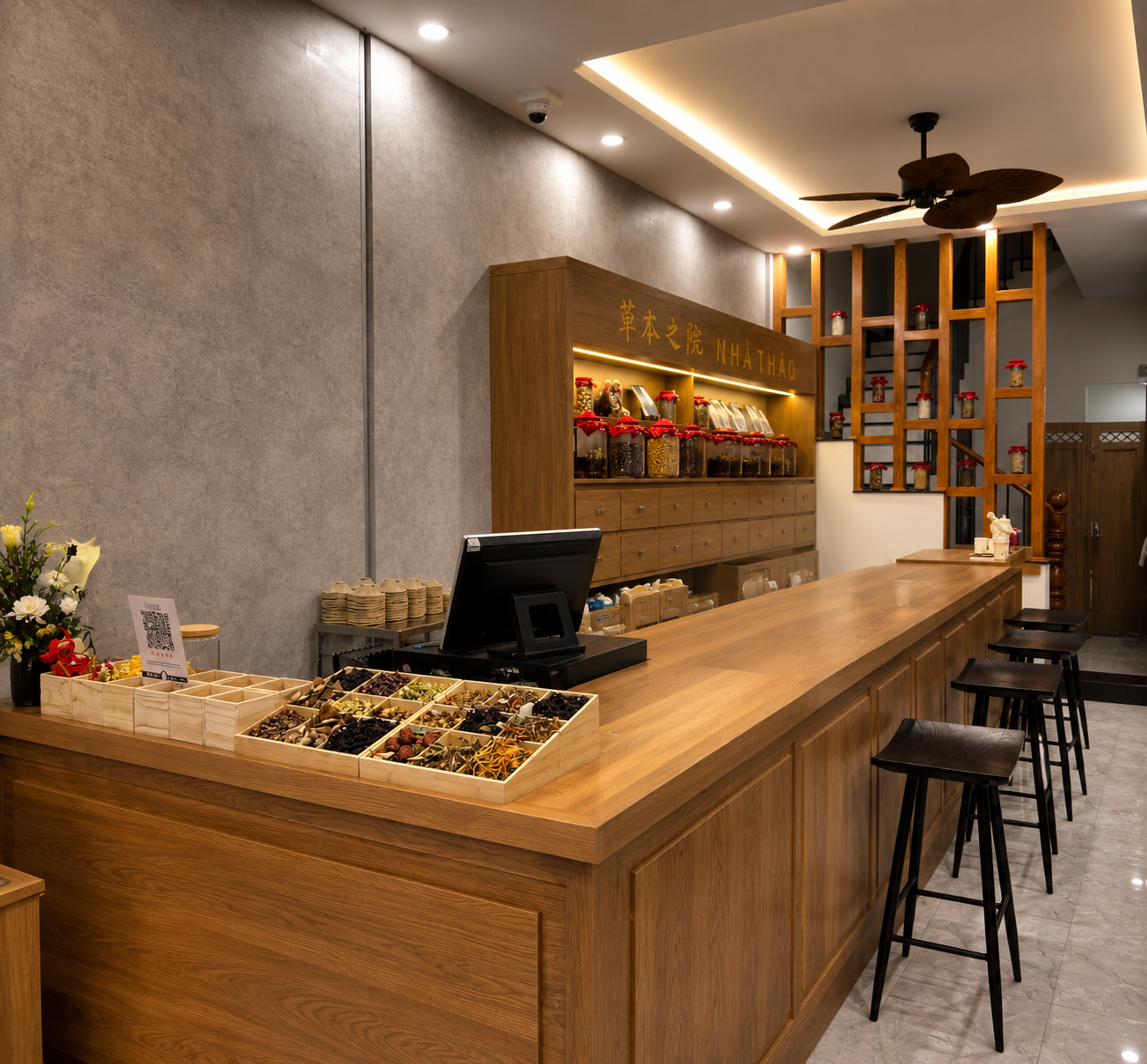
Located on Hai Bà Trưng street near Tan Dinh’s Pink Church, Nhà Thảo seeks to further Ezekiel’s quest to educate people on the benefits of TCM. In Vietnamese, nhà means “house” and thảo refers to “herbs and medicinal plants” making the venue a house of herbal medicine. [District 0] recently visited the space and noted the expansive, corridor-like space and its earthy, minimalist wooden furniture that evokes the warm ambience of a traditional Chinese apothecary. Furthermore, adorning the walls is a series of twenty-four life-sized paintings, each displaying a separate healing herb—such as Chrysanthemum, Goji Berries, and Ginseng—alongside its medicinal breakdown for you to better understand its benefits. The next time you stop by make sure to say hello to the general manager, Jessie, who happened to spend eight years living in Singapore before returning to Vietnam.
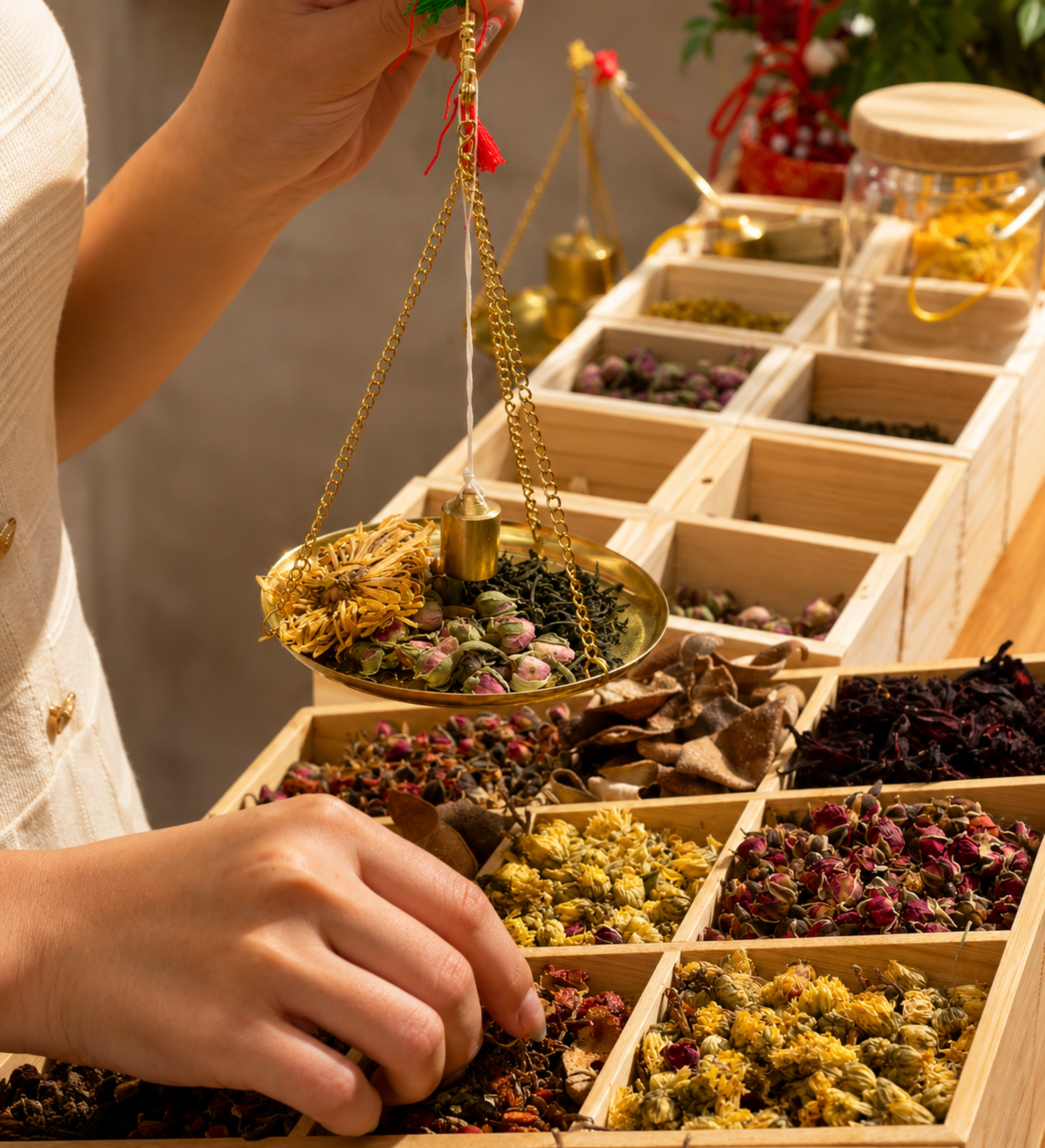
True to Ezekiel's Singaporean roots, Nhà Thảo rejects the use artificial powders and syrups and instead sources the finest raw botanical ingredients directly from Saigon’s historic Chợ Lớn market in District 5. The goal once again for Ezekiel is to challenge people’s presuppositions about tea, specifically milk tea being overly sugary and unhealthy, by crafting more wellness focused teas using zero refined sugar and plant-based sweeteners. Ezekiel also noted that Nhà Thảo’s modern herbal beverage house is only the beginning of the vision he has for the brand. In his eyes, the future will consist of building out an entire group of enterprises under the Nhà Thảo Group including bars, cafes, restaurants, and having a stake in wellness tourism by partnering with spas, clinics, and hotels.
Beyond opening the Nhà Thảo umbrella, Ezekiel will continue to run Synthesis Kitchen in Singapore while traveling back and forth to Vietnam for more pop-up events. Whether he is cooking in Singapore or Vietnam, his goal has always been to challenge our culinary comfort zones. He leans toward offering creative reinterpretations of the ingredients we think we dislike, asking us to reconsider our assumptions about flavor. In this manner, Ezekiel has transformed from a restless teenager scooping ice cream into a thoughtful head chef and business owner expanding our palates and normalizing traditional systems like TCM. Through his work, he continues to show that changing your mind about an ingredient can be a small but rewarding step toward developing an open mind.
Follow Ezekiel on Instagram
Follow Synthesis on Instagram
Follow Nhà Thảo on Instagram