







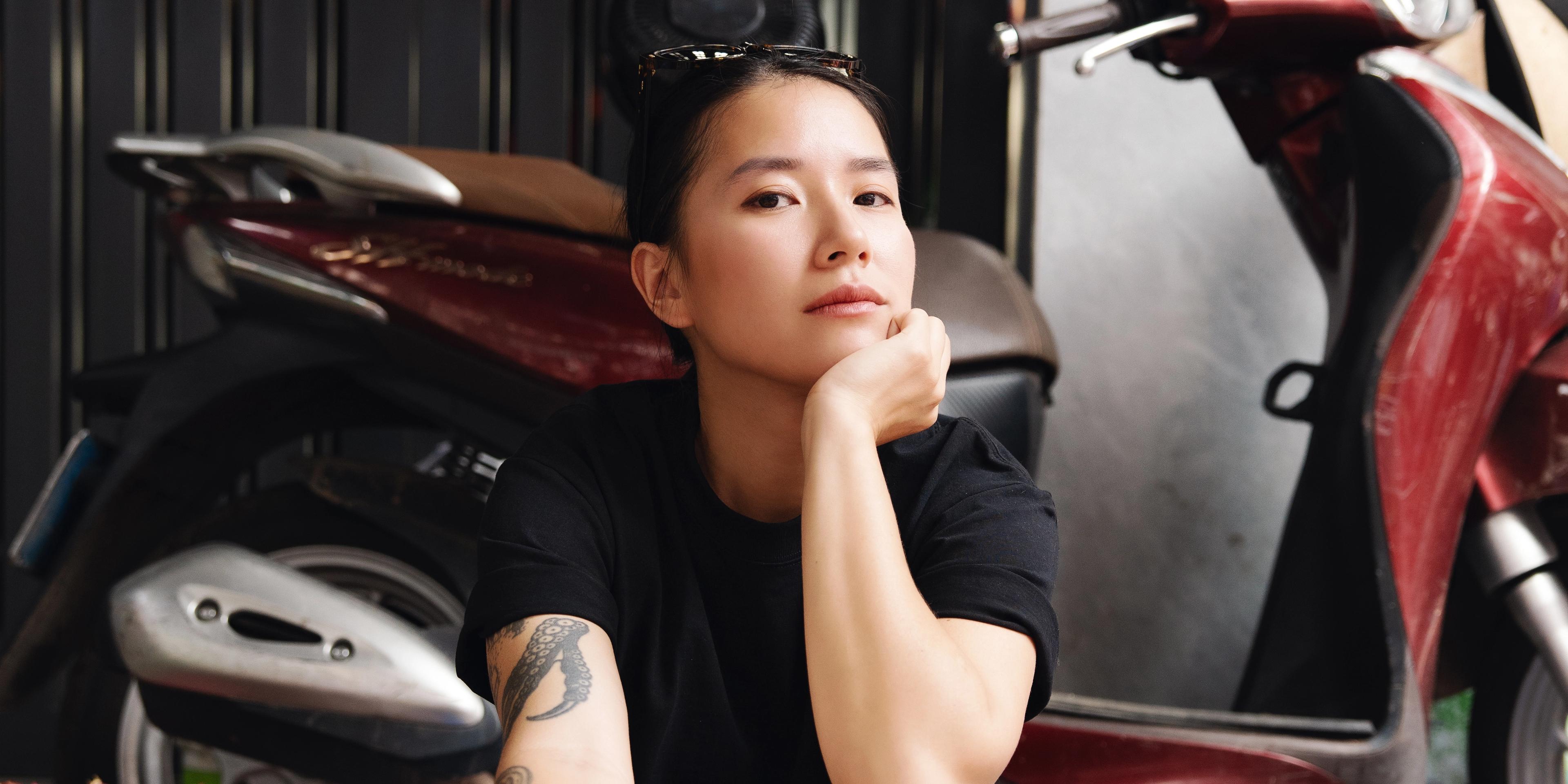
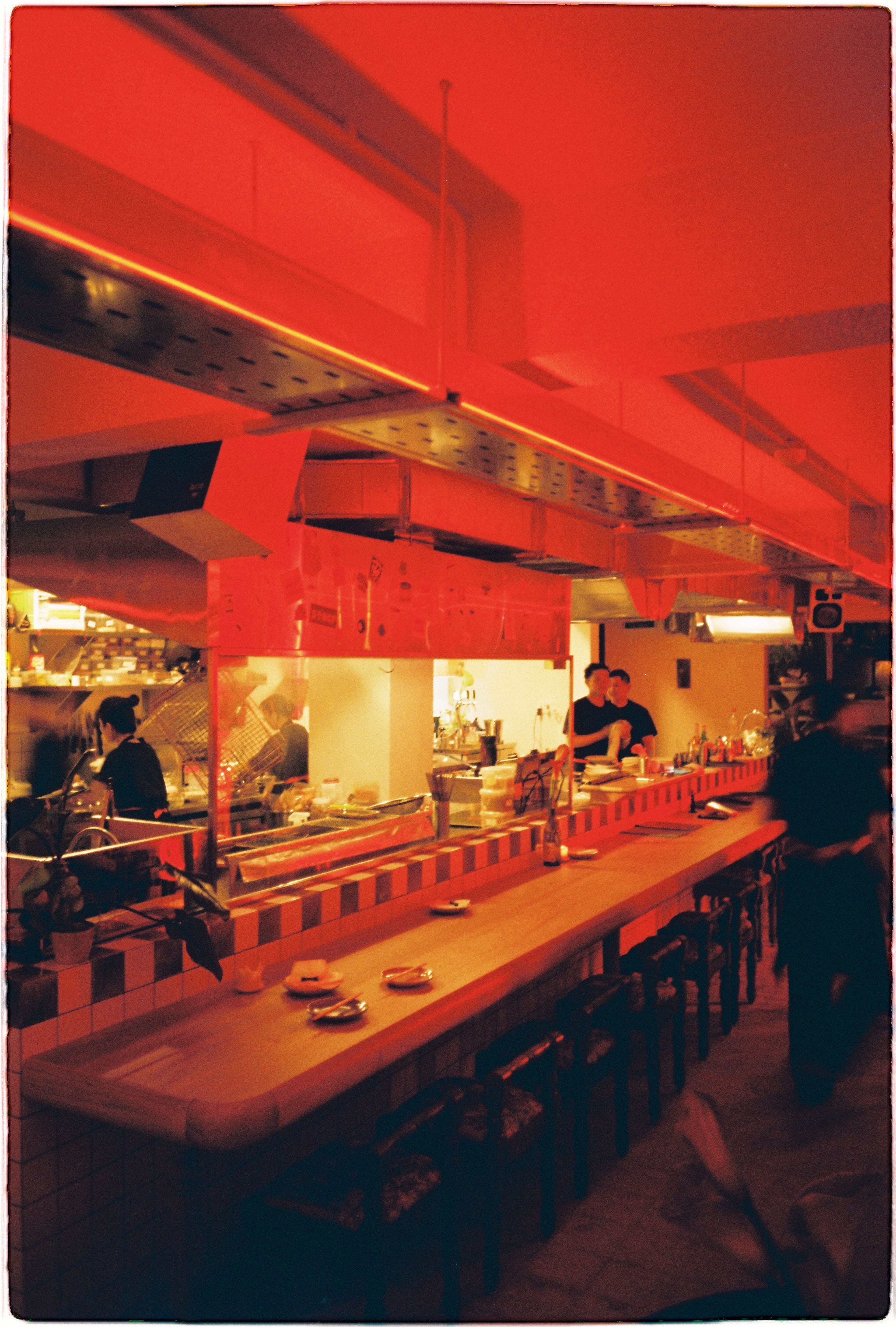
There is something I’ve noticed when interviewing owners. Whether it's for a bar, cafe, or restaurant, the same trend emerges when you finally get to talk with them: although they are sitting down, their mind is in perpetual motion. They’re making sure the customers who just entered through the door are seated promptly. They’re making sure the orders to those customers are being delivered swiftly. They’re making sure their staff is dialed in, the schedule for the day is set, and that each and every detail is accounted for, twice over. And although they are presumably calculating a million other things under the surface, when you ask them a question, they have this uncanny ability to redirect all of their focus back to you. It’s in those moments, you realize that such individuals are different. Multitasking is not only normal, it’s what they do best. When I met Anaïs at her restaurant Yeshi on Lê Ngô Cát street, she was in her element. From the cooks behind the stove, to the servers on the floor, to the customers in their seats, walking in I immediately felt she was in command of a tight ship in full swing. Yet, even in the midst of the heat of the kitchen and people flying around in all directions, she wasted no time in getting right to the point.
“You want a burger?”
“That’d be great.”
“Fries?”
“That’d be even more great.”
“It’s Tuesday so we’re testing our new burgers.”
“Perfect.”
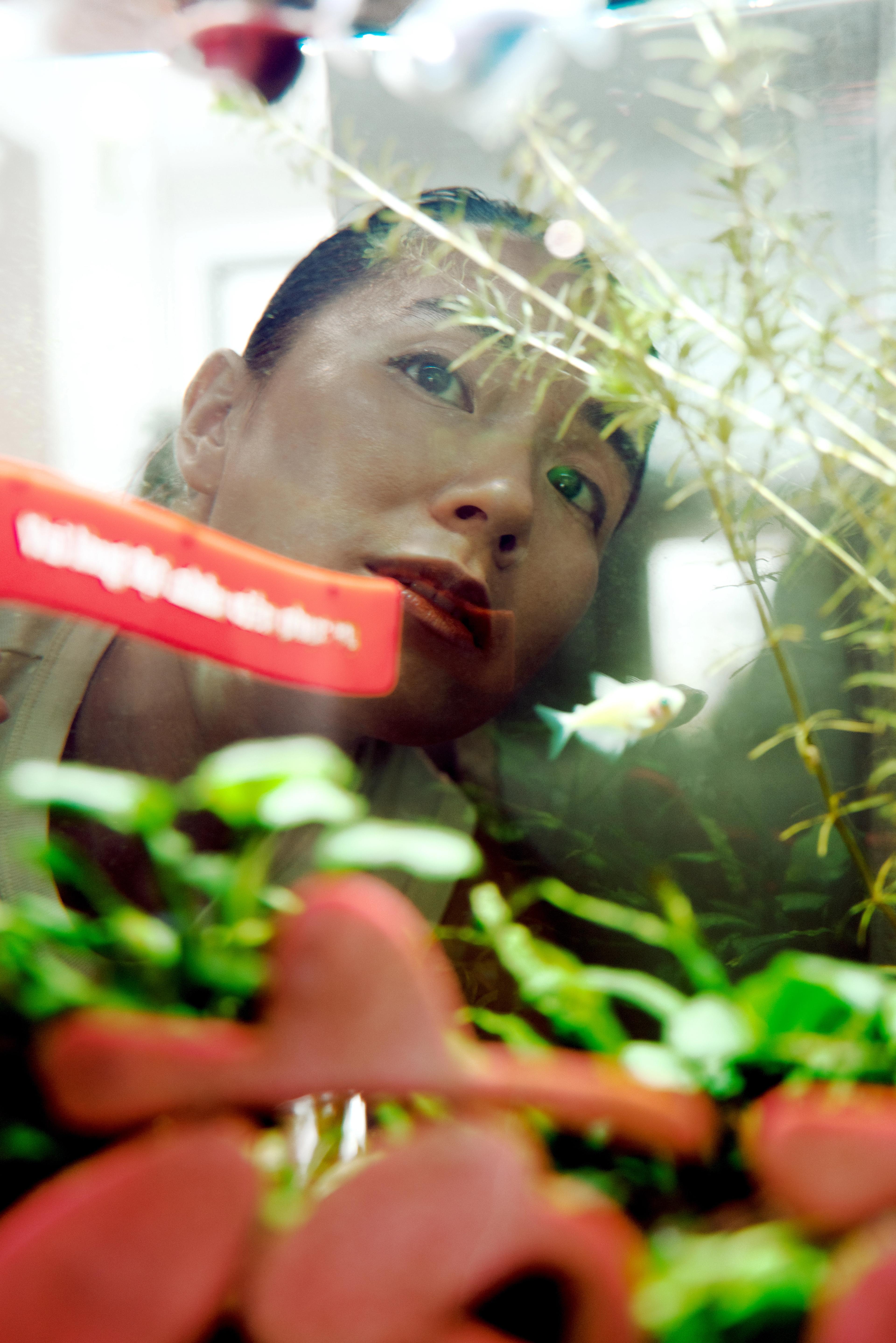
A moment later, we’re seated. She starts talking. I start typing away, wiping my hands in between bites. “It’s a commitment,” she said, observing the buffalo chicken sauce making its mark on my keyboard. And I was all but happy to commit. Every time Anaïs got up to assist her staff or tend to customers, I was stealing whatever bite I could. They were squeezed into small windows—once she sat back down, all of her attention came back in a flash.
Anaïs was born in Paris to Vietnamese and Dutch parents before moving to Saigon when she was three years old. She grew up attending the French international school, École Française Colette, which resembled an expat bubble from her perspective. Thus, as a kid, she felt stuck, even trapped at times. When you’re hanging around and studying with peers who aren’t from the country you’re in, reality doesn’t feel real. As a result, questions slowly morphed into the mindset she adopted back then, “When I grow up, I want to break out, explore, and see where the world takes me.” That exact drive would eventually bring her back to Saigon as a successful entrepreneur and author, however, such ventures wouldn’t come full circle until years later.
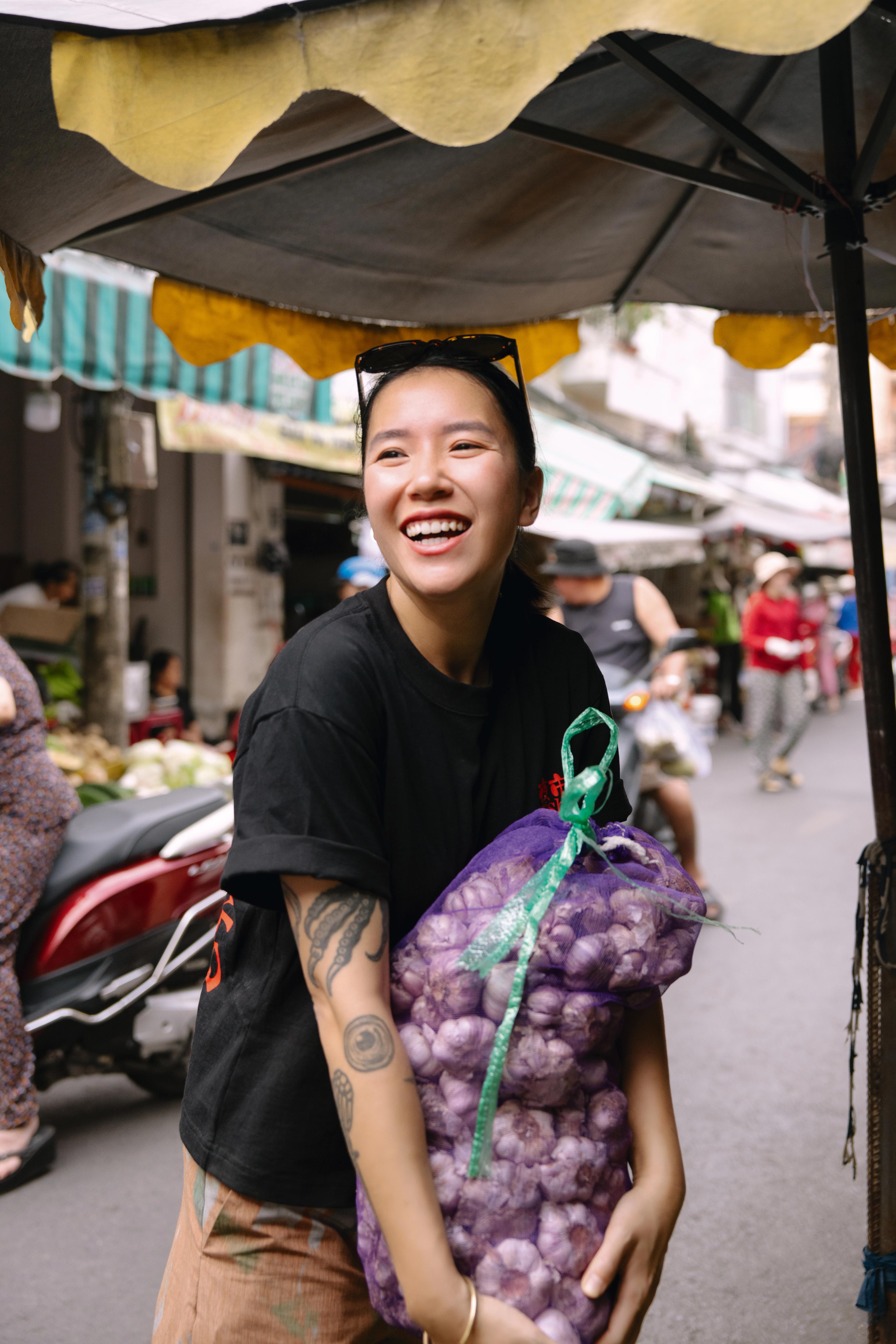
At seventeen years old, Anaïs moved to Singapore to study graphic design. For someone with a constant stream of ideas growing up, design felt like the perfect way to channel her creativity into a viable career. While she wasn't passionate about cooking yet—especially on a tight college budget in an expensive city—she cooked out of pure necessity. Desperately missing Vietnamese cuisine and with her family over a thousand miles away, she had to rely on her memories of home-cooked meals to recreate those flavors in her kitchen. This makeshift survival tactic sustained her throughout her studies, before she eventually moved back to France for a graphic design internship in Paris.
Although studying graphic design proved interesting at first, it wasn’t long before the reality settled that pursuing such a degree meant she’d be stuck behind a computer for a greater part of her career. To be more specific, hours spent tinkering with a design on a screen did not equate to the idea of exploring the world and all it has to offer. Bored out of her mind, Anaïs quit. However, when one door closes, another opens. Still in France, her cravings for Vietnamese food reminded her of her time trying to cook back in Singapore. While Anaïs wasn’t a bad home cook, she knew she could learn more. With that, she took a step in another direction and enrolled in culinary school at L'École de Paris des Métiers de la Table.
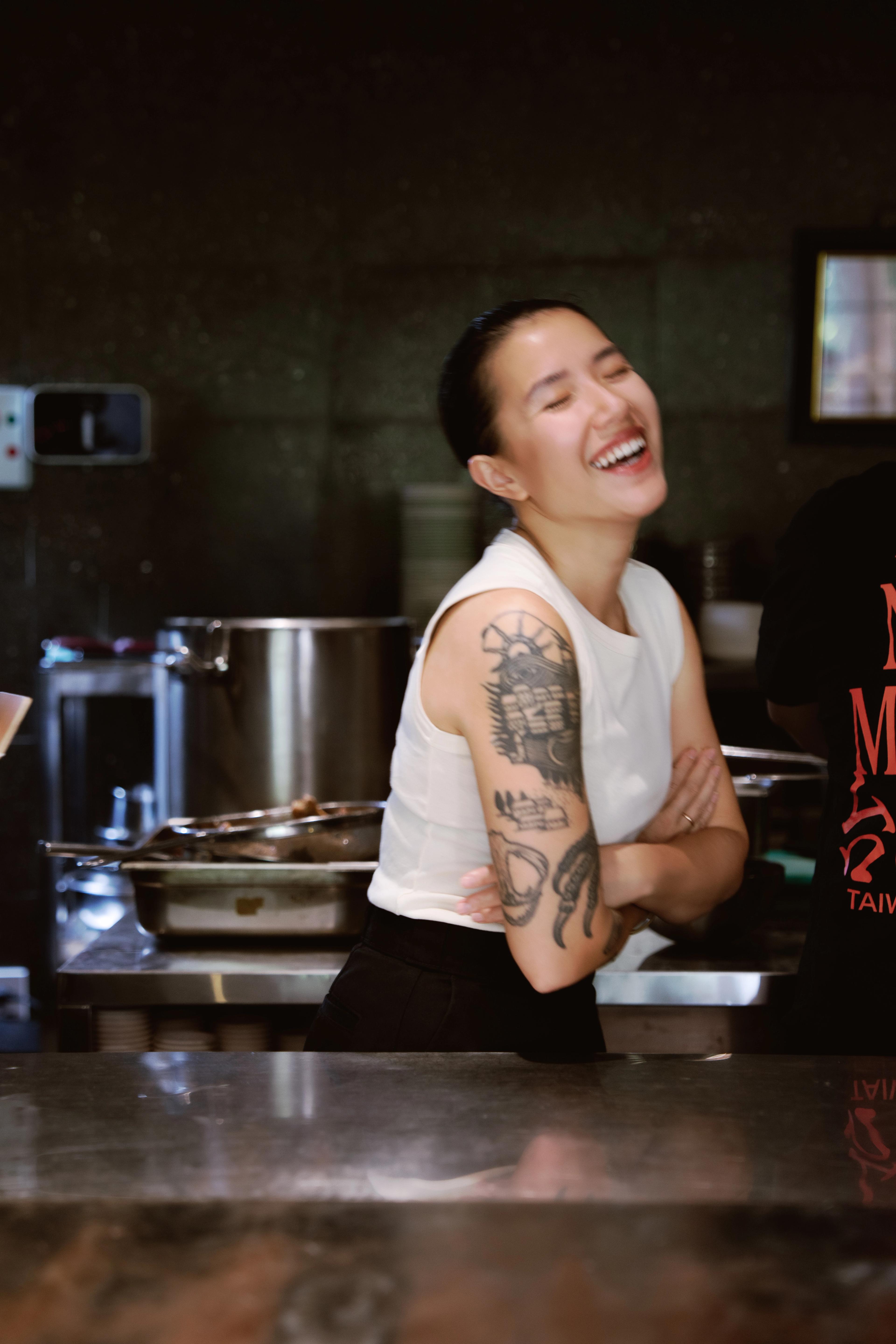
Not only did cooking school elevate her skills in the kitchen, she became fascinated with the restaurant industry as a whole. The ability to create a self-contained universe—from the space, staff, to the food itself—welcoming people from all over was the real draw. Armed with an upgraded culinary toolkit and a desire to create new dishes and innovative menus, Anaïs finished school and set sail eager to make her childhood wishes even more real. During our interview we did not go into full detail about her international escapades throughout Colombia, Brussels, Italy, and London—even she seemed to have trouble recalling the finer points of that whirlwind period of her life. However, Anaïs was rising steadily through the ranks. She started as a commis chef, then cooked on boats in Italy, and later helped open restaurants in Bogota and London. I asked if she could offer any advice to people regarding working in and starting different styles of restaurants and she replied, “Fake it til you make it. Fail, fail, fail. Learn, learn, learn.”
At that time, she was completely in her flow, running around and working at the hyper-speed she craved. Suddenly, everything ground to a halt. In 2020, at the onset of the COVID pandemic, Anaïs got sick, forcing her to stop working for a while and prioritize her health for once. For someone who feels in her element when she is constantly on the move—cooking, consulting, and socializing—a sudden standstill felt torturous. Instead, she found a silver lining. Once the entire world paused for the pandemic, she was able to relocate to Brussels and simply be with her family. In hindsight, she describes that period as feeling like a long holiday—a temporary slowdown that ultimately helped reorder her priorities and shift her focus toward the new projects calling for her attention.
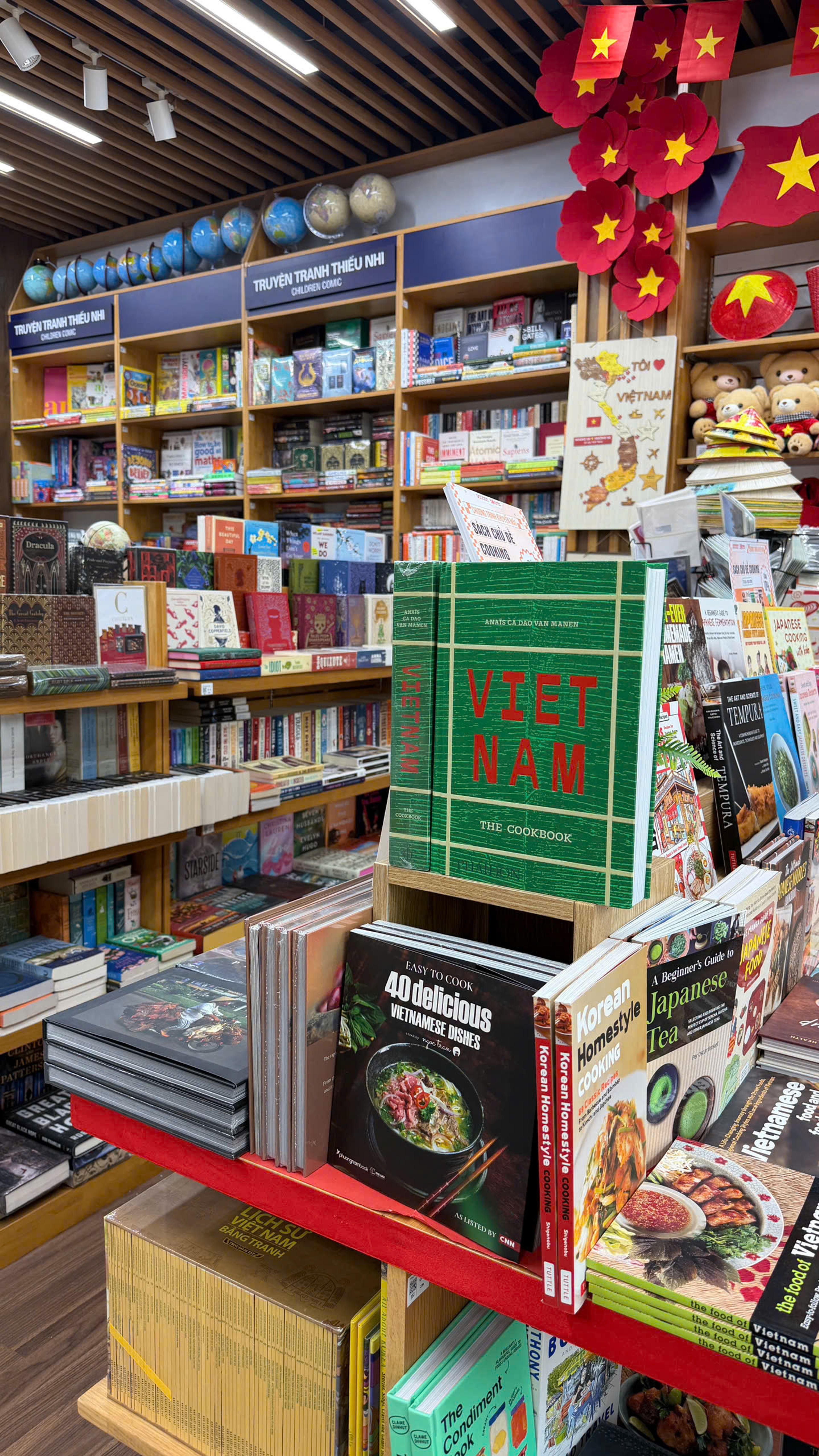
Around 2022, Anaïs returned to work focused on pop-ups and freelancing. However, in her free time, she started building a cookbook of Vietnamese cuisine. It seemed even after all the years living abroad and away from home her connection to and curiosity about the depths of Vietnam remained strong. When she reentered the workforce, operations were slow. Back at home, the cookbook developed at a similar speed. Not only that, she knew that if she wanted to create an authentic Vietnamese cookbook she had to go all the way to the real source for inspiration. So, in 2023, Anaïs returned to Vietnam to dedicate her full attention to researching the various cuisines across the country.
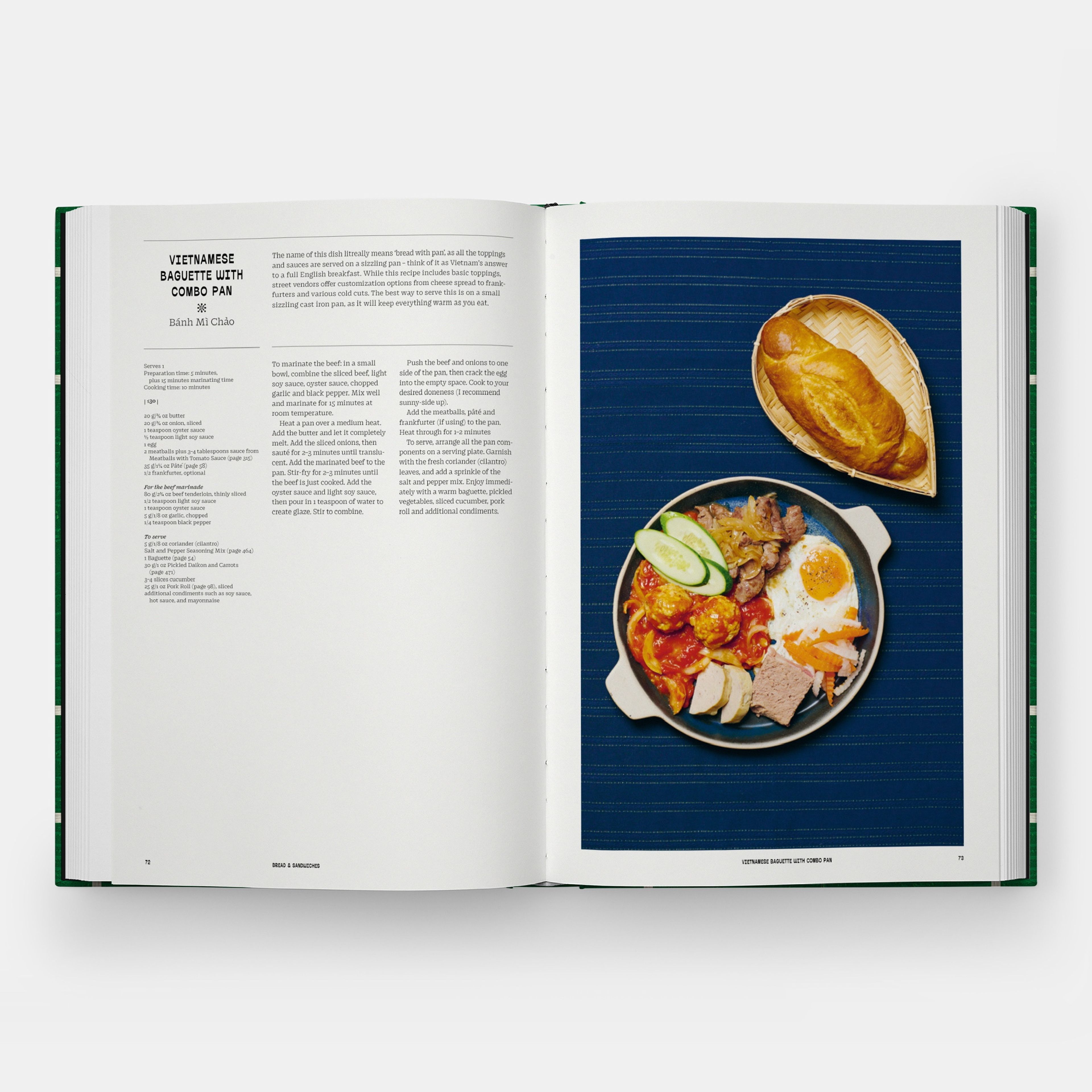
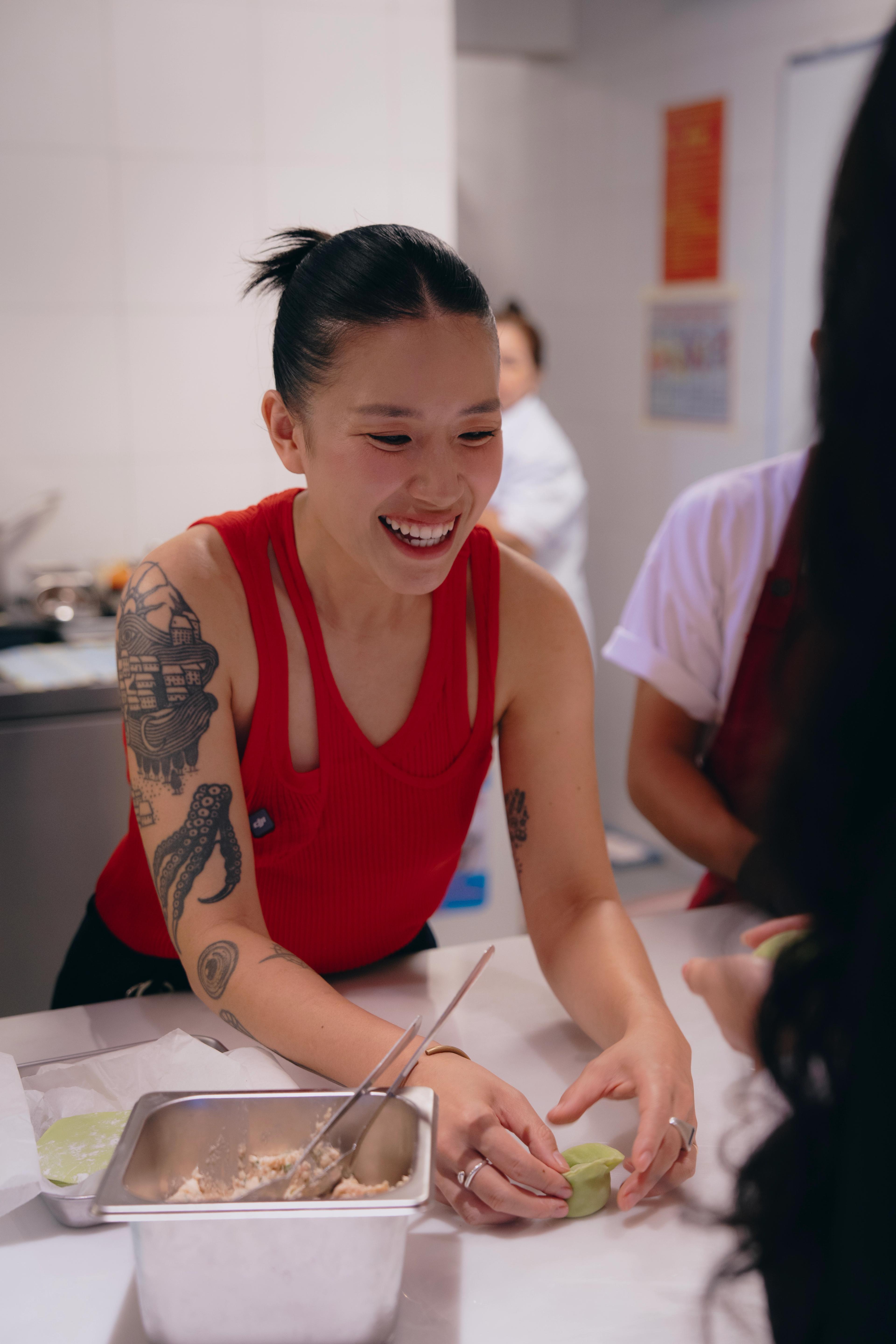
Between moving to Vietnam and bringing to print Vietnam: The Cookbook through the global publisher Phaidon Press in 2025, Anaïs spent two and half years researching and scouring through the country. From cooking alongside chefs all over Vietnam, in professional kitchens and local’s homes, to relentlessly testing thousands of recipes at home, she became more like an anthropologist implanting herself deep within indigenous communities such as the Chăm, Red Dao, and Black Thai, to later unearth the secrets of Vietnam’s most coveted culinary secrets. She even went as far as living with families for days to document step-by-step cooking methods that had never been written down before. What resulted was an award-winning celebration of 445 beloved traditional Vietnamese dishes. She stood up then, whipped around the counter, and took the green, red-lettered book off the shelf, and made her back to our table.
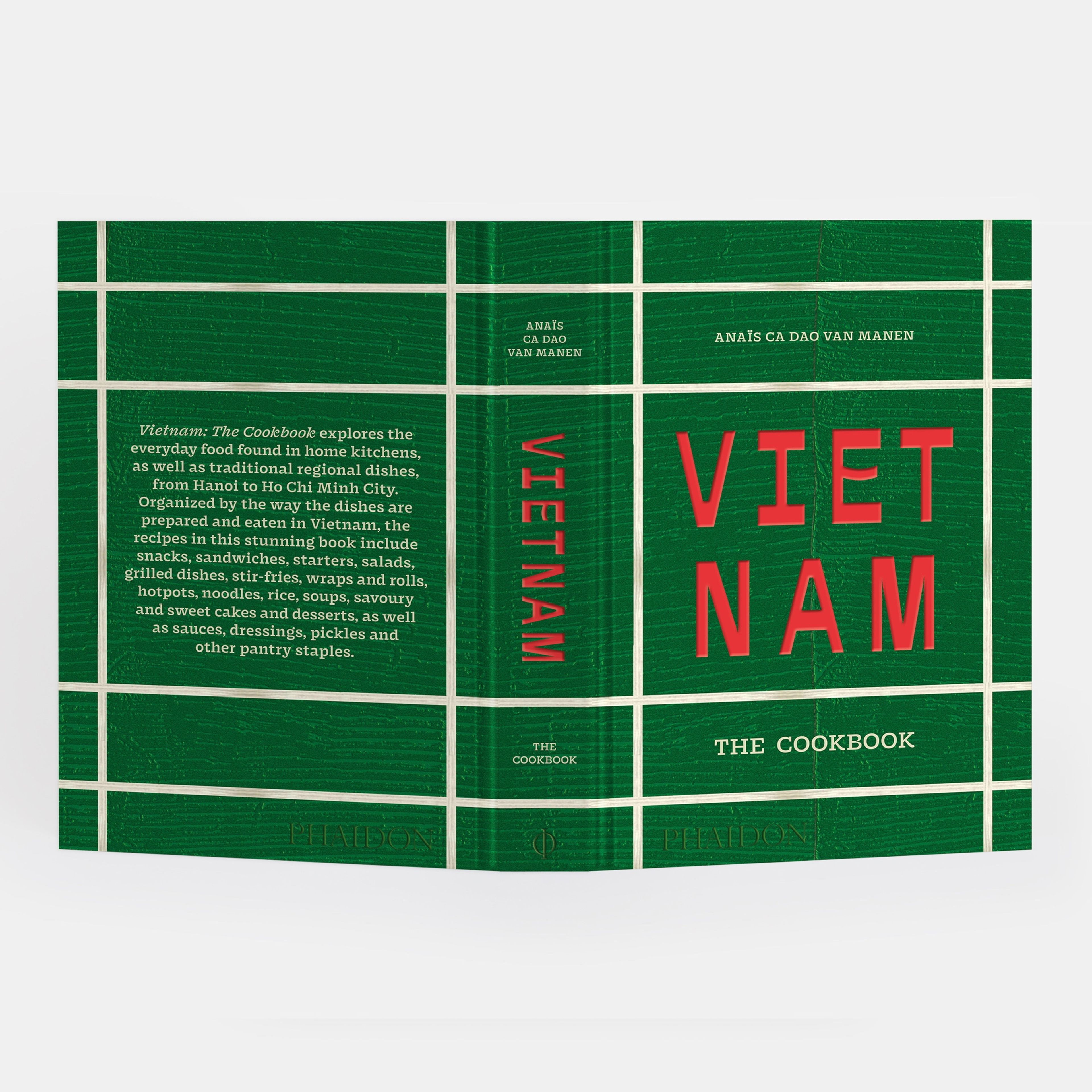
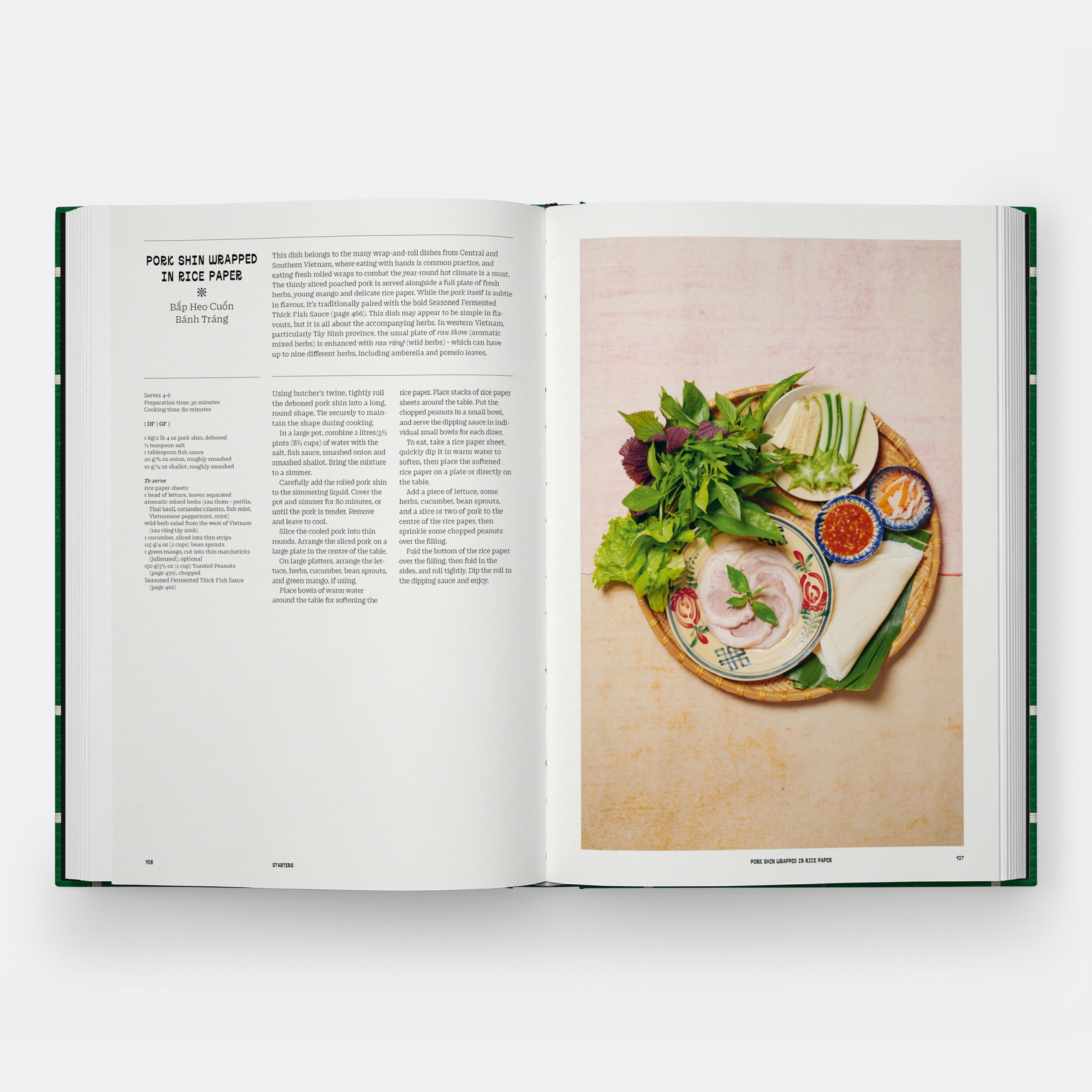
Structured like an encyclopedia, the book highlights the distinct culinary profiles across Vietnam’s provinces. Yet, despite its massive scope, Anaïs is quick to emphasize that the work is just an introduction to Vietnamese cuisine. Throughout her research, she came to realize that there is still so much more out there—a vast landscape of food embedded within all the different pockets of communities living across the country. After an introduction, the book explores street food favorites, main dishes, essentials like rice and noodles, as well as desserts. The text finishes with an overview of pantry staples covering the entire foundation of Vietnamese cooking: oils, dipping sauces, broths, as well as condiments. Finally, it ends by noting down all of those crucial ingredients that Vietnamese dishes can’t go without—the same ones Anaïs longed for when living overseas for so many years. After briefly flipping through its pages Anais returned it to the shelf above the kitchen counter, giving me just enough time to scarf down the rest of my burger.
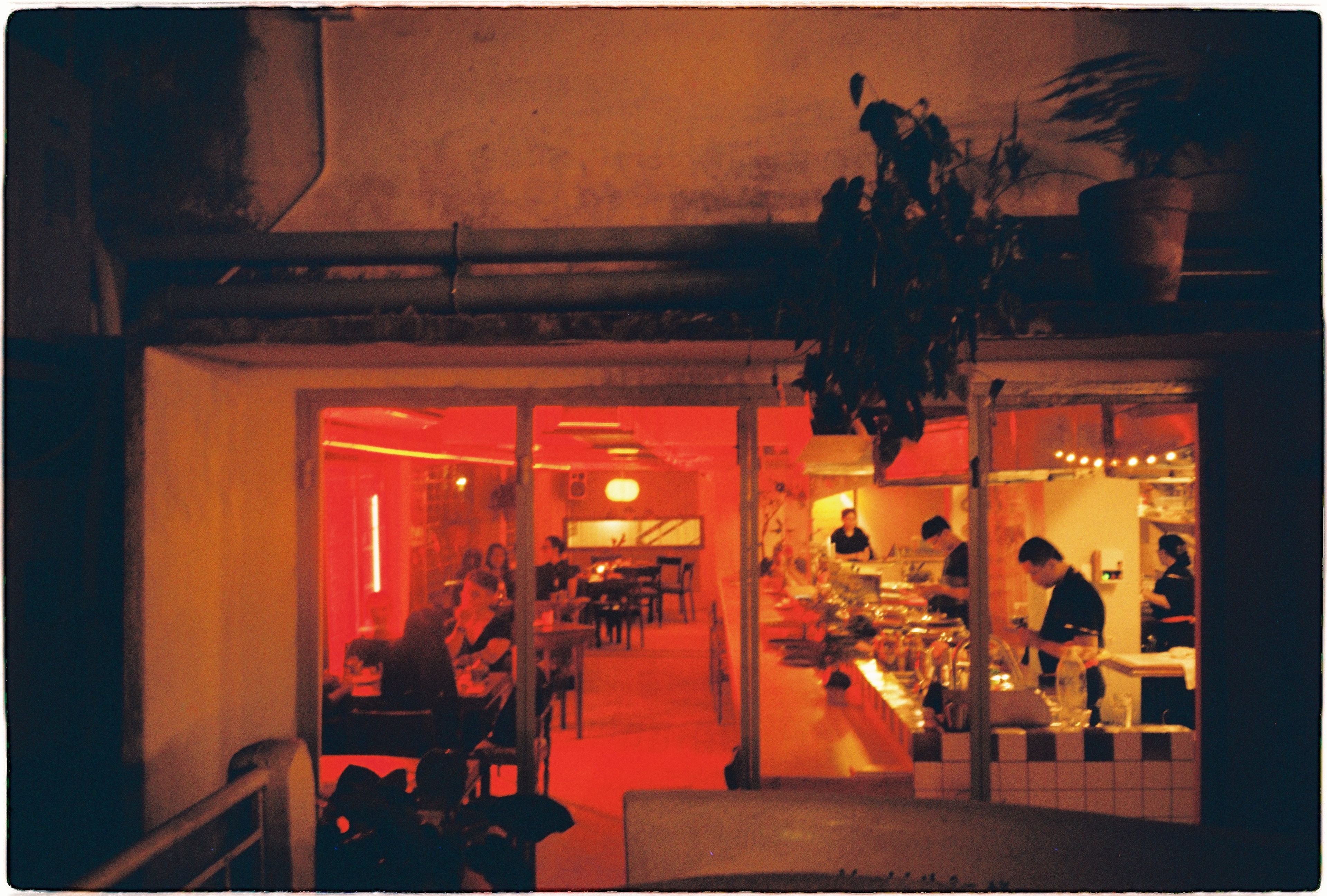
Writing a book, let alone traversing an entire country to do so, will consume the full spread of your days and nights. When Anaïs returned to Vietnam, she intended to focus purely on that monumental task. However, through the connections she made along her journey of discovery, there was no way she could stay away from the restaurant industry. Right in the middle of her research, she added another project to her plate: Yeshi, a Taiwanese kitchen. The goal was to open a place that was accessible, served creative dishes, and delivered at an affordable price point. The restaurant eventually went on to successfully open two locations. First, a spot above Bakes in Saigon in 2024, thanks in part to a partnership with Tuan, CEO of The Lab Concepts, the sister hospitality brand to the branding and interior design studio, The Lab. The second Yeshi opened in May 2025 on Lê Ngô Cát street where Anaïs and I met for our interview. Why open a place serving Taiwanese food instead of Vietnamese? Anaïs explained how she routinely gets obsessed with different possibilities. In simplest terms, when she has an idea or sees a gap in the market she goes out and makes that thing happen. That said, tons of people get obsessed with possibilities, have lots of ideas, or see gaps in the market. The difference is Anaïs’ track record. She’s proven to be someone capable of execution. When I asked why she thinks that’s the case, she helped break down her philosophy.
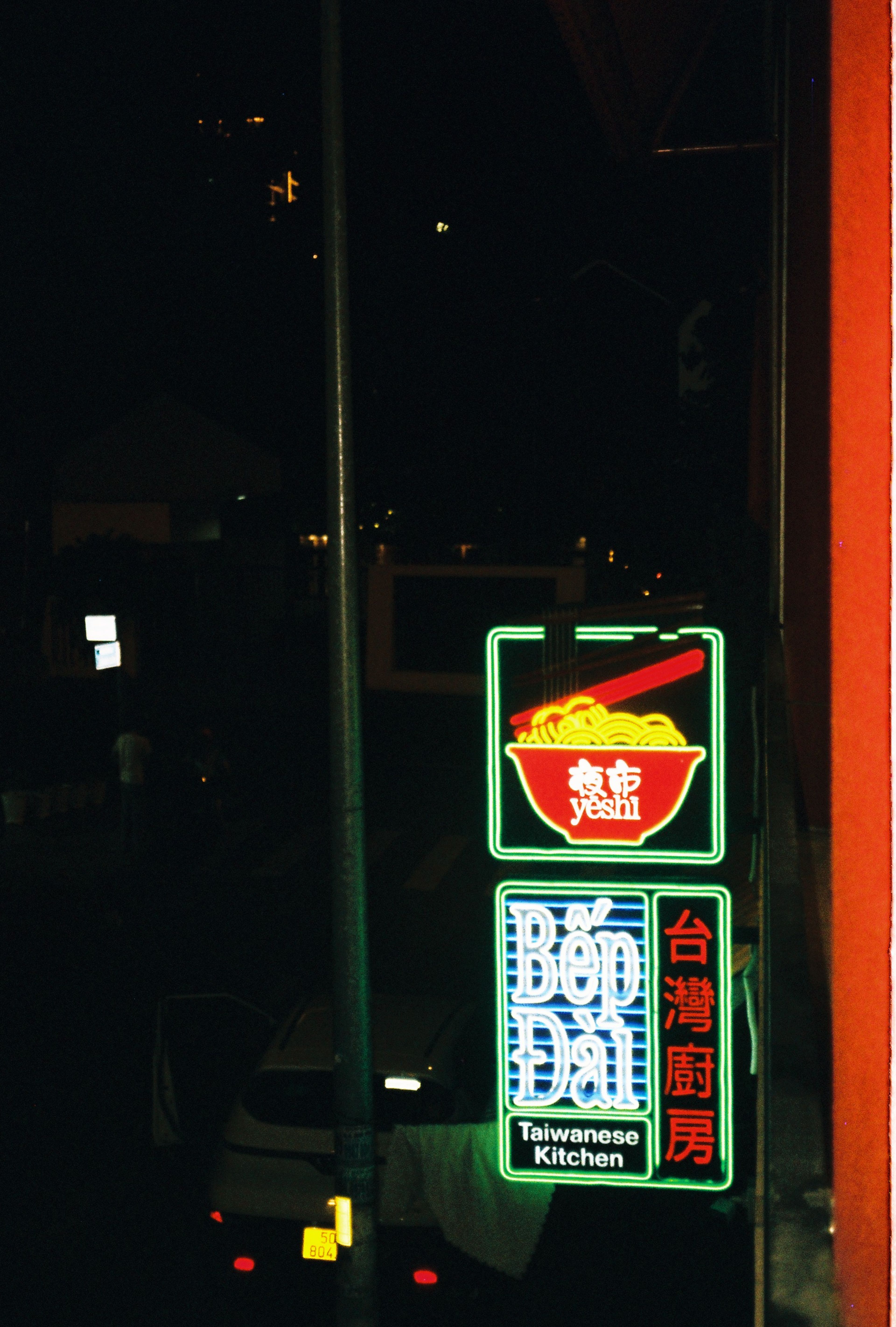
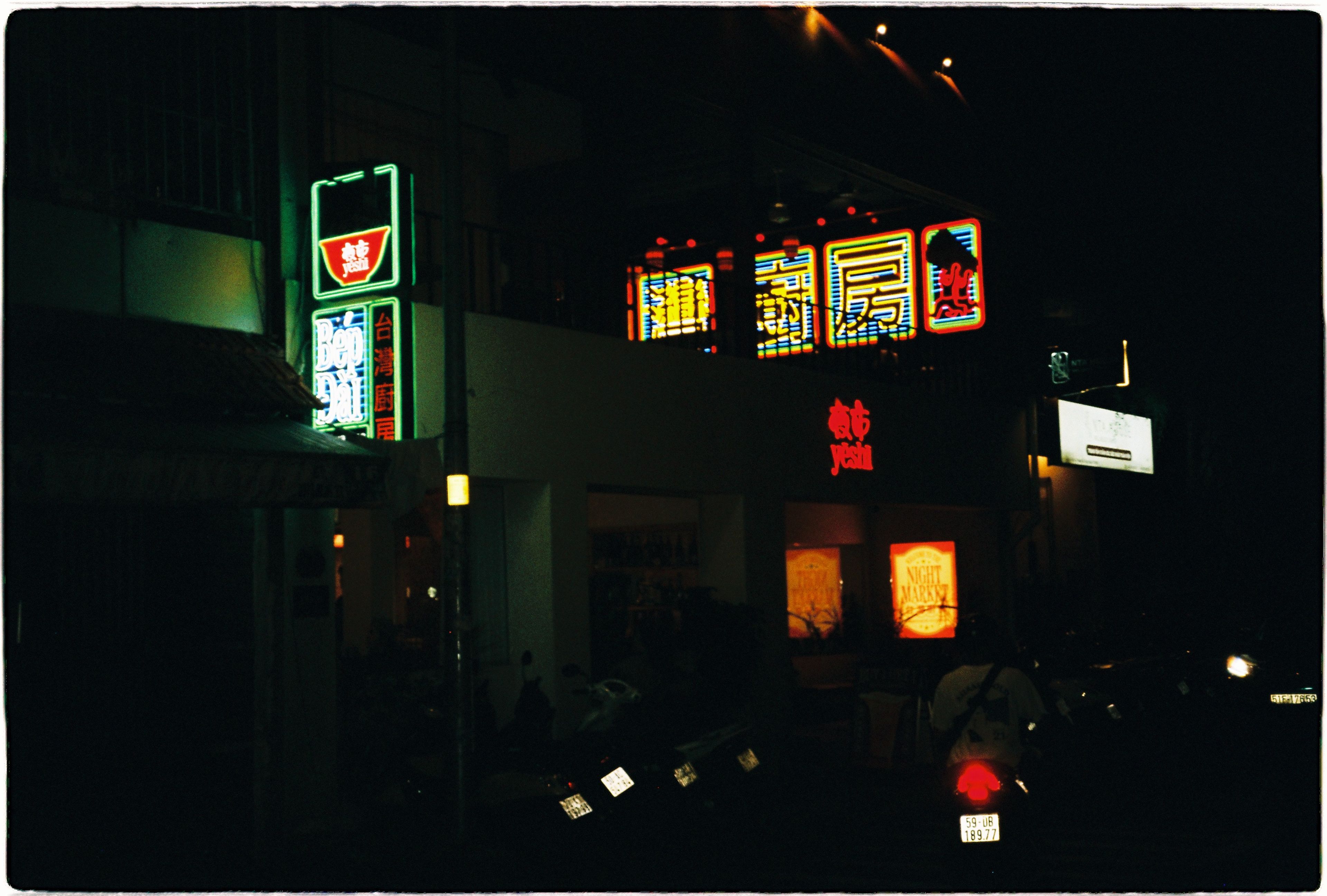
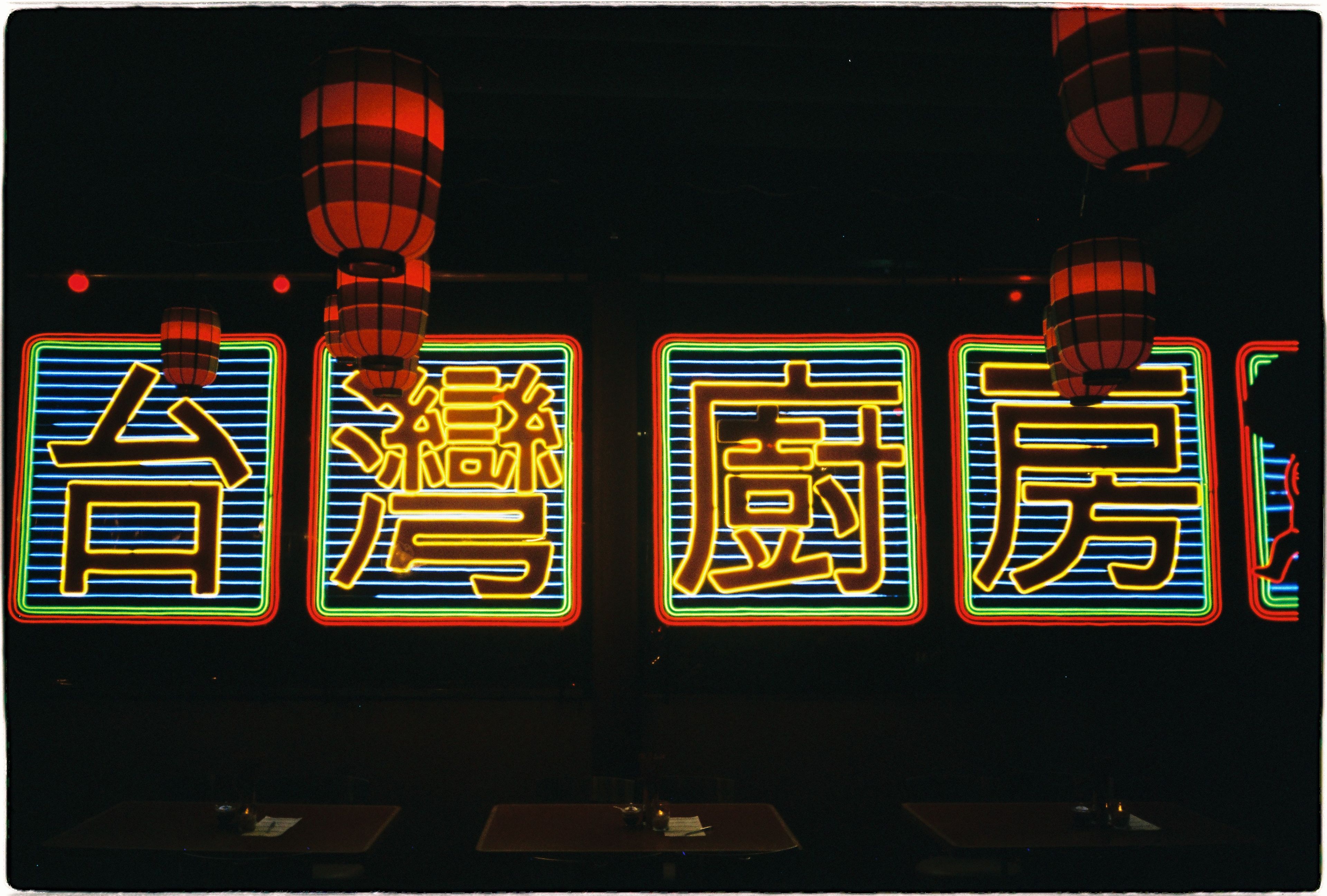
First, it comes down to actually seeing an opportunity. This means paying close attention to your surroundings and studying the landscape’s cultural dynamics. You also need to meet with various people, test different things in your free time, and see how people respond. Once you get a solid lay of the land, you’re now free to give into your obsessions. With a vision for what you want in place, the most crucial element after that is assembling the right team. This means finding people who believe in your vision who are also willing to take the steps to make that self-contained universe come to life.
In addition, she stressed how essential it is to create clear professional parameters, particularly when it comes to the language used in the kitchen. In Vietnamese culture, workplace communication can easily get complicated by pronouns. While some kitchens might lean into an overly familiar dynamic, Anaïs sets boundaries against potentially rude expressions like using mày and tao. For her, drawing that line prevents a casual environment from turning rough, ensuring her staff always feels respected. Furthermore, she emphasizes how important it is for a team to avoid toxic, ego-driven motives that often result in entire kitchens drowning under self-imposed pressure to be great. As for the logistics of actually opening up a place—like acquiring buildings, drafting contracts, and ironing out the minute details—Anaïs claims you can learn that along the way. “You don’t need to know how to do everything,” she said, “and remember you are not alone. You are never alone.” For Anaïs, a restaurant is the accumulation of many people's hard work, meaning success hinges on trusting your team to do their jobs. But while you can improvise certain creative aspects, she cautions against winging the critical financial foundation if you want to mitigate risk. It is a delicate balance: you have to be organized behind the scenes to create as many opportunities as possible for the business to succeed.
Beyond all of that, in terms of her mindset towards building and operating multiple businesses at the same time, she offered a philosophical term to note down: antifragility. Coined by Lebanese-American author Nassim Nicholas Taleb, antifragility is a property of systems that grow stronger when exposed to volatility, randomness, and disorder. In short, to be antifragile means to thrive no matter the situation. Perhaps an ideal word to describe Anaïs’ dynamic working style, and also a fascinating paradox, considering the fact that she still admits to feeling lazy at times!
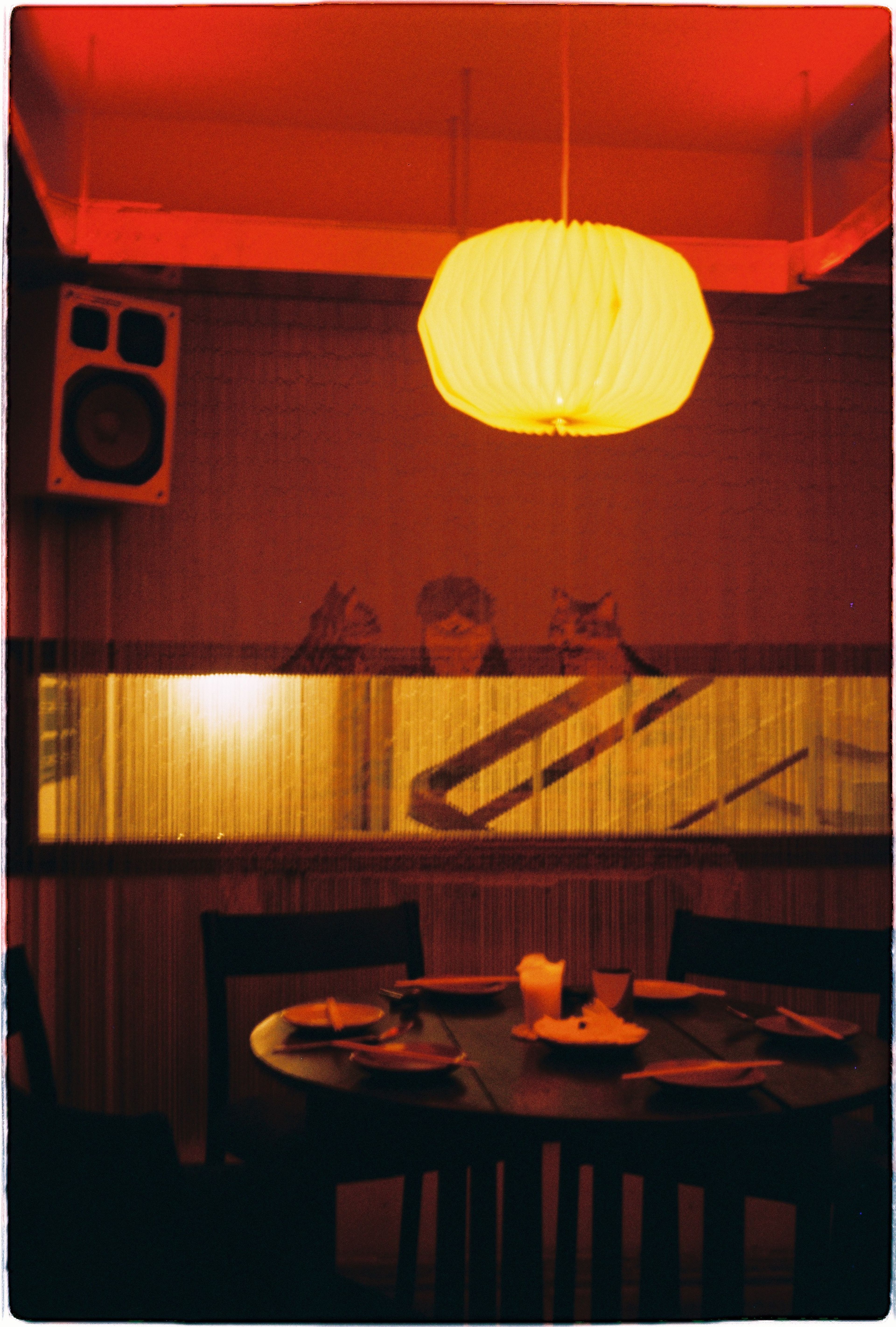
Going forward, Anaïs has many projects besides Yeshi, including Bar Rơm which officially opened this June. The bar is located in a former abandoned hotel in Thao Dien that has since been renovated and rebranded as the 02 COMMONS—a kind of shared space for creative culture. On the way up the stairs to Bar Rơm, you’ll pass by the place’s namesake item—rơm means bale of hay in Vietnamese—followed by beaded curtains hanging in the doorway around the corner, as well as over a half dozen tiny paintings of the co-founders' furry friends along the hallway. The venue is home to an open-air traditional Japanese binchotan grill, allowing guests to see the cooks work right in front of them while a slight charcoal aroma passes through the long, stretched room. Although I didn’t try the local craft spirits when I visited, the wine and cocktails were delicious. That said, if there is one thing that I’m definitely coming back for more of it’s clear: their foie gras with whiskey glaze, brioche, and guava sauce.
The lessons to be parsed from Anaïs’ journey are clear. First, don’t underestimate the power of breaking out of the bubble you grew up in. Explore as far and wide as you can and see where the world takes you. Second, learn how you operate and lean into it. Doing so allows you to follow your obsessions and opens up your mind to other ways of life. Lastly, go, go, go—and then rest, rest, rest. For someone who has opened so many different businesses, Anaïs made it clear that at the end of the day, it’s just work. Not everything needs to be overhyped. Your work is supposed to be fun and bring people together.
At the end of our conversation, Anaïs joked that 2027 is the Year of the Goat, and because goats love to wander at their leisure and eat everything along the way, she might mimic them by taking a step back to chill out. Only time will tell. If I had to venture a guess, no matter how much time Anais takes to rest, I have a hunch that she’ll eventually spot an opportunity to dive right back in. That will spur things into motion and in that moment, as she has done time and time again, she’ll assemble a team who believes in the vision and make things happen.
Follow Anaïs on Instagram
Follow Yeshi on Instagram
Follow Bar Rơm on Instagram