






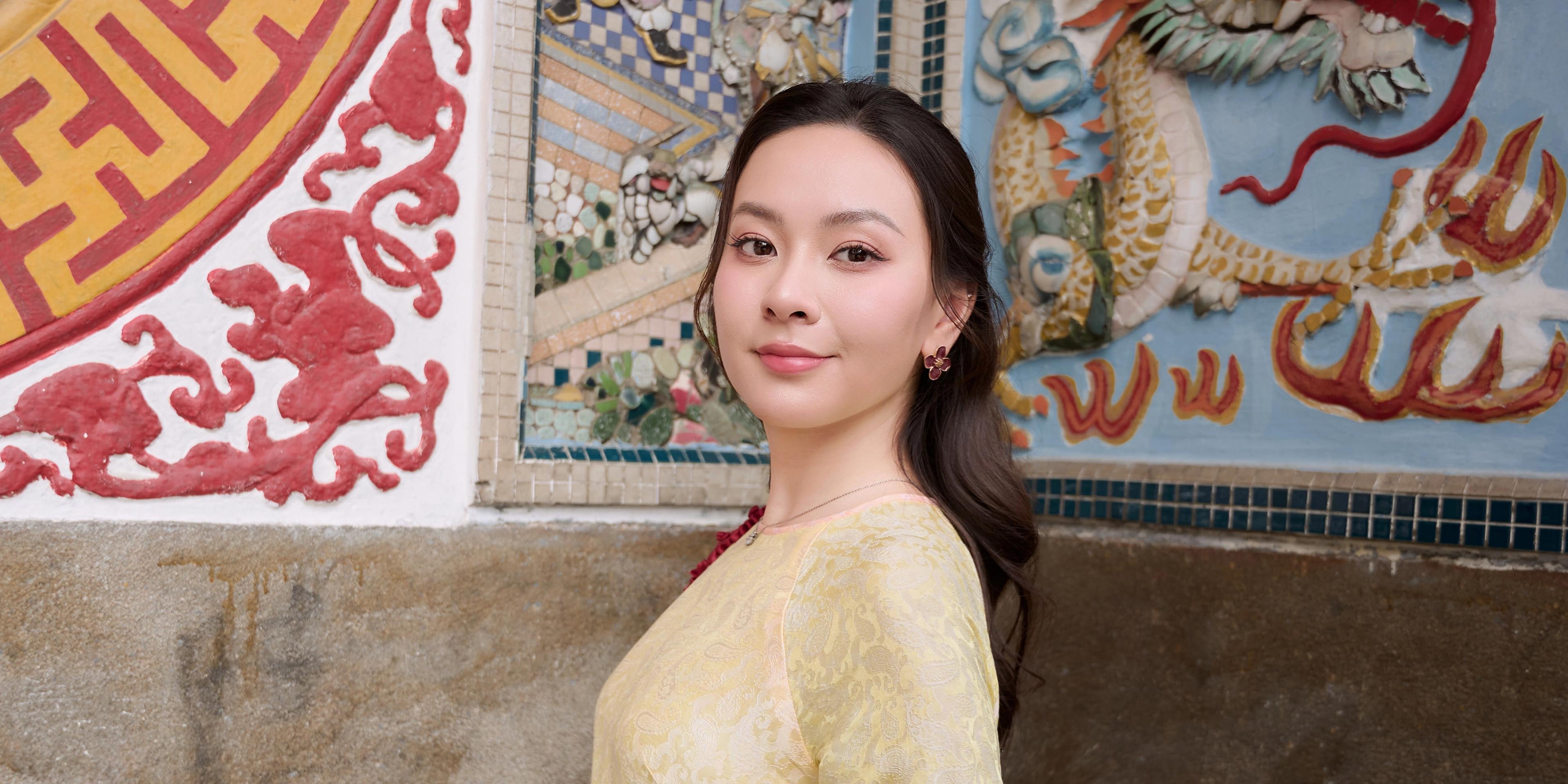
Travel has a distinct way of humbling you. Visiting different cities and countries opens your mind, transforming long held perspectives of the world at large. Meeting new people from different walks of life can show you what you’ve been missing out on this whole time. Travel, therefore, may be one of the greatest teachers there is. This is especially true when you return home. Like many great stories, it’s the journey back that proves to be the most difficult and yet often the most enlightening. For Van, a professional YouTuber behind the channel What The Pho, traveling far and wide was only the beginning. It wasn’t until she finally returned to Vietnam six years ago that she received her greatest and most humbling lesson of all: the true meaning of living a life full of richness.
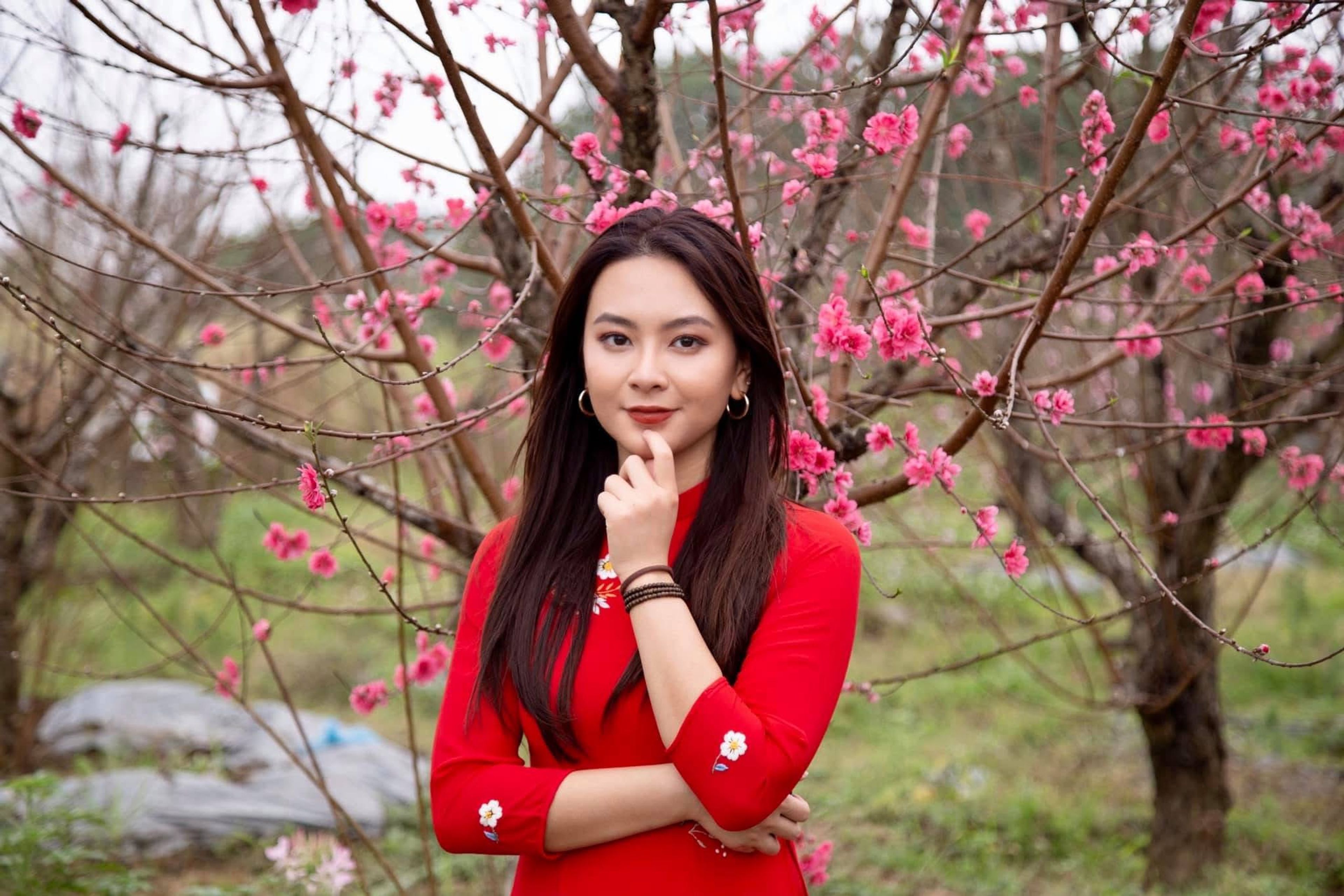
Ever since she was a kid growing up in Hanoi, Van has been steeped in Vietnamese culture. Beyond being born and raised in Vietnam, Van’s father, who has a PhD in Vietnamese History and Culture, had a huge influence in shaping her early understanding and appreciation of her home country. While parents have a huge impact in fashioning their child’s views of their world, it is often those outside the home that leave an even greater impression. Van's high school English teacher from the United States did just that. She described him as a stark contrast from the traditional Vietnamese school teachers she had spent years learning from. He had a different aura—more casual, free-spirited, and open-minded. Although she felt more comfortable being around him in comparison to how she felt with other teachers, there was one problem: she barely could speak to him. Rather than give up, this turned out to be a huge source of motivation to learn English. More so than that, it was that English teacher who first opened her mind to living in the U.S.. However, in order to do so, she would need to earn some sort of scholarship that would finance her dreams of studying overseas. Another obstacle was the fact that her parents did not want her to leave. Yet, despite her parents' worries and wishes for her to stay, Van was stubborn about making her dream come true. So much so that although her family didn’t have money for extra classes, Van took it upon herself to study non-stop. Every day after school Van rode her bicycle for 30 minutes all the way to the U.S. Embassy to utilize the free learning materials available such as English books, CD players, and flashcards. More than just passing tests, she was drawn to hearing people’s stories. She frequently made a point to hang around the famous Hoàn Kiếm Lake as a way to practice speaking English with foreigners, eager to bridge the gap between her world and theirs. Eventually, through sheer hard work and determination, she earned a scholarship to move abroad and finish her last two years of high school in the U.S..
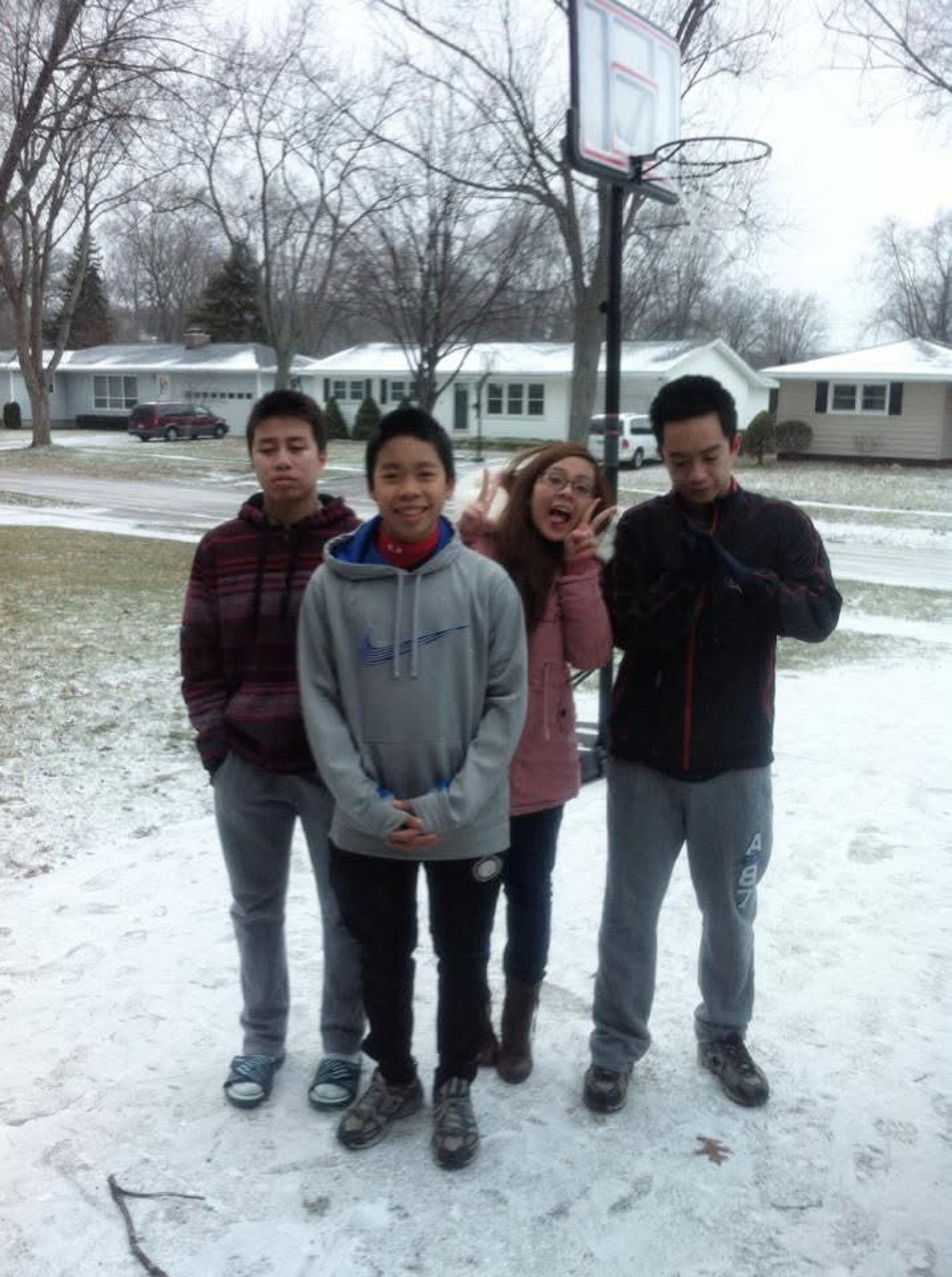
At 17 years old, Van moved to Muskegon, Michigan. One of the last things Van’s father said to her when she left was a statement that was as honest and heartfelt as it was painful. He said, “I know I’m going to lose you.” For many parents, sending their children to study internationally can be considered a status symbol. The opportunity to give your child the chance to open their mind is a moment of great pride. That said, it can also produce a deep fear—fear that their child’s mind may expand in such a way that it stretches beyond its original dimensions. A big reason Van’s parents eventually accepted their daughter’s move wasn’t because of her scholarship, although that was an undeniable factor in terms of financial viability. Instead, it had to do with who she would be living with. Before she left, Van’s mother befriended Van’s future host: a Vietnamese woman named “T”. Despite Van’s parents’ reluctance, knowing that she wouldn’t be entirely shut off from Vietnamese culture eased their worries. As Van noted, “If your dream is big enough, the universe will send help to you.” Pair that with the eight other Vietnamese boys Van would be living with—all of which were there through a baseball program—their fear of her being alone and not looked after soon subsided.
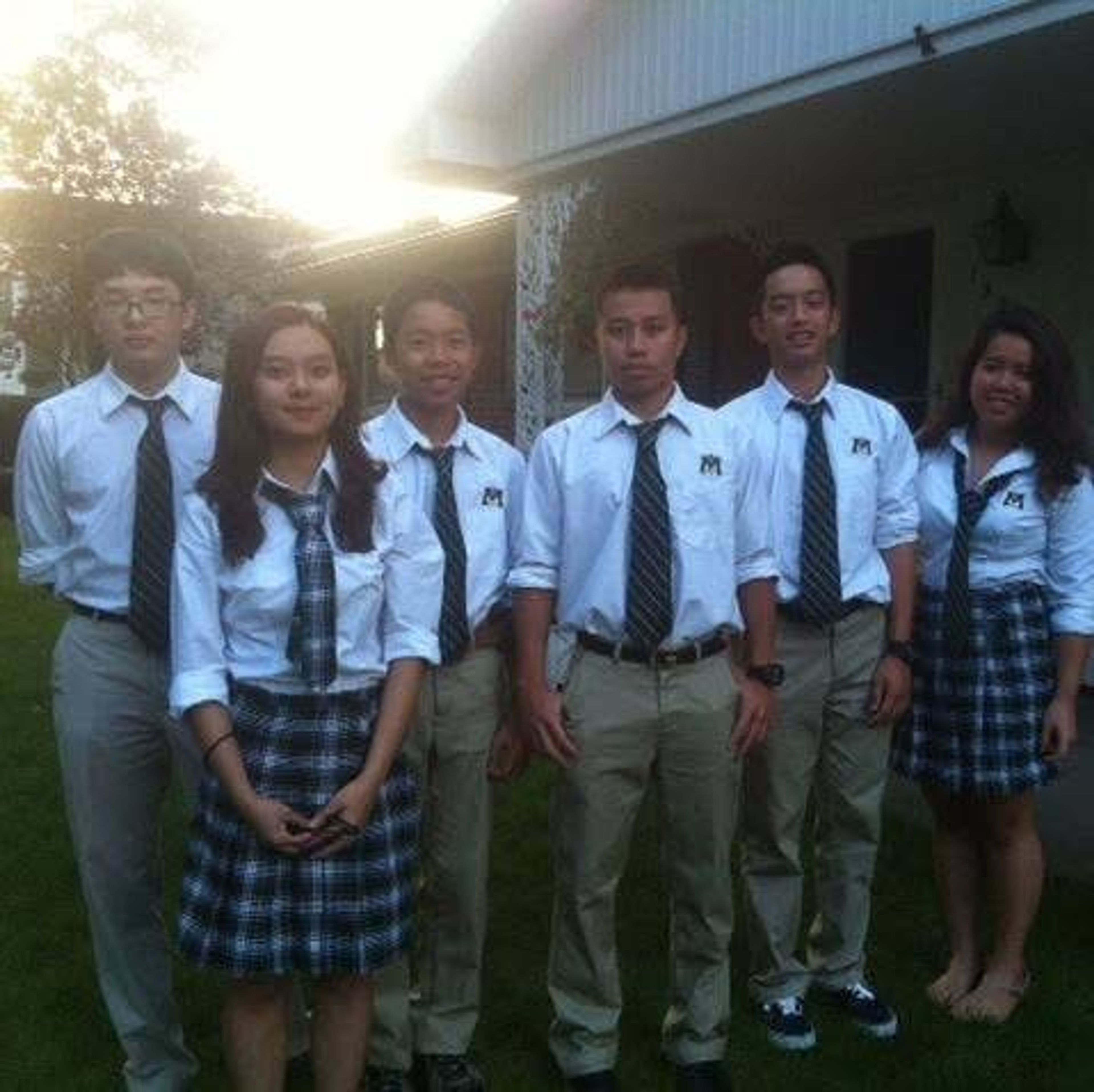
Van’s first impressions of Michigan were overall positive. As a lover of swimming, since she was living near the Great Lakes she thought it was like living near the beach. That is, of course, until the winter season arrived. It’s hard to understand just how cold winter can really feel until you live in a place like the North-central region of the U.S.. While seeing snowflakes gently fall onto her sleeve was a magical experience for Van at first, when the city started reaching below freezing level temperatures, reality settled and she quickly understood she was no longer in Hanoi.
More so than geography and weather, navigating high school in a new country is a daunting experience starting with the language barrier. Although her English was good enough to get her to the U.S., communicating with native speakers at full speed was exhausting, leaving Van to rely heavily on Google Translate just to keep up. This barrier was especially frustrating when she needed to defend herself in difficult situations. Case in point: every morning, her host family faced the circus of rounding up eight teenage boys, cramming them into a minivan, and trying to get to school on time. When the morning commute inevitably ran late, Van’s limited English made it hard to explain the chaos to her strict Math teacher. The result? Frequent detentions and eating lunch alone during her first semester. Ironically, that daily lunchtime loneliness served as a quiet oasis, giving her a break from the pressure of speaking English all day. Thankfully, by the second semester, her morning schedule shifted. She started the day with her literature teacher who was far more understanding of her chaotic commute—and someone who first created a space where Van could express herself through writing rather than speaking. The detentions stopped thereafter, and Van was finally able to use lunch to make new friends. As she began opening up and sitting with her classmates, conversation naturally turned to what was on their plates—a topic that would spark some of her very first cultural exchanges.
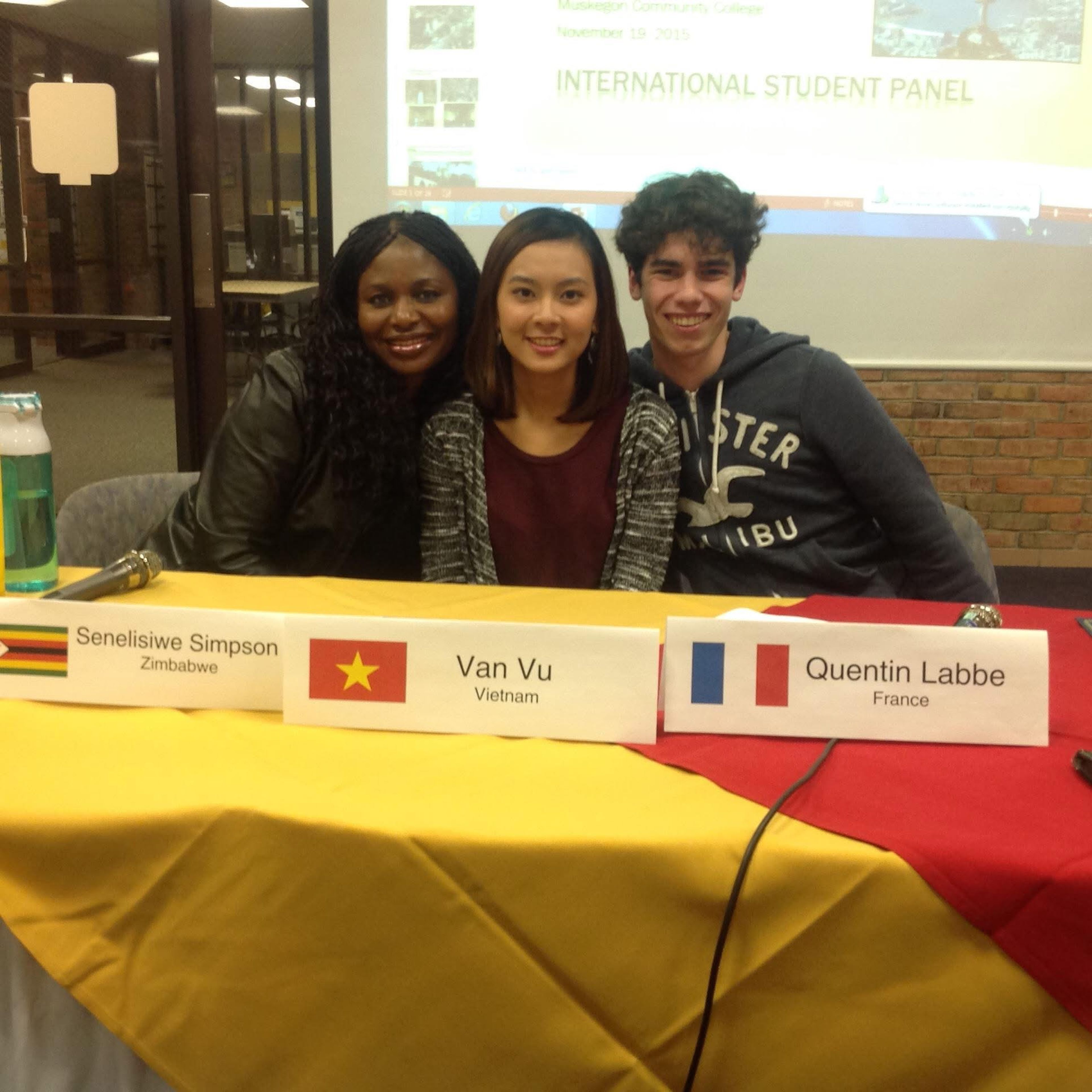
Living in Michigan, it’s not exactly as easy as living in Hanoi or anywhere in Vietnam for that matter to simply walk outside of your home and get a bowl of phở. For anyone that is from Vietnam, visited, or has moved here from another country, it is one of the great pleasures there is being here: on every single street corner there is delicious Vietnamese cuisine to be enjoyed no matter the hour. In Michigan that is not exactly the case. Even if Van was craving a home-cooked Vietnamese meal, she said she’d have to drive 45 minutes to a market that sold the necessary Vietnamese spices. That said, she often willingly made that trek and cooked at home more times than not. This provided an acute sense of comfort given that she still wasn’t used to eating hamburgers, squared pizza slices, and cheese-stuffed breadsticks at school. As such, Van often brought her home-cooked Vietnamese meals with her for lunch. Instead of judging her for eating lunches that looked different from the rest—especially considering she was one of only two female Asian students at her school—her friends were curious.
For many teenagers, bringing a lunch that looks or smells different from everyone else's can trigger a wave of anxiety. As much as high schoolers want to stand out, they also desperately want to fit in. Van admitted there were times her lunch included fish sauce, and she’d deliberately choose not to microwave it. This choice was not made out of shame, but out of courtesy, so the pungent aroma wouldn't waft through the cafeteria. Even if it meant eating her meals cold sometimes, Van never hid what she ate. For her, it’s always been of the utmost importance to keep her connection to Vietnam alive, and one of the most powerful ways to demonstrate her love for her home was through food. The point here is if you’re proud of where you’re from and are not afraid to show it, you will have a better chance of inviting curiosity from people who want to learn more.
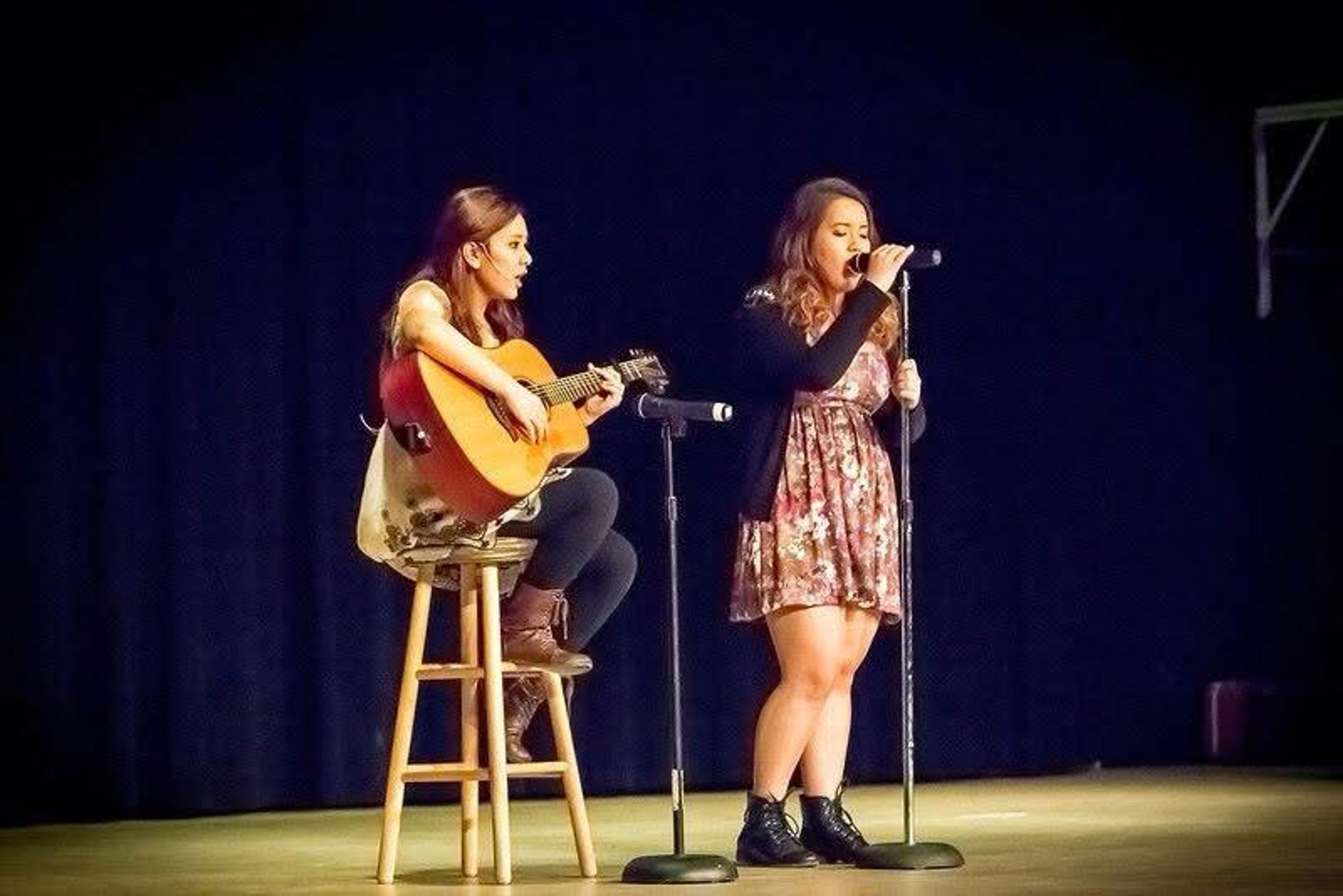
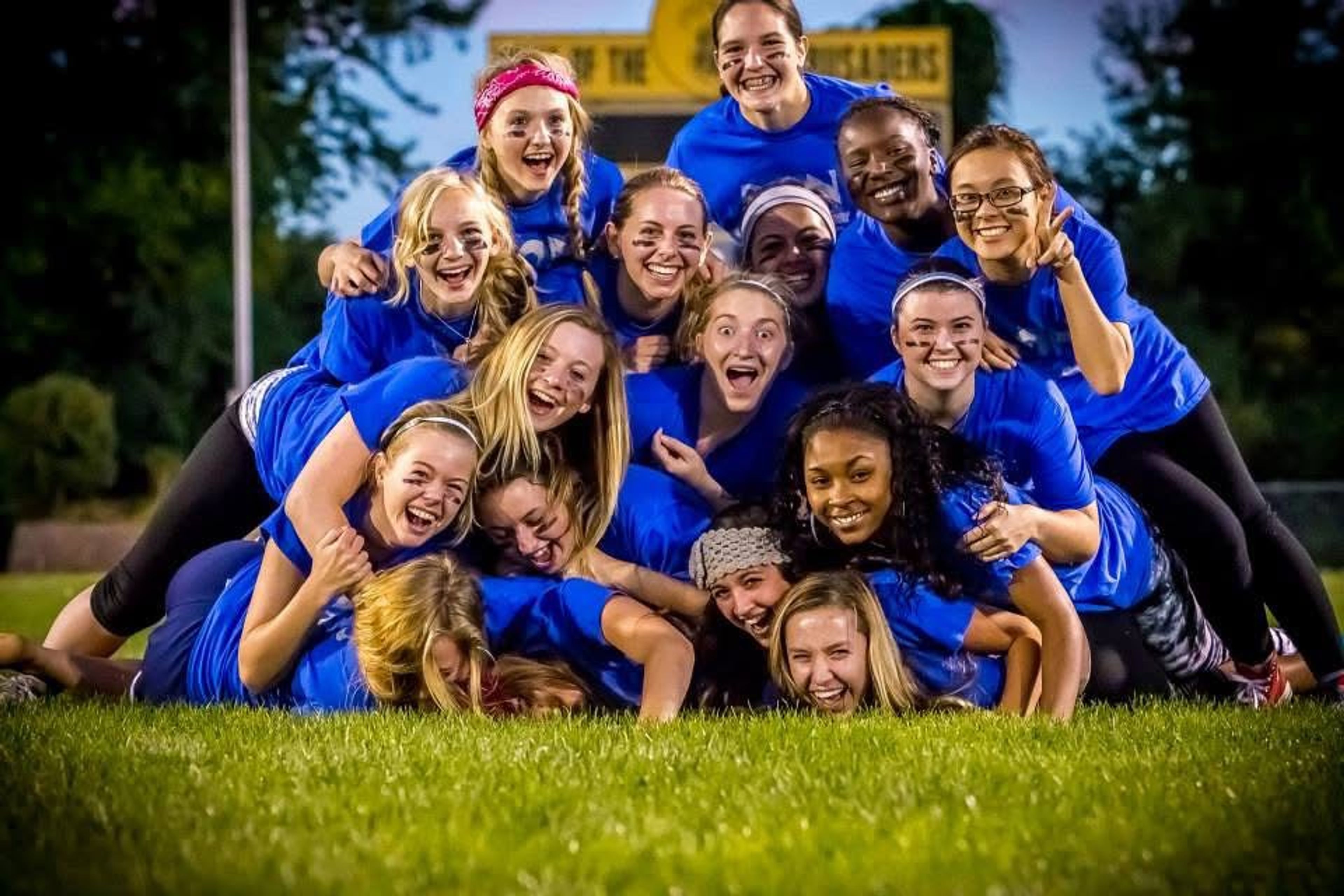
All in all, Van felt that she adapted to living abroad quite well. She experienced many milestone moments such as going to football games, playing softball, participating in talent shows, sitting through random fire evacuation drills, surviving harsh Michigan winters, as well as finding herself frozen in disbelief when she was called over the school’s intercom to go to her locker one day. As she described the scene, surrounded by a sea of students filming her with their smartphones, Van found her locker covered in sticky notes and the high school quarterback standing next to it with a teddy bear making his proposal to attend Junior Prom together. Van joked saying she still believes it was the school counselor who encouraged him to ask her out.


Throughout high school, Van traveled back and forth between the U.S. and Vietnam during summer breaks. While going back home to Hanoi was always something to look forward to, it also meant dealing with an unexpected adjustment: relearning how to handle personal space. Spending most of her time in the U.S., Van had grown accustomed to the Western emphasis on an individual’s personal space. Returning to Vietnam every summer meant stepping right back into a close-knit household where personal space is almost non-existent. As Van explained, in Vietnamese culture, family closeness often shows up as constant togetherness and more fluid boundaries, where elders openly comment on your weight, lifestyle choices, or your future plans regarding work and relationships without hesitation. Navigating this back-and-forth dynamic between independence and togetherness during those summer visits was tricky at times, but it helped Van develop a deep sense of empathy and adaptability wherever she went.
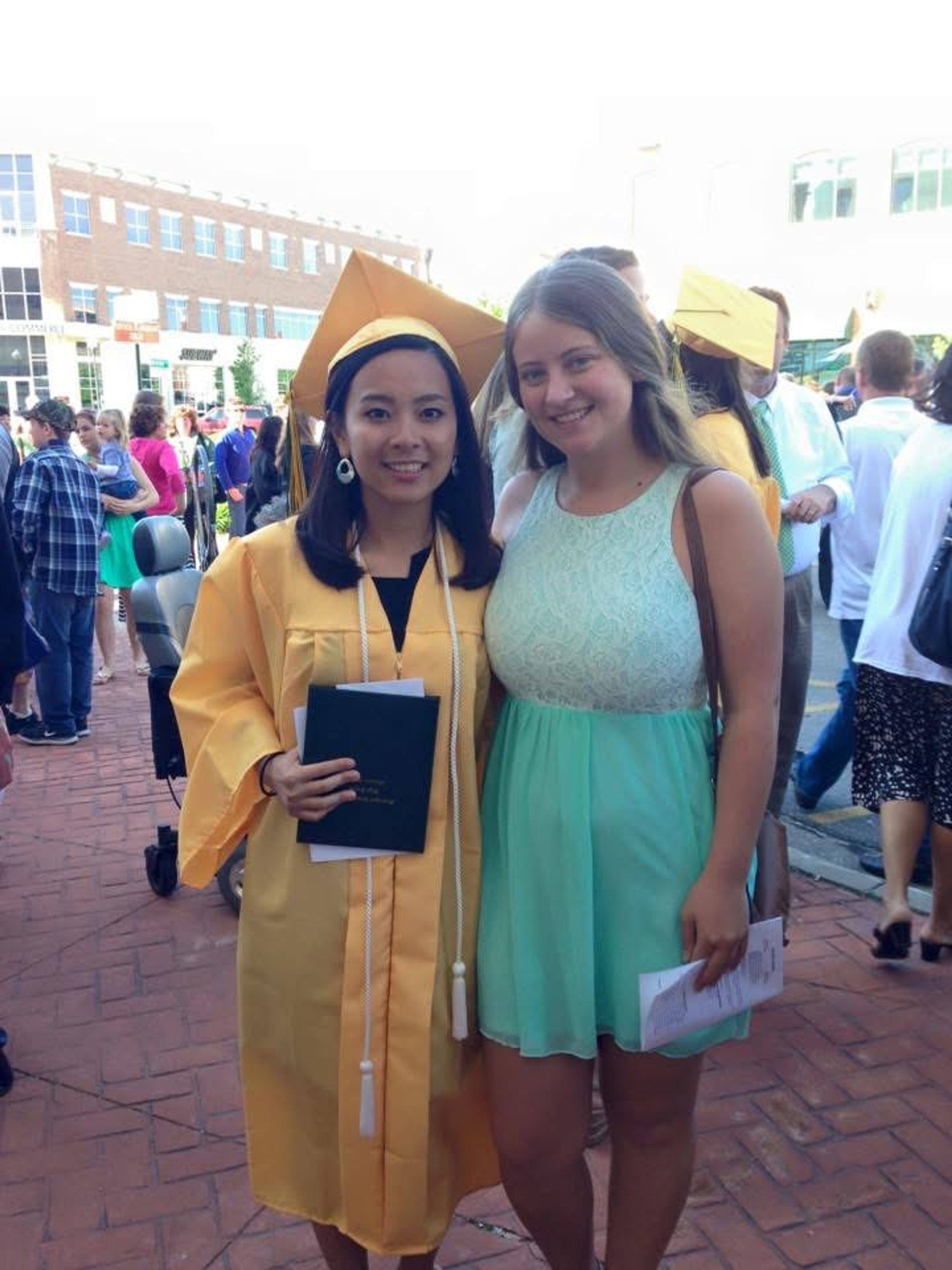
Although Van’s returns to Vietnam kept her connection to the country strong while she lived abroad, during senior year in the US, she started thinking about her plans for college. In similar fashion to how she was able to study abroad in the first place, Van spent many hours in her free time to secure financial aid for the next step of her education. This time she was awarded multiple scholarships all of which substantially lowered tuition fees. That said, even with aid, the tuition for university in the U.S. is significantly more expensive than in most countries. Although Van couldn’t attend her dream school, University of Michigan, she first studied at Muskegon Community College before transferring to Grand Valley State University where she would eventually receive her degree.
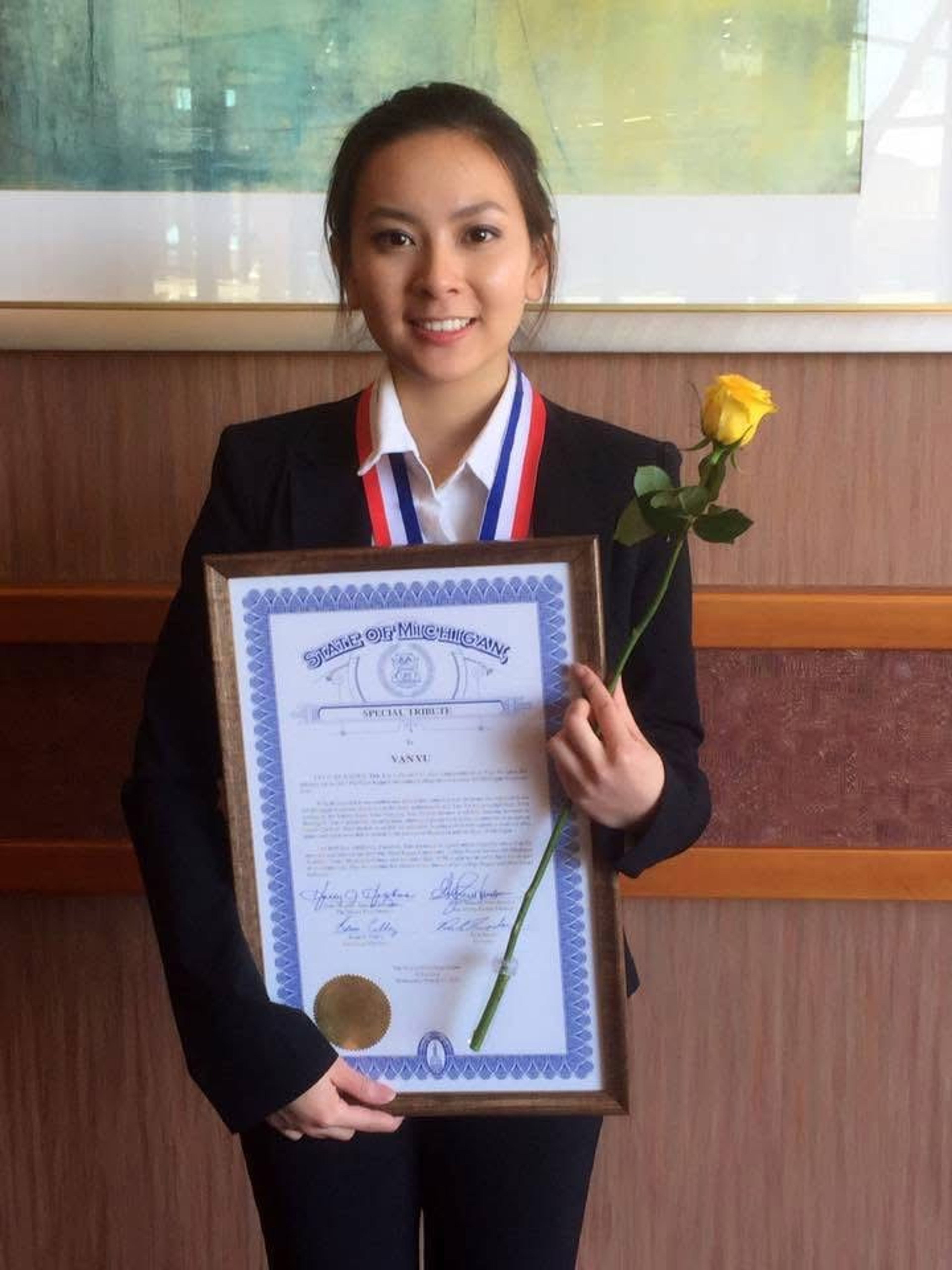
Her initial major was Accounting, a practical choice that led to her first job helping clients file their taxes. It didn’t take long for her to realize she hated the daily grind of tax preparation. She pivoted to studying Finance at Grand Valley State, yet the idea of becoming a financial advisor inside the corporate financial landscape felt distant and detached from who she was. Van was fortunate, however, to find a mentor in one of her finance professors—a woman originally from Saigon who understood the silent pressures of studying in a second language and recognized Van's diligent work ethic. Beyond merely teaching finance, she made Van feel more comfortable attending classes. Still, Van knew she wasn’t destined to pursue finance long term. Longing for a path that honored her innate love for stories, human connection, and creative expression, she added a double major in Marketing.
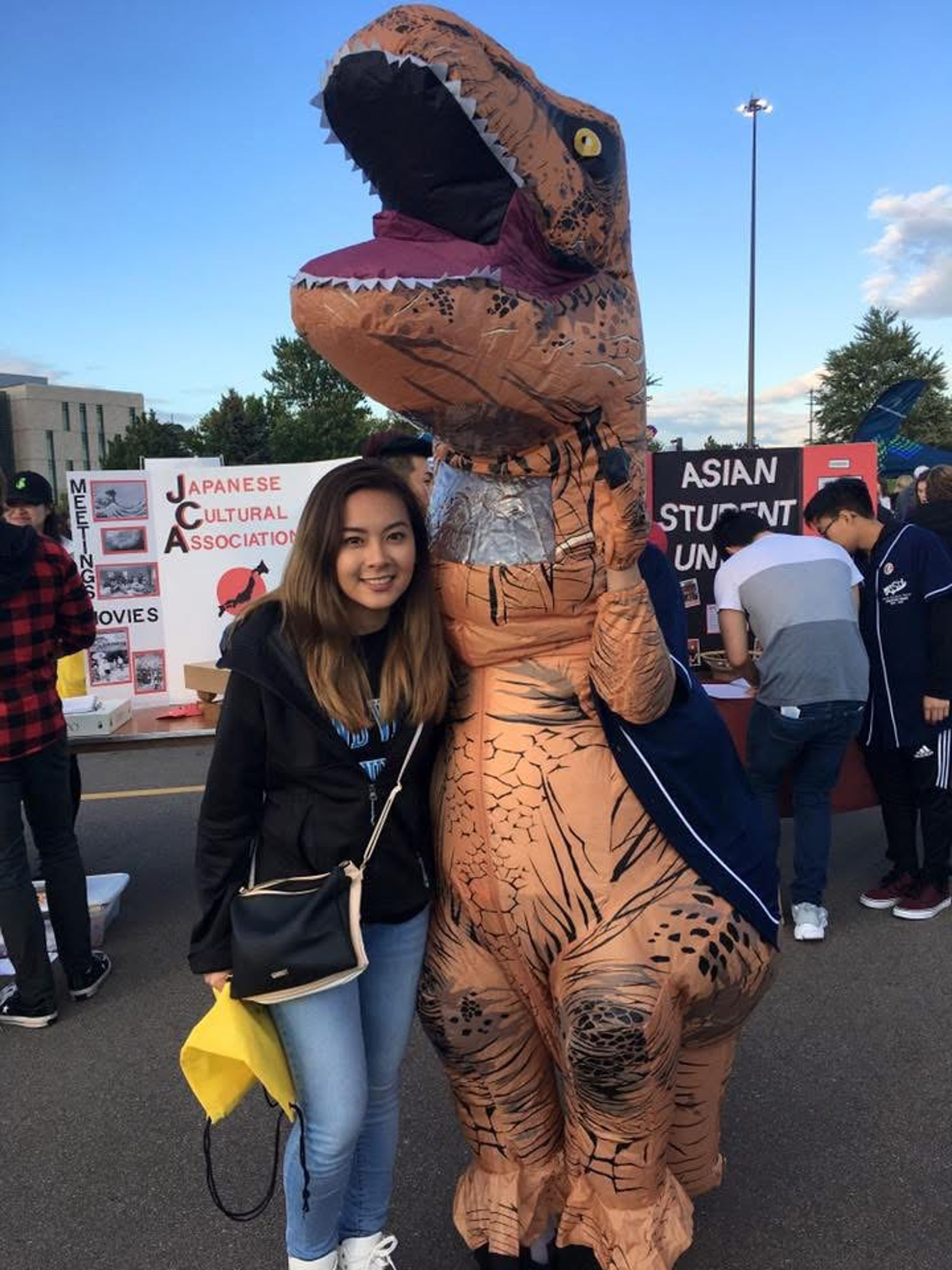
Beyond the classroom, Van’s most profound college transformation was internal: finding her voice in a second language. In her early years in the U.S., her strong Vietnamese accent had been a constant source of anxiety. She had even failed an initial visa interview to attend university, and painful memories of the inevitable handful of high school peers teasing her about her accent still lingered. To cope, Van poured herself into Literature classes even more than before, fostering a deep love for written storytelling which would have a huge impact once she eventually picked up her first camera. Her breakthrough came when she moved in with two American roommates during her second year of university. Through daily immersion and genuine friendship, her spoken English flourished to the point where strangers began asking if she was a native speaker. More importantly, Van arrived at a quiet epiphany: an accent is not something to be ashamed of. An accent is a mark of origin to wear with pride, a quiet badge of honor that tells the world where you’ve come from and who you are.
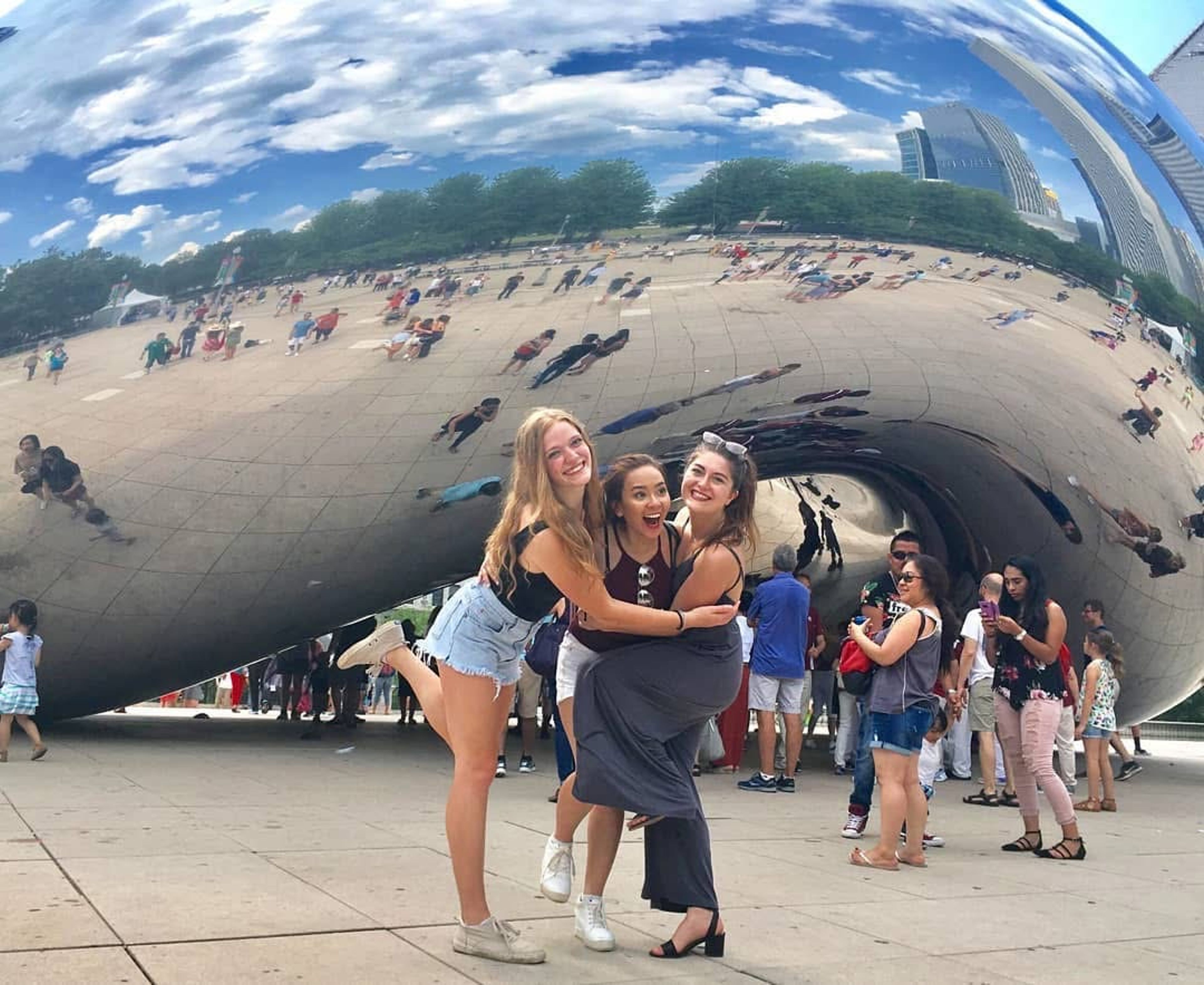
Van finished university in 2019 and stuck around to work for a year until Covid eventually made its way around the U.S.. She was working at a floral shop as the marketing manager but as the pandemic worsened, waves of layoffs started to break. In those moments, Van started to internalize the idea that she too could be replaced at any time which led her to begin cultivating the mindset and future vision of one day becoming her own boss as a way to gain autonomy and freedom. Fortunately, Van was one of the few who kept her job during the pandemic, leaving her to become a one-woman marketing department. Work therefore became increasingly demanding, not to mention, her insurance coverage at the time was limited, and even though she was living in a safe area near the university, Asian hate violence during the pandemic was sprouting up at an alarming rate. After waking up one morning to discover a robbery and shooting took place at a bank in Grand Rapids close to where she was living, Van felt that it was time for her to head back home where she felt safer as well as confident there would be more opportunities for her there.
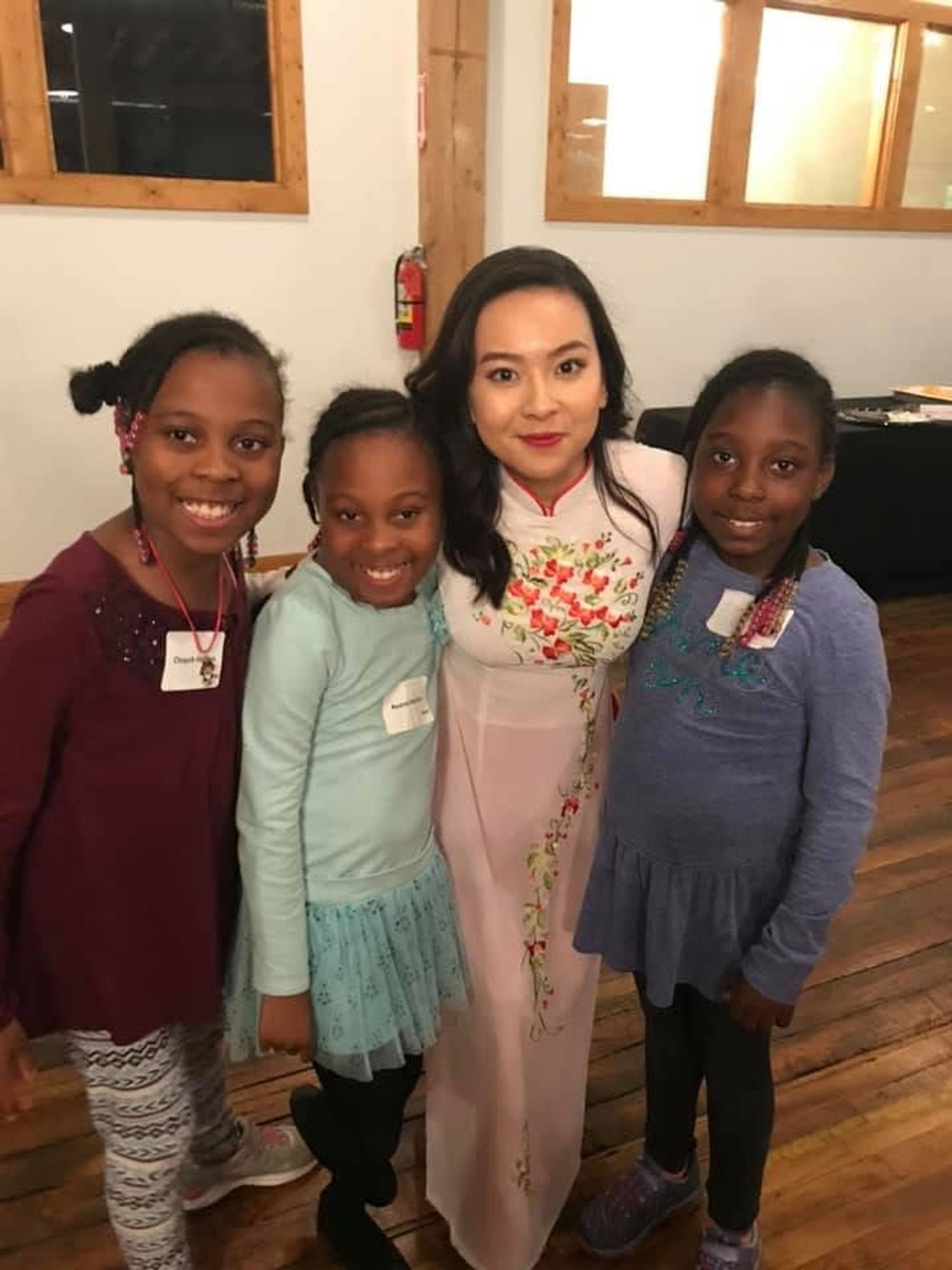
With all flights to Vietnam being banned, Van ended up stuck in the U.S. on a waiting list for another six months before finally returning in September 2020. In an unexpected manner, this is the moment that Van’s journey as a YouTuber began. Quarantined for two weeks at a military camp on the outskirts of Hanoi, Van remembers making the most of her time there. Exercising when allowed, making friends over scheduled meals, and documenting her journey—a decision that would unexpectedly alter her entire career path.
When Van returned to Vietnam, she felt like she was more American than Vietnamese. She was seeing her home country through a fresh lens and felt that sharing her experience would be interesting for other people to see. In addition, when Van’s friends in the U.S. heard she was traveling back to Vietnam during the pandemic and staying at a military camp due to quarantine protocol, they were worried for her. Put simply, she wanted to show her friends back in the U.S. that Vietnam was actually pretty safe and she was being treated well at the camp. She noted of all of the moments she captured on her iPhone 8 back then, the one that stood out the most was when the camp’s staff put on a music performance to say goodbye at the end of their visit.
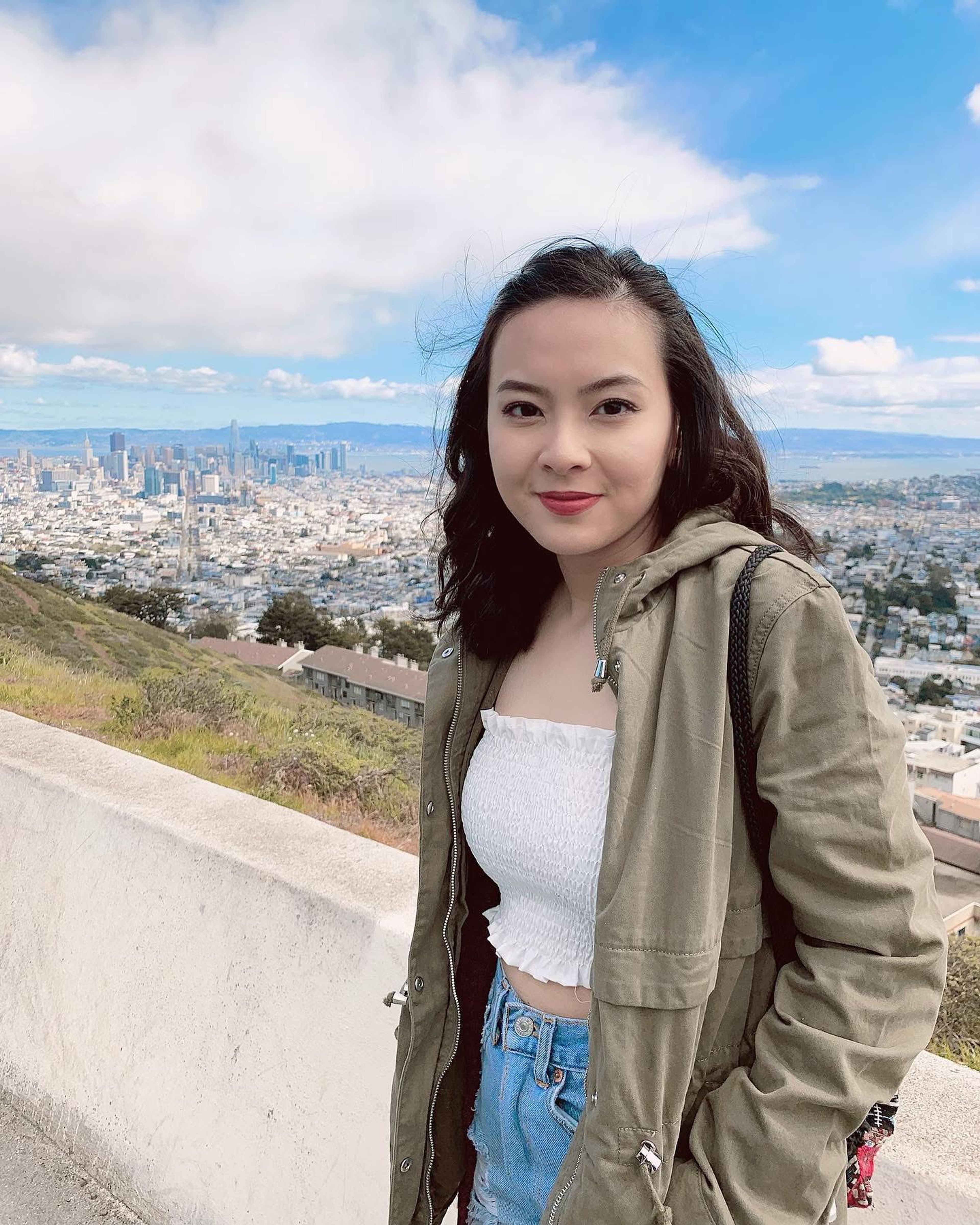
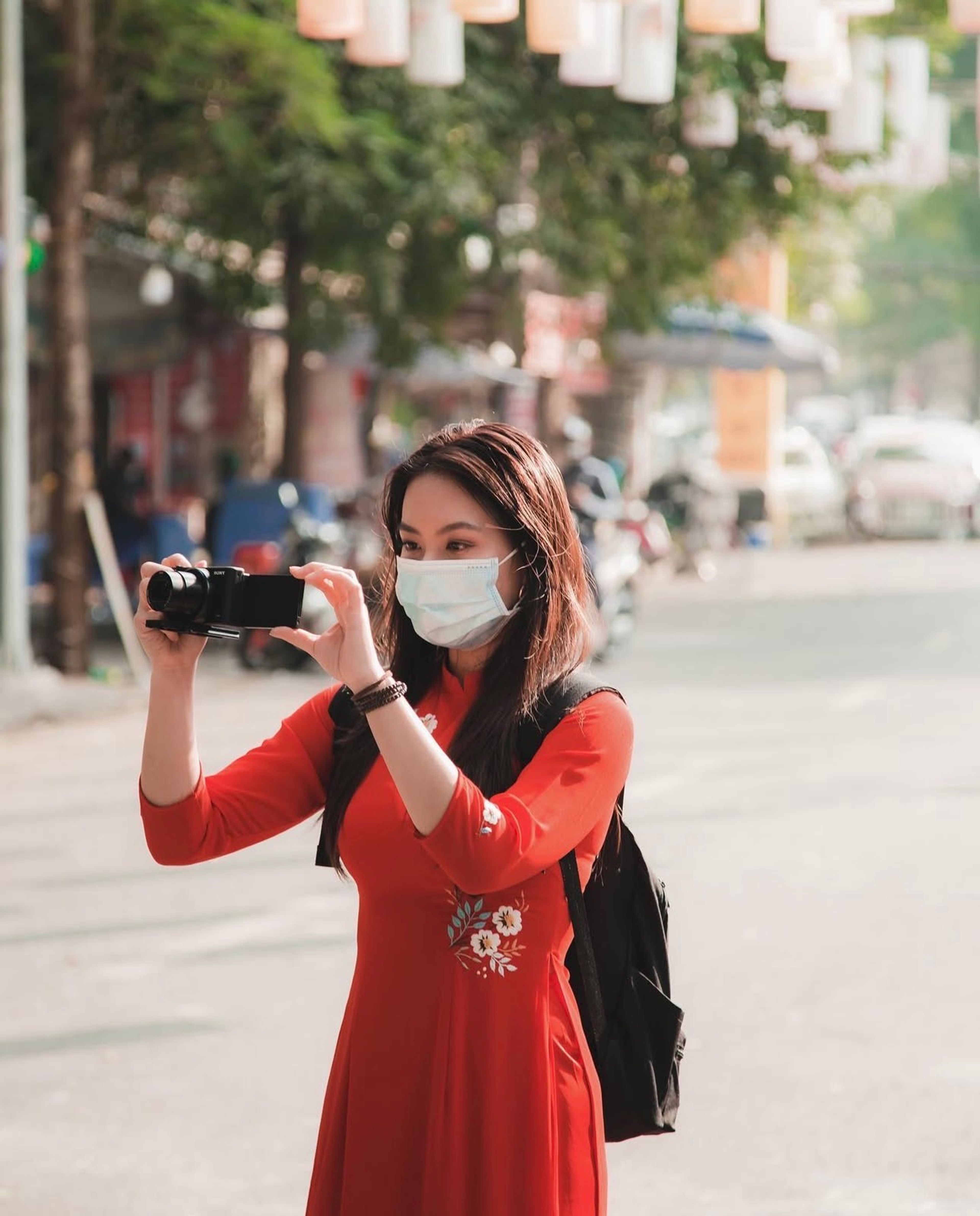
Coming back to live in Vietnam after seven years in the U.S. brought that same dynamic of personal space right back to the surface. Having fully absorbed a stronger sense of individualism, re-entering a more communal culture meant learning to navigate blurred personal boundaries all over again. Yet, returning as an adult, Van chose to view this lack of personal space with a different perspective. Instead of feeling stifled, she began to see it for what it truly was: genuine warmth, openness, and craving for human connection. After being released from quarantine, Van hit the ground running on making more videos. However, she didn't go straight back to a routine in Hanoi. Instead, she booked a ticket down south and spent three months in Saigon. Exploring the city on her own was a revelation. After working so hard for many years both as a student and employee in a foreign country, she finally felt free. Deciding to make the most of it, she spent the majority of her days wandering local alleyways, testing street food, and filming her observations. That three-month stint in Saigon proved to be the incubator for What The Pho, giving her the confidence to realize that her unique perspective as a returning Vietnamese was something people around the world genuinely wanted to see. When she returned to Hanoi, Van took up an MC Role for VTV4 as a way to provide a stable income for herself while she pursued YouTube. She spent most of her time managing content marketing for companies and producing videos for brands. Since that initial role in media, Van has been doing YouTube full-time since she began six years ago. Van’s mom was actually the one who bought Van her first camera, a Sony ZV1—the same one she still uses now!
At first, her content focused on lighthearted cultural explanations and reactions to different foods. But as the novelty wore off, Van felt a pull toward something deeper. The seven years she spent in America gave her a rare dual perspective: she could view Vietnam with the fresh curiosity of an outsider while understanding it with the deep, unspoken intimacy of a native. It was at this turning point that her father’s influence came full circle. As a full-time creator searching for more substance in her videos, those childhood lessons about history and culture became her secret weapon. She began digging into the stories behind regional recipes, forgotten local traditions, and the humanity behind everyday street stalls. Her father also offered crucial guidance on navigating public discourse, advising her to keep her platform rooted in cultural appreciation, positivity, and human connection.
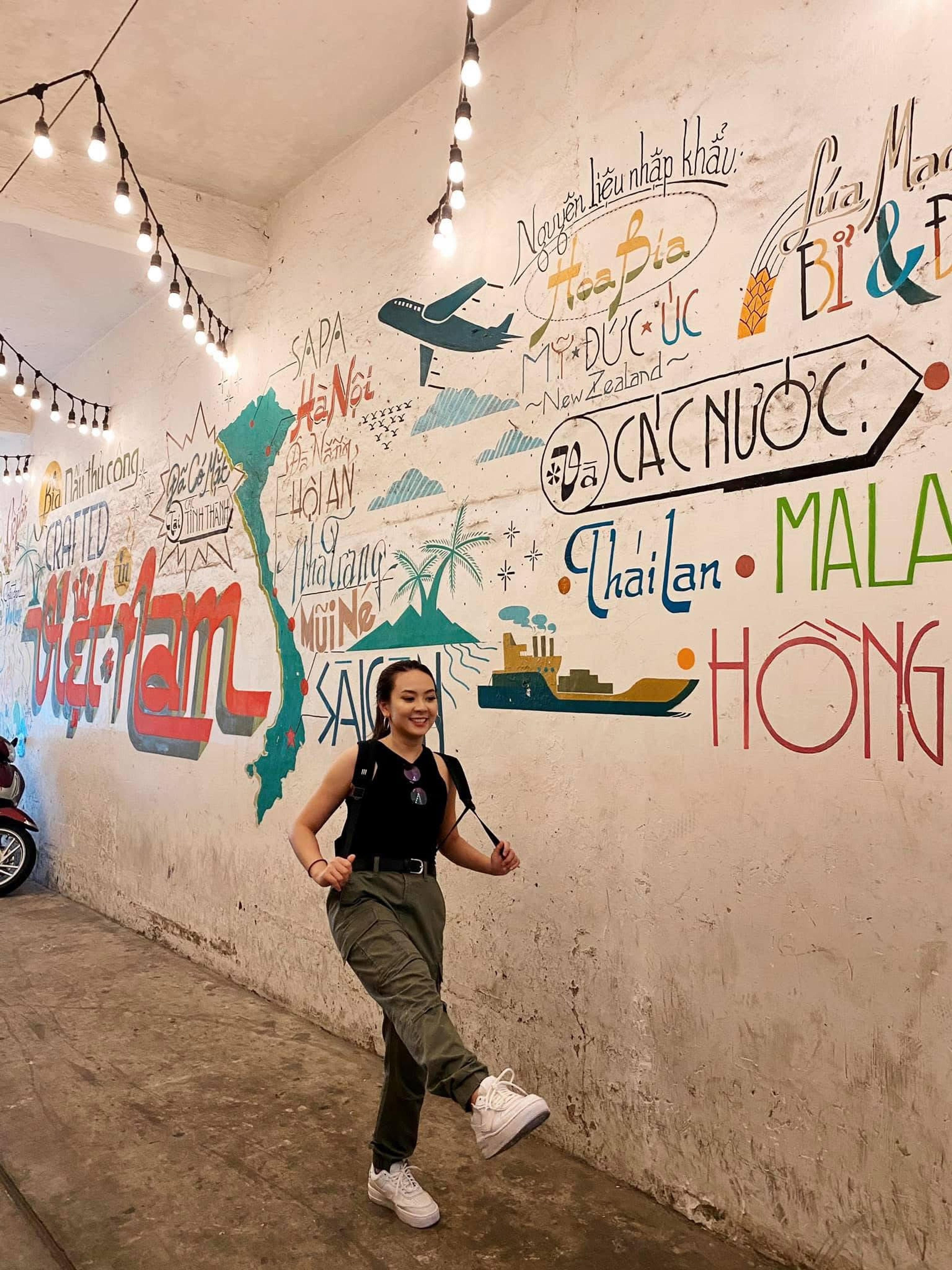
Seeking a new canvas different from where she grew up, Van eventually made the official move to Saigon. If Hanoi was defined by tradition and the quiet pressures of "saving face", and corporate America was glamorized by achieving status through relentless hustling, Saigon offered a completely different philosophy and way of life. In fact, it was on the bustling sidewalks of Saigon—interviewing street food vendors—that Van experienced the humbling realization that has since changed her life. She met various aunties and uncles who ran street side stalls selling bowls of sticky rice and cups of iced tea. On the surface, one may think nothing more than what they see. However, the more Van stuck around to share conversation, common themes emerged. Many of the people she spoke with often worked for a few hours every morning, owned their homes outright, and spent their afternoons drinking iced tea or beer while chatting with neighbors, friends, and loved ones. They weren’t trying to show off through status symbols like high-end clothes and luxury cars, nor did they have grandiose aspirations about climbing corporate ladders. Instead, they possessed something more special: total ownership of their time, a warm community to surround themselves with, and a deep peace of mind. In other words, a life full of richness.
"Vietnam humbles you a lot," Van reflected. Speaking to people every day who live in a simple manner taught her the value of being rich. “They get to choose what they love to do and bring value to people,” Van added. “When I moved back to Vietnam, I learned that real richness is health, time, happiness, freedom, energy, and the opportunities to do what you want.” Fueled by the depiction of these experiences and lessons, What The Pho exploded in popularity.
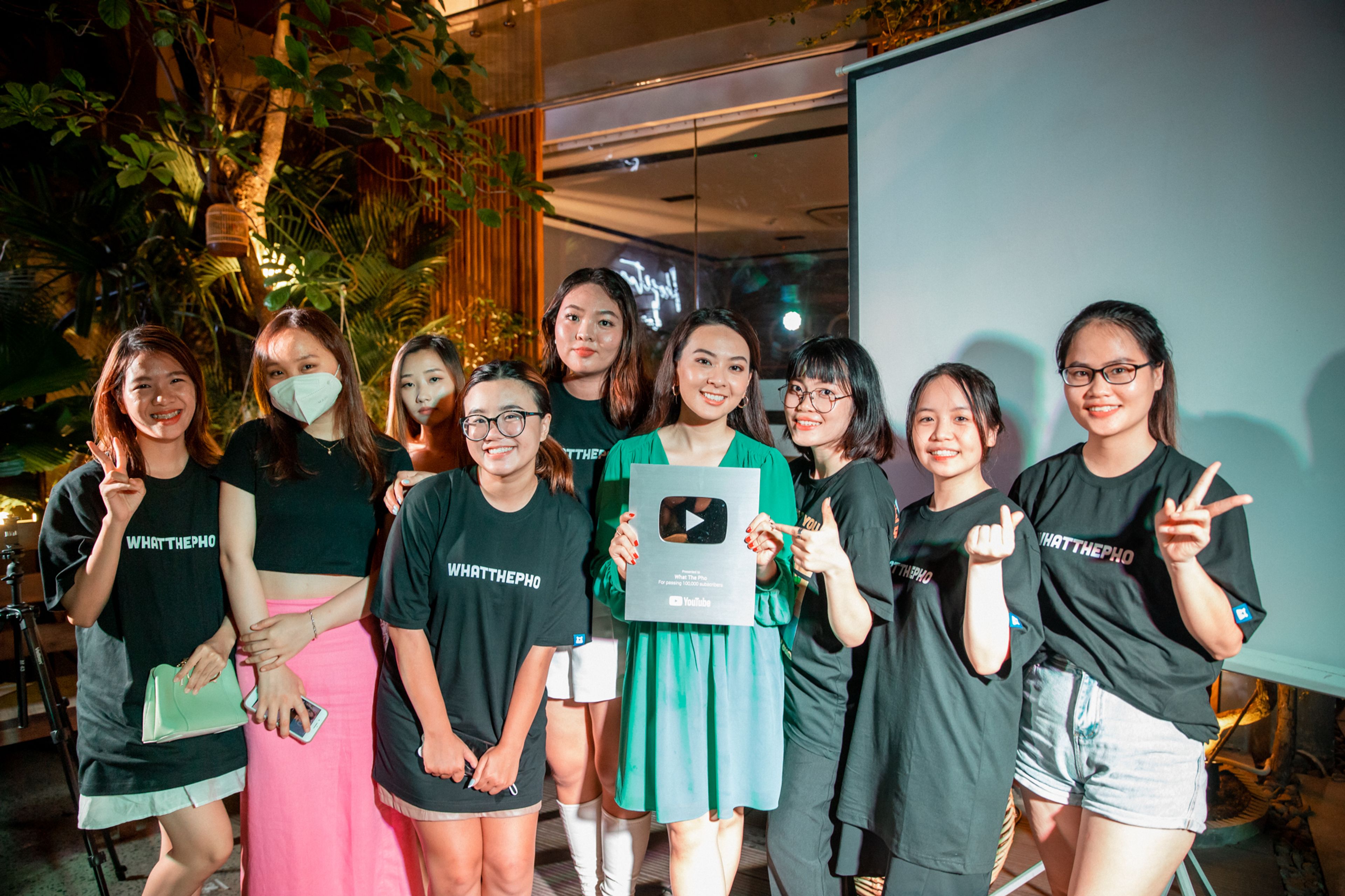
When Van first started she was a one-woman show. Writing, shooting, editing—every aspect was under her control. However, her team quickly grew within the first year to include an editor, photographer, and videographer—all of whom stayed with Van for almost two years. After that, at full capacity, her team had six people total which lasted about half a year around 2023. The problem with scaling her team was in the belief that it would result in a higher return in quality and output. Instead, what happened was a loss of authenticity. Delegation of tasks led to a detachment with What The Pho’s subscribers.
For example, one of the aspects of her channel Van loves the most is scriptwriting. The ability to express yourself through writing while having the visual imagery of Vietnam’s beautiful landscapes and delectable cuisine is a true joy for her. However, when her team was growing her energy became diverted—storytelling was sacrificed in favour of managing staff. As a result, outsourcing the scriptwriting to other members of the team led to more impersonal, detached, and almost too polished pieces of content in her opinion. Feedback became clearer everyday: subscribers followed Van because of her personal and authentic storytelling rather than tuning in to follow a high-budget TV-style production. With this in mind, Van made the executive decision to scale her team back down, eventually all the way back to just herself. As it stands today, Van handles the entirety of What The Pho, retaining full creative control from crafting the script to sharing the final video with her audience.
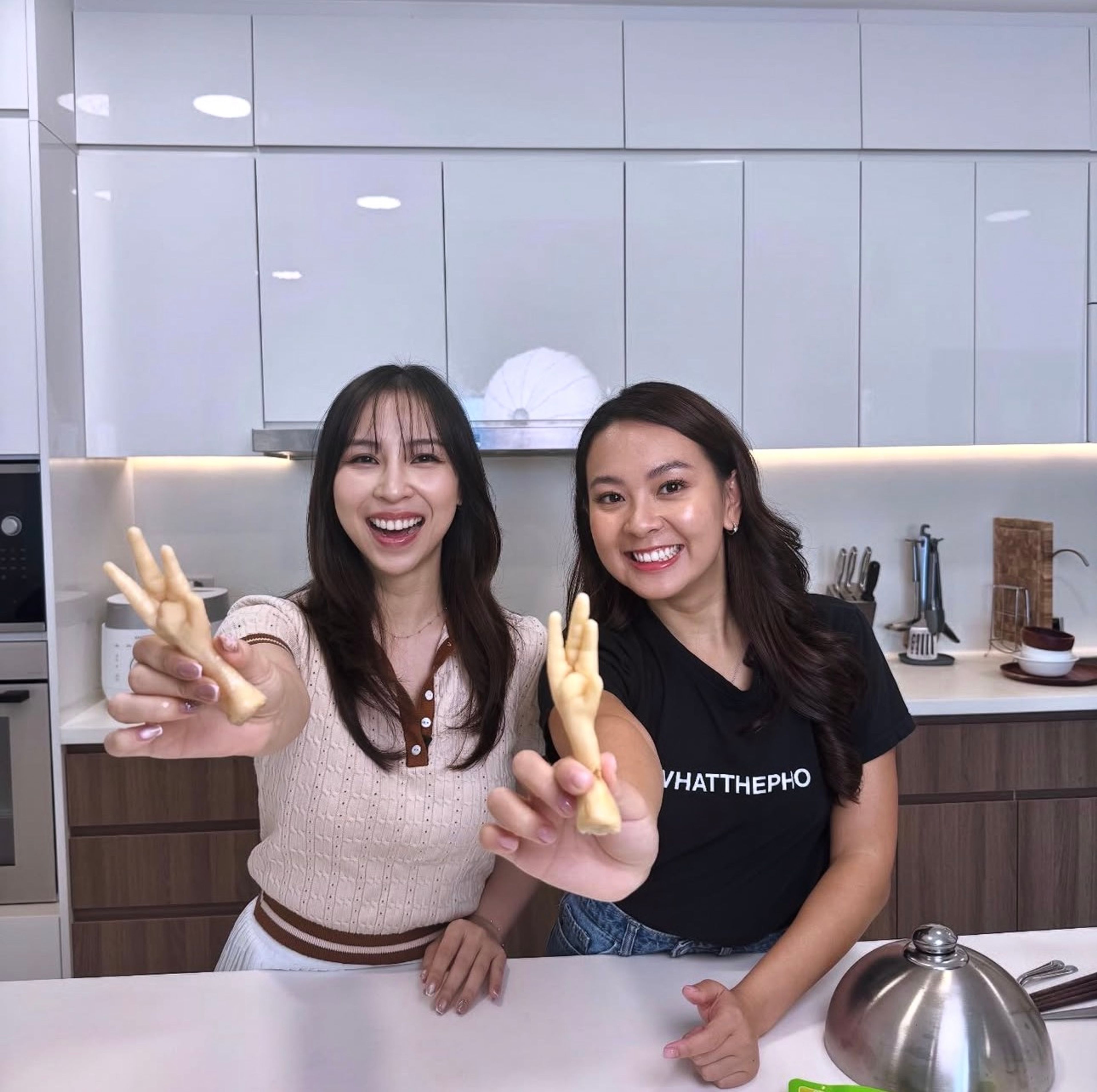
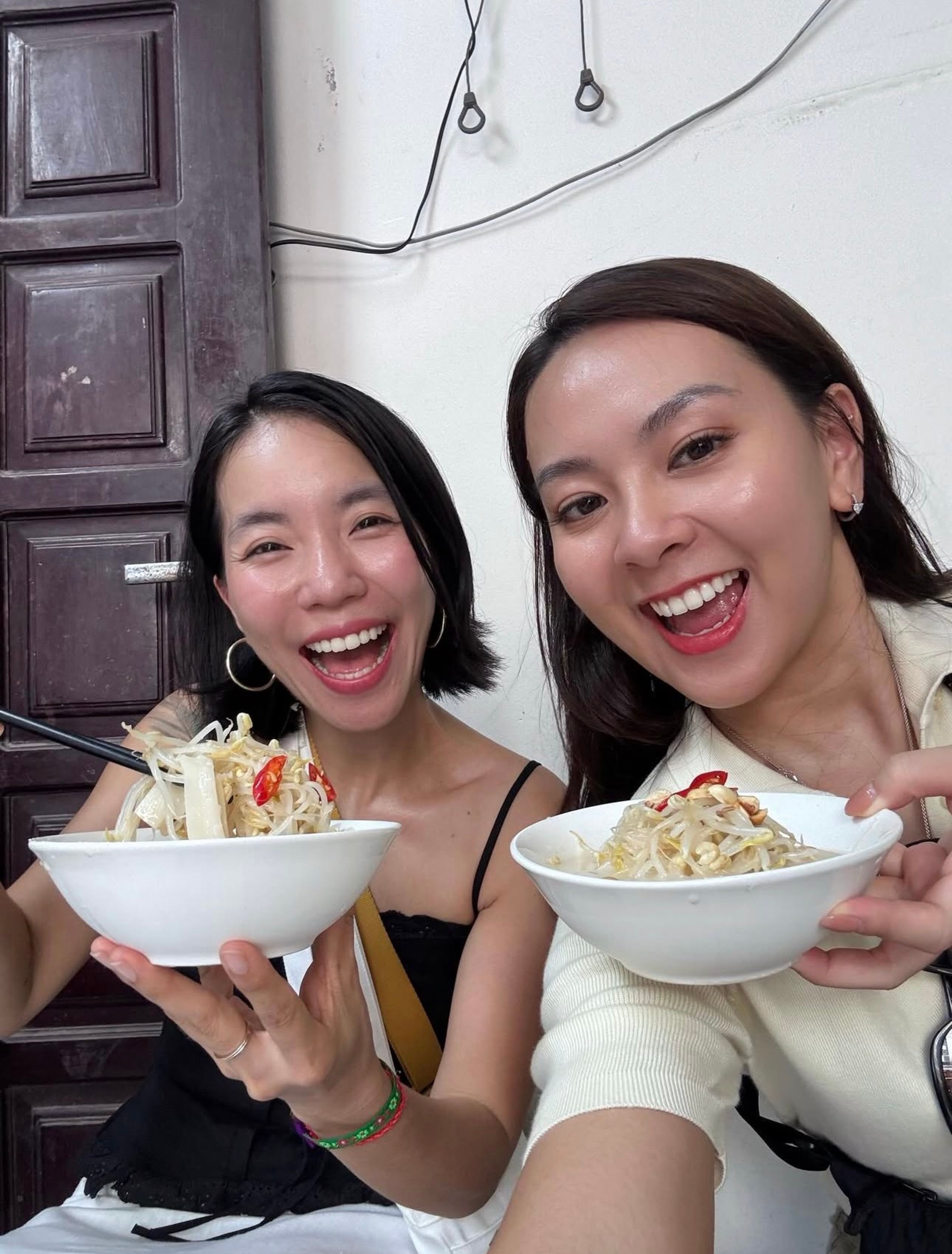
Currently, Van boasts a thriving YouTube channel with over a quarter million followers and nearly two hundred videos alongside memorable collaborations with creators like Tina Yong and Lylla (Curious about Vietnam). But pursuing a full-time career on YouTube wasn't something Van's parents immediately understood. “What are you doing? What’s YouTube? What kind of job are you going to get?” they would ask. Like many parents who have worked hard to give their children a top-tier education, they wanted her to take a traditional, stable path that her finance and marketing degrees could provide. YouTube felt unpredictable and risky. Van understood their worries, so she gave herself a goal to make the channel financially profitable within six months to prove it was a real career. Reaching the requirements to monetize her channel, she started earning an income from her videos. Wanting to reassure her parents, Van even transferred some of her YouTube earnings directly to them as proof that her hard work was paying off. The turning point eventually came when Van invited her father along on a sponsored trip to a resort. Seeing his daughter conduct herself as a professional, managing her work while being treated with respect by brand partners, her father's perspective completely shifted. From then on, he and Van’s mother became more supportive and curious about her work, even helping out by filming videos and continuing to ask her jokingly, “So how does YouTube work?”
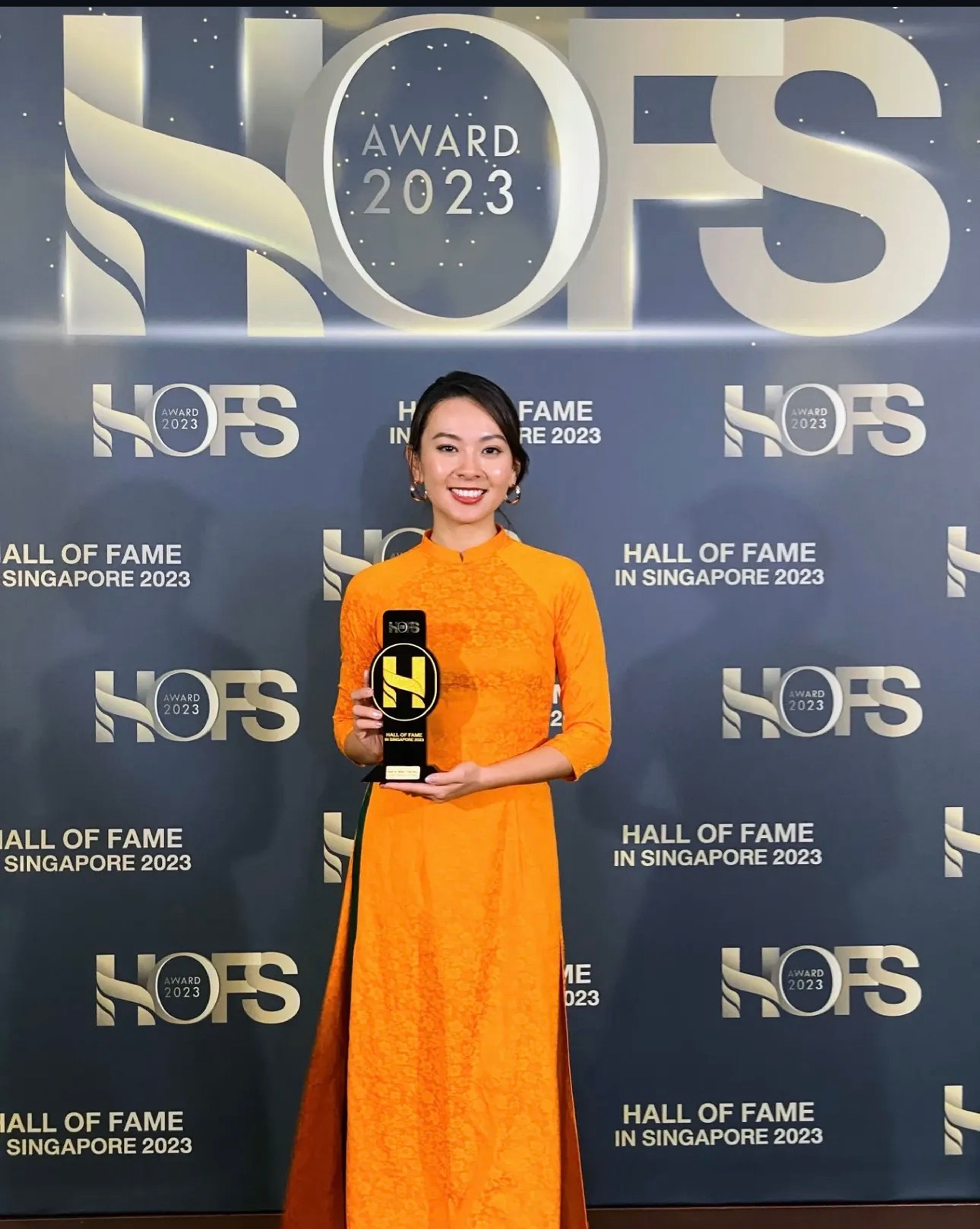
As for the name What The Pho, the original idea comes from Van’s American aunt, Dawn. Van said Dawn has left a huge impression on her. She was the one who taught Van how to drive a car in the U.S.. She was the one who taught Van various American jokes, and influenced her with her deep sense of sarcasm. And when she visited Vietnam with her husband and met up with Van and her parents, they all went for a bowl of phở. Taking one bite, the phrase was coined then and there, “What the phở?” Van heard it, noted it down, and has used that as the name of her channel ever since the beginning. The play on words works on two levels. First, it uses the world's most famous Vietnamese dish as an inviting hook—a familiar starting point to draw viewers in, only to reveal how much richer and diverse Vietnamese cuisine is beyond just phở. For Van, it’s a unique, accessible way to represent Vietnam and share its full culture with the rest of the world. Secondly, it is a way to pay homage to Van’s sarcastic American aunt Dawn who passed away last year but whose memories of the lives she touched are forever held deep in Van’s heart.
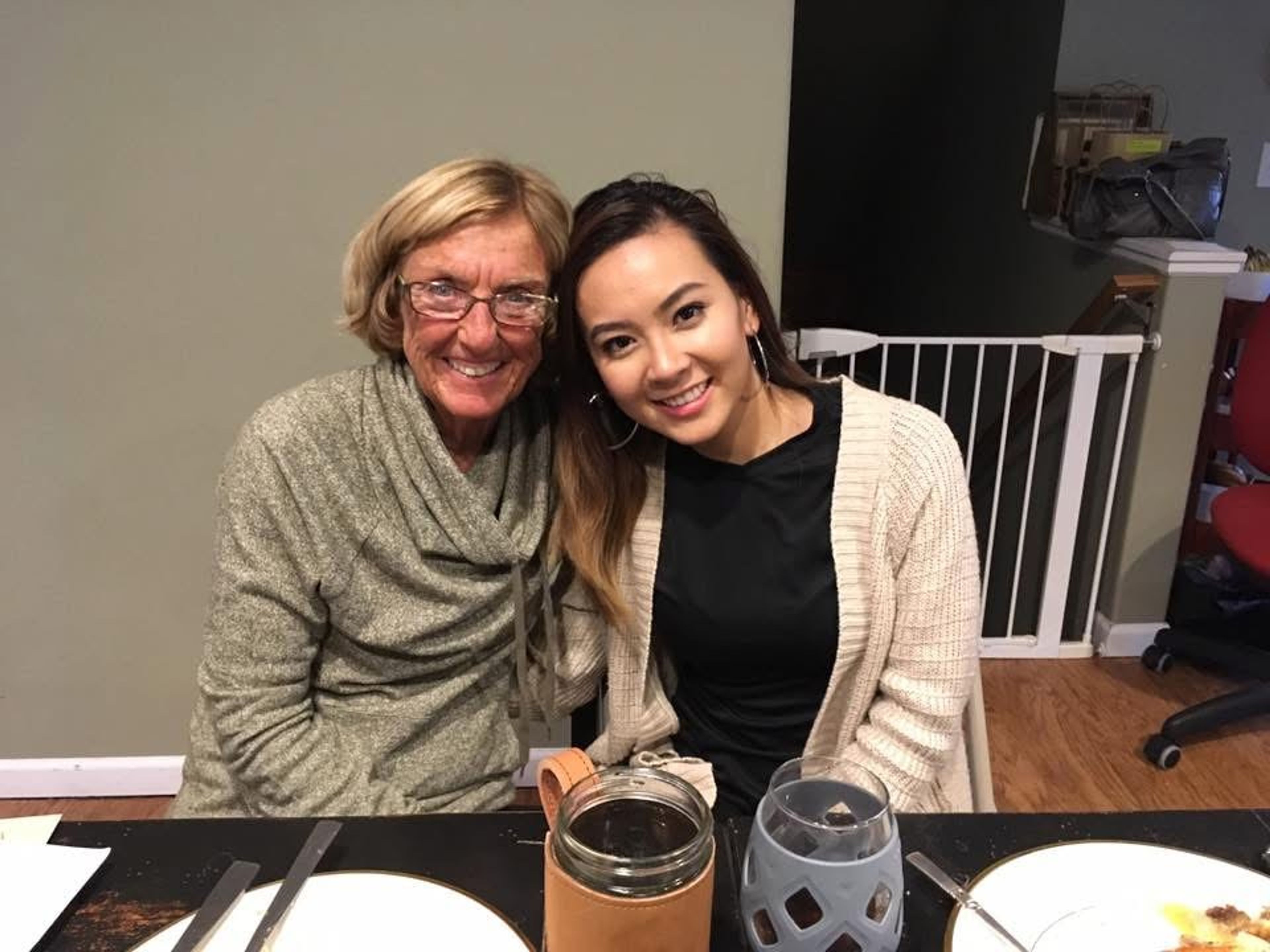
Van has no shortage of ideas for the next stages of What The Pho. Most recently, she did a series exploring Vietnam’s rich coffee heritage, bridging traditional local roasting with lesser-known third-wave cafes around cities like Đà Lạt, Hanoi, and Saigon that treat coffee as an artisanal craft rather than a simple commodity. As she pointed out, coffee in Vietnam is massive, but it’s not only the bold flavors that make visiting a coffee shop memorable. The Vietnamese coffee world is welcoming younger entrepreneurs who studied abroad and are returning to blend traditional cafe culture with modern specialty brewing. As she reminded me during our interview at HÔM in District 2: “There’s a richness of culture in Vietnam. You’re rich right now. You get to sit at this very beautiful coffee shop and have the time to do what you love.” Van’s words made me grateful in that moment, as I couldn’t have agreed more. As for projects that extend beyond her YouTube channel she just laughed, assuring me she’s keeping them secret for now and hopes to surprise people in the future when the time is right.
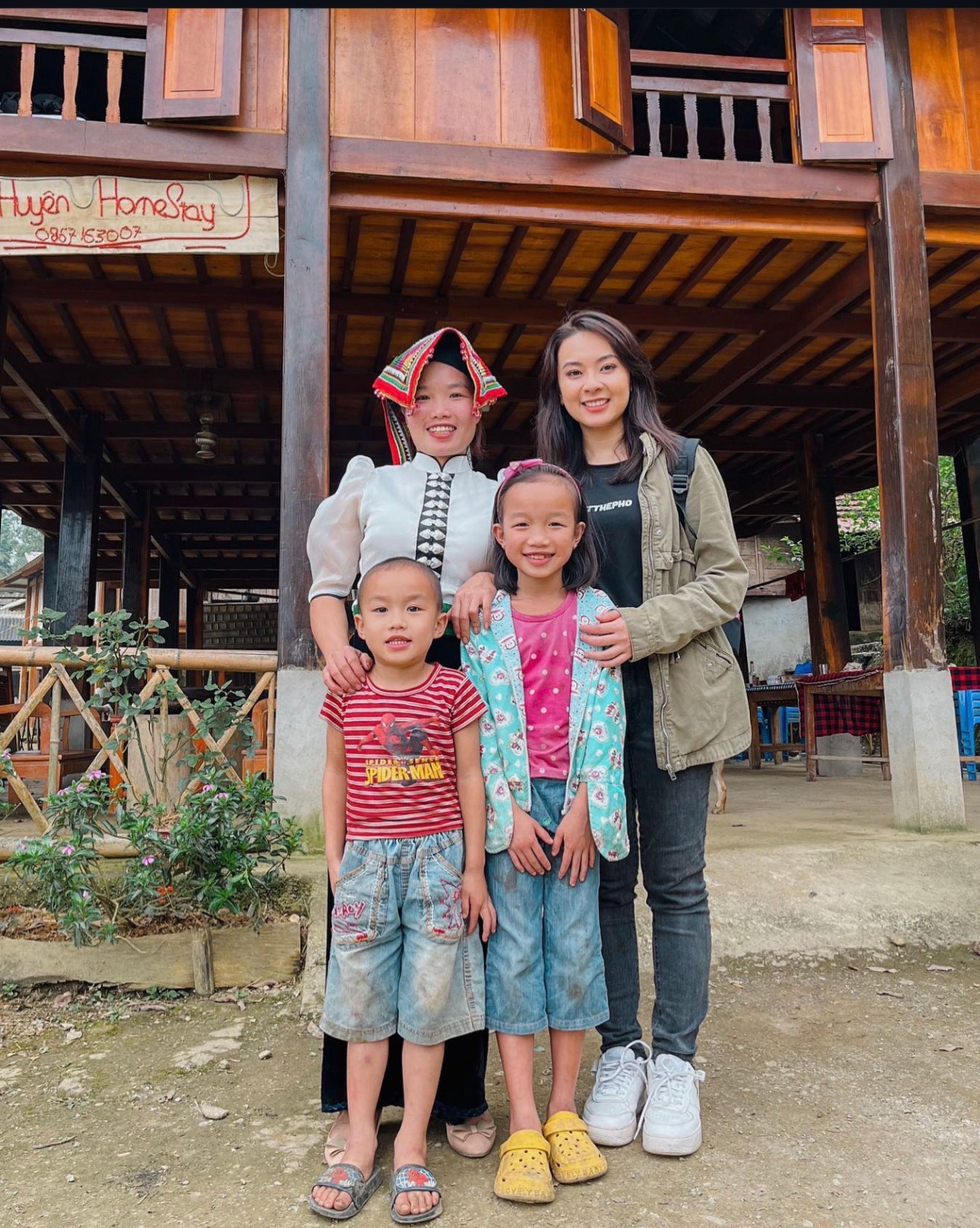
Van’s story shows time and time again how profoundly travel can humble you. Not only does it open your mind, transforming your perspectives on different people and places, it also shows you sometimes the greatest lessons are unfolding in plain sight. On nearly every single street corner in Vietnam there are human stories waiting to be heard. People demonstrating, quietly and humbly, what a rich mindset looks like in practice. Through her journey thus far, Van has learned that people are never defined by corporate status, material objects, or bank balances. Rather, time, community, and the freedom to do what you want are the true riches in life. Reflecting on her path, Van offered a traditional Vietnamese phrase that she had learned along her journey: "Đi xa để trở về" which means to travel far away just to find your reason to return home. "I never regretted the decision to move back to Vietnam," Van says. "Even though many people said I should do certain things, I listened to my intuition. Vietnam is like my mother, who allows me to fail with affordable costs, lifts me up gently, and teaches me to be humble and grateful for what I have." Rest assured Van will continue to uncover more stories in Saigon, Hanoi, and all around Vietnam, but if there is anything to take away from her work and her story it’s this: you don’t need to chase someone else’s definition of success to live a rich life. Slow down, connect with those around you, and appreciate the richness life has to offer right in front of you.
Follow Van on Instagram
Follow What The Pho on YouTube