






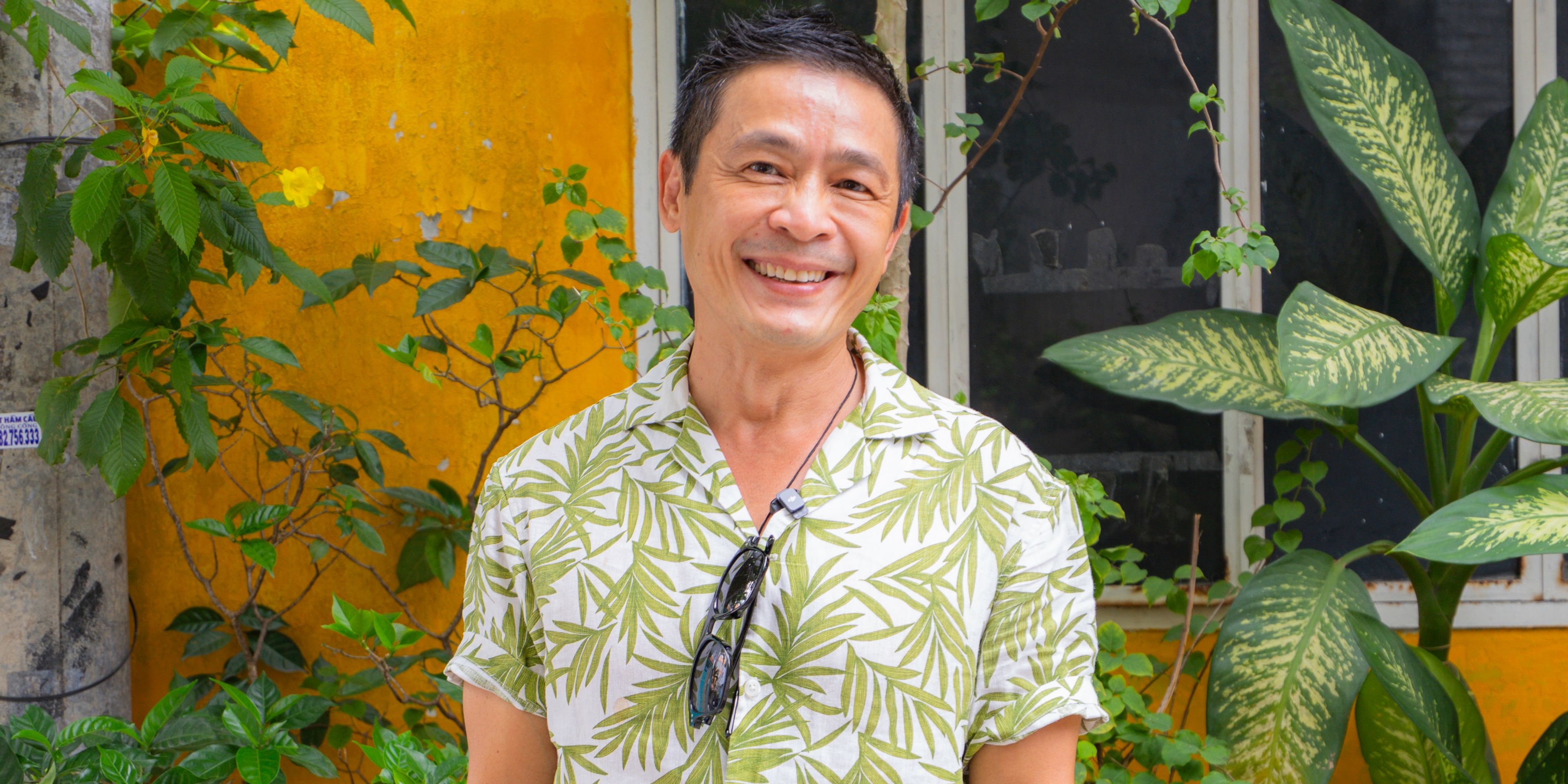
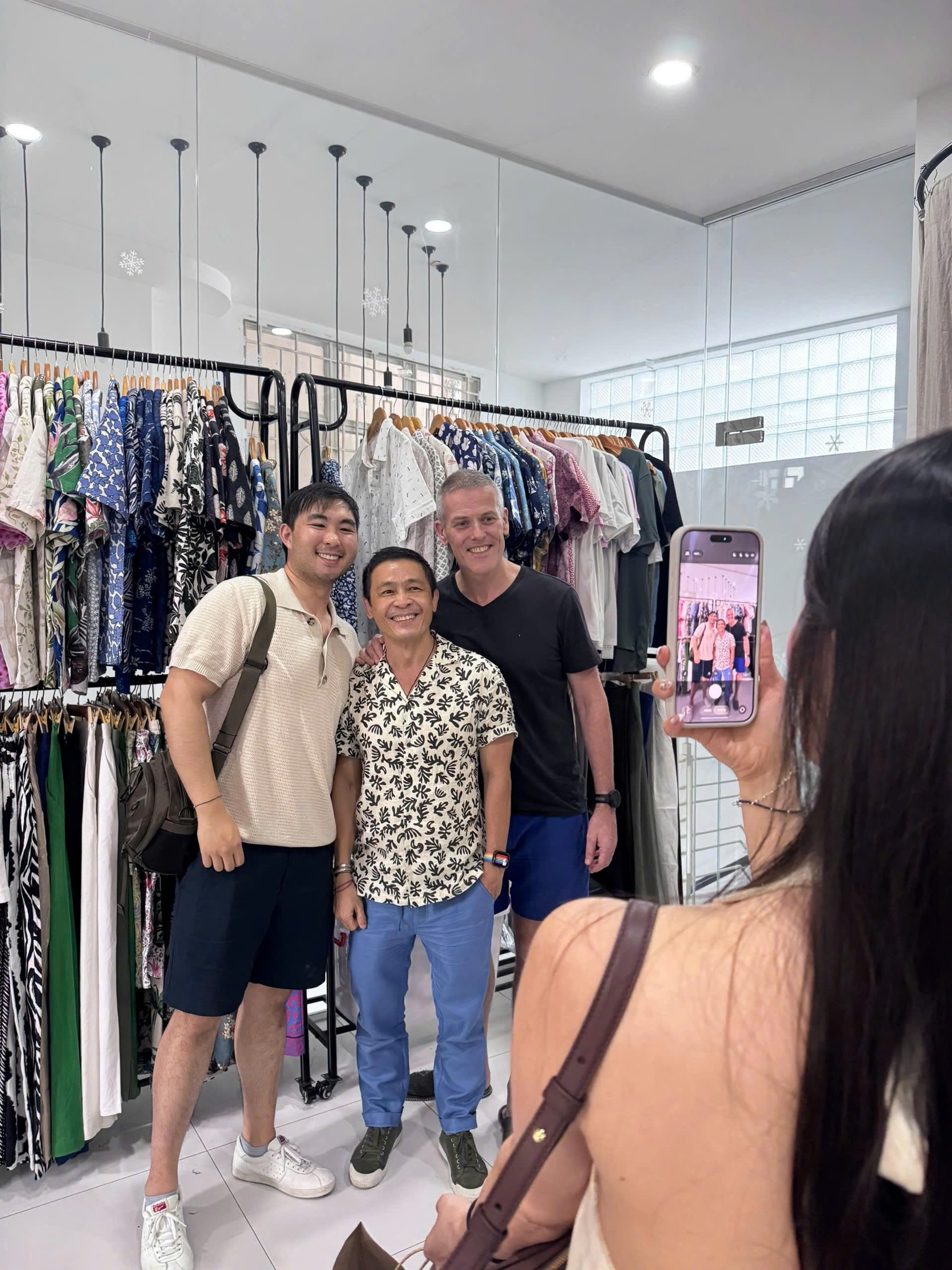
Lam wore a pink shirt with motifs of mermaids gliding across the fabric, light blue denim jeans, and beige loafers that gave a nice clack whenever he took a step. Along with his partner Chris—in a bright orange floral shirt and dark green shorts that matched the colour of his slippers—the pair showed me around their Saigon Concepts studio hidden in an alleyway in Bình Thạnh. Deceptively large from the outside looking in, the space featured two floors. An office, showroom, sewing room complete with nine sewing machines, as well as a cutting area where piles of colourful fabrics surrounded a cutting board the length of a mini-van. As I learned more about Saigon Concepts, all the piles of fabrics, countless boxes of buttons, and endless rolls of yarn appeared less like clutter and more like a testament to their mission. This was best represented by the rack of men and women’s clothing in the center of the showroom: expertly crafted items given a new life out of waste that’s known as “deadstock” in the fashion world. And like a surgeon resuscitating a patient in the emergency room, Lam stands at the beating heart of this effort for revival.
Like many Vietnamese from his generation, Lam grew up in the poverty and destruction that followed the Vietnam War. The youngest of eleven, Lam was raised in a cramped home where he shared a single bed with three older brothers. Food was scarce and electricity shortages the norm. He recalls the power cutting out every two nights of the week as a result of a rationing system whereby some areas got their share and others lost it depending on the day. Despite the enduring hardship, Lam says clothing provided moments of respite. Once a year he’d receive a new set of clothes from his parents as part of a Vietnamese tradition for welcoming Tết (Vietnamese Lunar New Year) dressed anew. His aunt would also send boxes of secondhand clothing from where she’d relocated to in America. Soaps and shampoos also filled these packages and Lam never forgot how upon opening what felt as wonderful as a birthday present, fragrant smells filled the room while they ogled the different articles of clothing. To young Lam, clothes represented more than just something to cover your body but a means of feeling confident and optimistic about the future. Besides that, when his older sister started working as a seamstress to make some money for the family, she taught Lam to sew as well. He took to the practice with a skill unusual for his age and lack of experience. Yet even then, he never envisioned a future in fashion.
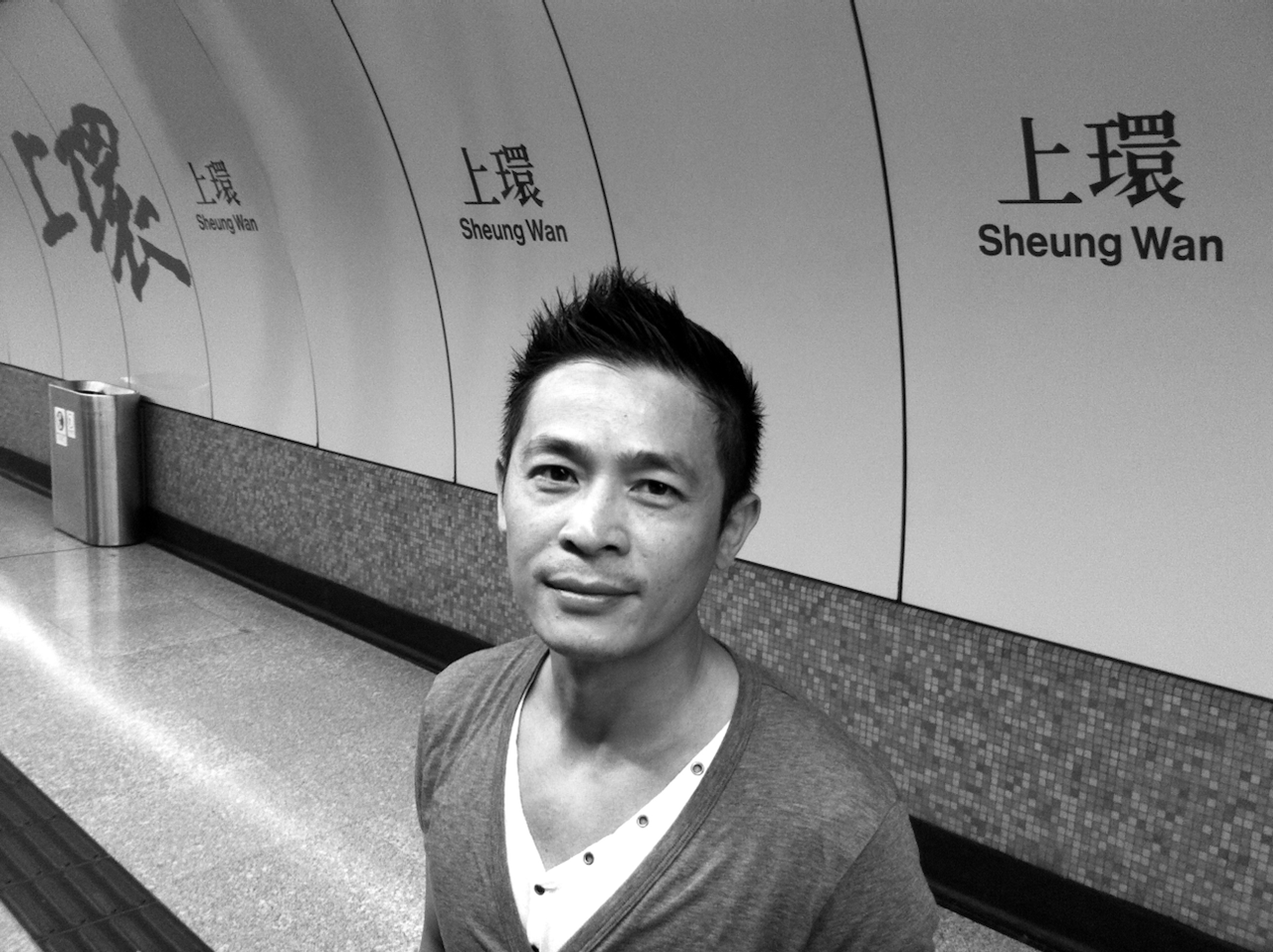
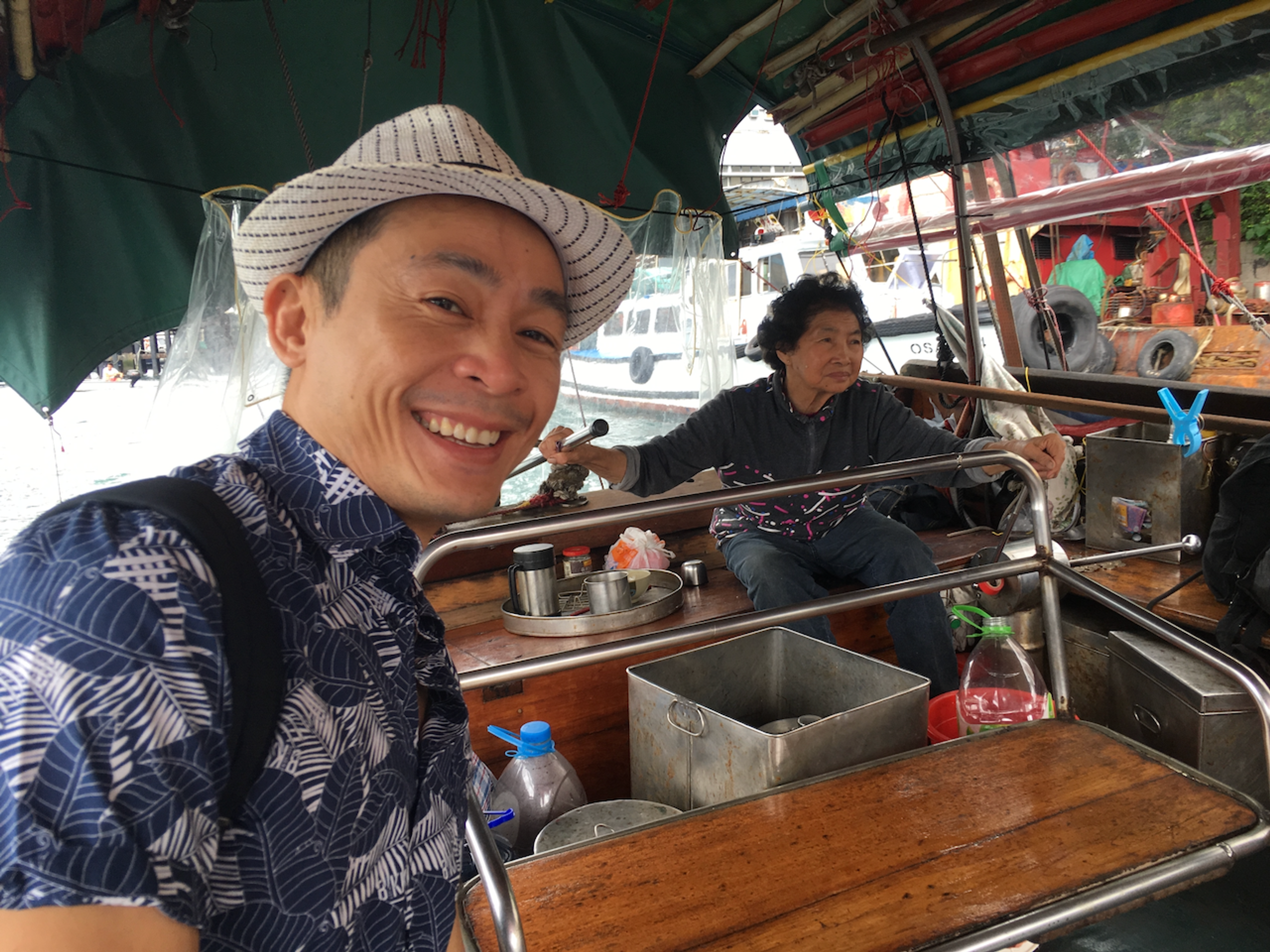
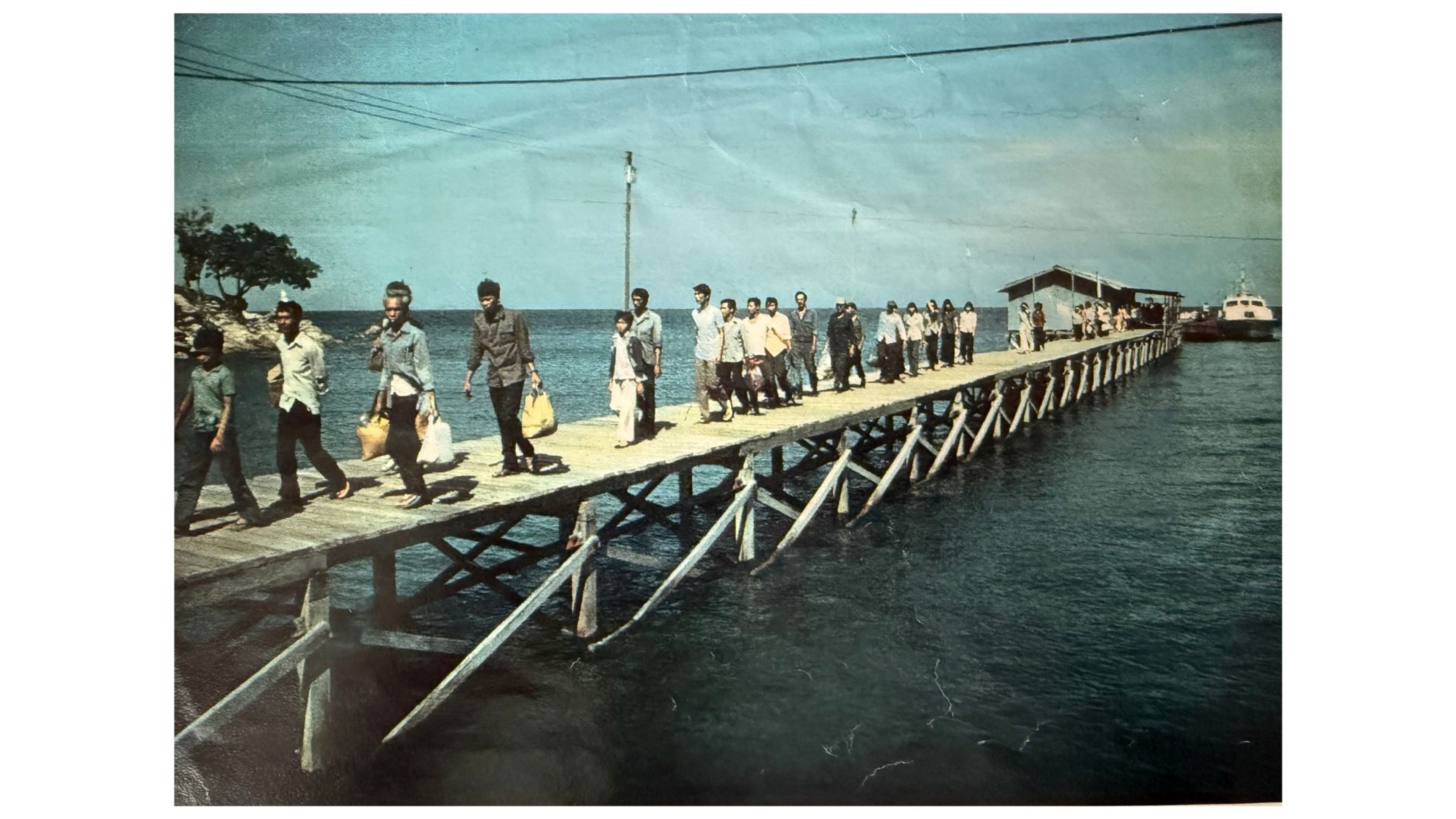
At fifteen, Lam left Vietnam on a boat. Landing in Malaysia, he spent some time in a refugee camp before making his way to Australia. Enrolling in the latter years of high school in Sydney, Lam began a new life far from home. As university approached, Lam realised he didn’t have any idea what he wanted to pursue after school. Instead, he accepted the path set for him by his parents and applied for a degree in electrical engineering. As often occurs when you’re doing what you’re told, eventually you break. For Lam, the cracks formed in the fourth year of his studies. He knew he couldn’t endure any longer. Dropping out, he began working as a waiter to support himself. Six months elapsed. Although drawn to studying psychology, Lam found himself enrolled in a vocational school. Called East Sydney TAFE (EST), the school was Lam’s first experience with a structured framework for studying fashion. From apparel manufacturing, pattern making, to sewing, EST offered him a chance to delve into the world of clothing and he fit right in. The practice he’d had sewing when he was younger came in especially handy. At the end of two years Lam left EST with an advanced certificate and the belief that he’d found what to do with his life.
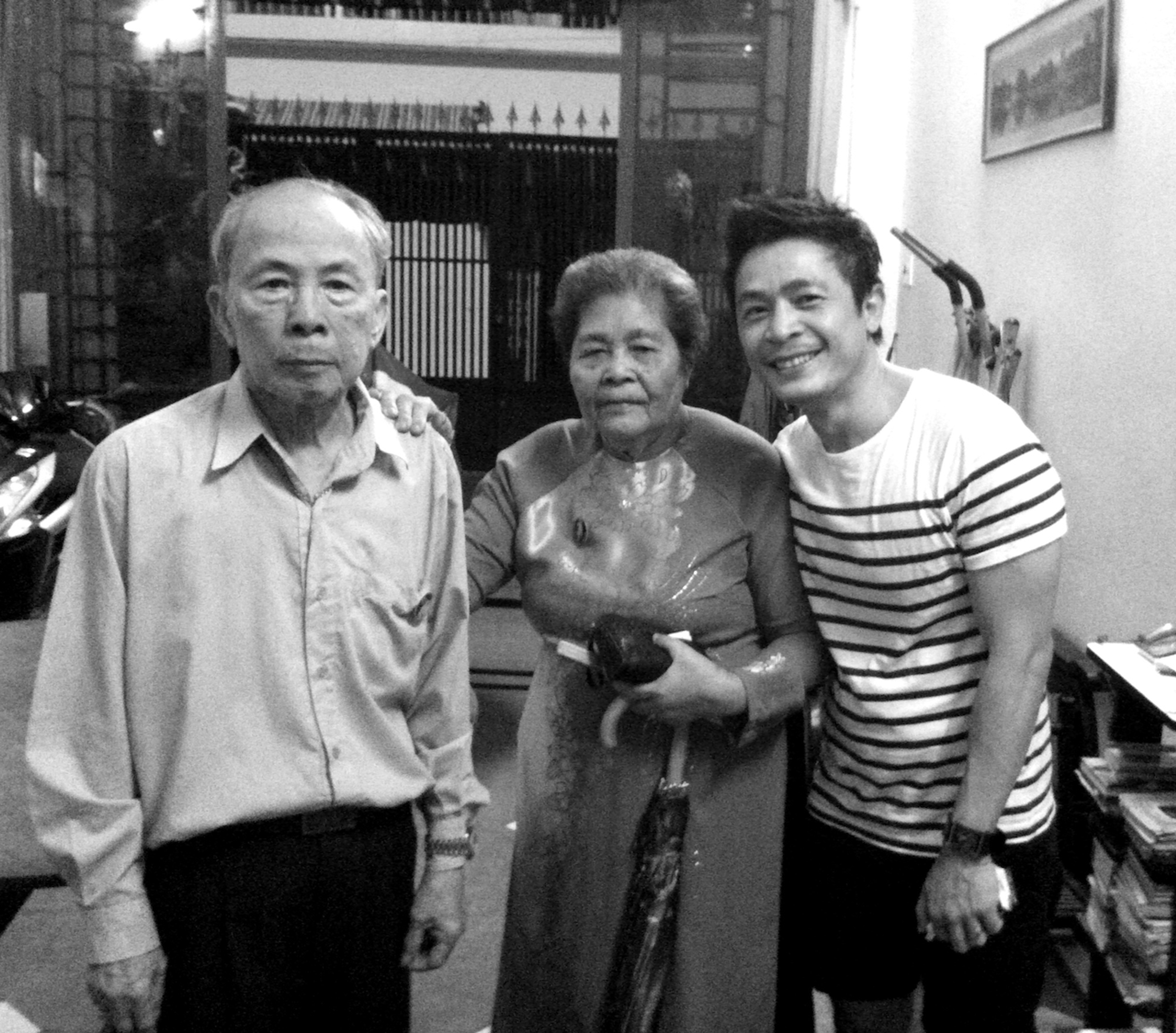
By the end of 1999, Lam began working as a design room coordinator at Collette Dinnigan. Between cutting, dyeing, all the way to sourcing the pieces of the clothing himself, the work expanded Lam’s understanding of how to take different items and turn them into a finished garment. From there, he shifted to pattern making for labels such as Sarah Jane, Charlie Brown, Peter Morrissey, and SABA. Even within the title of pattern maker, Lam’s job entailed much more. “In Australia it’s great because you can do a lot of things and learn about different parts of the process,” he said. “It’s not just creating patterns. I also had to find different types of materials and components of the clothes, then I had to know how each material informed the construction of a garment. With sewing there were also different types and seams I needed to use. After that I could do a fitting on a real model and talk with her—once she felt comfortable in the clothing, then I had to grade it based on size.”
Along the way Lam acquired numerous skills. Being a cutter taught him proper cutting technique and how to follow a fabric’s grain line. This was crucial as some fabrics have different shades so if you cut in the wrong direction, it appears as two separate colours. He absorbed the intricacies of sourcing, appreciating the details that separate a high-quality colour, thread, or zipper from a lower-quality counterpart. Eventually Lam went from a design room coordinator to a senior pattern maker and team lead at SABA, one of Australia’s most iconic heritage fashion labels. He spent five and a half years with them, but despite how far he’d come, he craved something else. When the 2008 financial crisis hit, Lam, along with his partner and event’s consultant Chris, received the jolt to the system they needed. Coincidentally, SABA was opening up offices in Shanghai and they wanted Lam to train the new team. He started visiting the Chinese city several times a year, but it never became the permanent move he desired. Soon, Lam had another reason for leaving Australia: his parents’ age. Though they saw each other once a year, Lam knew that if he didn’t make an effort to visit them more often, he’d end up filled with regret. In 2011, during a stop-off in Hong Kong, Lam interviewed with Triumph International, one of the world’s largest intimate apparel brands. Enticed by the rare opportunity to work for them, he decided it was time to relocate permanently.

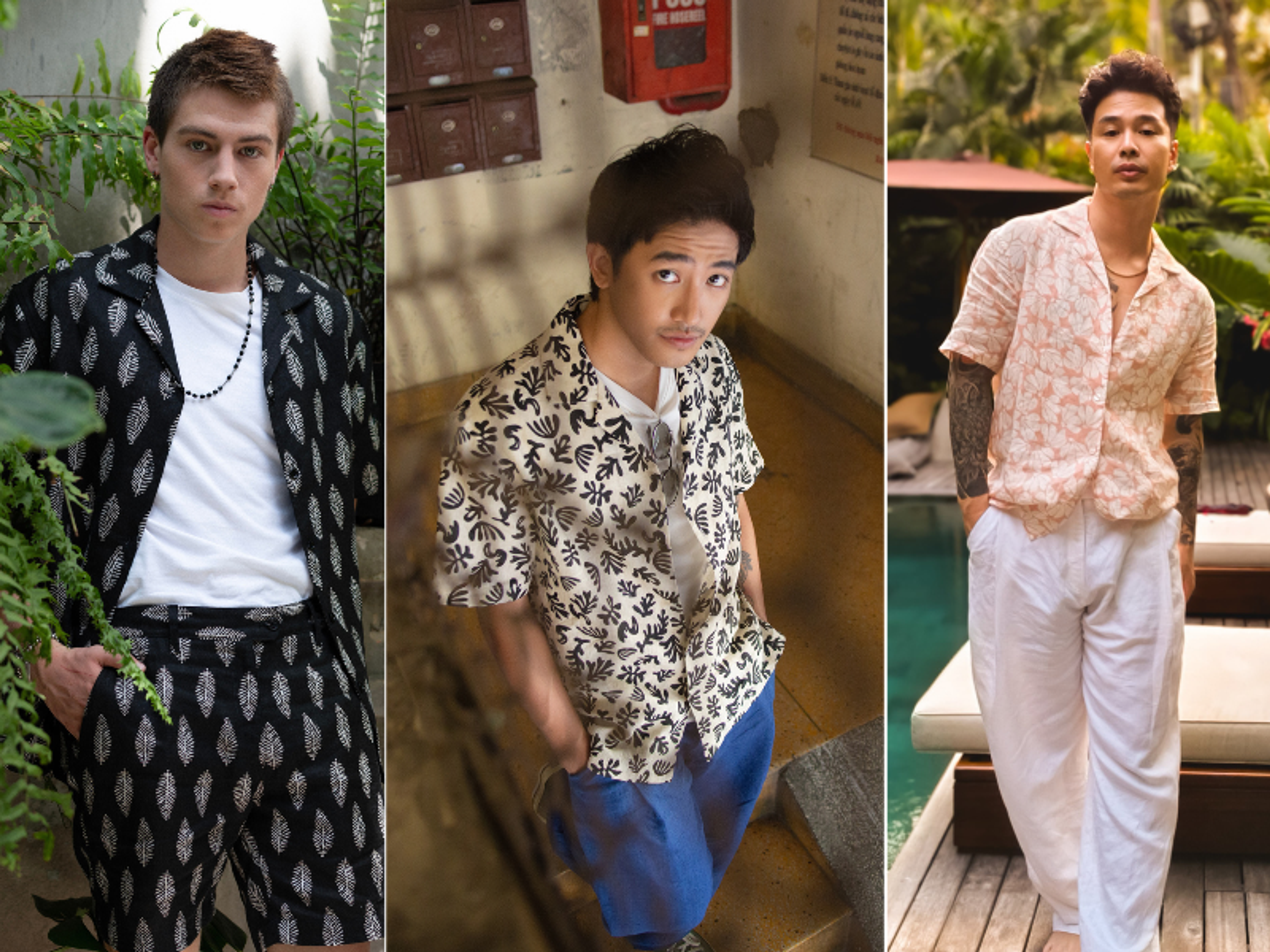
Lam spent six years at Triumph International, rounding out his understanding of fashion by acquiring as much knowledge as he could on clothing items like bras, underwear, and shapewear. When I asked about the differences between regular garments and intimate apparel, he spoke about precision. “When you design intimate apparel you need to pay attention to fit, functionality, and comfort. There can be little error in terms of space,” he said. Getting up, he pulled a shirt and shorts from the rack and continued. “Outer wear can be much more loose. You can wear it baggy if you want and you don’t have to pay as close attention to fit. But intimate apparel needs to be exact. It’s much more technical and the sizes are in millimetres. Stitching is also very important. The style of stitching needs to adjust with the fabric you use.” Towards the end of his tenure at Triumph International, Lam served as their technical manager. Compared to his early days honing individual skills in the fashion industry, this position sat at the intersection of creativity, engineering, and manufacturing. Beyond simply pursuing an artistic vision with a piece of clothing, Lam’s two decades of experience culminated in expertise at overseeing the production of a garment from start to finish. When the opportunity to work in Vietnam finally arrived, Lam was more than prepared.
During the height of Covid, Lam returned to Vietnam on a charter plane alongside thirty others. In the tiny cabin, his nerves were as palpable as his excitement. Though he was flying into a country reeling from the pandemic, Lam was at least certain he’d find work. Li & Fung hired Lam as their global head of technical management for some US brands. Leading a multinational team and handling numerous overseas accounts, this was another large-scale operation that taught Lam more about the business-side of fashion. By then Lam had garnered twenty-five years’ worth of knowledge in the fashion industry. While his credentials spoke for themselves and he’d carved out a position for himself as someone with a rare blend of artistic conviction and technical prowess, a key ingredient was still missing from his career: work that he could call his own.
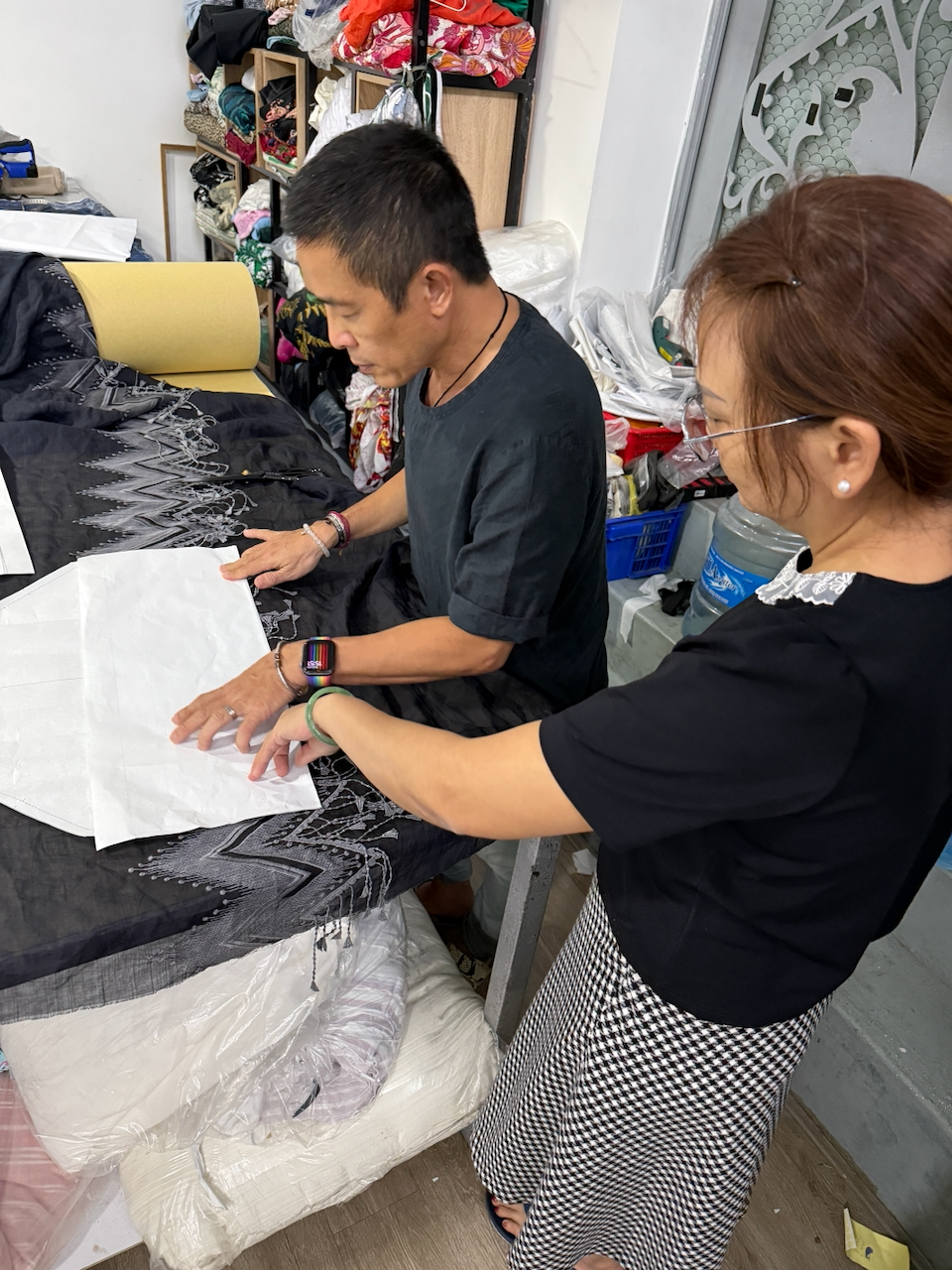
The sapling of Saigon Concepts sprouted the longer Lam spent in Vietnam. It began as a consultancy, sourcing for brands in Australia and the United Kingdom. His niche was small production runs of around eighty to one hundred units, rather than the hundreds of thousands most big brands expect. With a tailored, boutique approach, he could offer companies a more personal, specialised service—one that remains part of Saigon Concepts today. But working at that scale came with its own challenges. To source fabrics in such small volumes, Lam had to visit Saigon’s markets and find the materials himself. And it was there, among the market stalls, that he discovered what would become Saigon Concepts’ purpose.
While the fashion industry had given Lam so much, its lack of environmental conscience had long troubled him. Waste is the norm, and an out-of-sight, out-of-mind mentality runs through the industry. Factory offcuts end up in overflowing landfills. Huge amounts of water are used to wash and dye denim. Plastic bags and wrapping are often thrown away the moment a purchase gets home. Then there’s the problem of deadstock fabric.
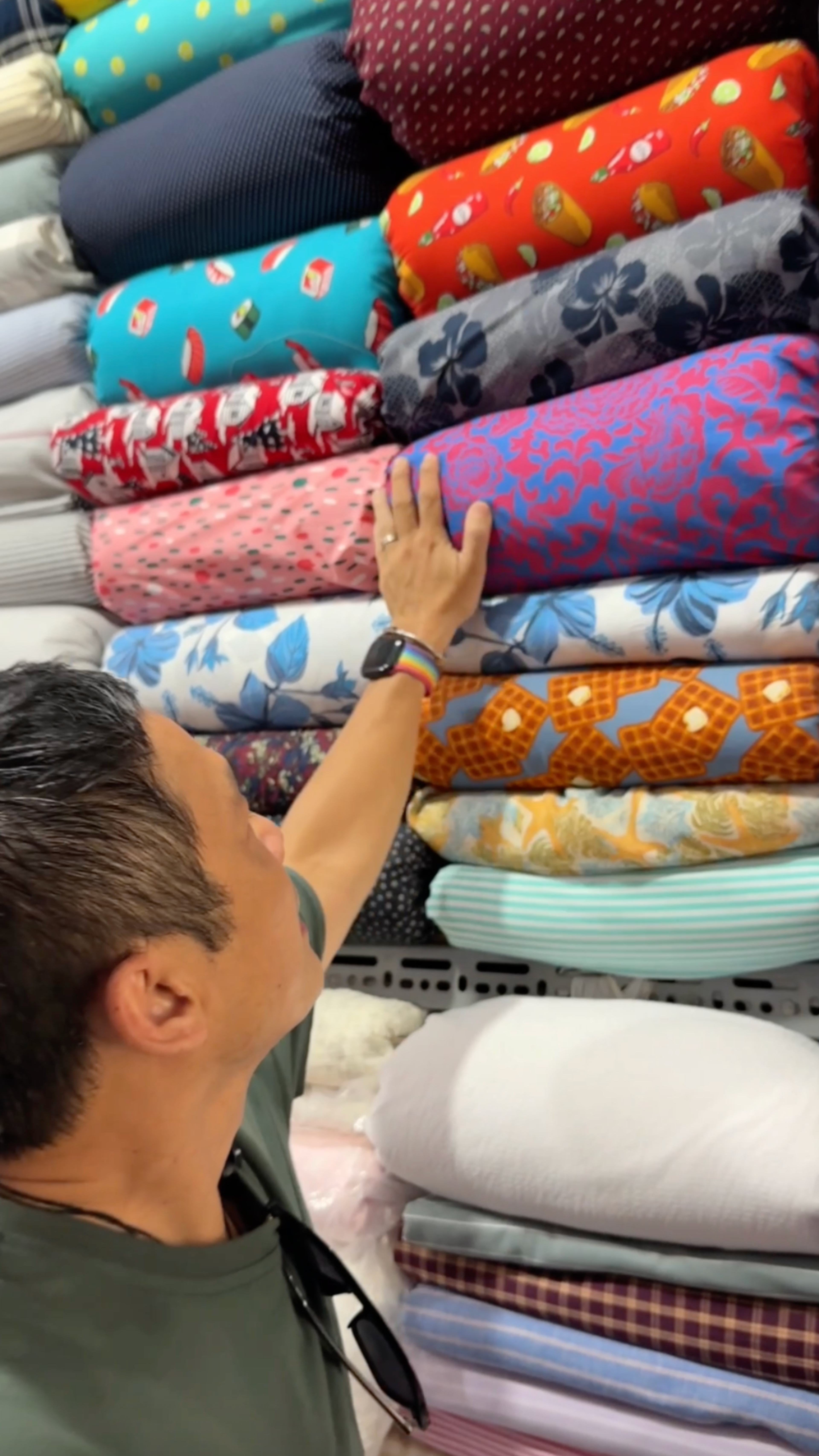
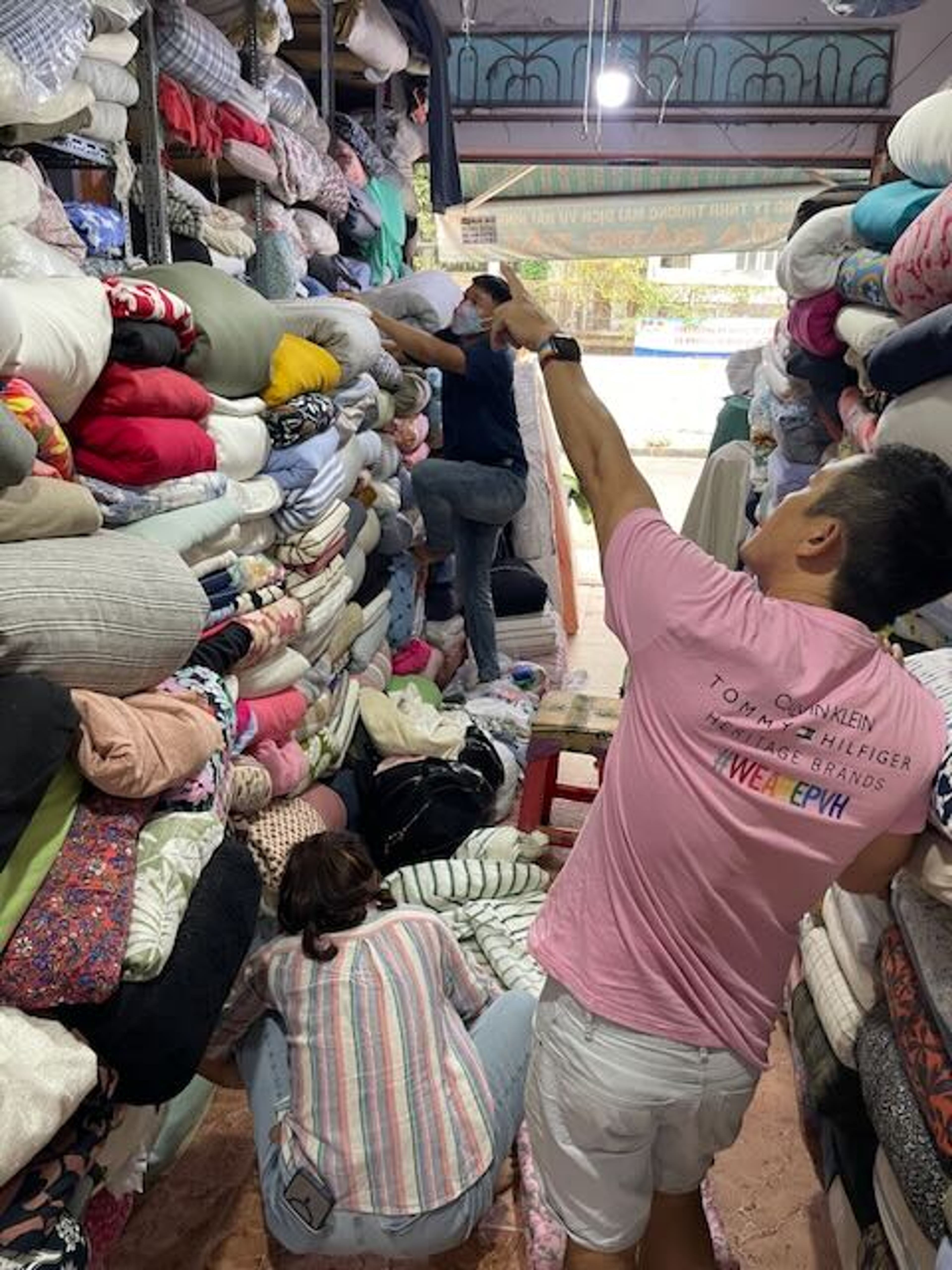
“People misunderstand what deadstock is,” Lam said, his voice tinged with passion. “Deadstock doesn’t mean something is poor quality or that it can’t be used. It’s when companies order too much of a fabric, or anything else – the quality is already there, but it doesn’t get used. This normally happens because factories offer discounts if a company buys bigger quantities… so of course the company takes it, right? And whatever they don’t use ends up as deadstock.” Fabric isn’t the only thing that ends up as deadstock; overlooked components like buttons and zips can carry the same unwanted label. According to Lam, deadstock is everywhere. Yet in his long career working for some of the world’s most respected fashion brands, he had never once worked with deadstock materials. As he walked Saigon’s markets and saw just how much was available, he realised he could breathe a second life into what had been written off as waste.
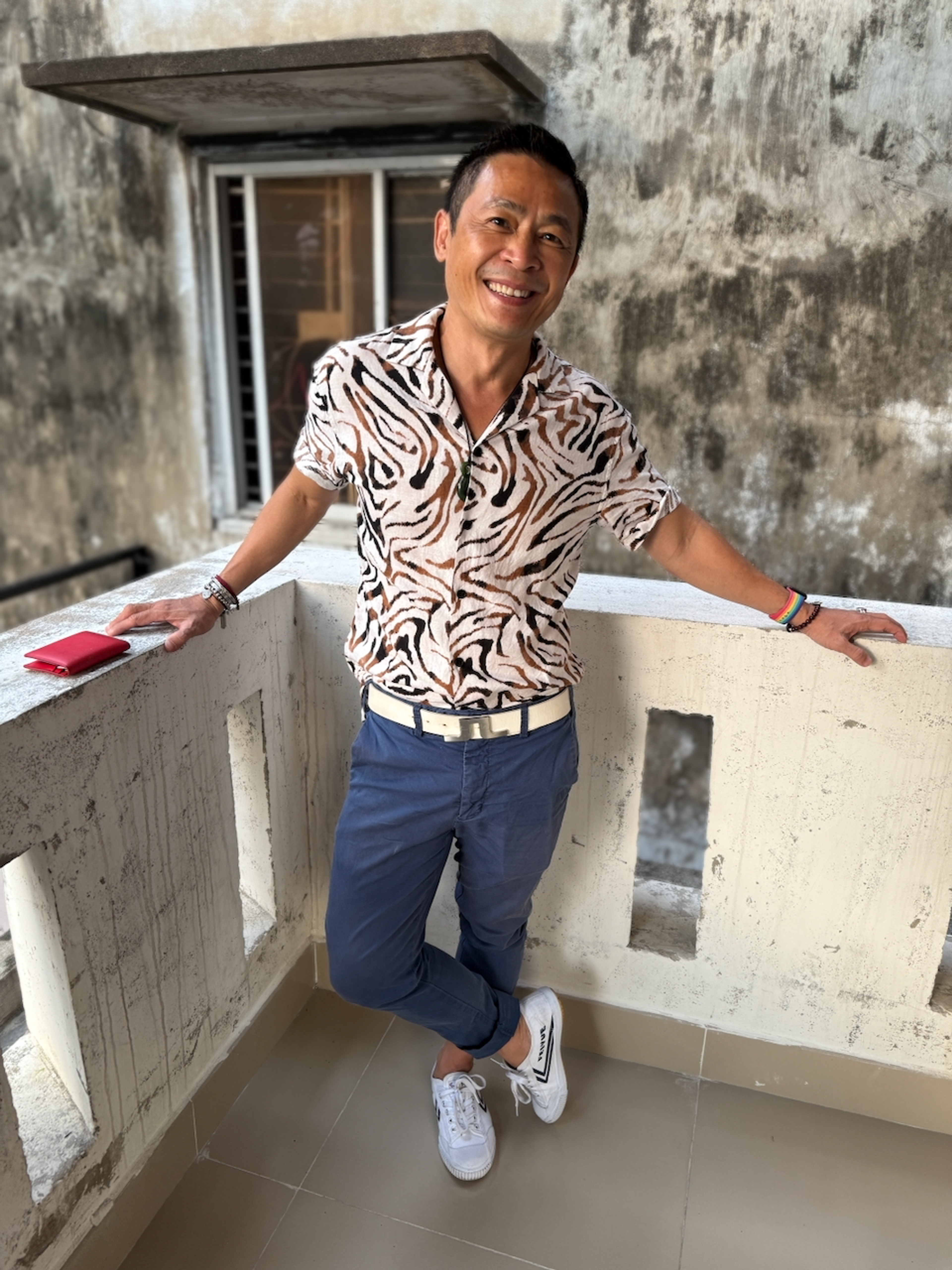
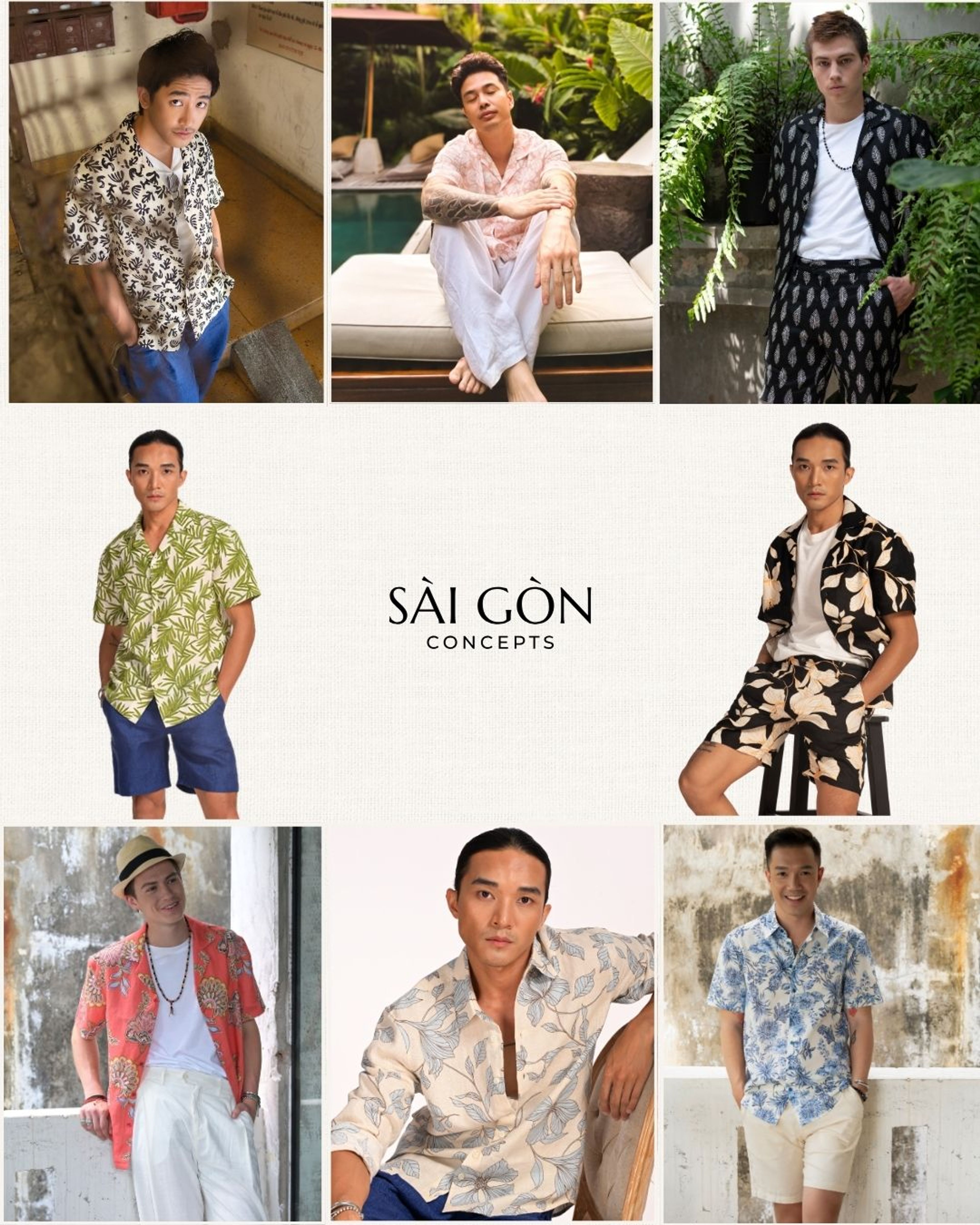
Lam began by ordering online but immediately realised that the texture, size, and colour of the products he was being sent were unlike what was advertised. He knew he had to go to the markets himself, and so returning to places like Chợ Lớn, Tân Bình, and Phú Thọ Hòa, Lam navigaed the tight walkways to scour for deadstock amongst the piles of goods. In this lay multiple challenges. For one, the language market vendors ascribe to their items aren’t always accurate. Lam noticed how fabrics sold as silk were in fact polyester, and there was an ever wider vocabulary that he had to decipher in order to know what was worth purchasing. Besides that, there was also the issue of quality. For Lam to ensure he sourced the best, he had to take fabric samples—what’s known as a “swatch”—for testing. With industry experience, he conducts testing material for colour runs and shrinkage by cutting a square piece of fabric and putting it in hot water and soap. Hot water checks for shrinkage and soap handles colour runs. If a fabric’s colour runs or there’s shrinkage then Lam will send it for treatment before cutting. By utilising his knowledge in the field, he gathered the quality components that would represent Saigon Concepts’ brand.
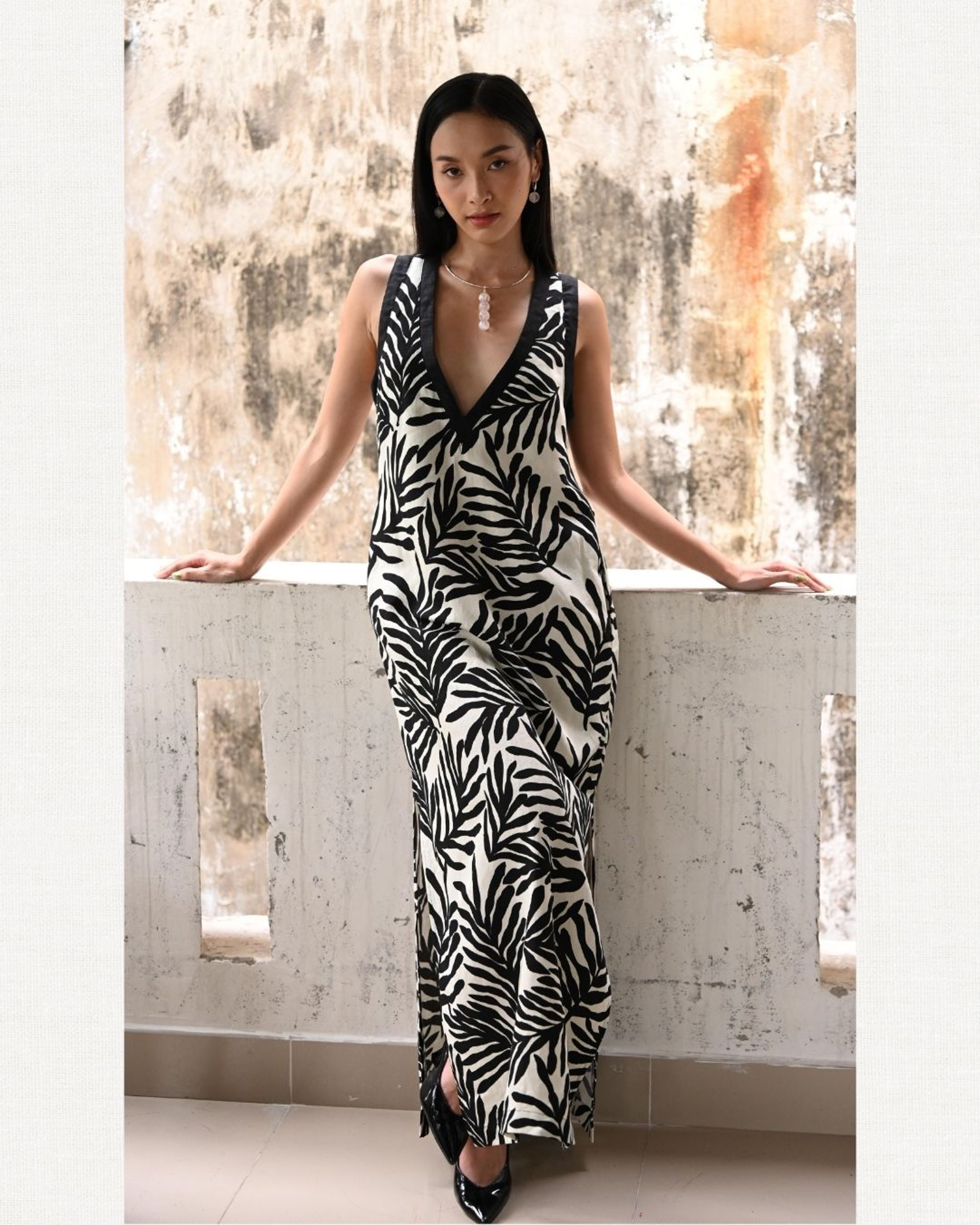

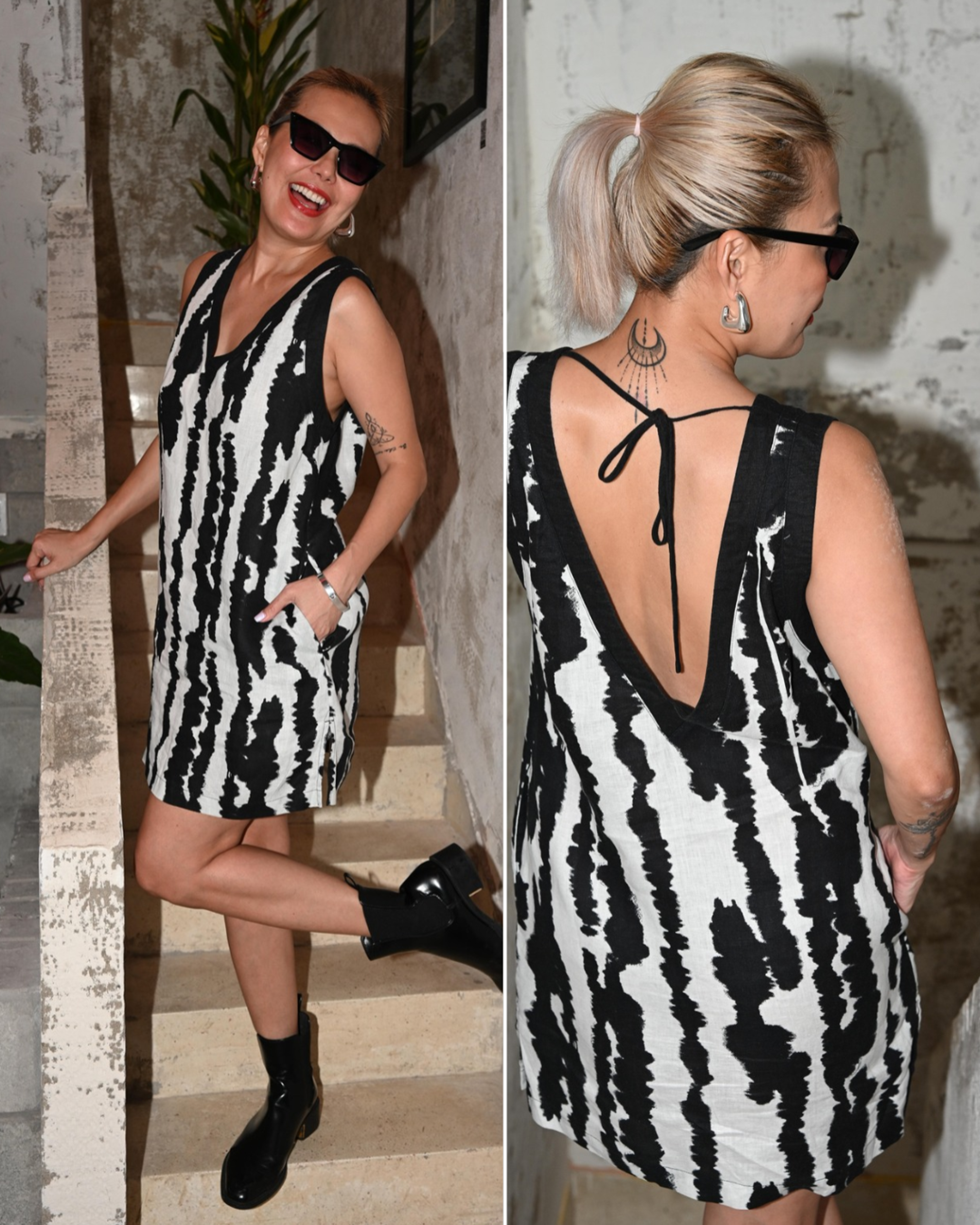
In terms of the journey a fabric takes until it can be displayed in the Saigon Concepts studio, Lam said he either follows his intuition or lets the process determine the design. Sometimes it’s as simple as looking at a fabric once and instantly recognising its potential as a shirt, dress, or pair of shorts. When he isn’t sure, Lam relies on testing. By considering aspects such as shape, pattern, and colour, he’ll brainstorm what works best with a fabric and slowly form it into a desired outcome. Above all, comfort and ease are major pillars for the types of clothing Lam wants to create. Following these guiding principles ensures that everything the Saigon Concepts team makes stays true to their vision and ethos. So far, Lam’s proudest of a lot of the men’s clothing he’s made because they’re pieces he’ll wear himself. In the women’s section, he pulled out a long, flowing, zebra-patterned Vesper maxi dress. It’s a piece you can imagine someone wearing on top of a swimming outfit, slipped on for a cocktail bar, or on a dressy night out. As Lam put it, that was part of the idea. “You see it has two different V-cuts on the front and the back?”—he showed me both sides of the dress, pointing out how one side had a deeper V than the other—“So the woman can choose which side she wants to show depending on how she’s feeling. If she’s going out and wants to be a little more sexy, she can wear this side. If she wants more modesty, this side is better. The biggest compliment was when a friend going through menopause told me that whenever she wears this dress, she feels comfortable and it lets her breathe. It’s one of her go-to dresses.” Lam also pointed out the dress’s deep pockets, a detail he’s careful to include in his womenswear. Women’s clothing rarely has proper pockets, he says—when they’re there at all, they’re often purely cosmetic and barely functional. As is the case with premium products, it’s those details that count.
Besides Lam and Chris, the Saigon Concepts team is made up of a small group of Vietnamese seamstresses. Lam entrusts these women with upholding his standard. “I want to give more work to locals and especially women because I think if you support females, they will support their family. One of our seamstresses works from home because she has a baby. But this is good, right? She can be with her baby and make money for her family.” This philosophy ties directly into why Lam believes Vietnam’s fashion industry is special: the talent is already here, but what’s needed to elevate Vietnam’s standing in the global scene is experience and knowledge. That’s where he comes in. Lam wants to bear the responsibility of uplifting his people so they develop confidence in their abilities. You don’t need to go to Italy, France, or Japan for good clothes or designers—Vietnam has everything you need. Furthermore, the country’s affordability separates it from other nations. He admits that it’d be difficult to run a sustainable fashion brand elsewhere because of the labor costs and material fees. Vietnam isn’t as expensive, which means production costs are lower and subsequently, so are product costs.
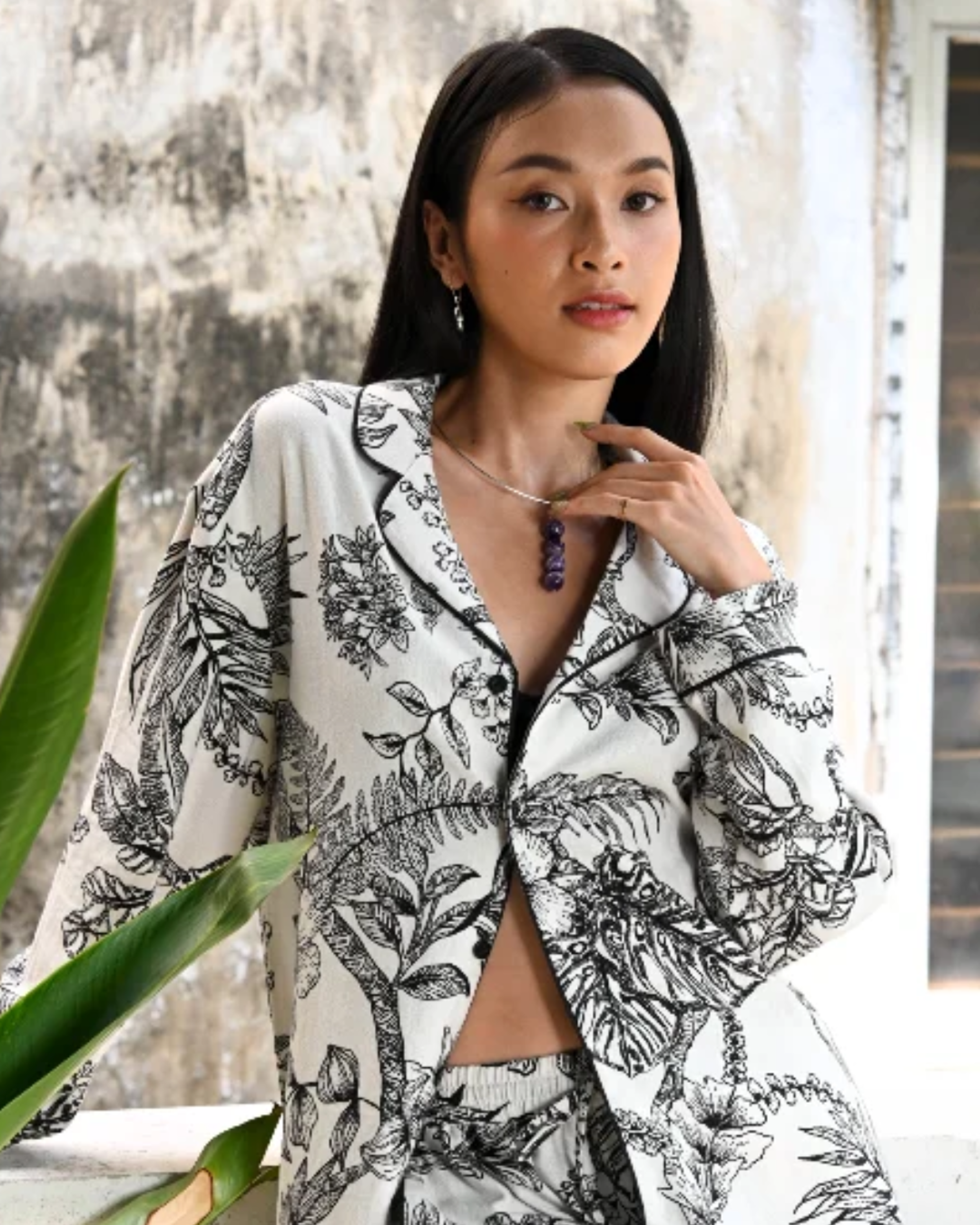
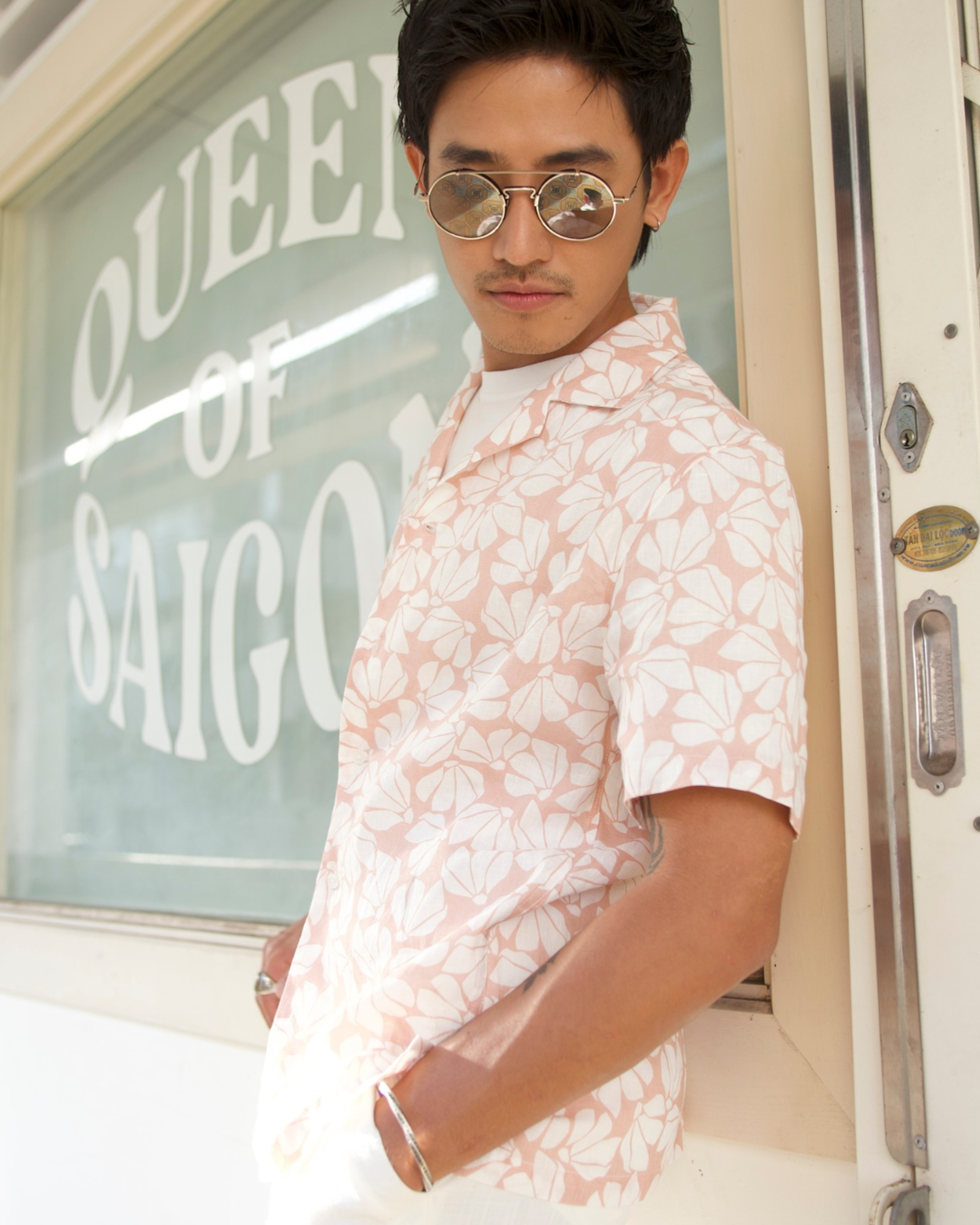
Lam said the first twelve months of Saigon Concepts were tricky as they didn’t have a physical store. Even when they started selling online it was hard to develop a brand presence. They resolved this issue thanks in large part to Chris’ experience as an event producer. Deciding they needed to bring Saigon Concepts to the people, they started organising pop-ups where customers would not only be able to speak to Lam, but they’d be able to see, touch, and try on the clothes themselves. By allowing people to interact with the pieces and learn their stories, Saigon Concepts started to enter the consciousness of fashion and sustainability-forward individuals in the city.
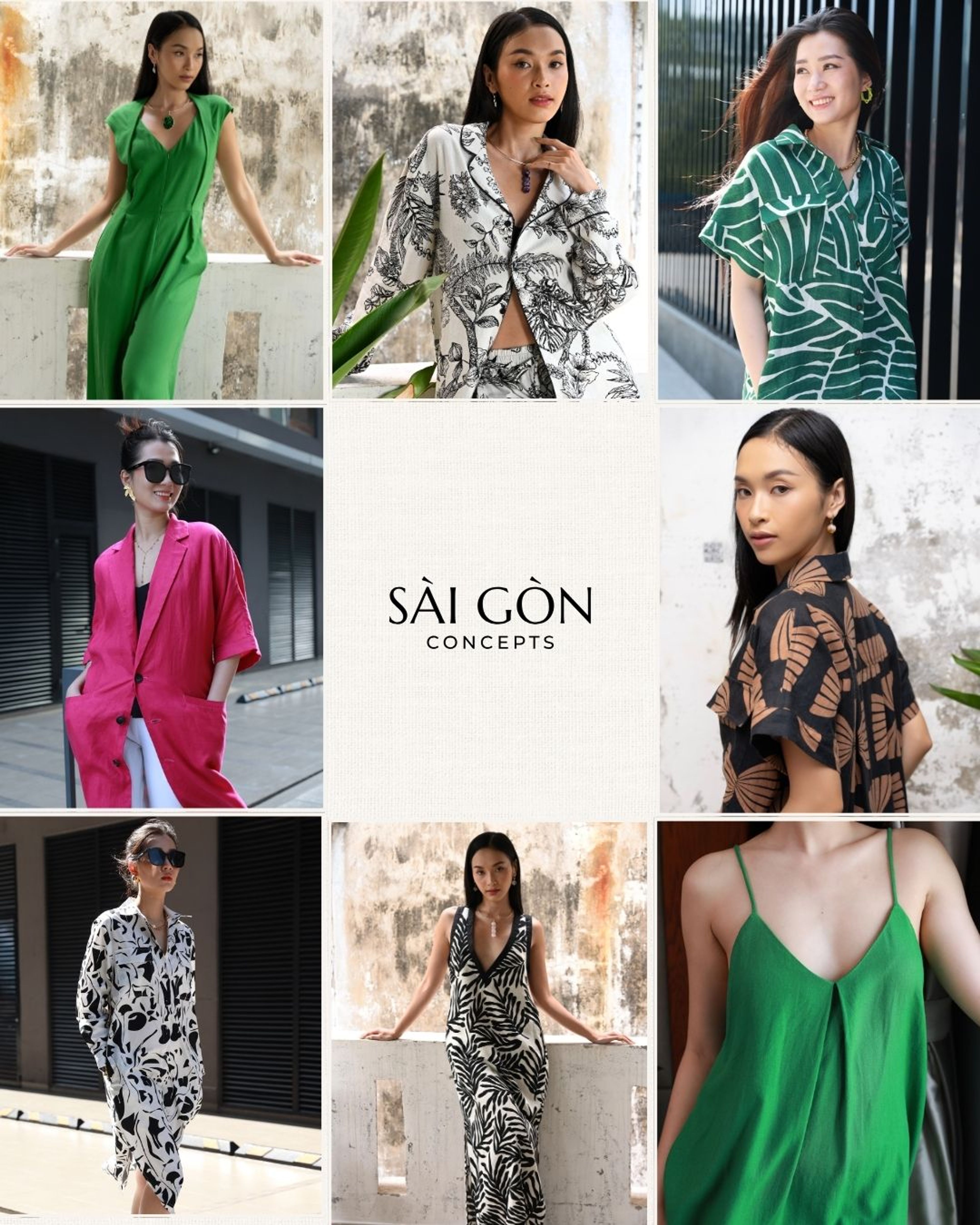
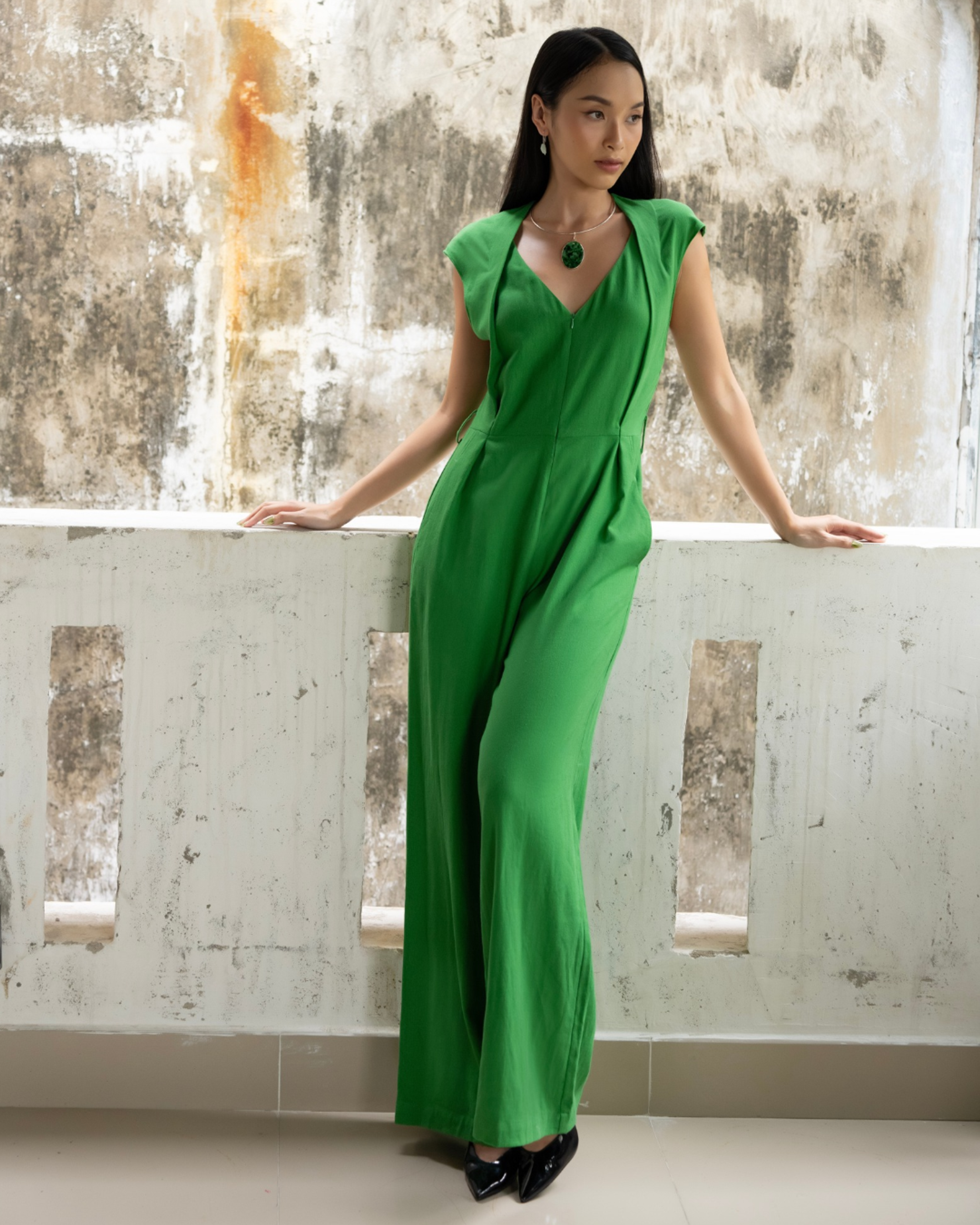
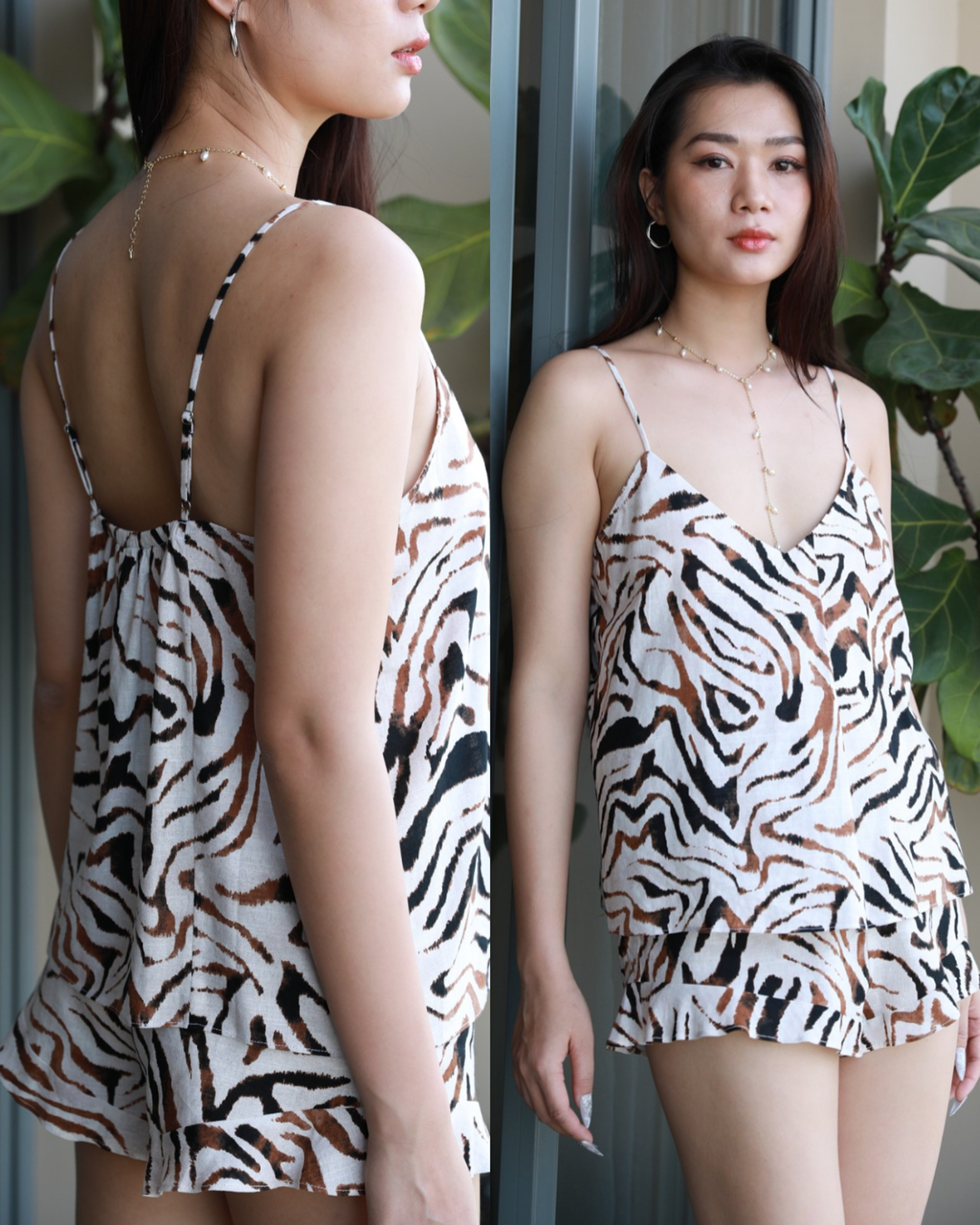
Through popups, representatives from resorts across Vietnam also got in touch with the brand. Hyatt Regency Da Nang Resort & Spa reached out first and asked if they could stock Saigon Concepts’ product. After a few more popups, the marketing director for Four Seasons Resort The Nam Hai in Hội An requested a consignment. With each connection, Saigon Concepts’ clothes were shipped out to another part of Vietnam. Nowadays you can find them stocked in eleven 5-star luxury resorts and boutiques across the country. These collaborations suit Saigon Concepts considering their branding as a “Resort Wear Slow Fashion Studio”. However, Lam noted that this idea stems more from the look and feel of their pieces which conjure images of holidays and the beach. Naturally, they can be worn elsewhere as well. A great example of this is their 100% cotton and natural linen blended Lounge-to-Street Collection. Made up of Đồ bộ (matching set) clothes commonly worn by Vietnamese aunties, Lam crafted a range of pieces that can be worn as a set or mixed with other products, allowing for versatility without sacrificing style or comfort.
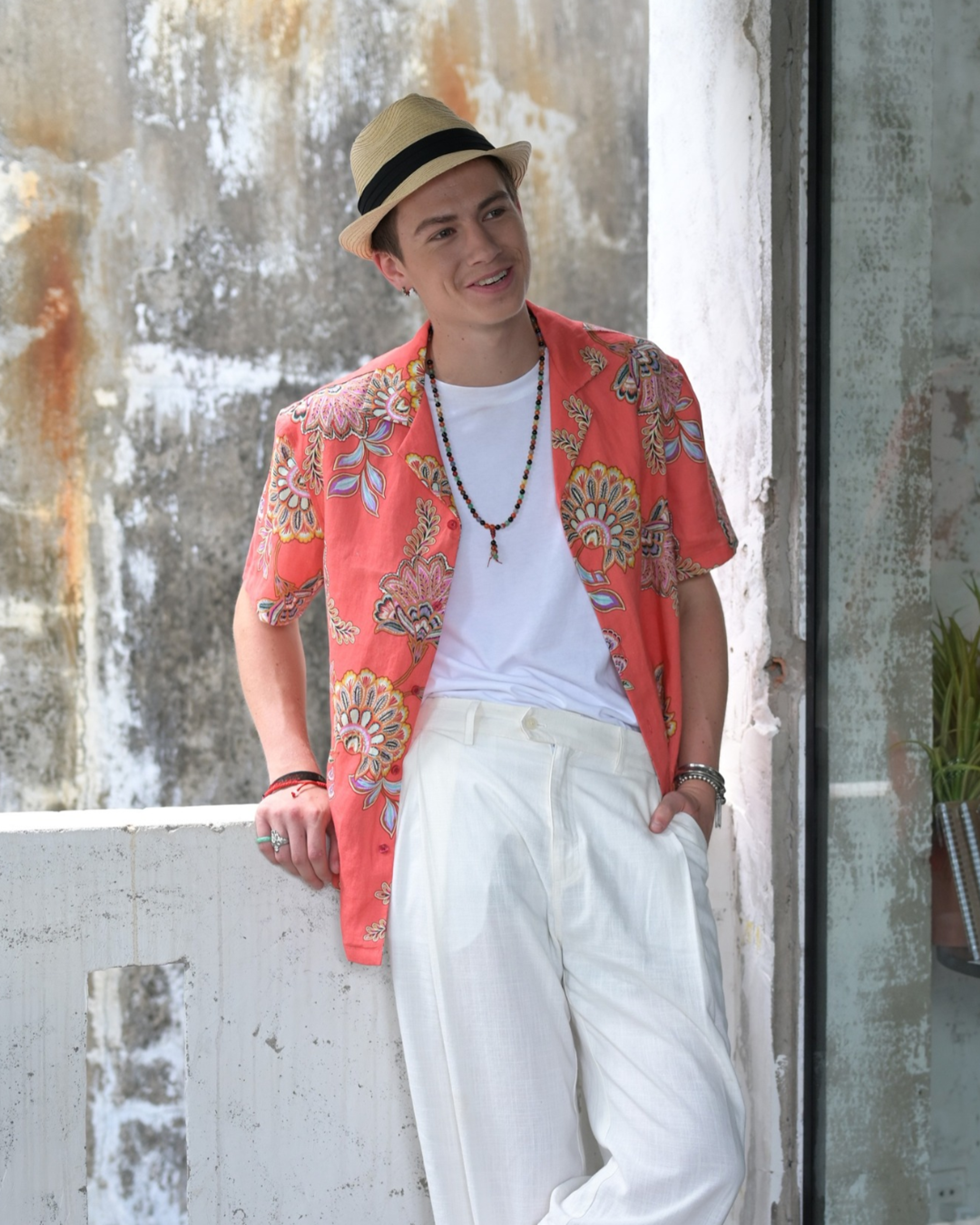
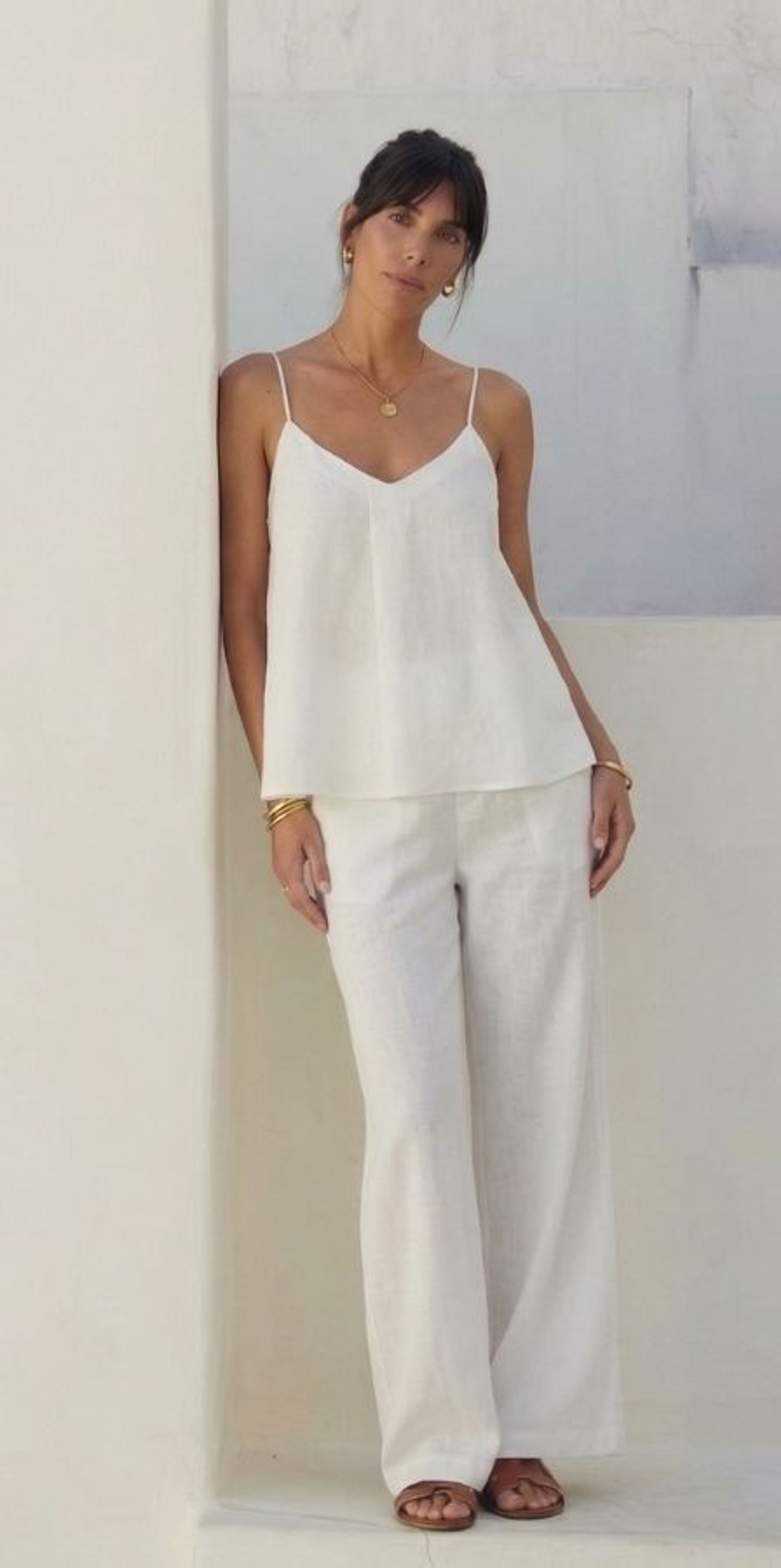
Looking to the future, Lam spoke about the possibility of opening a Saigon Concepts store. Though he recognises the benefits of doing so, he also mentioned how this would remove the ability for him to consult with individual clients on their needs. Currently, whenever someone visits their studio, Lam’s there to personally attend to their questions, as well as conduct any fitting and handle any tweaks. Relationships are fostered as a result, turning shopping for a piece of clothing into an intimate, personal act.
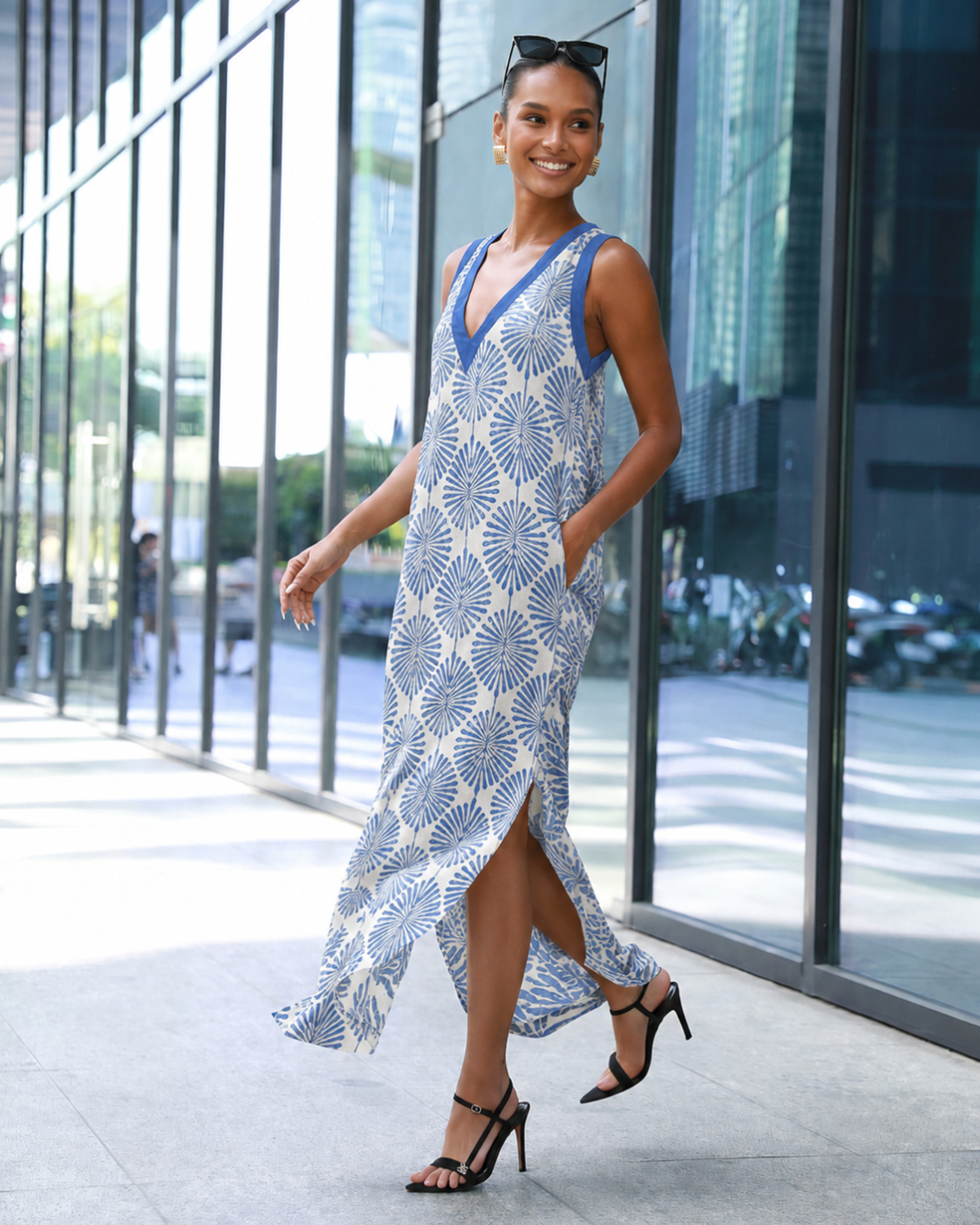
No matter what ends up happening, one thing is for certain: Lam and the Saigon Concepts team will continue to pursue their mission of breathing life back into deadstock by crafting clothing that’s as sustainable as it is fashion-forward. Lam’s journey is evidence of the fact that although he was born into the shadow of a struggling post-war Vietnam, he never let his past define him. Having successfully created a life of personal and professional wealth, his use of deadstock is a metaphor for everything he’s ever done: taking something that might appear broken or undesirable and transforming it into something that makes people stop and stare, awed by its beauty.
- Discover Saigon Concepts’ online range
- Follow Saigon Concepts on Instagram and Facebook