







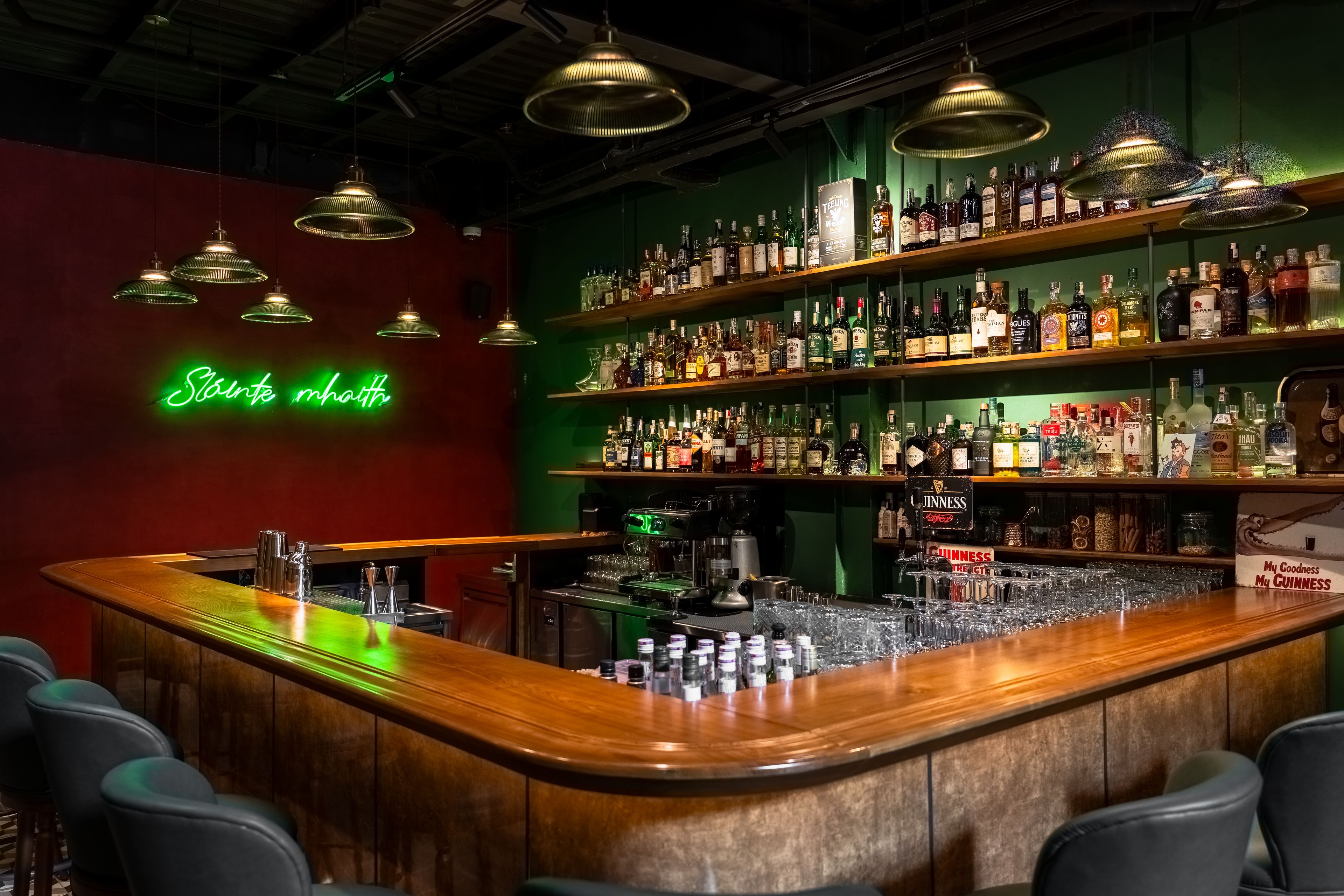
Spend some time with an Irishman and you’re bound to hear a few songs and stories. It’s no wonder why when you enter Éire, Antóin’s recently opened Irish eatery and pub, you’ll find a neon green sign lighting up the wall that reads Raised on Songs and Stories. Multitudes of Irish bards, poets, and literary heroes have blessed the world with lyrics and lines, and so over time songs and stories have turned into something of an Irish birthright. It’s in their blood to orate. Their spirits were made to author, compose, and document. Antóin is no different. He stands out in Saigon: tall, auburn hair, a neatly trimmed light red beard. But when I sat down with him at around noon at Éire, I was reminded of that common Irish trait. Around us, heroes of modern Irish culture framed the walls: Roy Keane, Cillian Murphy, Colin Farrell—and as Antóin told me about his past and how he ended up in Saigon, it was as if they couldn’t help but listen too.

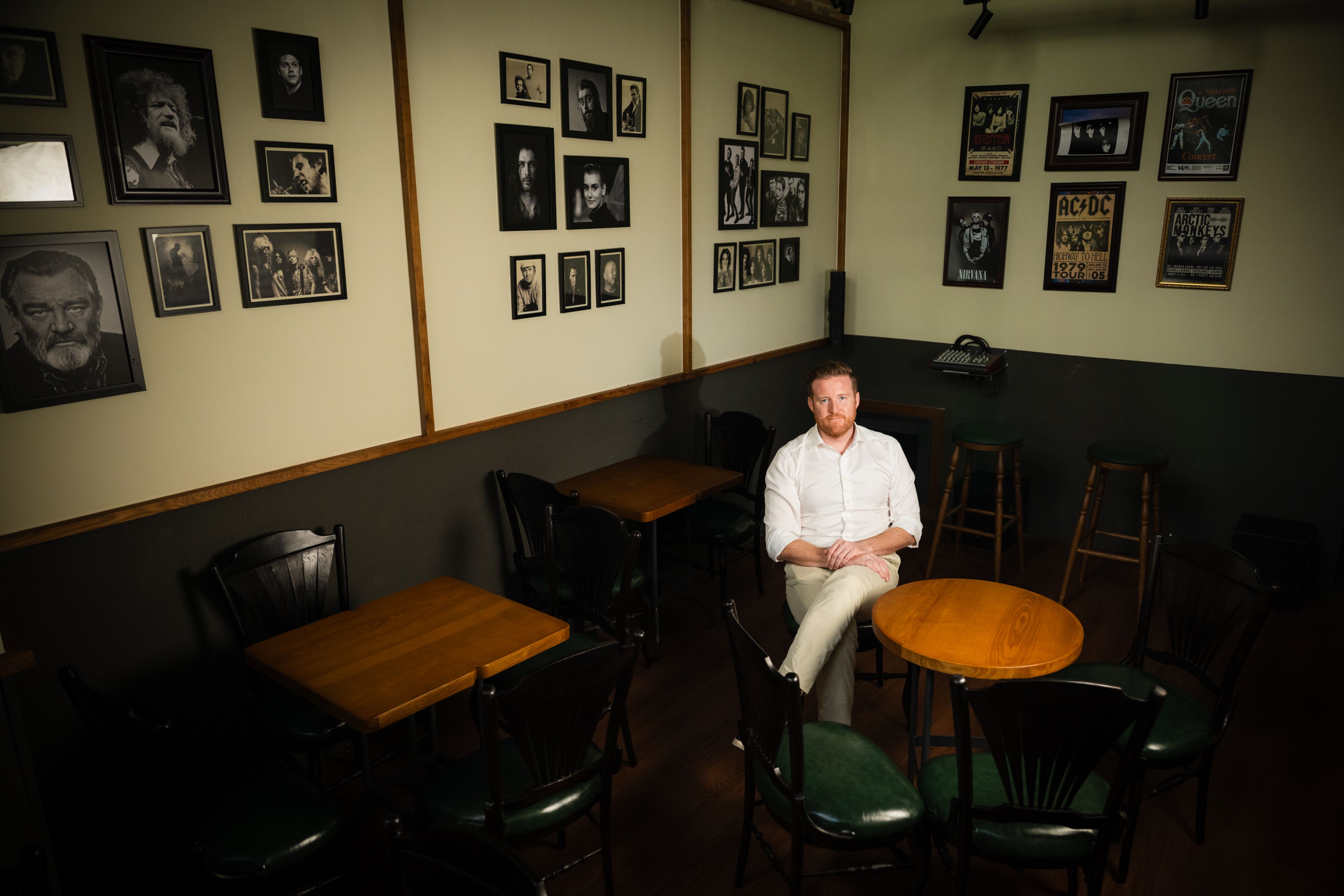
Ever since he was a boy, all Antóin wanted to be was a businessman. His father was a businessman which Antóin cites as one reason for his interest in the position. His natural curiosity even led him to borrowing his dad’s suit and briefcase as if he were acting out the role. Six years old at the time, his father’s suit hung over his frame like a kid wearing their favourite basketball player’s jersey. Waddling around carrying a briefcase, when his neighbour spotted the young Antóin in his new getup, he commented, “Dig the suit.” Moments like that stand out in Antóin’s memory—even though he wasn’t sure what it actually meant to be a businessperson, he felt an unexplainable pull to the profession.
Antóin started working in pubs at twelve. Along with a group of other kids, they operated in a pub near the rugby union and football stadium Lansdowne Road. From ten in the morning to midnight, they collected glasses for spare change and as they got older, poured pints as well. Young and full of ideas, they hosted daily competitions to see who could get the most beer stains on their shirt whenever they stacked their glasses high. Like a badge of honour, they believed more stains equated to more effort. Afterwards, Antóin worked a series of odd jobs: caddying at a golf course, collecting golf balls at a driving range, and cleaning a flour mill over the summer breaks. At fifteen he got back into learning about drinks when he began working at an off-license called O’Brien’s Fine Wines. The owner, Canice McCarthy, took the teenaged Antóin under his wing by teaching him about wines. Later, he’d go on to take his Wine & Spirit Education Trust (WSET), considered the global benchmark for wine, spirits, and sake education.
In university, Antóin studied management. His goal was clear: graduating and getting into the Export Orientation Program (EOP) within the Irish Business and Employers Confederation (IBEC). Part lobbying group, trade association, and business representative organisation, the EOP division served as a matchmaker for companies by compiling resumes from prospective employees. After making it through the application process, Antóin was presented with a host of overseas employment opportunities. A meat company in Brazil wanted him to learn Portuguese in order to communicate with the region’s farmers. A UK-based bread company wanted to send him around the region selling their bread. Despite the stories that might’ve come out of those openings, Antóin wanted to build his knowledge of wine and spirits in an Irish distiller or drink company. Having already completed a one-year erasmus exchange program in Copenhagen, he was a natural fit when global spirits brand Pernod Ricard needed someone for its Sweden branch. After a successful interview, Antóin joined as an Irish Whiskey ambassador—working under Pernod Ricard’s subsidiary, Irish Distillers.
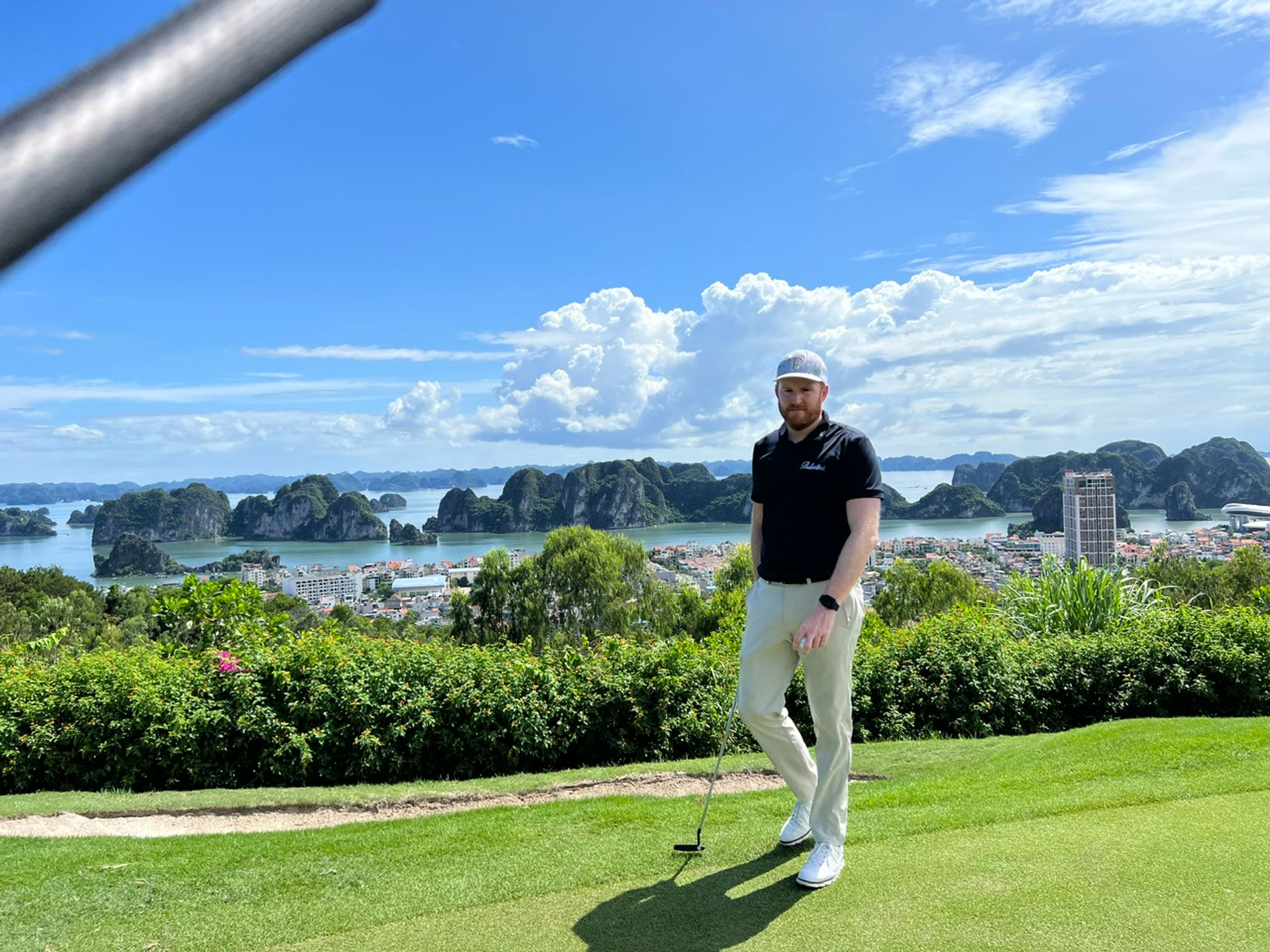
Twenty three at the time, Antóin spent a year as an assistant brand manager. Reporting to the brand manager of Jameson, much of his work was made up of training the bar staff, hosting whiskey tastings, and coordinating events, especially ones at ski resorts around the country. “It was great, being twenty three and getting to visit different parts of Sweden on the company dime,” he chuckled, perhaps recalling the bills he racked up. “I reckon I’ve visited more places in the country than your average Swede.” When I asked what lessons he learned during his tenure in Sweden, Antóin told me about his father’s advice. “First was to always give more than you’re asked”—he looked to the side in recollection—“the second was to remember that somebody’s always watching.” He said his father’s wisdom only resonated upon returning to Ireland. Antóin recalled being at a sales and marketing conference where he was the youngest out of over a hundred. The CEO of the company was giving a speech on the off-trade market in Scandinavia—retail outlets where products are consumed off-site—when out of nowhere, he asked Antóin what he thought. The fact the CEO knew his name, let alone wanted his opinion, drove his father’s advice home.
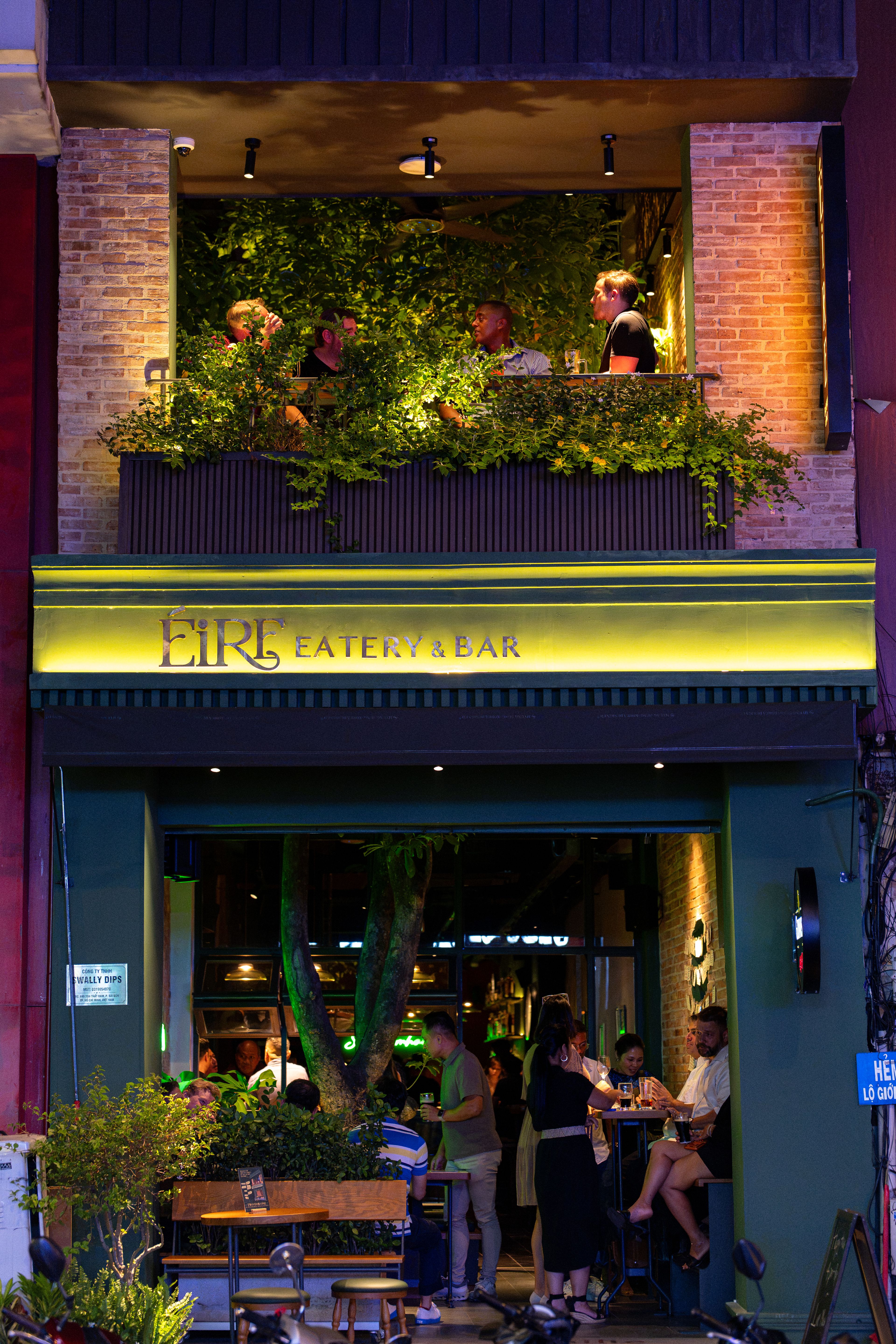
Antóin spent two years in Dublin as a category management analyst. In plain terms, he engaged in war over shelf space. As Irish Distillers’ category management analyst, Antóin spent hours mulling over the question of why and how Irish people bought and consumed spirits. While logistical data explained what sold the most, he also needed to grasp the visual cues influencing real-time purchases. Using planograms—shelf diagrams that dictate which bottle sits at eye-level—Antóin merged sales data with retail psychology to elevate his understanding of the industry. The truth was never as straightforward as the stereotype about Irish people liking a drink. Antóin got a glimpse behind the curtain at the systems, schemes, and tactics that nudge shoppers to reach for one bottle over another.
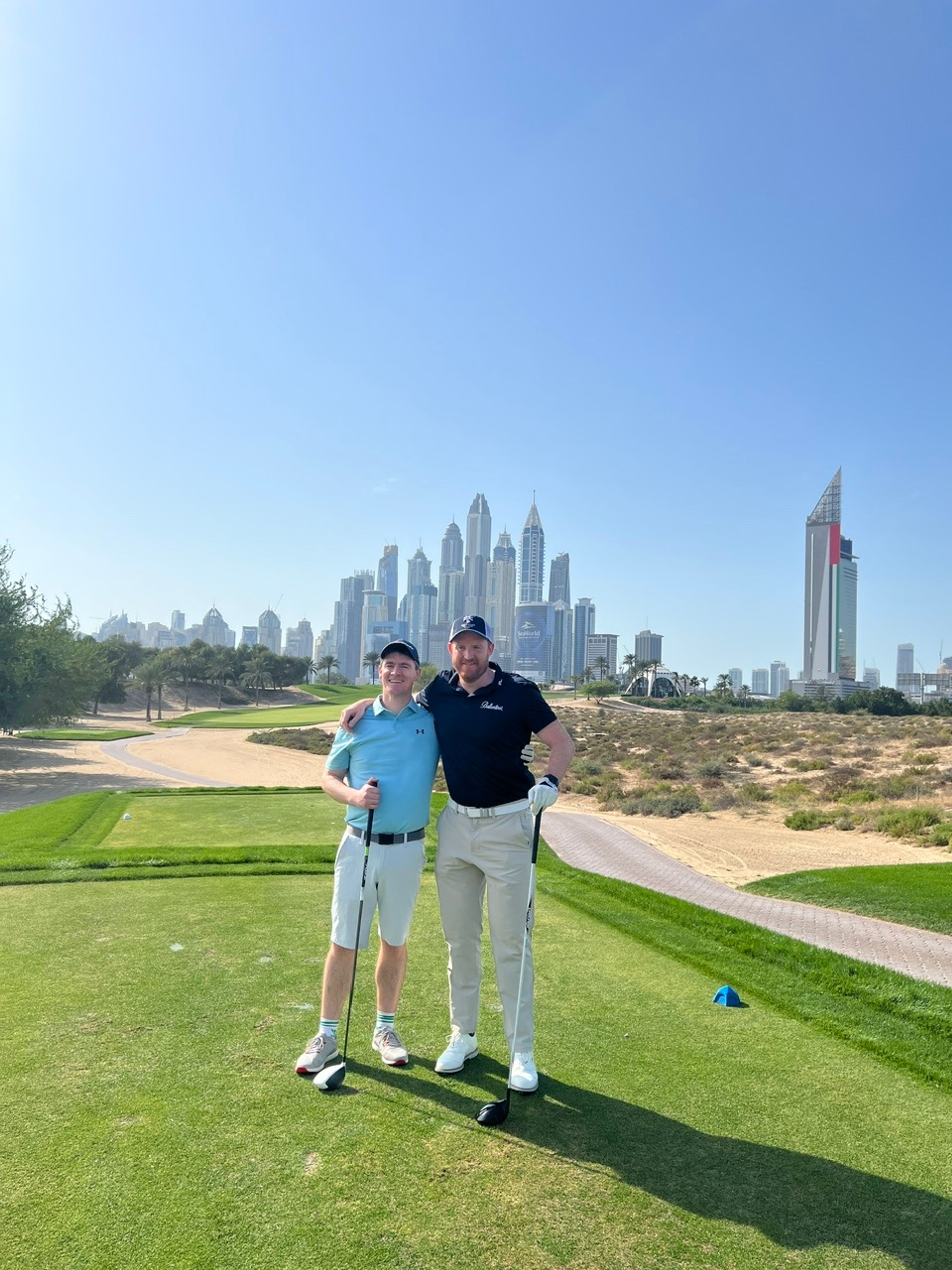
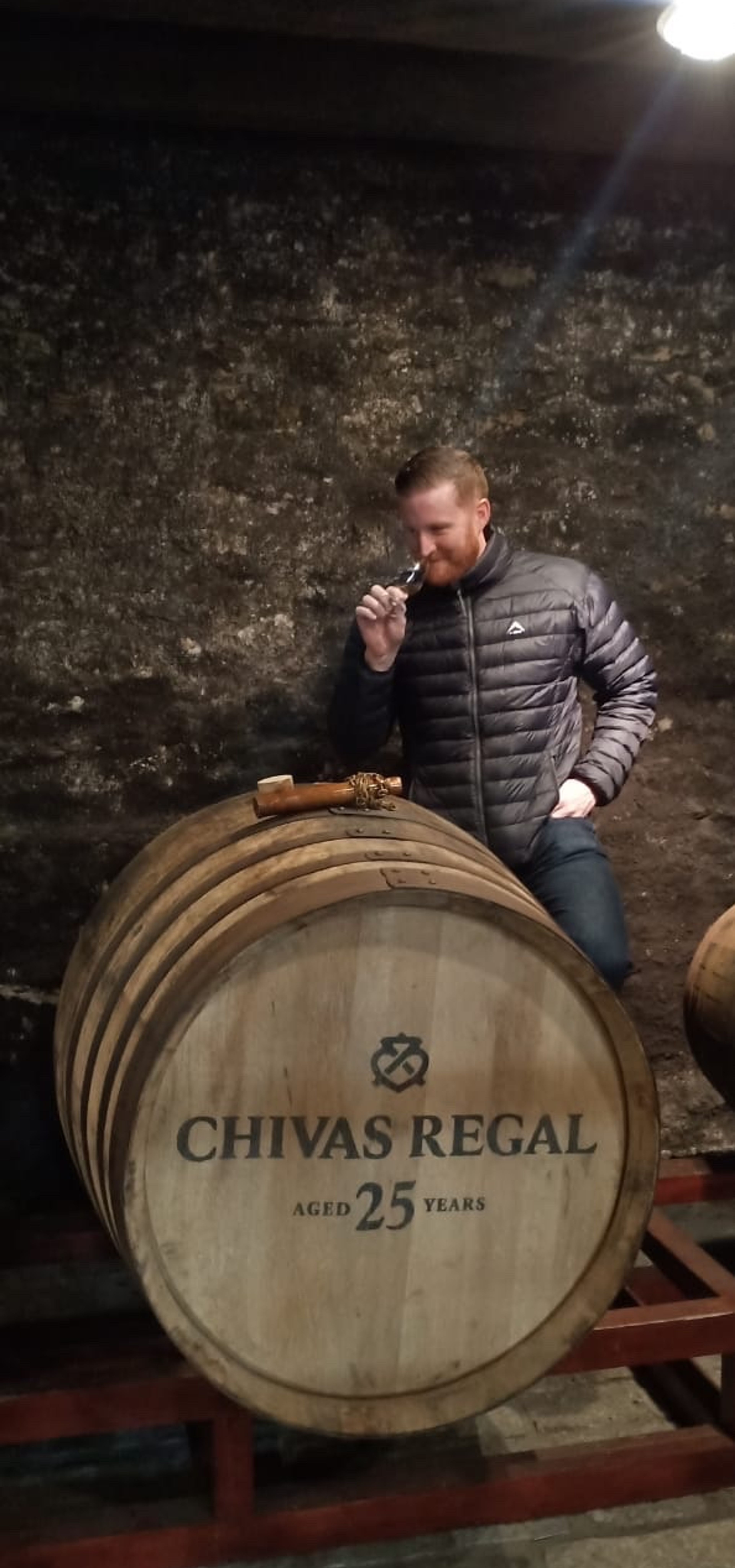
Antóin moved from Dublin to Dubai for a change. He felt as if he landed on another planet. The August heat was unlike anything he was used to, then the tall buildings were staggering in their height. Still developing, Dubai made Antóin recall his ancestors who’d gone from Ireland to New York City at the turn of the 20th century. They must’ve felt the same: leaving the security of home for the promise and anxiety of life in a foreign land. Taking a step away from whiskey, he began focusing on Pernod Ricard’s scotch and gin brands like Chivas Regal and Beefeater. He started on the domestic side, managing key regional distributors whose sales teams supplied both off-trade retailers and on-trade venues like bars and restaurants. “Sales is relationships,” he said, “but the attitude in the Gulf was a bit more old school. There were a lot of handshakes, going out together, and getting pissed. I think a big reason why I succeeded was because I did all that and more. Others were fine with just doing the relationships part and coasting but I always tried to offer more.”
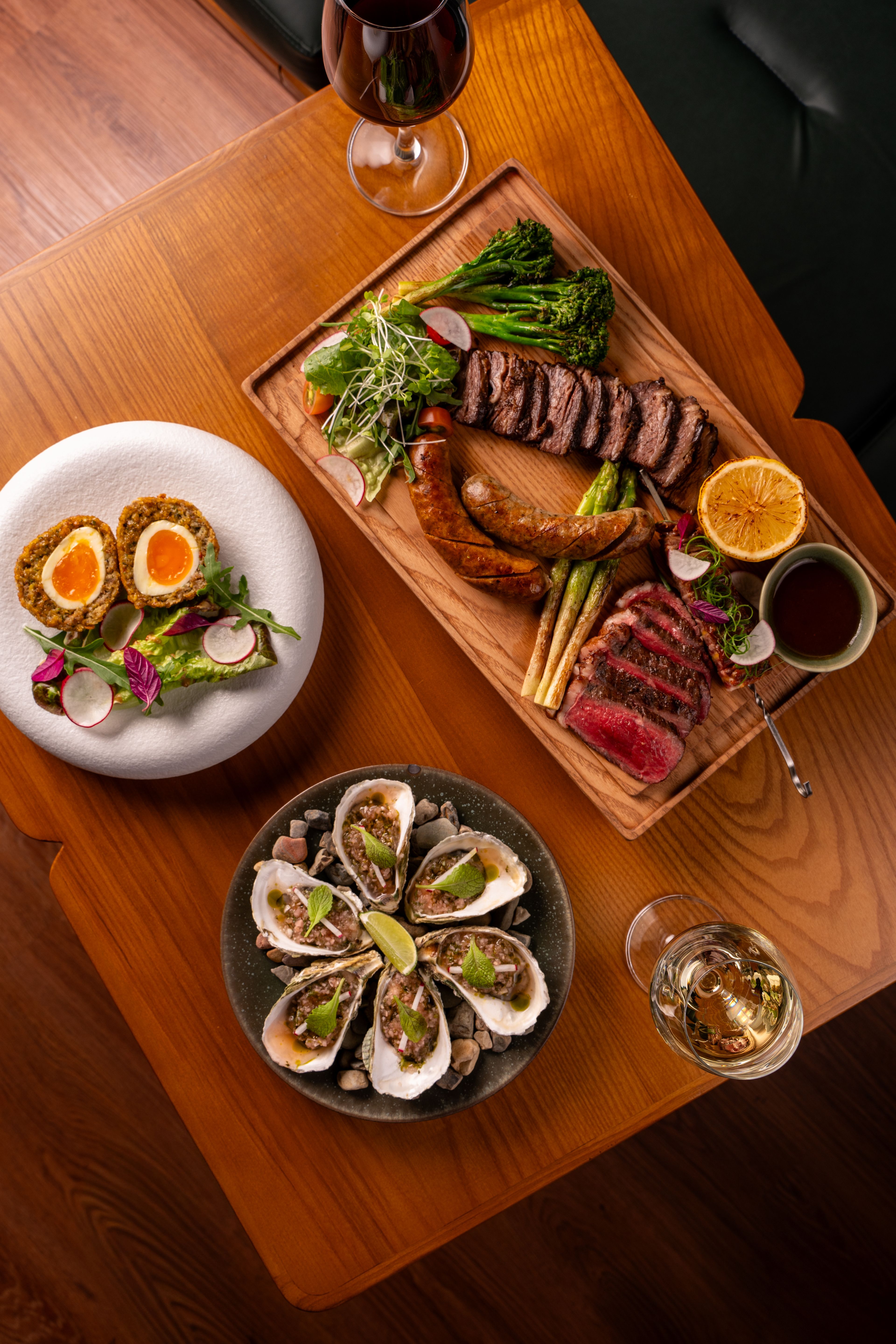
Eventually, Antóin moved into marketing. The consumer lay at the heart of this position. By building detailed profiles of individual buyers, he learned how to anticipate the decisions they’ll make when it comes time to buy a product. Part of this involved determining a person’s motivation for consumption. In other words, different communities have different reasons for purchasing a specific product, with factors like timing, location, and cost affecting a single decision. “In Ireland, there’s different reasons people have a drink,” Antóin started. “You’ve got Friday nights with coworkers, Saturday nights with mates, Sunday roast with the family… Each fills a different need and occasion, and if you can understand those motivations, you can figure out what to say, when to say it, and how to say it.” He went even further by talking about how humans have several baseline needs including companionship, love, and pleasure. When you couple an understanding of those fundamental needs with an accurate depiction of a person and their motivations, you can create a marketing strategy that successfully targets them.
Marketing in the Middle East was a particular challenge because it was what Antóin called a “dark market”. Compared to nations where spirits and alcohol companies have the freedom to advertise across mass-media platforms, dark markets restrict advertising on mediums such as TV, social media, and billboards. These constraints meant Antóin had to figure out a different way to market for Pernod Ricard, and he cited this lack of opportunity as a catalyst for creativity. Among the various strategies they employed, lifestyle branding became a key component. Rather than simply tacking an image of Chivas Regal on a billboard, Antóin and his team had to play into the values and identity a brand can possess. In this manner, it becomes possible to mythologise the brand and draw people in indirectly. The Absolutists were one such creation. A social media account for Absolut Vodka, rather than directly speaking about the product, they organised and supported events that later formed into a community of Absolutists. From producing storylines and content to developing in-person activities for their target audience, it allowed Absolut Vodka to engage with their consumers.
Antóin went on to spend eleven years in Dubai, culminating in a role as Pernod Ricard’s marketing director for the Gulf and South Asia regions. While his expertise propelled him to try setting up a company in conjunction with Pernod Ricard, he shelved the idea after a year. Instead, an opening came up at its Vietnam branch. Moving further east intrigued Antóin as a result of a playful fantasy he’d had that if he kept heading in that direction, he’d eventually end up back home in Ireland. In 2021, Antóin moved to Saigon and became Pernod Ricard’s marketing director. Funnily enough, Vietnam was another dark market. Furthermore, beer is king in Vietnam, and while there aren’t many restrictions hampering the marketing possibilities for that beverage, when it comes to spirits, advertising isn’t allowed and even retail-store promotions are forbidden. Instead, it’s a much heavier trade-marketing focus, with experiential marketing through events also necessary. After three and a half years, Antóin’s career at Pernod Ricard ended. The company was restructuring, and while a move to London was an option, that wasn’t the way back eastwards he was looking for. Instead, he decided what he wanted was some well-deserved time off work.
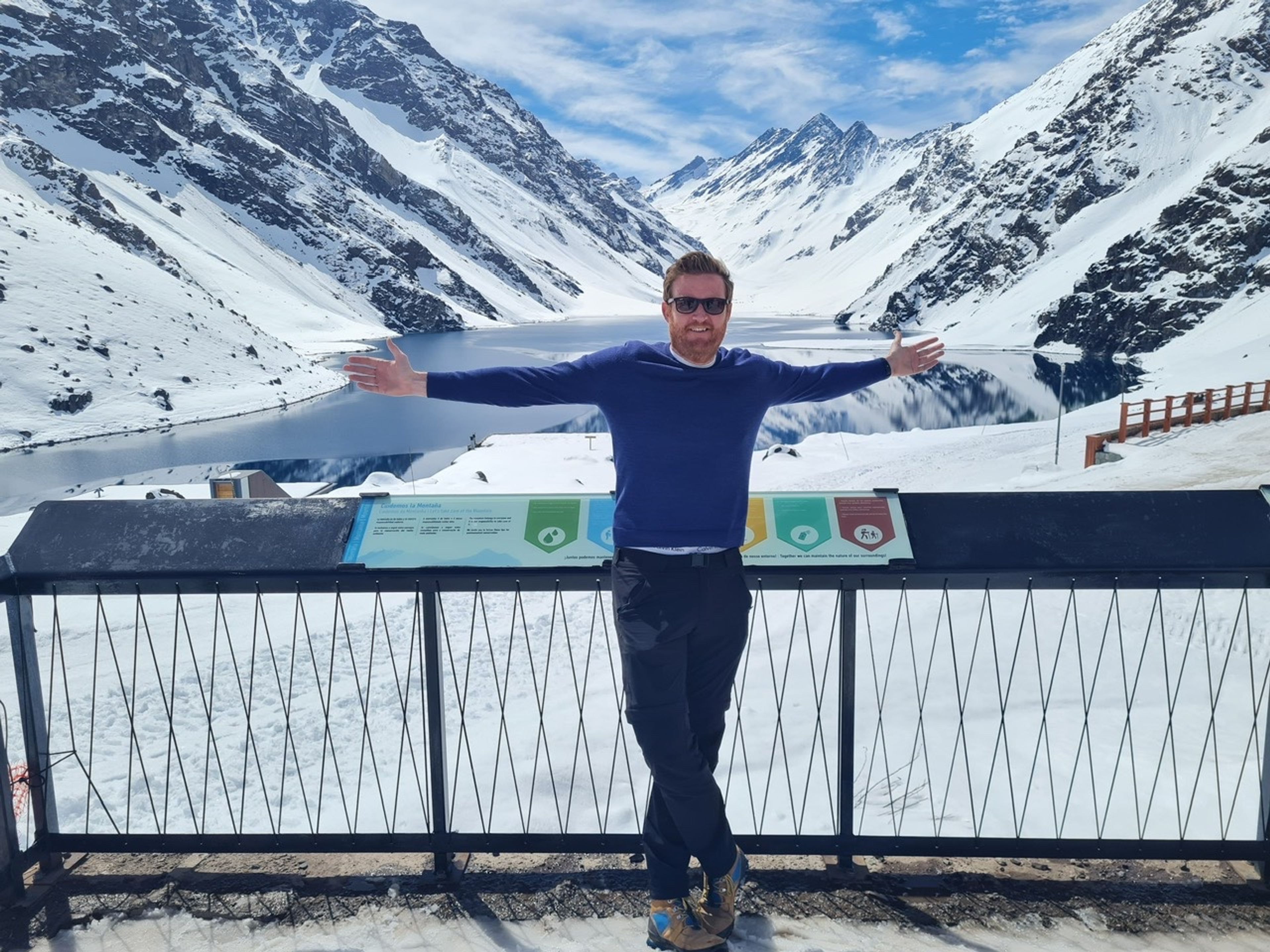
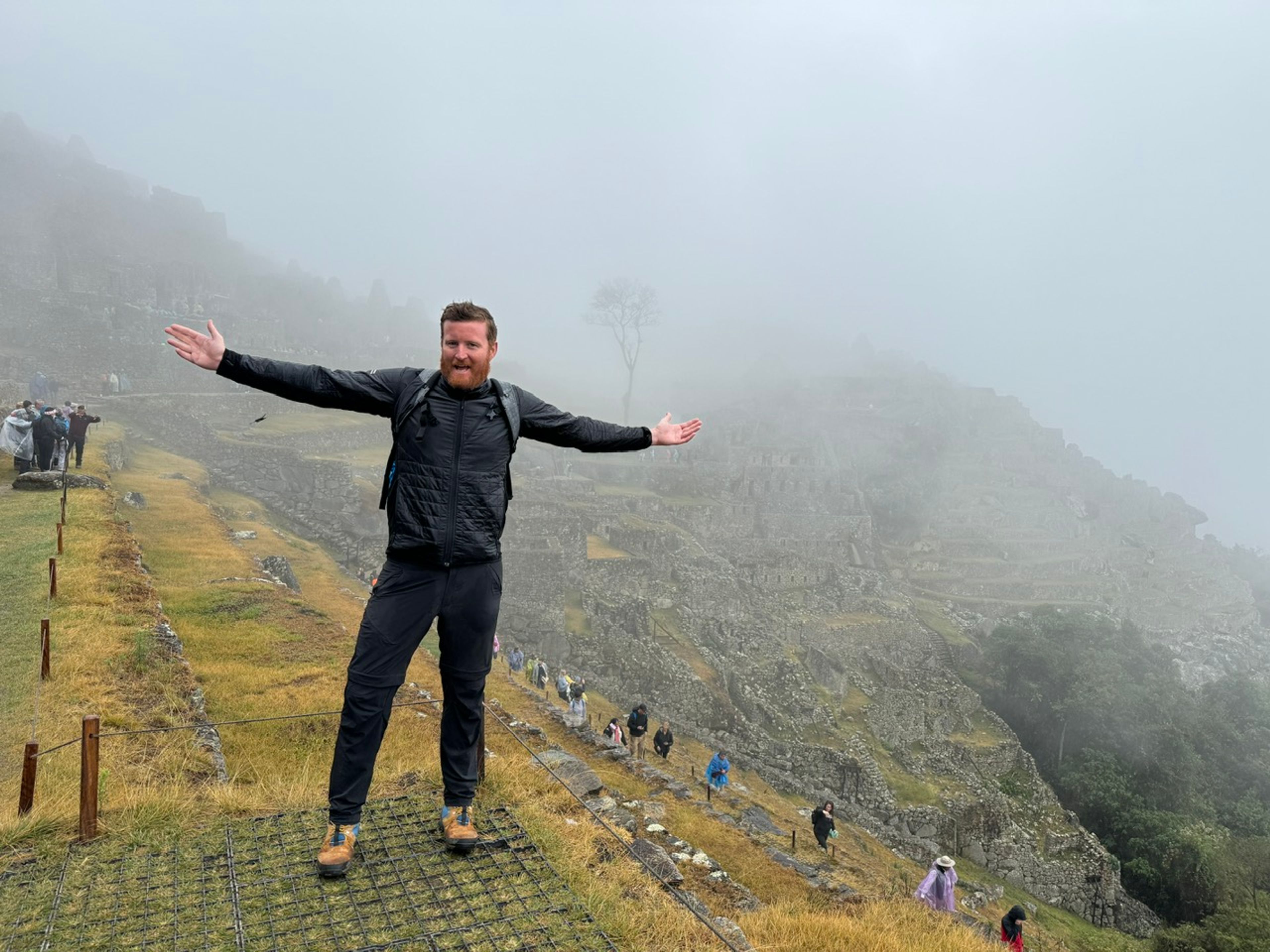
Keeping Saigon as his homebase, Antóin travelled around the world. Japan, Korea, Taiwan, then back to see old friends and colleagues in the Middle East. He spent a month with family in Ireland, headed to Canada and did a road trip with a friend in America, driving to cities like New Orleans, Austin, and Miami. South America came next, soaking up the culture of countries like Argentina, Brazil, Colombia, Chile, and Peru. All the while, he tried his best not to think of work, but for the man who’d wanted to be a businessperson since he was a boy, it was hard not to wonder about his next venture. After roughly ten months, Antóin made it back to Vietnam. “I remember it was a Thursday and I went out with some mates, and the next Monday I woke up in bed and I kind of just panicked”—he paused, chuckled to himself—“I’ll admit I was a bit anxious. I thought I’d made a mistake leaving the corporate world… I slept on it, and the next morning I went to the gym and I started figuring out what to do.”
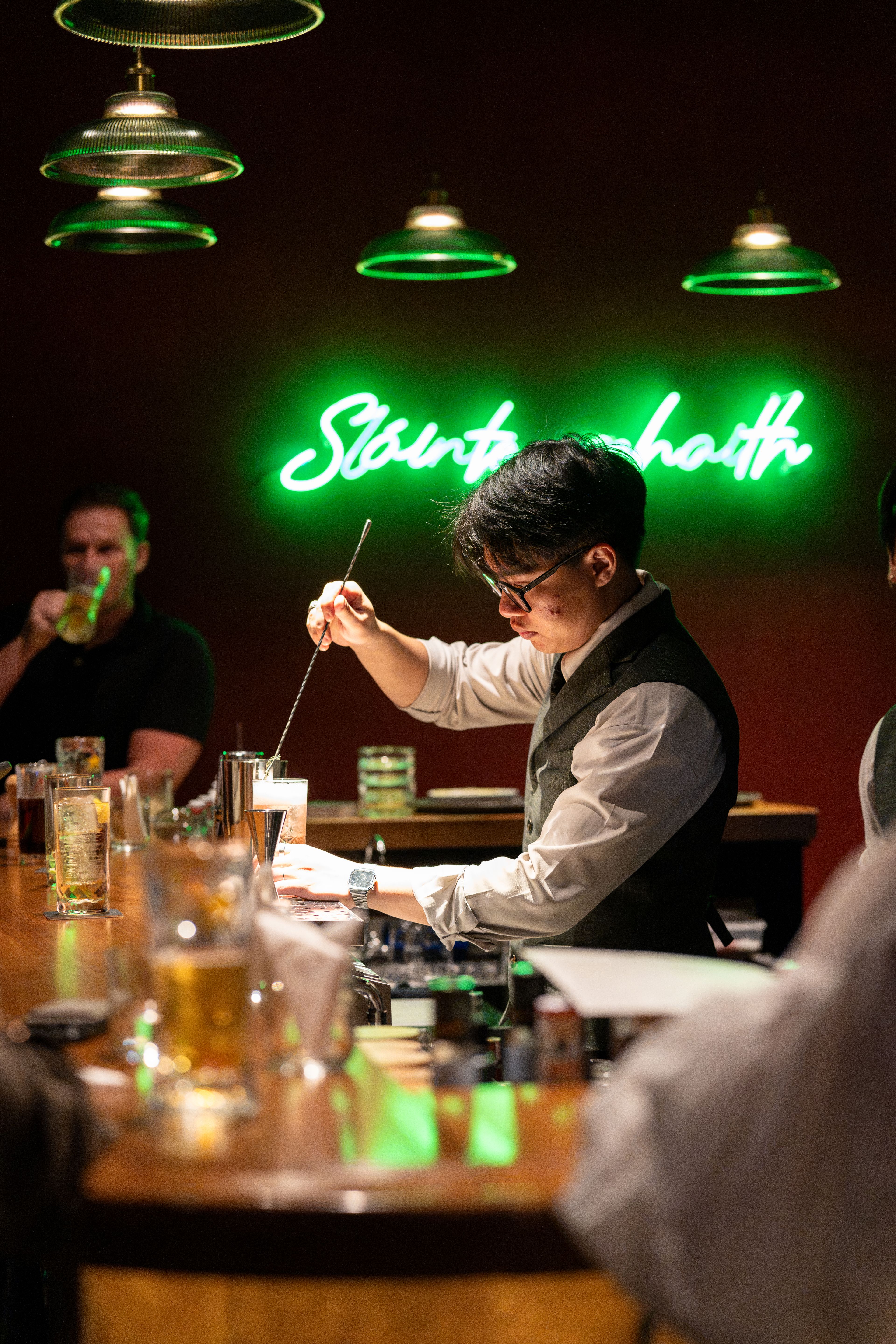
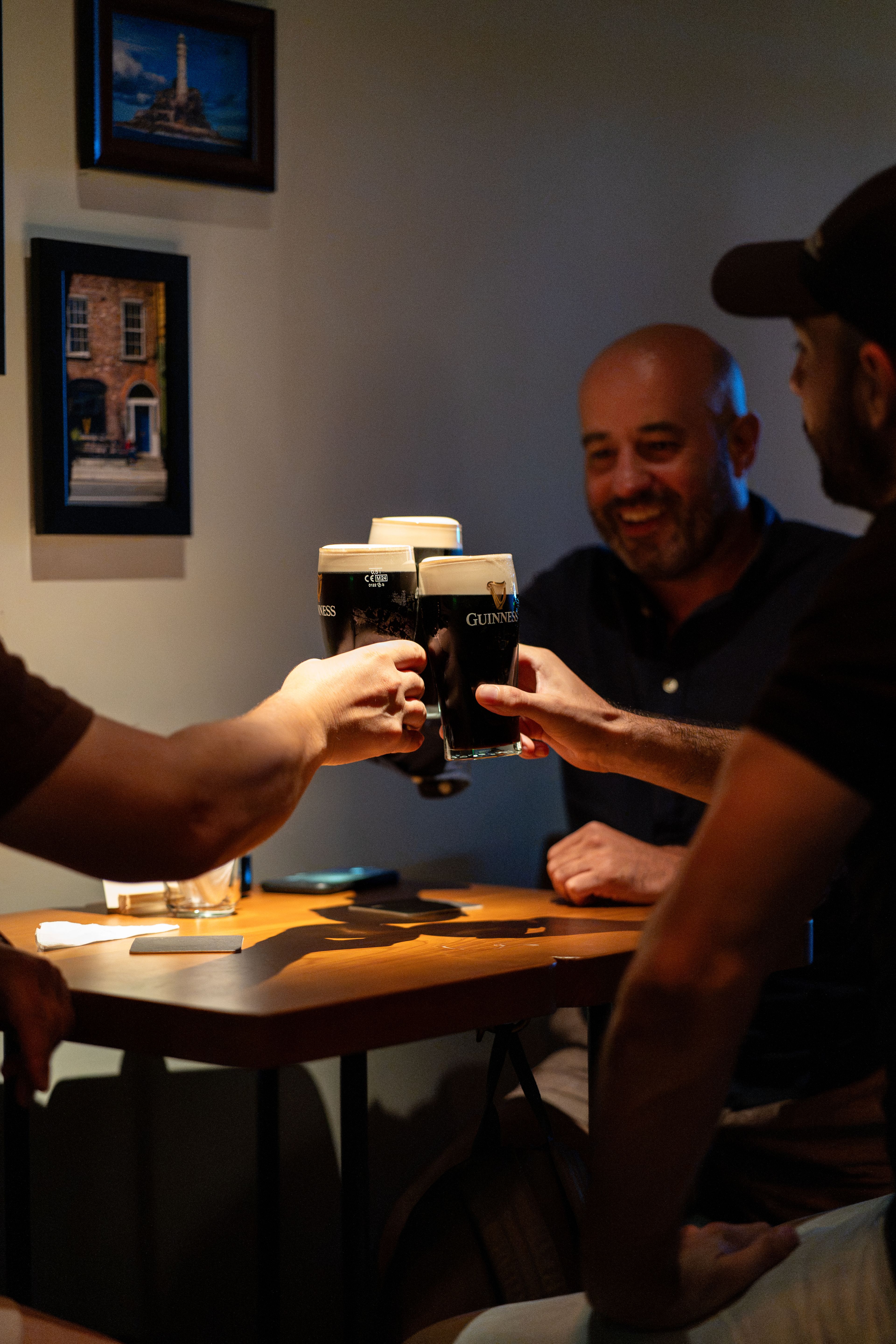
Though he considered other paths like consulting or getting into the coffee industry, Antóin kept coming back to the dream he’d carried through all his travels: opening an Irish bar. He wanted to open one in Vietnam because of his belief in the similarities connecting the Irish and Vietnamese. Both have endured decades of hardship, and yet despite those struggles, have come out the other end with a powerful sense of identity. In addition, each possesses a unique joy for life—that quality of wanting to gather with friends and family over food and drinks to chat, laugh, and sing. The fundamental need for companionship and social gatherings—a trait Antóin recognised in his past work in Pernod Ricard—abounded in Vietnam and Ireland. This had long prompted Antóin to wonder about the lack of many proper Irish establishments in Saigon. He credited bars like The Rabbit Hole and O’Briens Factory with bridging the gaps between the nations. However, he still felt more could be done. He also didn’t want to infantilise his Irish heritage by playing into stereotypes and creating a venue filled with shamrocks, leprechauns, and jokes about potatoes. Rather, Antóin wanted to design a venue that honoured Irish traditions while modernising it for an international crowd.
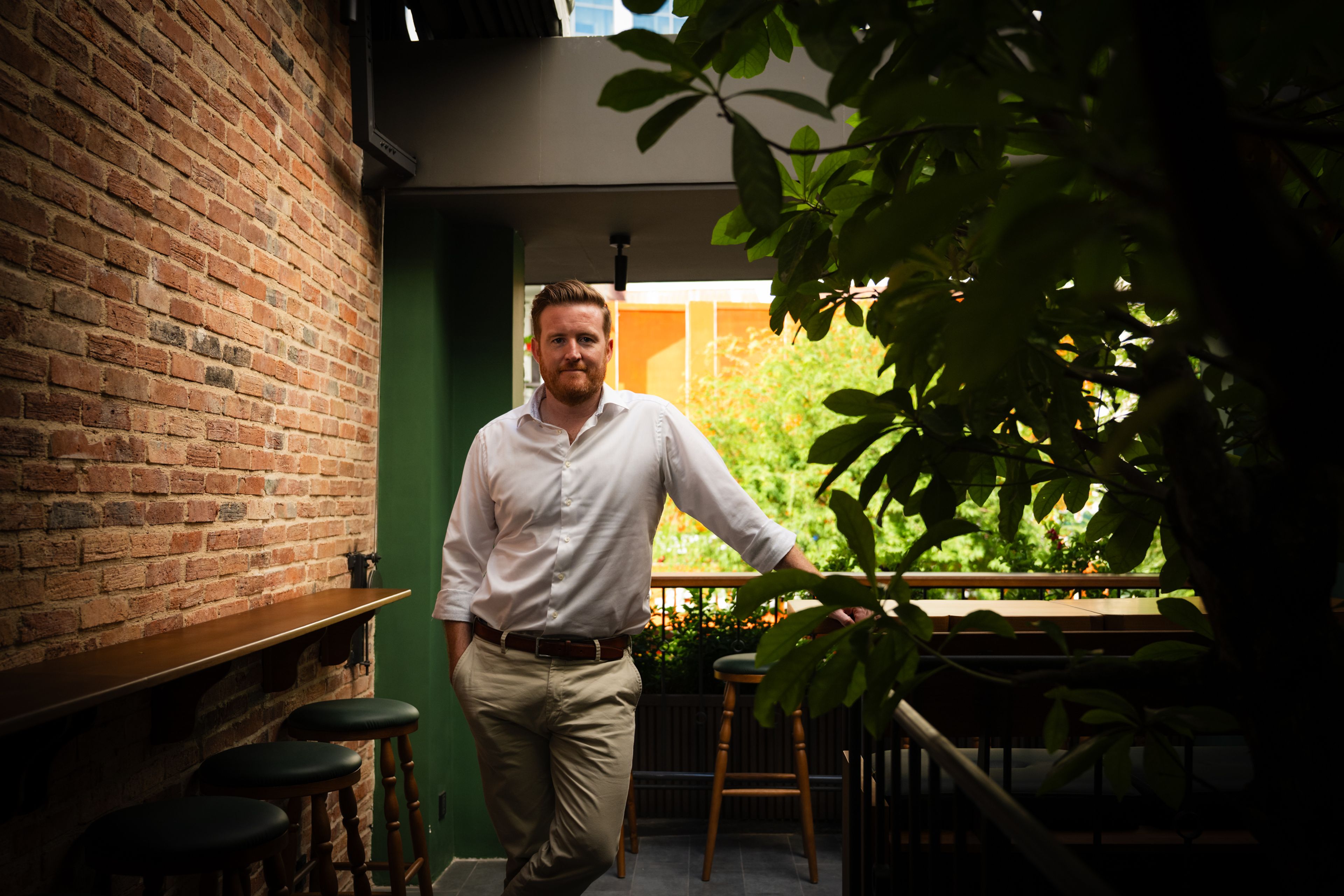
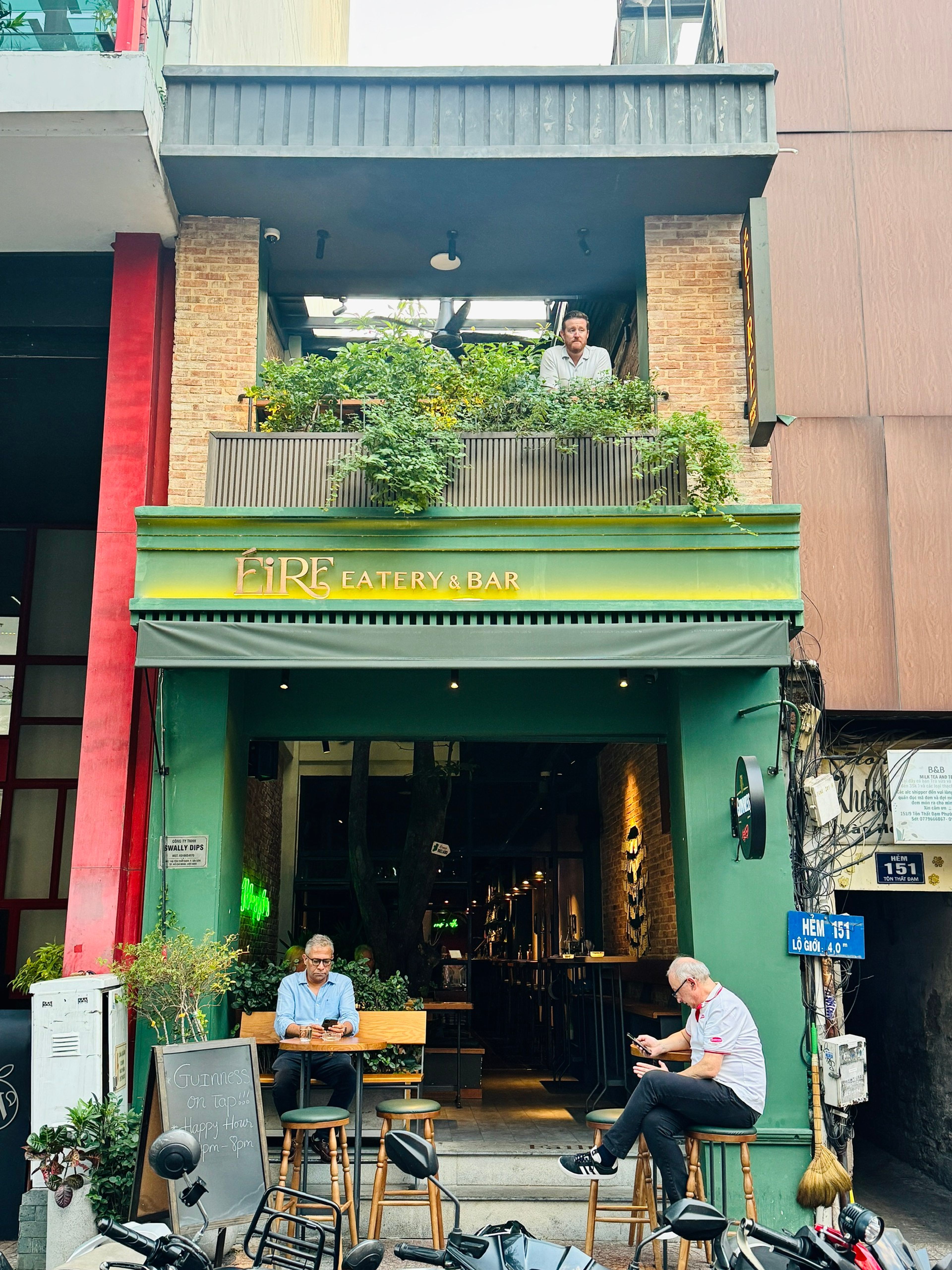
When Antóin started looking for a place to open, he had a few criteria in mind. A narrow, cramped building like some Saigon real estate was out of the question. Instead, he was after a place that people could freely move around in. Antóin also devised a map of Saigon and encircled the areas he was happy to set up shop. In the beginning, he included most of District 1 within his borders, but after scouting venues at night and on the weekend, he whittled his choices down to a few streets. After nine months of refusing to settle for anything below his standard, Antóin found Éire’s eventual location—and it was exactly where he wanted: a central location on a two-way street with steady foot traffic among locals and tourists. Finally, the building’s tall ceilings created an adequate sense of space.
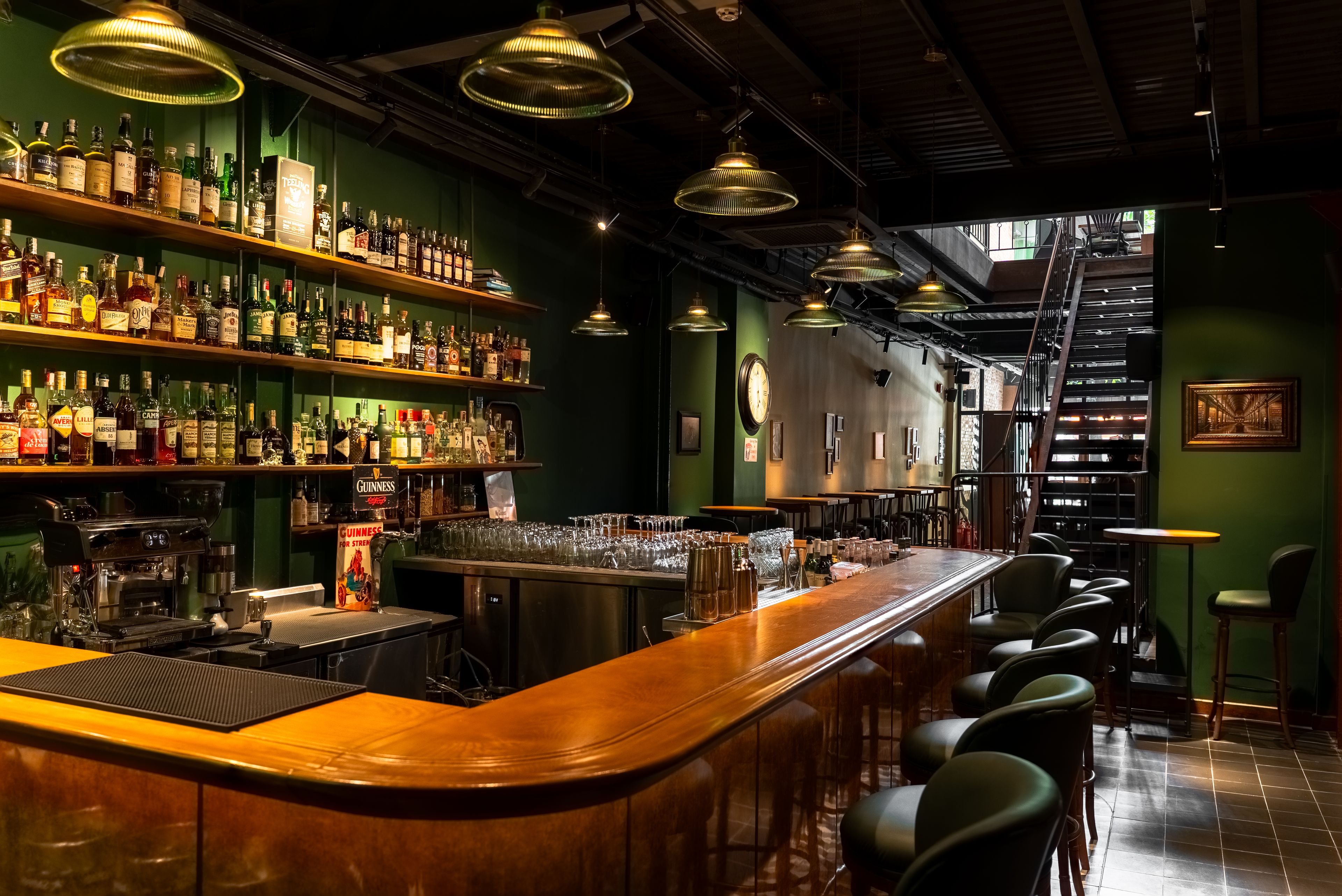
Out of the numerous other details he had to iron out before opening, one stood above the rest in importance: Guinness. However, when he first considered its sourcing requirements, he began to convince himself that rather than an essential, it would more just be a nice thing to have. While the story for how he managed to bring Guinness over is a secret Antóin prefers to keep to himself, on the day he saw the kegs roll in with their famous black label, he knew Éire had a chance to live up to its mission of bringing an authentic slice of Ireland to Saigon.
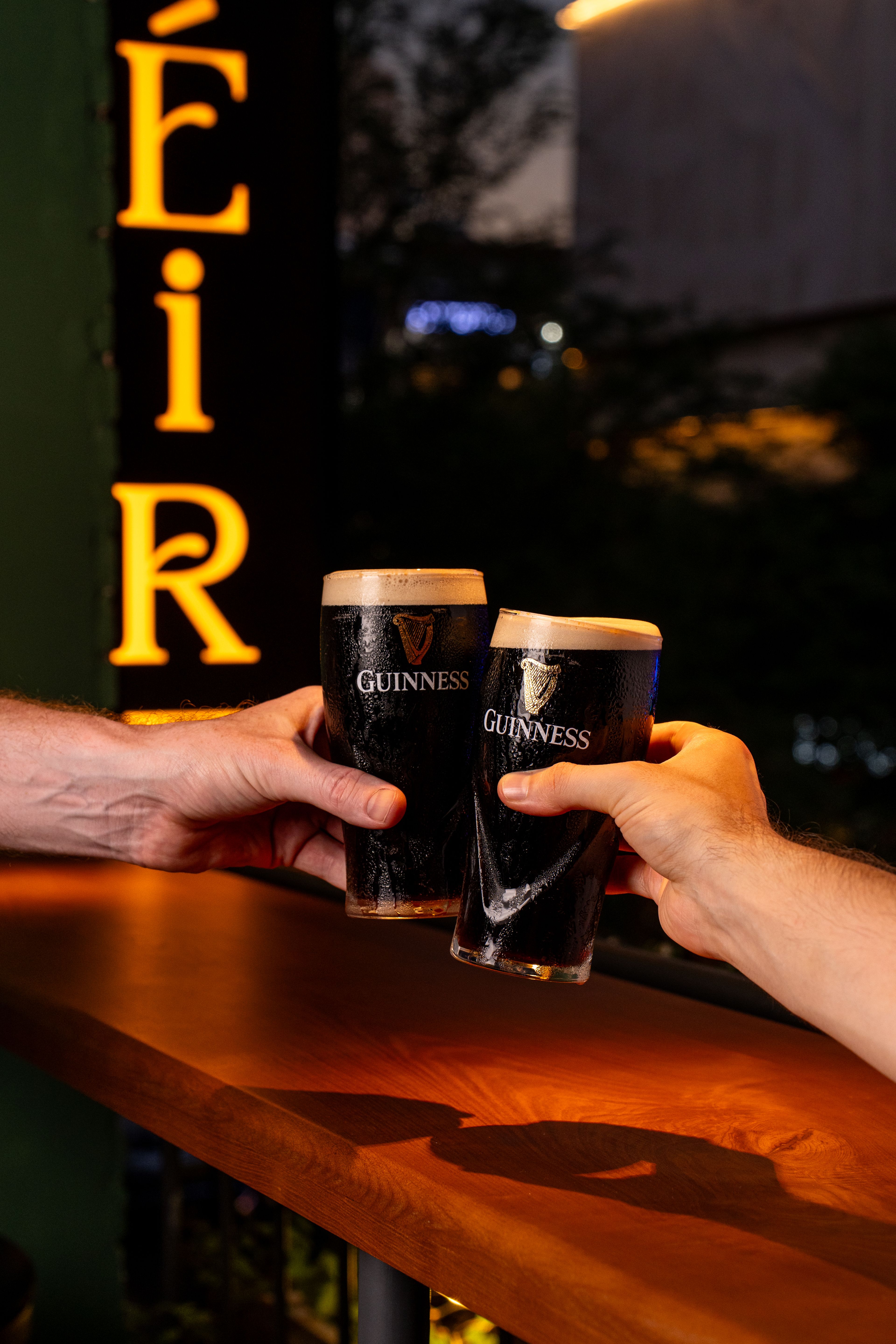
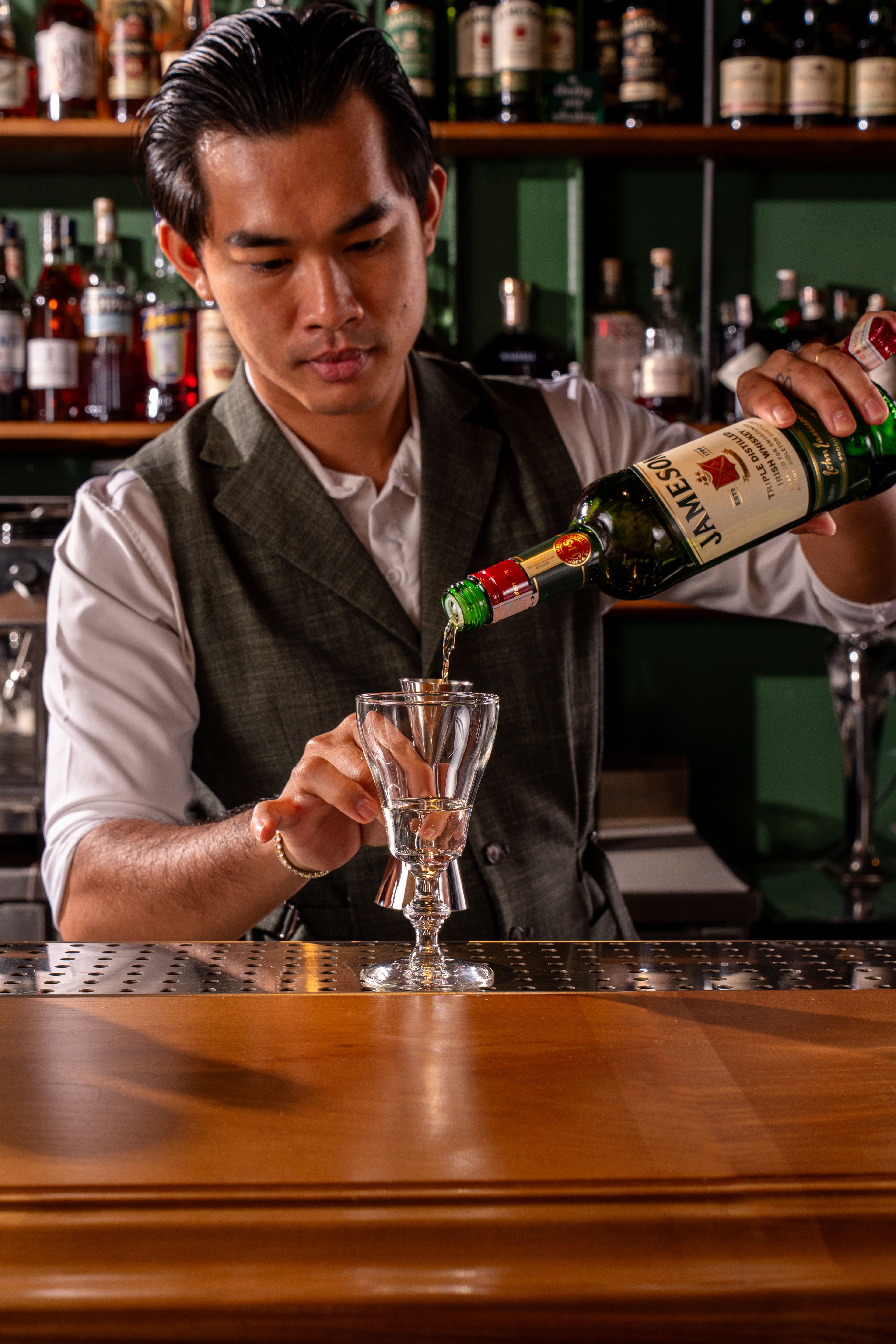
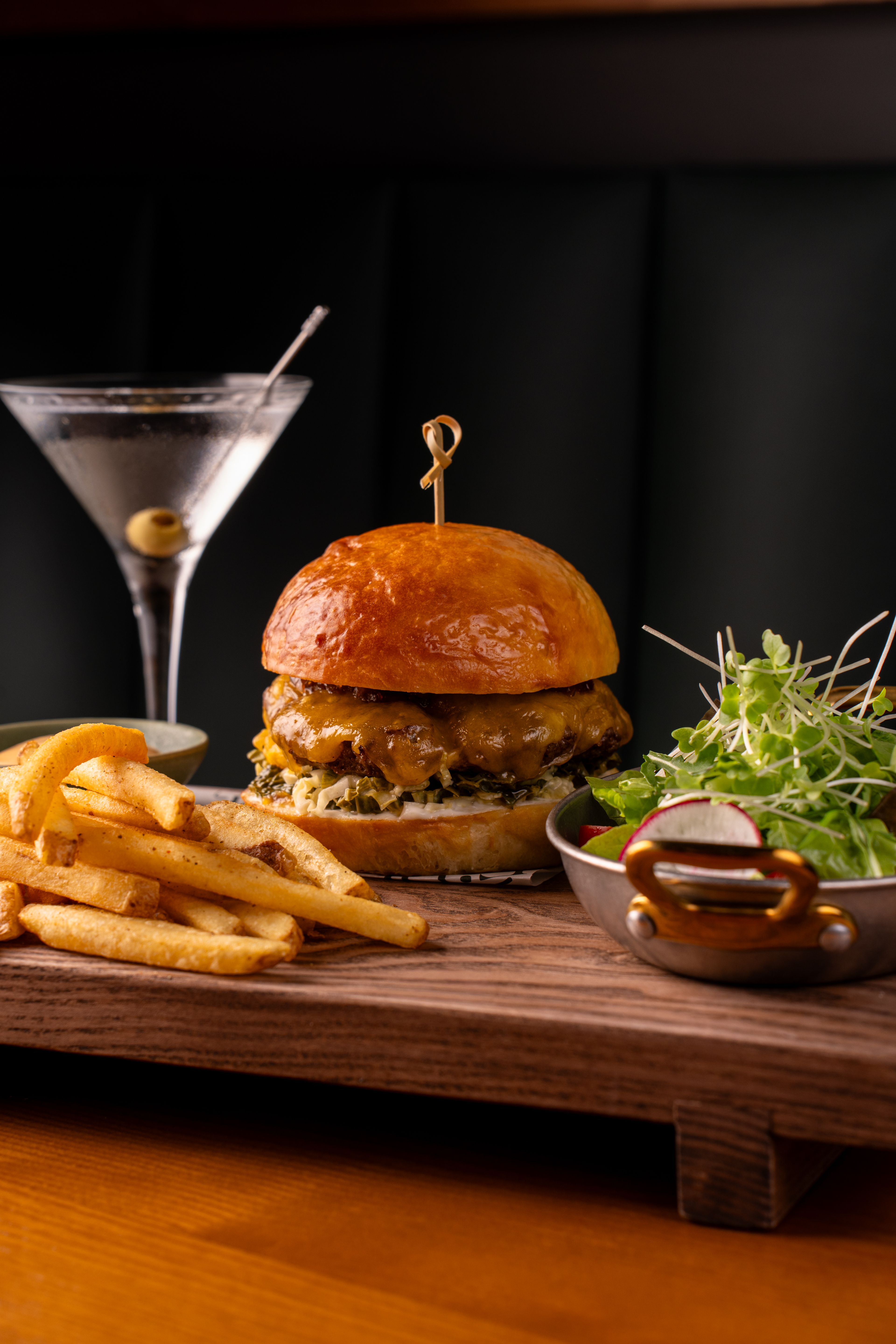
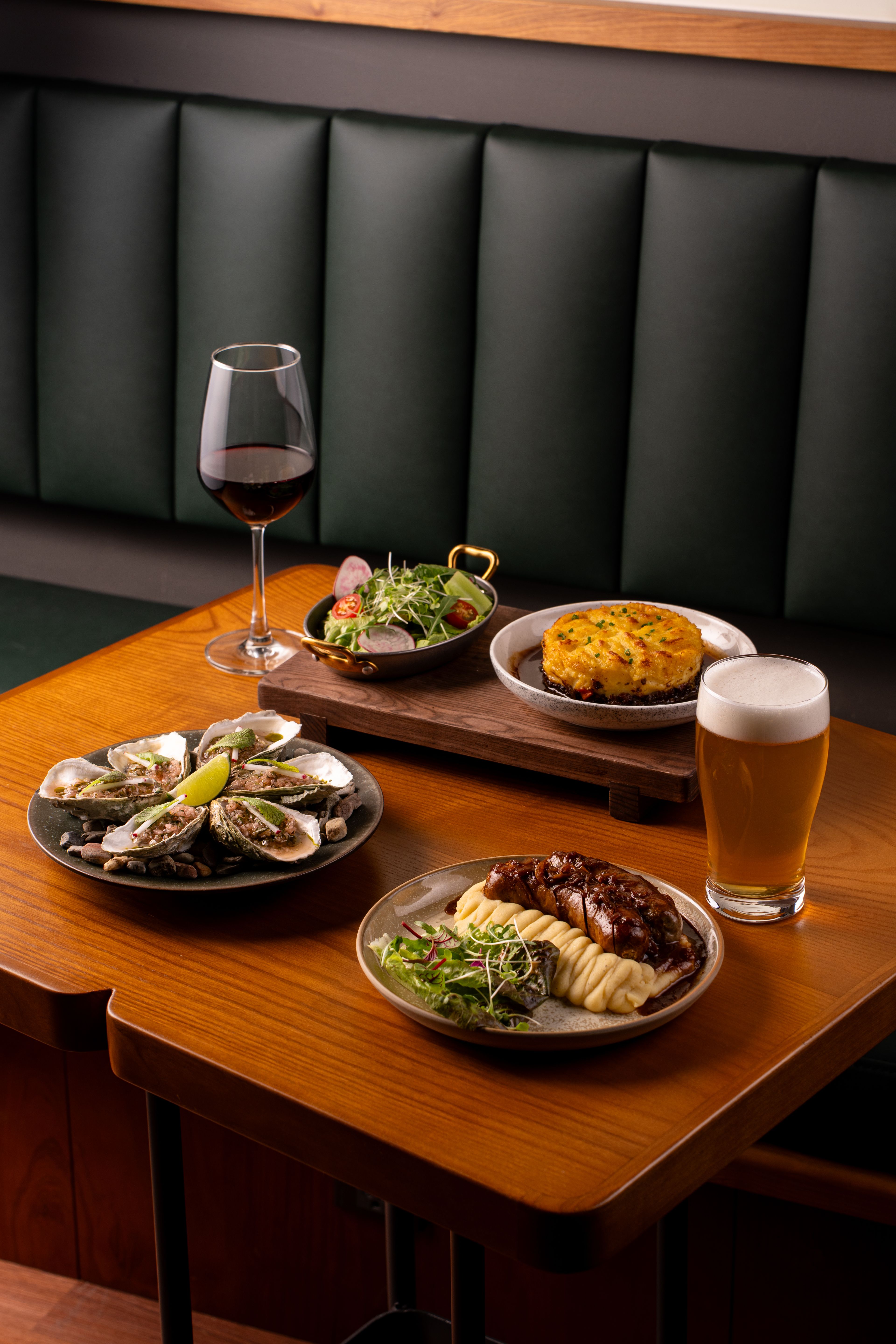
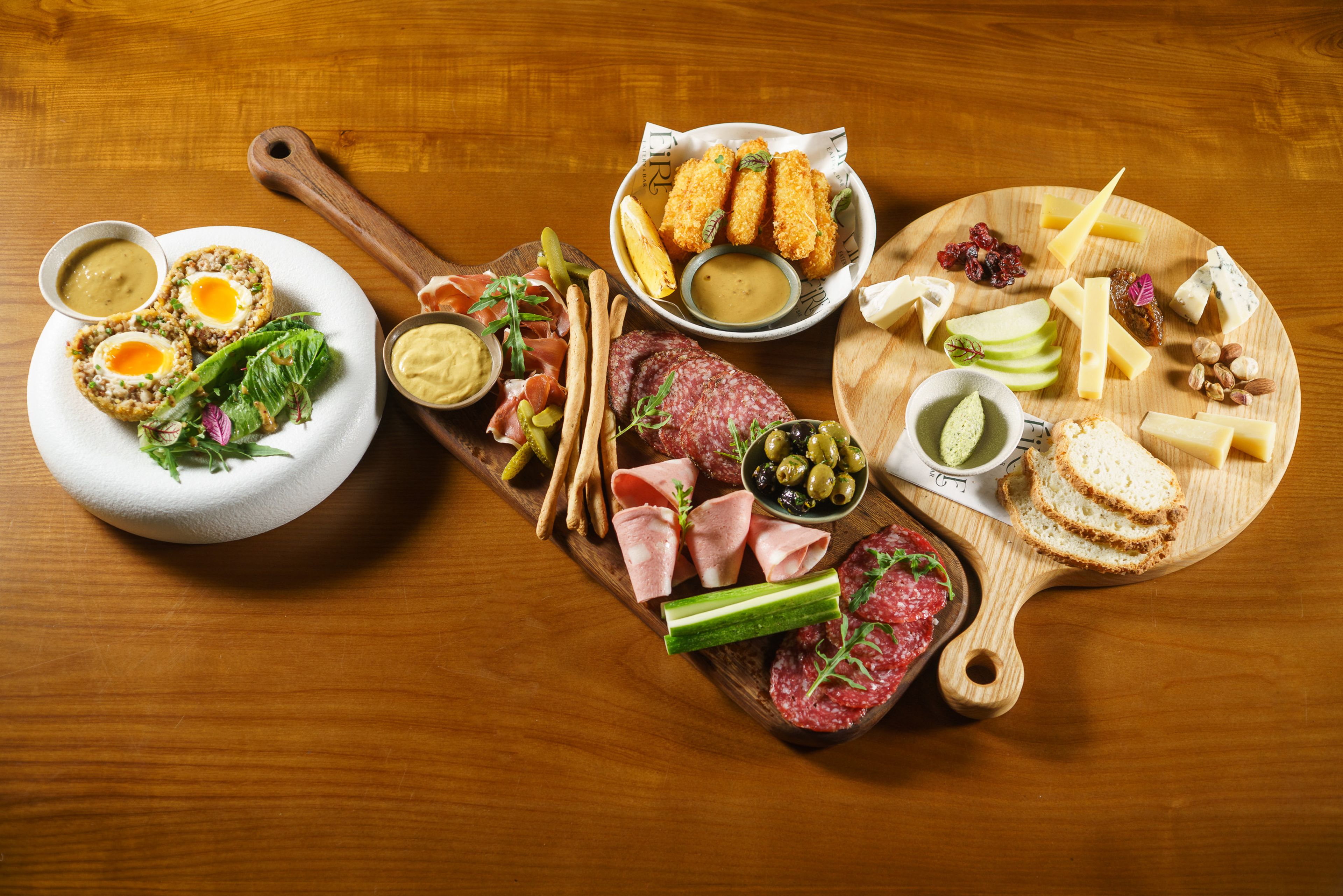
Antóin’s been pleased with Éire’s progress since they opened in June. “We don’t have an established audience yet,” he admitted. “Some nights are Western and others more Vietnamese, it’s a mixed bag in that regard but the feedback’s been positive. Of course it’s not easy. You constantly have to work at it and people aren’t just going to show up—you have to keep giving them a reason to come.” Besides the allure of Guinness, part of that reason is written in the company’s internal document: Céad míle fáilte, or, “one hundred thousand welcomes”. A phrase that sums up Irish conviviality and hospitality in one, Céad míle fáilte is Éire’s beating heart. More than anything, Antóin wants people to eat well, drink well, and leave Éire with the feeling that they had a good time. And while that sounds simple, the truth is that there’s so much you need to get right in order to achieve something that sounds basic on the surface. Drinks are one part. Food’s another. “Of course Irish cuisine isn’t known as being a gastronomical power,” Antóin joked, “but we have hearty meals so I wanted to take those and elevate it to a more international quality. Luckily I have a great chef who can adapt and learn, so I gave him a culinary brief and he put his spin on it.”
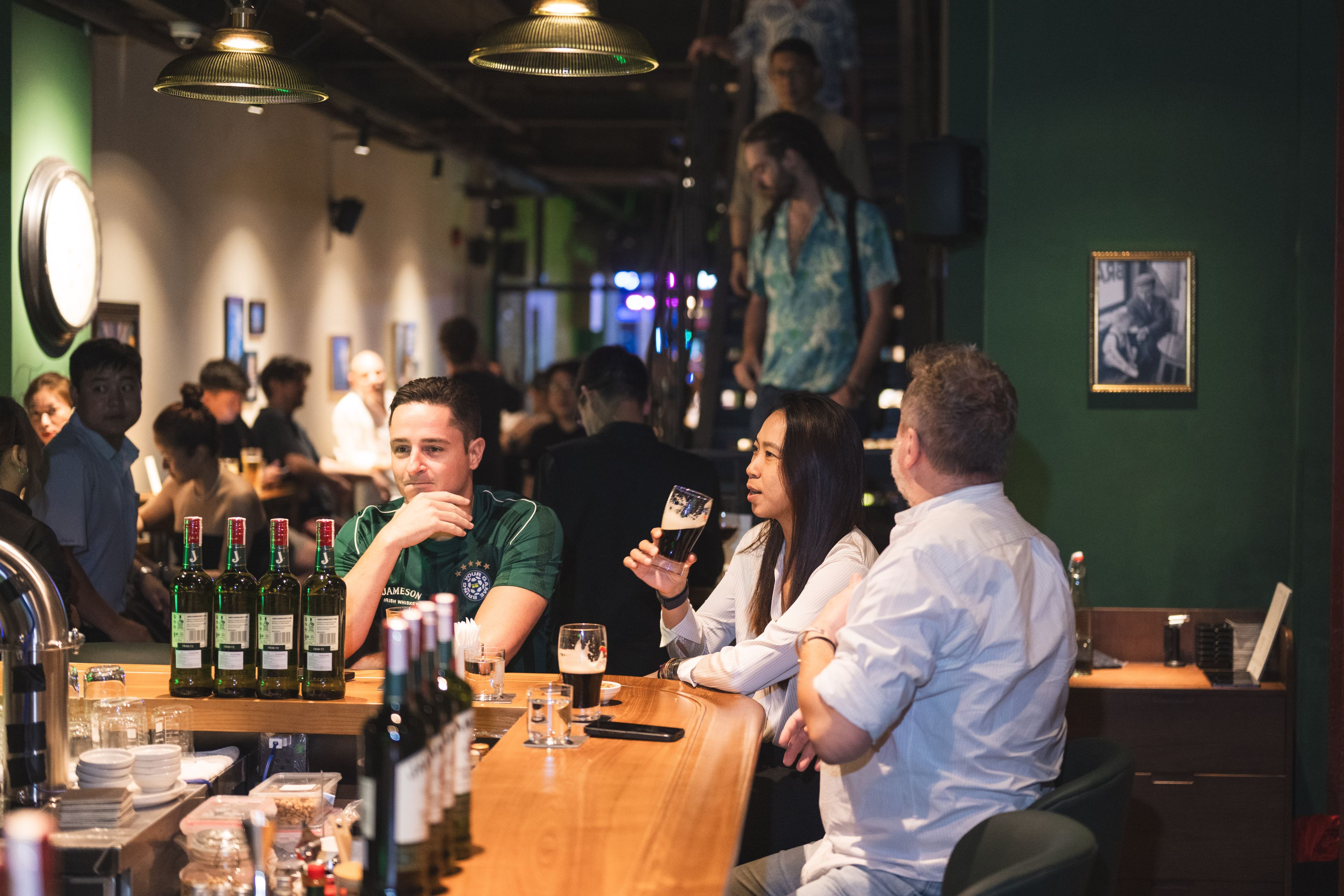
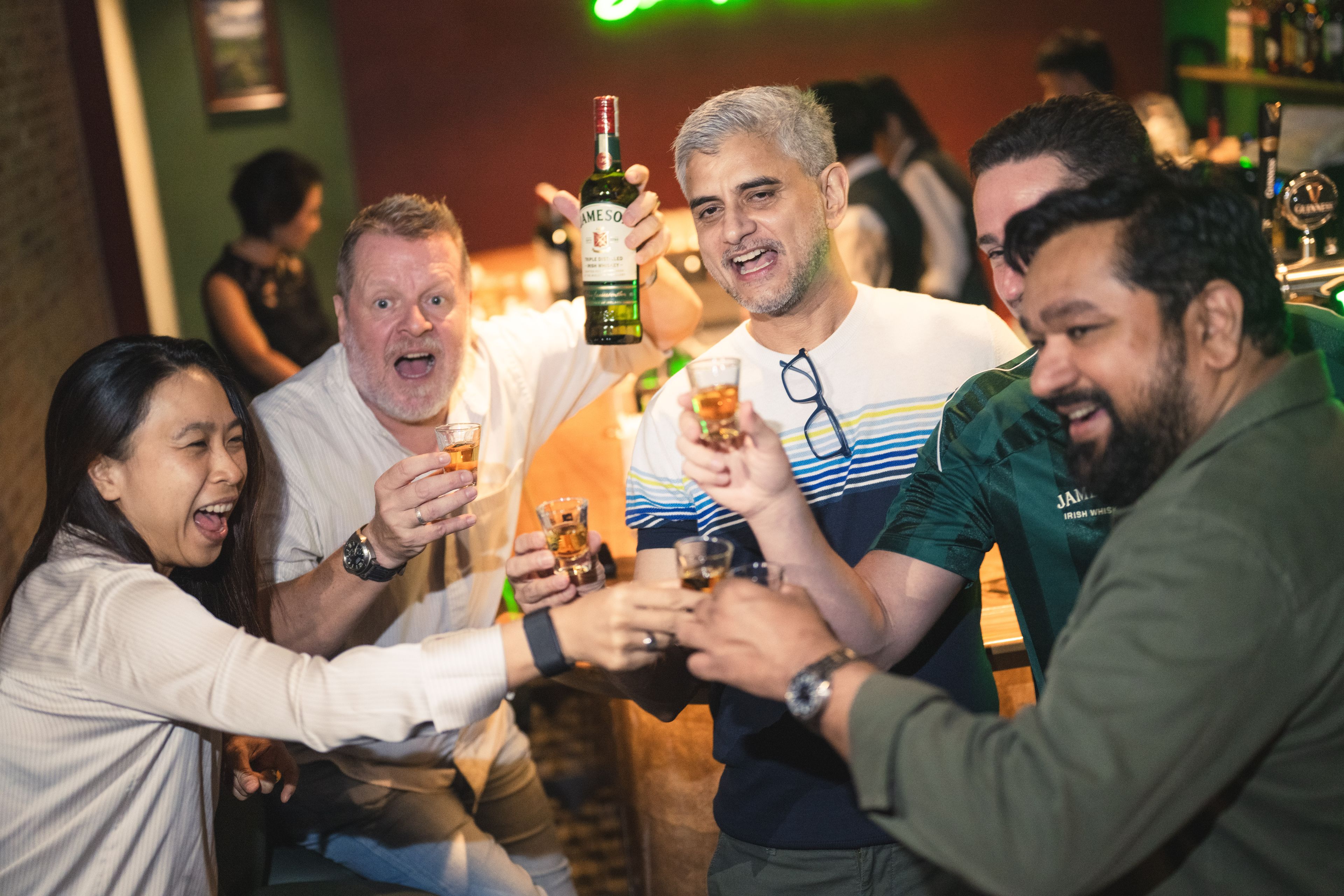
Then, of course, there’s the people. Having a solid team has been a driving force of Éire’s success. As Antóin said himself, he’ll take attitude over competence any day of the week. Though some of his staff had trouble pronouncing Ireland in the beginning, over time he’s been able to teach them bits and pieces about Irish history so they understand the culture they’re representing. What’s made him most proud is how some members now come to him with questions about Ireland, as well as suggestions for how they could incorporate more of its DNA into Éire. With those three elements, they’ve got a chance at delivering Céad míle fáilte. But ultimately, none of this would’ve been possible without Antóin himself. From a childhood dream of becoming a businessman to landing in Vietnam decades later, the songs and stories he’s told and heard along the way live and breathe in Éire’s walls. And just like the countless Irish heroes framed in its rooms, Antóin is there as well, sitting, waiting, eager for a chance to hear your tale.