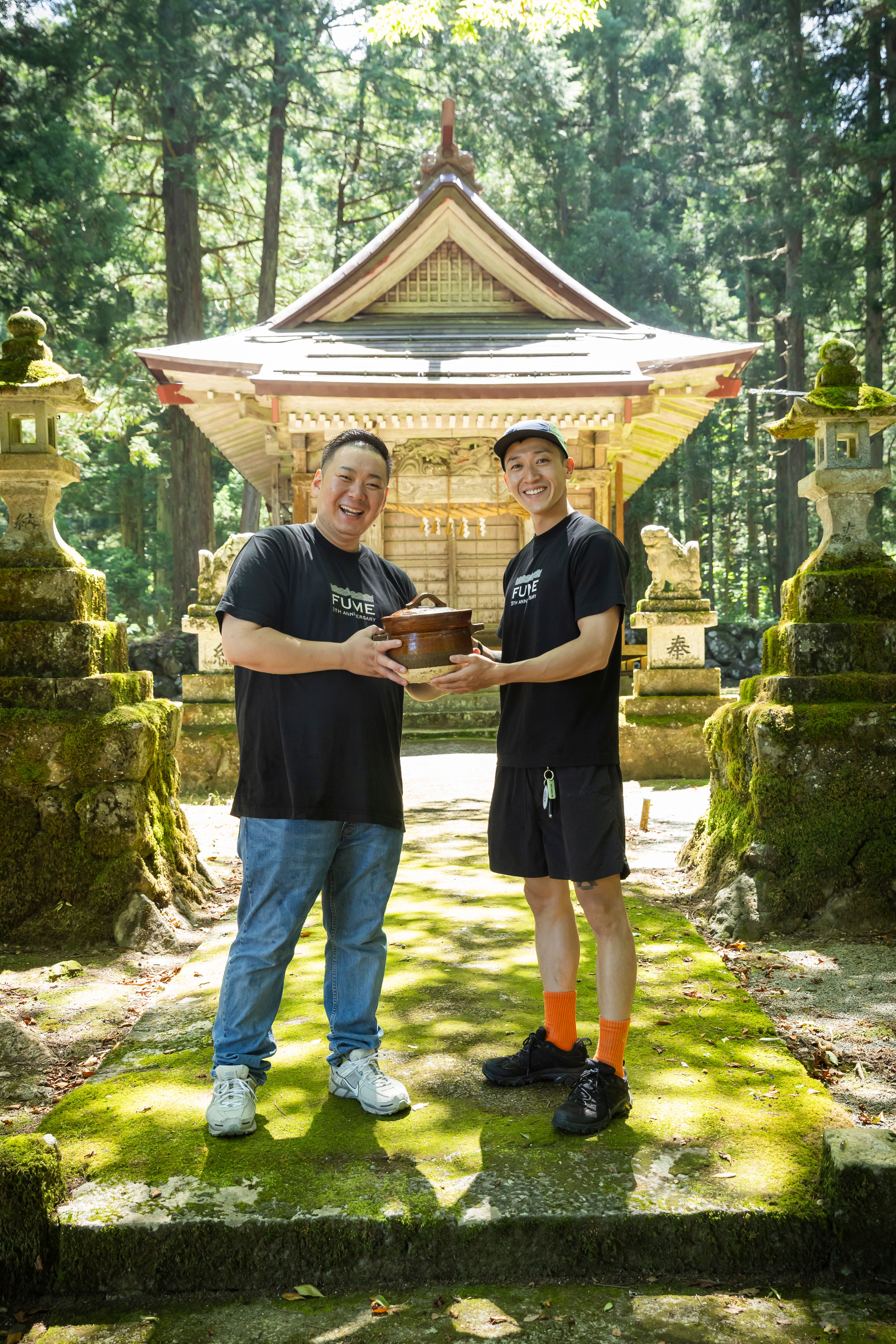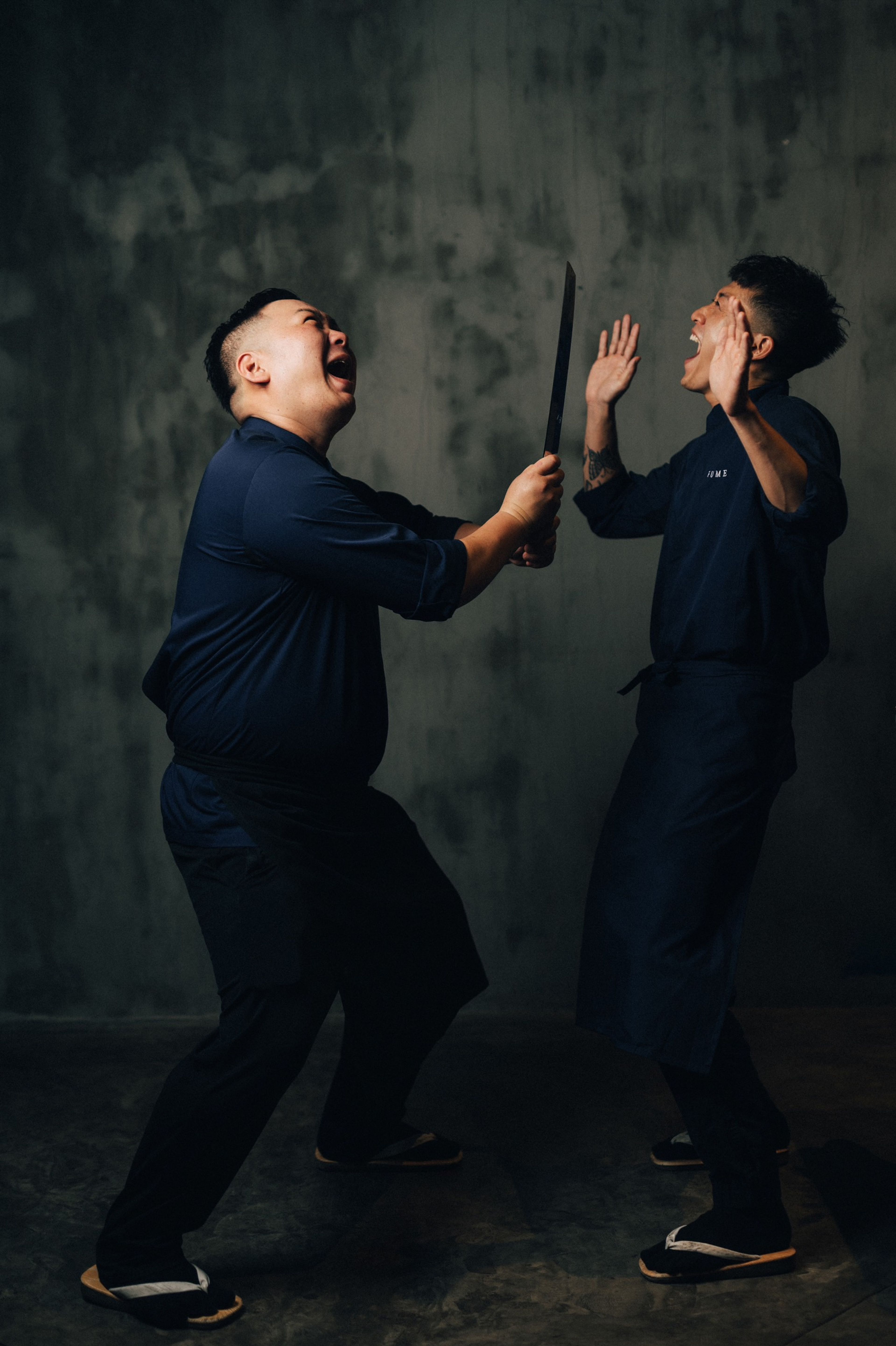







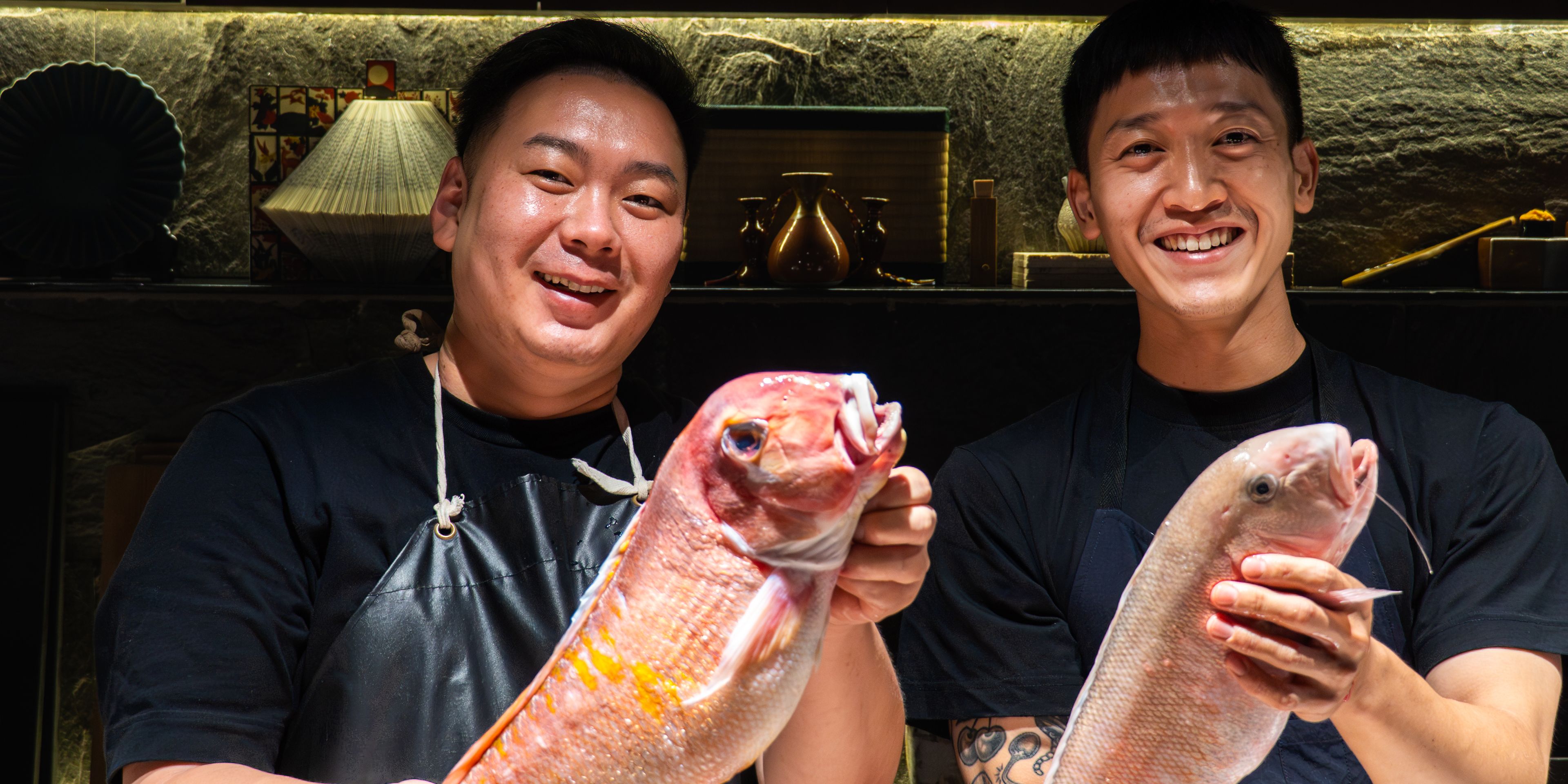
In Japan, there’s a word called shishõ. It’s a culturally significant term, used to denote people who have committed their lives to their craft and through years of work and experience, have put themselves in the position where they can have people working under and learning from them. At their best, these shishõ are similar to the idea of a “master”. They uphold Japan’s reputation as a country of craftsmen who harbour a unique blend of passion, perfectionism, and dedication to their work. However, in order to fully grasp the meaning of shishõ, you also need to know another term. Deshi are, in a nutshell, apprentices. They work under a shishõ to learn a craft, and it’s this symbiotic relationship that makes the shishõ and deshi dynamic so special. It’s a two-way street. While they might have different goals or responsibilities, ultimately, they both need one another. At FUME, there are two individuals who represent this dynamic: Chef Shōzō and Chef Tatsuo.
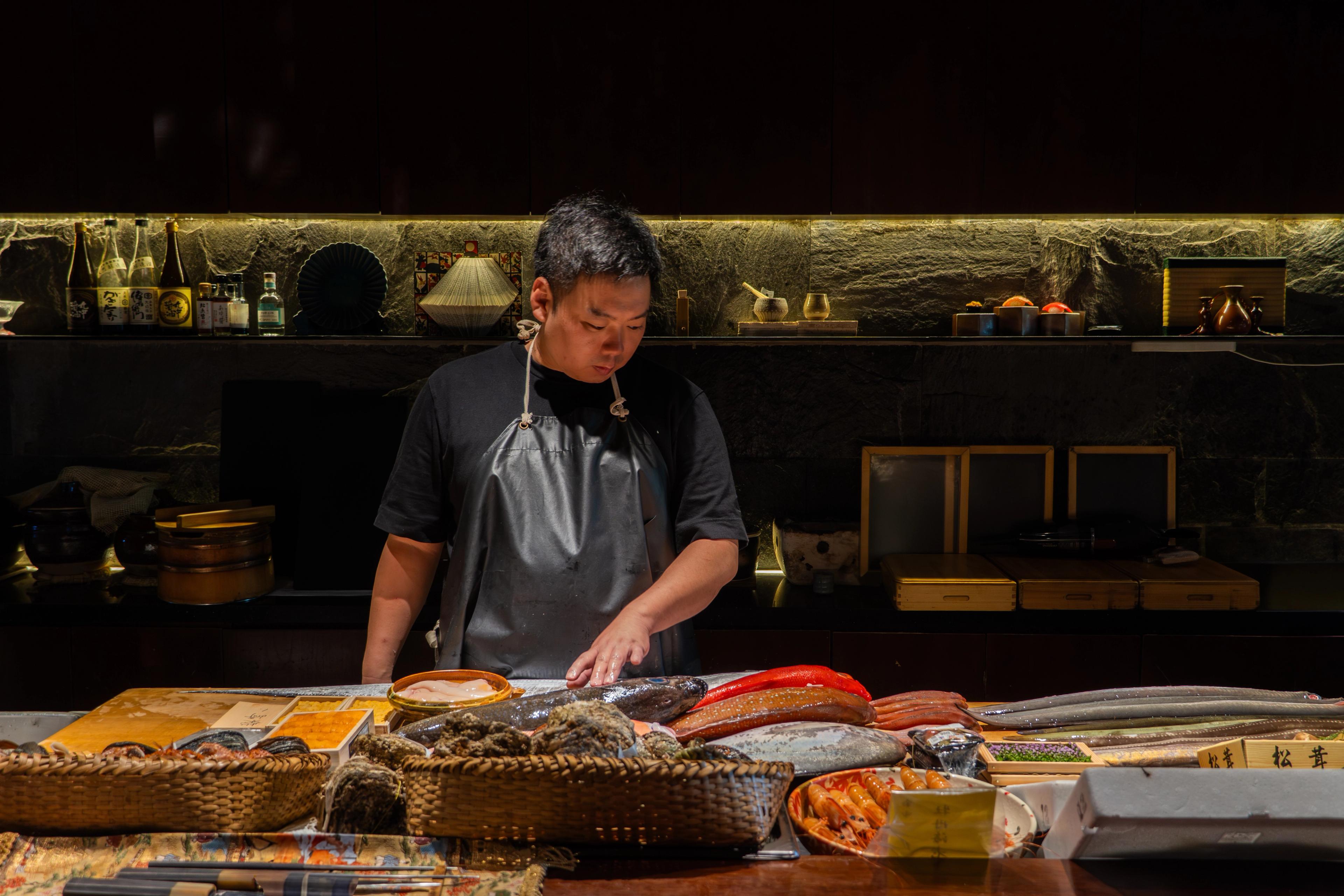
First, the shishõ. Shōzō was born in the Hyōgo prefecture of Japan's Kansai region. From an early age, he recalls how much he enjoyed cooking. TV shows like Ryōri no Tetsujin (Iron Chef) were always his favourite and given that his parents were often out working, he also spent a lot of time cooking for himself. This interest naturally developed as he got older until high school when Shōzō began working in a variety of restaurants and izakayas (Japan’s version of a pub). Finally, when he was twenty-one years old, he moved to Singapore after the fine dining restaurant he was working at in Tokyo opened a branch there. He worked there for over four years, among a team of talented chefs including many Japanese that came from French and Italian cooking backgrounds. This deepened his overall knowledge of cooking and sharpened his skills in the craft. It was also during this time that Shōzō made several trips to Saigon to visit his friend who was living there. The city made an immediate impression on him for the general feel of the place, not to mention the friendliness of its people. Thanks to those visits, he was certain one day he would move there.
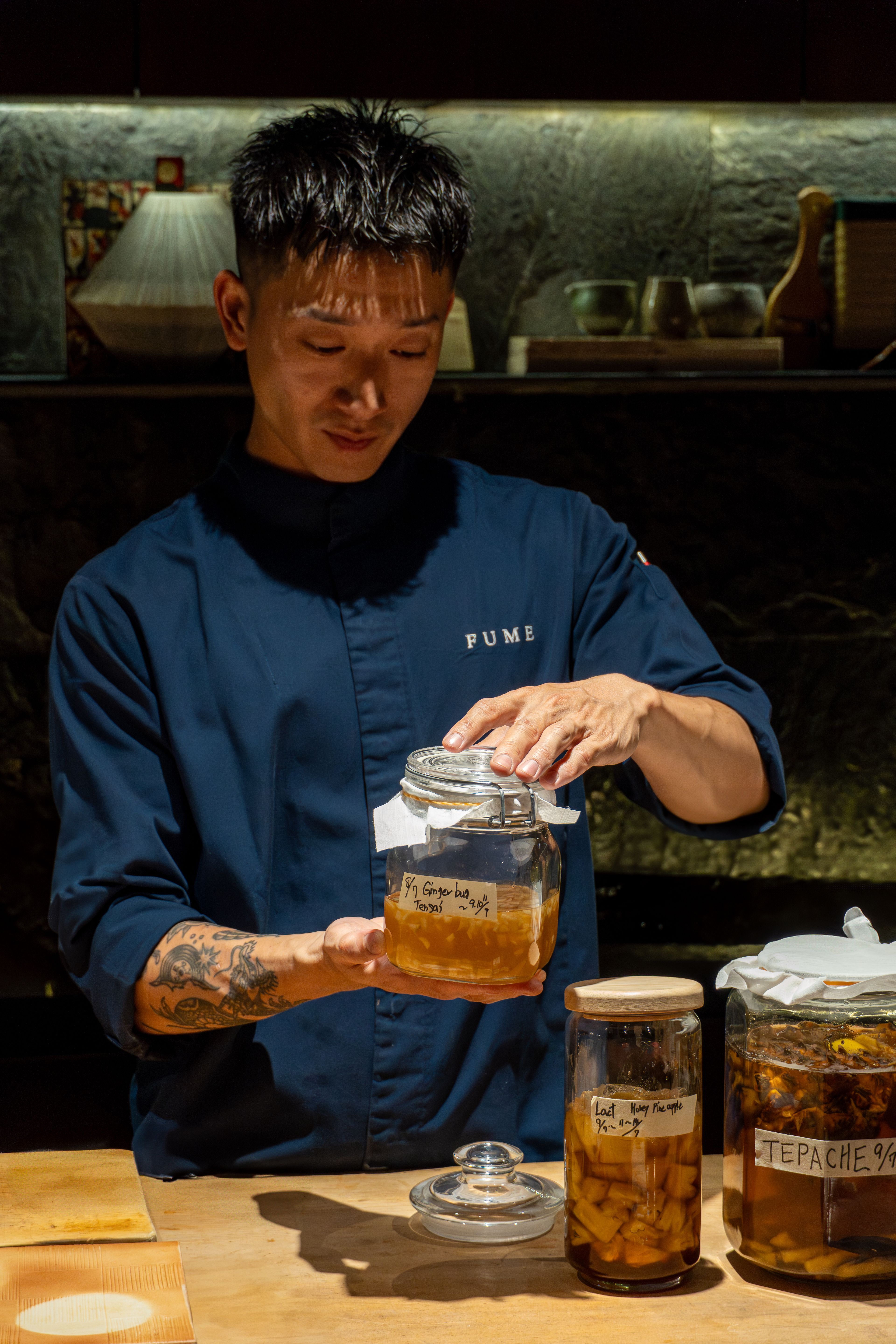
Now, the deshi. Tatsuo’s roots are in Ōsaka, which is also in the Kansai region. Unlike Shōzō, when he was younger Tatsuo didn’t really care much for cooking. He admitted he had a bit of a rough upbringing which is why the one person that made the biggest impact on his childhood was a school teacher. According to Tatsuo, this teacher was warm, friendly, and caring, and gave Tatsuo the sense of being loved despite everything that was going on in his life at the time. It was thanks to this individual that Tatsuo decided when he grew up, he wanted to be a teacher himself. It wasn’t necessarily about being the best educator, but more about the value of being someone that has their students’ back and is also concerned about how they’re doing, beyond just how good their grades are. Around high school, Tatsuo started working and this is when he got into the cooking business. He started working in izakaya and though he admitted it was difficult, he always felt fortunate to be surrounded by helpful people who taught him a lot about cooking. Upon graduating from high school, Tatsuo moved to Vancouver. He wanted to improve his English and still had hopes of becoming a teacher so he studied at university to get a teaching degree.
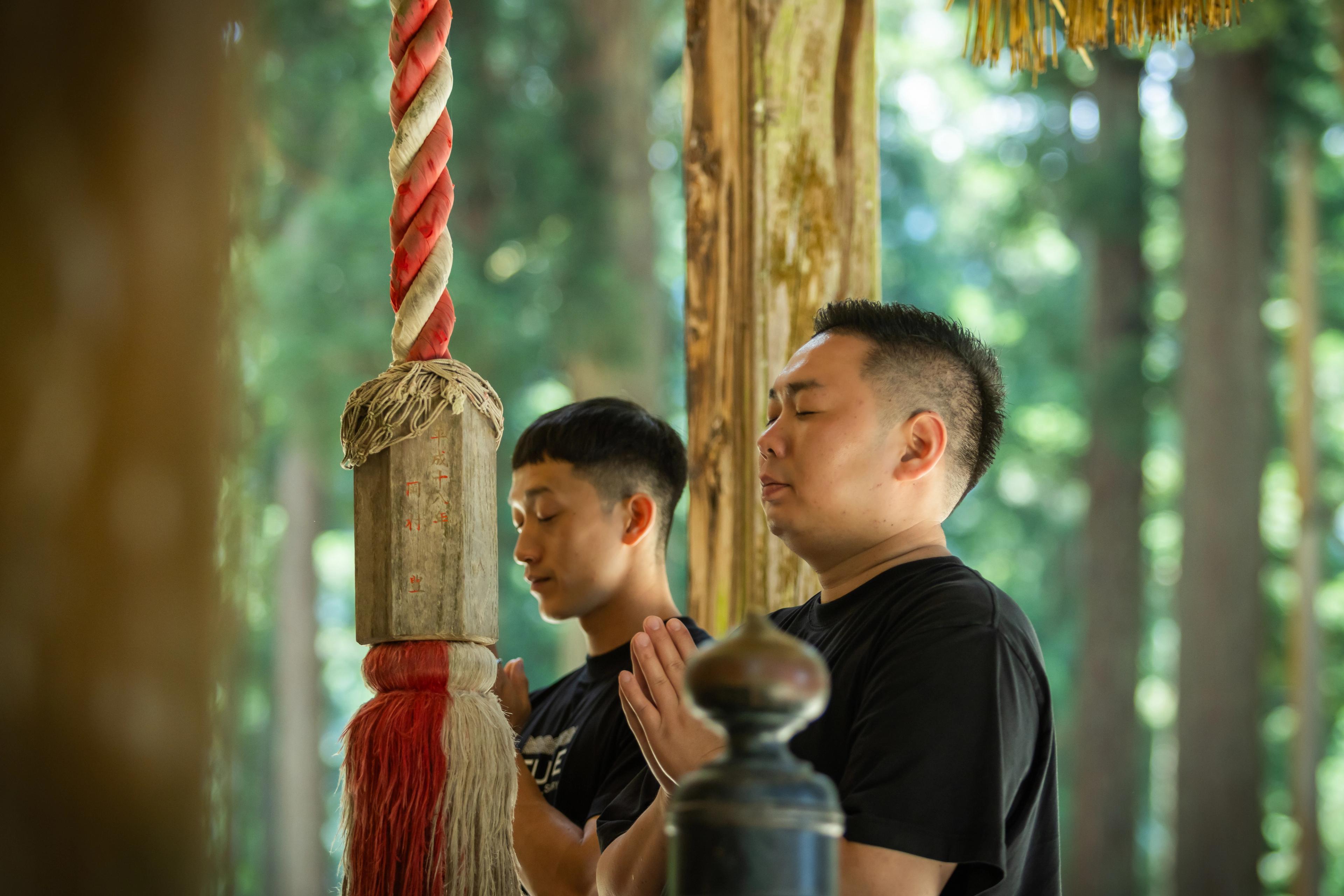
While Tatsuo was studying in Vancouver, Shōzō was working as a chef in Singapore. Though Shōzō knew he wanted to move to Saigon to start his own business, he also knew that once he made the move, he’d be locked into his job which would leave little room for travel. This is why after four years in Singapore, Shōzō decided to go to Canada so he could experience more of the western world. Of course, he didn’t go purely for the purpose of travel—he was there to work as well. He found a job at Guu, an izakaya in Vancouver considered a pioneer of this part of Japanese dining culture. Little did he know what would happen once he got there.
It’s funny how when you map out people’s history, you get to appreciate just how much randomness and luck influence the trajectory of our lives. When I consider how I met my two partners in this District 0 venture—Aidan and Garrett—there is no rationale that I can use to explain it. They arrived in Vietnam to teach English roughly seven years ago, happened to apply for and be placed in the same English center out of countless in the city, which happened to be the same center that I would apply for and be placed in upon my arrival three years ago. Most interactions are, when stripped back, made up of similar expressions of chance. Shōzō even admitted that if he hadn’t had the desire to see more of the western world which resulted in a move to Canada, he probably wouldn’t have met Tatsuo. What would FUME have ended up like then? How differently would the two chefs’ lives have turned out?
The first time the two met was actually outside of Guu. Shōzō recalls walking in the local neighbourhood and seeing a Japanese guy, immediately thinking that this was a person from the Kansai region. Simply put, Tatsuo had the aura of someone from that area. Then, this same guy was at Guu when Shōzō went for his first day and with that, their worlds collided. Tatsuo, on the other hand, had a different first impression. When he heard all of Shōzō’s credentials—from his years cooking and experience in fine dining—he couldn’t help but be suspicious as to why this guy had flown into Vancouver to work at an izakaya. Despite such impressions, after some talking, the two became inseparable. Besides just working together at Guu, they hung out after hours as well, getting to know each other and developing a relationship that quickly cemented itself as more like a brotherhood. It wasn’t long before Shōzō told Tatsuo about his plans to move to Saigon and open up his own restaurant there. The sheer amount of passion with which Shōzō spoke about this venture excited Tatsuo, who, while still harbouring plans of becoming a teacher, couldn’t help but be swept away by the grandeur of the dream. As for Shōzō, there was a reason he was telling Tatsuo about his plans: he wanted him there alongside him. Despite the fact that Tatsuo didn’t have as much experience in the culinary world, Shōzō was impressed by his character. He saw the measured and kind manner in which he interacted with others, not to mention the quiet confidence with which he moved through different scenarios. Although their relationship at that point wasn’t the stereotypical shishõ and deshi model, it was quickly shaping up to be one defined by mutual respect and trust.
Shōzō spent eight months at Guu before leaving. He was twenty-eight and kept thinking back on a promise he’d made to himself when he was ten: that by the time he was thirty years old, he’d have his own business. Realising how close he was getting to that number, he knew he had to go. On the other hand, Tatsuo stayed. He was close to graduating from university, keeping his promise to himself as well, so he completed his studies before making his next move. While he wanted to move to Saigon afterwards, he opted to return to Japan first. Back in Osaka, Tatsuo started working at a fine dining restaurant in the glitzy neighbourhood of Kita-Shinchi, Osaka's version of Ginza in Tokyo. He spent a year and a half there during which he was able to gain a deeper understanding of traditional Japanese cuisine. While Tatsuo was in Osaka, Shōzō got to work in Saigon.
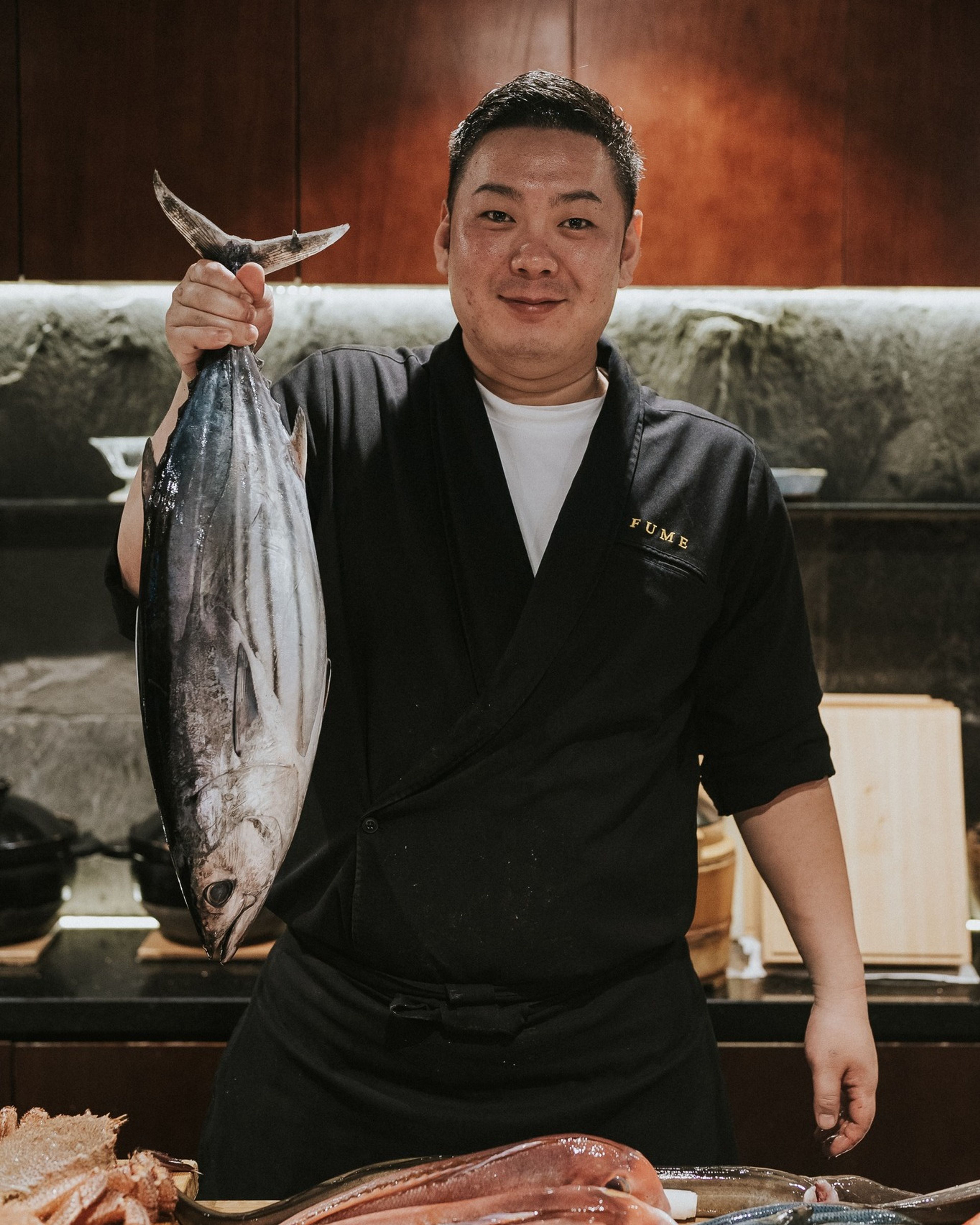
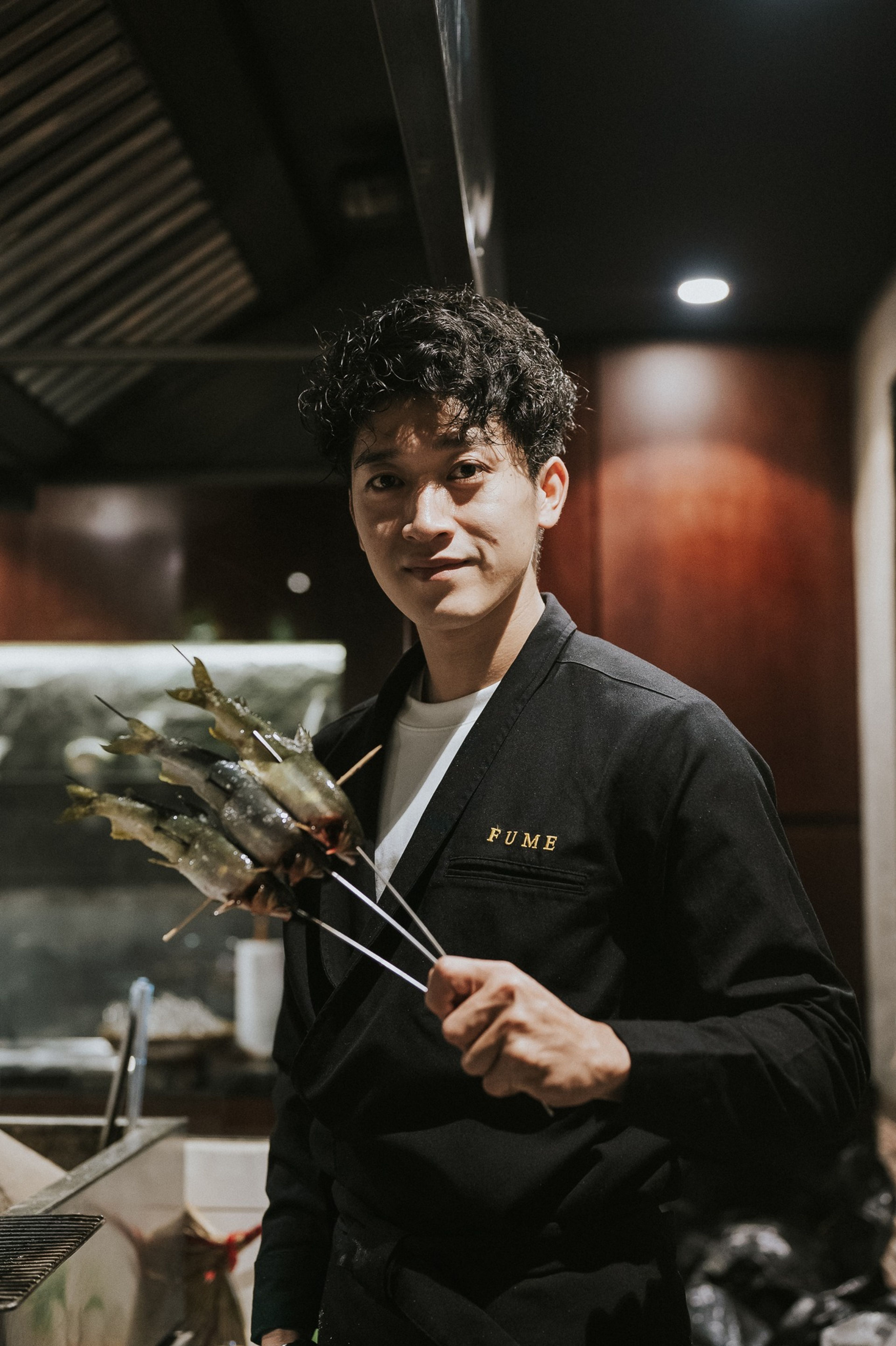
The concept behind FUME comes from Shōzō’s culinary upbringing. While he’s Japanese and has roots in its culinary traditions, he’s also learned about dishes, ingredients, and techniques from cultures such as French, Italian, and Vietnamese. FUME, then, is about leveraging these world-renowned flavours in an attempt to cook Japanese food of a different style: a type of cooking that is modern whilst remaining grounded in Japan. His desire to do this also comes from Shōzō’s belief that many Japanese chefs tend to be dogmatic towards the rules of Japanese cooking. This isn’t necessarily bad. After all, much of Japanese cuisine is beloved but when so many chefs focus on upholding tradition, you end up losing out on the possibility of taking food in a different direction. This is why, at its core, FUME is Japanese. However, what separates it is the willingness of Shōzō and Tatsuo to tap into culinary thought processes from other cultures, thereby providing a twist, an a-ha moment that subverts their diners’ understanding of Japanese food. An example of this is their temaki sushi (hand-rolled sushi) dish that has gone through several iterations since they put it on the menu. While the fillings have changed over time, the idea is to elevate a traditional Japanese dish using ingredients, flavours, and smells from Vietnam and other countries. Dishes like this cast Japanese cuisine in a different light, all the while remaining rooted in people’s understanding of the nation’s food. On that note, you cannot make the mistake of going too far with fusion cooking as then it becomes too confusing for guests to appreciate. For Shōzō, this delicate balance is paramount.
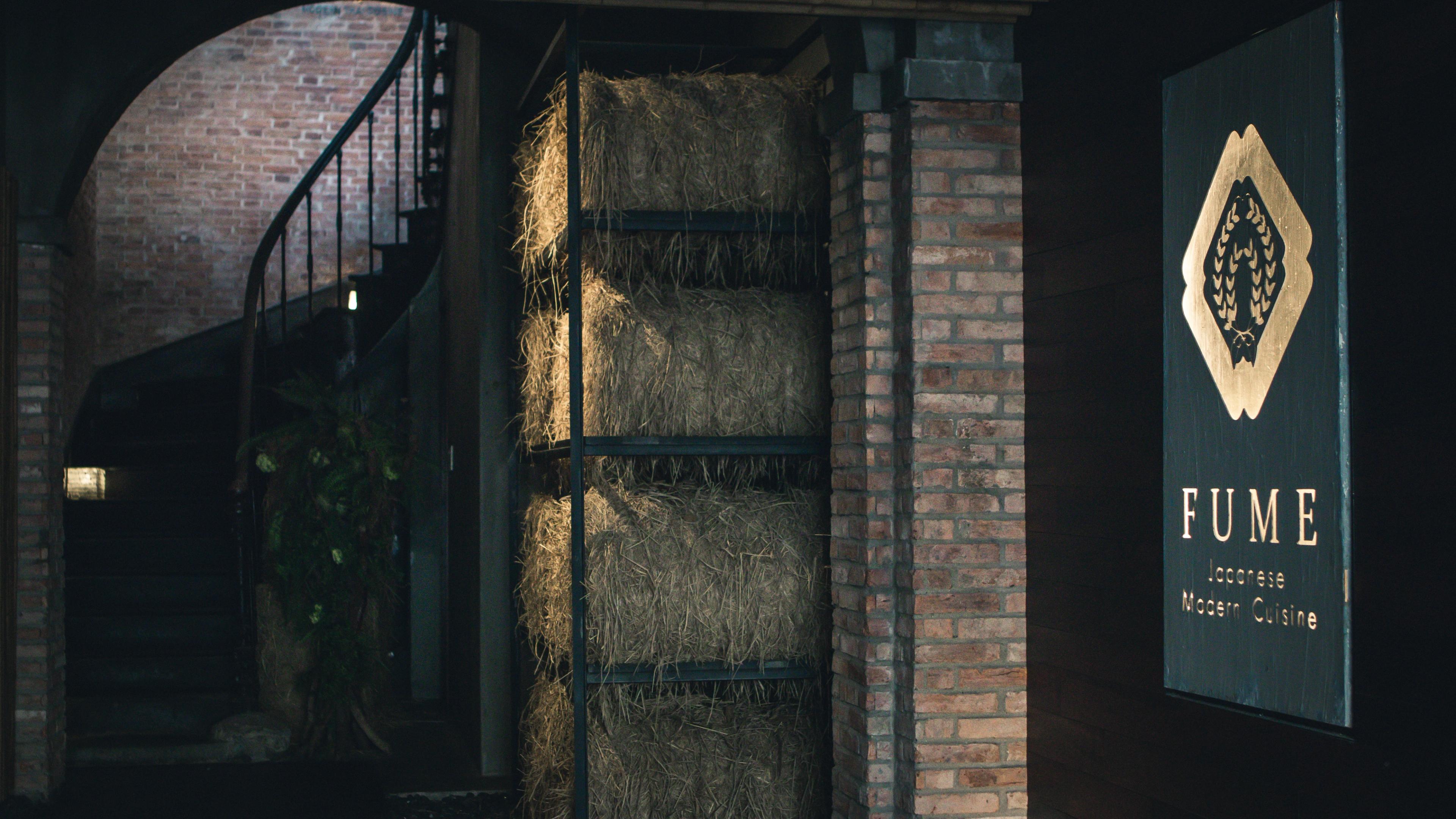
With their concept set, FUME was ready for opening. Tatsuo joined Shōzō in Saigon and everything seemed ready for the taking. However, there was a problem. Construction for FUME’s original location kept getting delayed, and so in an effort to get something started while they waited, they opened a donburi (rice bowl) spot called Kemuri Donburi (it’s now closed). While running operations for that business, they continued searching around for alternative locations for FUME until finally, they found one. The building was one-hundred and forty years old. Shōzō and Tatsuo knew it was the one from the moment they saw it. For starters, just the fact that the building was so old fit in with their concept of FUME as a restaurant where tradition meets modernity. Besides that, it was in a prime location. Located in the heart of District 1, across the street from the Park Hyatt in a quaint, French courtyard-esque space, it was everything hopeful restaurateurs could dream of. The deal was signed and in September of 2019, FUME opened its doors.
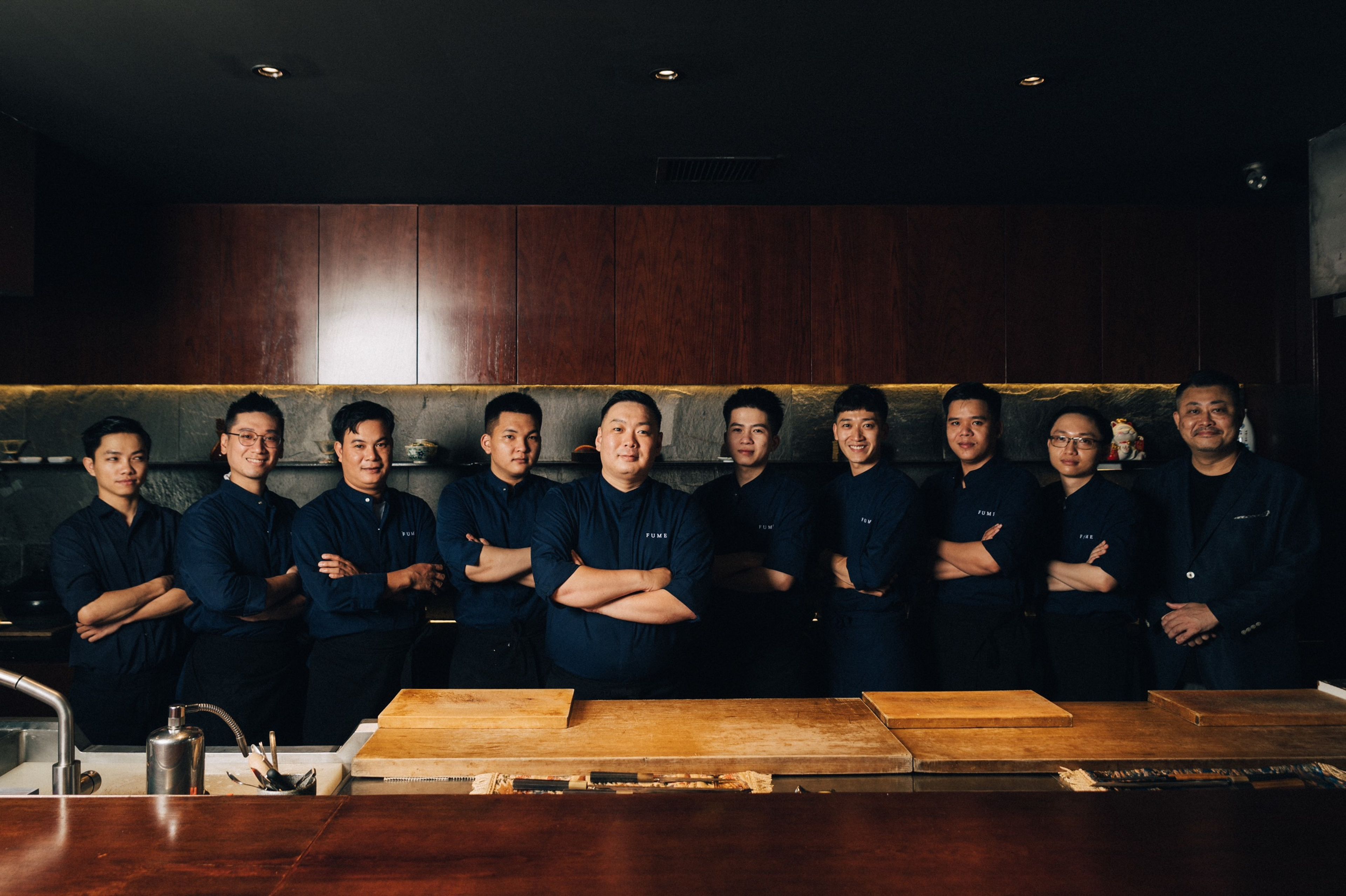
They got off to a good start. Customers seemed to resonate with FUME’s concept and with Shōzō as the owner and head chef, Tatsuo as the sous chef, and a team of hardworking staff who believed in their mission, everything came together nicely. Then, in 2020, Covid hit. The first major restrictions included social distancing and a pause on business operations like restaurants. Right when they were getting wind in their sails, it disappeared. Shōzō recognised the gravity of the situation. As the owner of FUME, he knew that if they were going to survive Covid, they had to think of some creative ways that would allow them to make it through the pandemic while staying true to their brand and concept. Similar to a lot of other F&B businesses, FUME decided to put their chips on delivery and catering services. What separated them was their focus on producing slightly more high-end delivery options, with choices like bentō (takeaway boxes) featuring sushi and kaiseki meals (Japanese style haute cuisine). Besides that, you also had nabe (classic hot pot) and shabu shabu (hot pot named after the onomatopoeic swish-swish sound from dipping thin slices of meat inside to cook). It was a period of non-stop work, with Shōzō and Tatsuo doing everything from cooking, cleaning, all the way to making the deliveries themselves and helping customers set-up dishes like nabe and shabu shabu. The two were clear that they couldn’t have done it alone, pointing out the importance of the rest of the staff who stuck by during the pandemic, even if that meant the occasional delay with their salary.
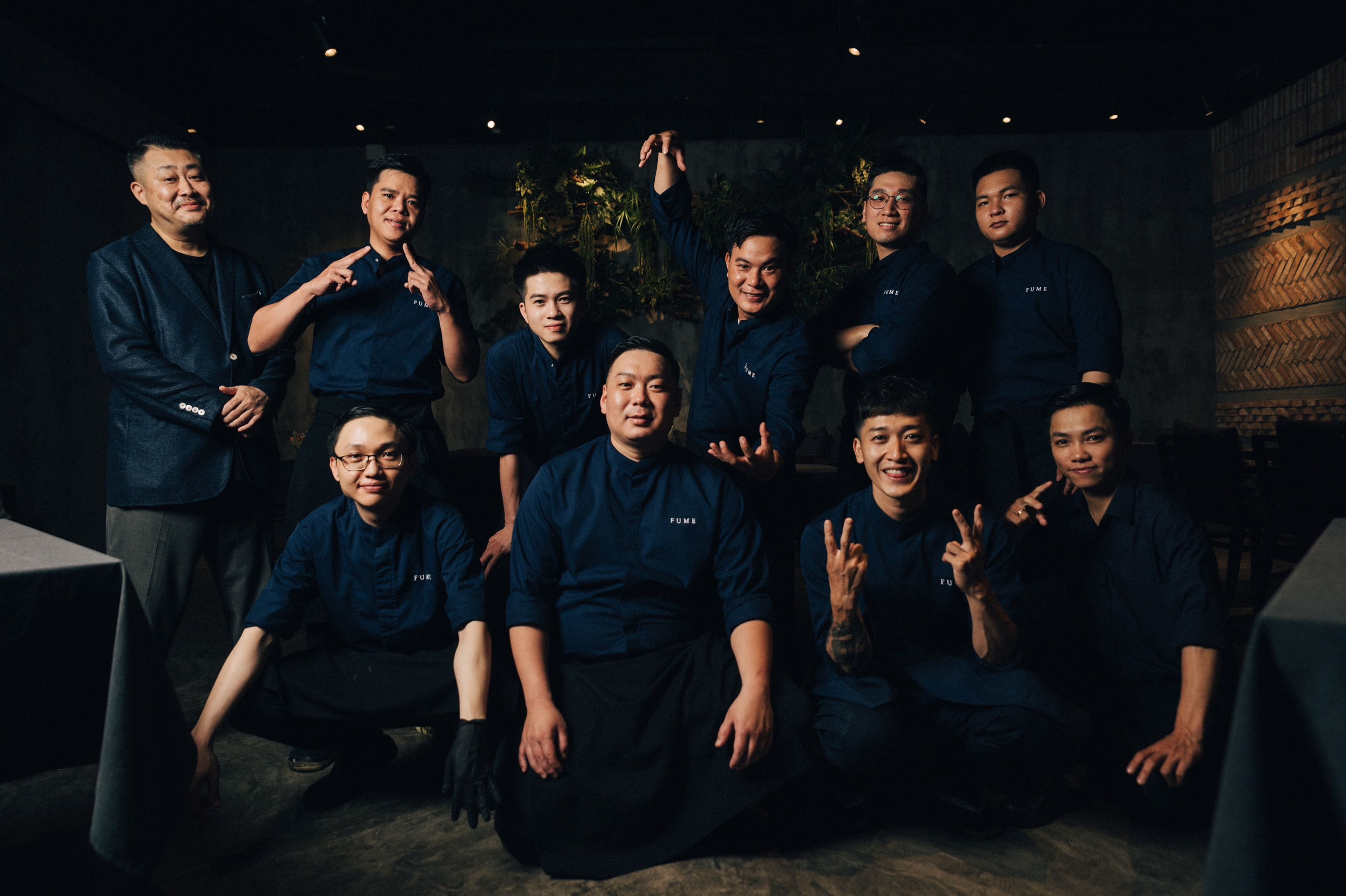
FUME’s team effort is what pulled them through Covid. Not only that, it made them stronger. They came out the other side with a deeper connection to each other and their mission, and once restrictions were lifted, they were able to kick straight back into gear compared to other businesses that might've lost staff and had to rebuild. Better yet, by then their reputation had spread in various circles which led to a number of celebrities dining at FUME, as well as several television shows and films using their space for shoots. This only added fuel to the fire and FUME’s popularity post-Covid skyrocketed. Today, reservations are required several days in advance, a testament to how beloved the restaurant has become. They’ve also received numerous awards since opening, from being recognised as one of the Top 25 Restaurants in Vietnam by Robb Report every year since 2023, to being named Epicure’s Best Omakase Restaurant in Vietnam in 2025. Despite these accolades, when I asked Shōzō and Tatsuo what their greatest memories with FUME have been so far, they talked about the various collaborations they’ve been a part of.
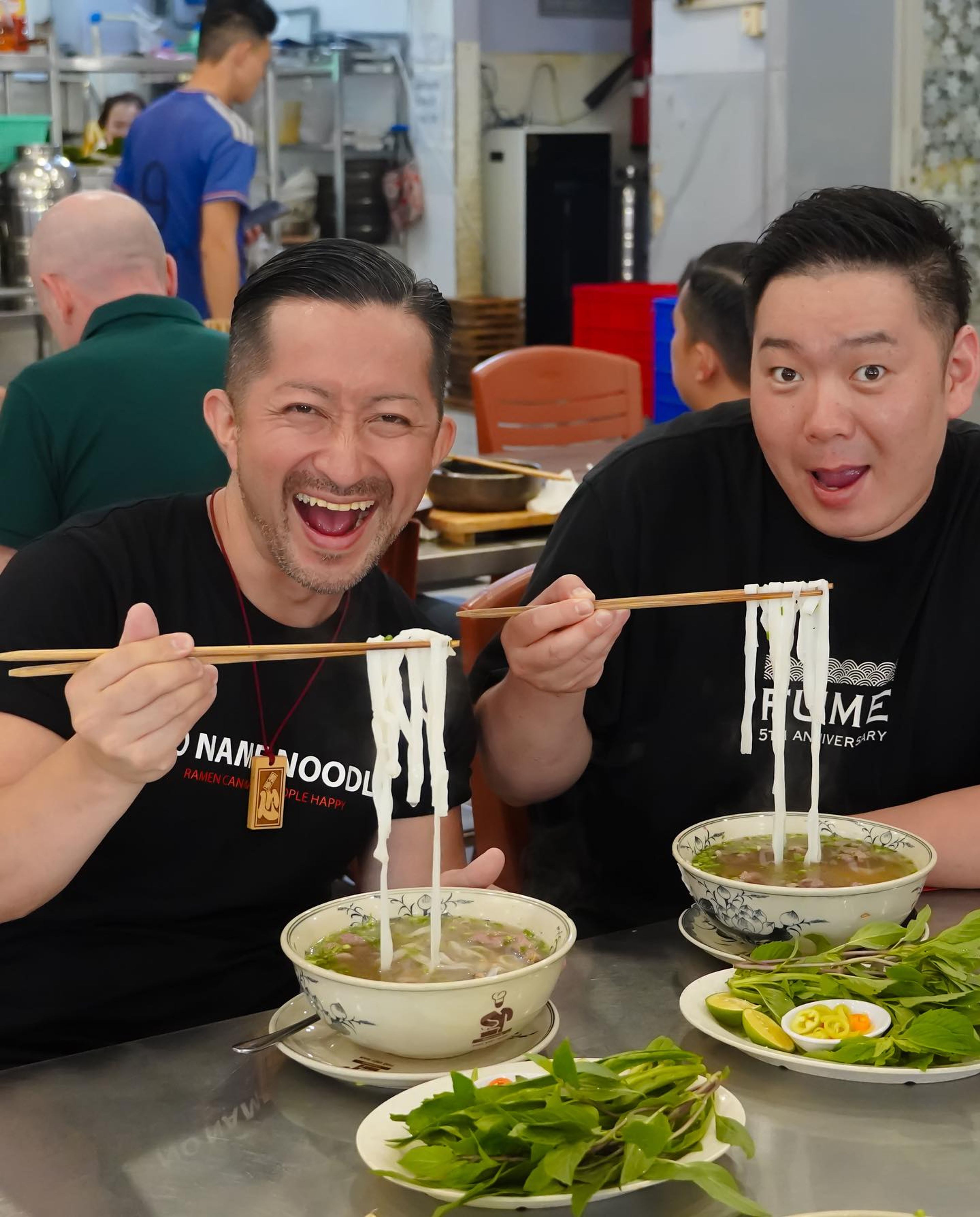
Working with other chefs is something Shōzō and Tatsuo love. This continues to tie into the ethos of FUME as a place where tradition meets modernity. Collaborations allow them to pick the brains of other chefs, thereby tapping into flavours and ideas that help push the envelope on what people consider to be Japanese cuisine. They’ve done a Ramen Omakase collaboration with Shinji Inoue from Michelin Bib Gourmand selected No Name Noodle, one of Bangkok’s top ramen spots. They’ve also worked with chef Tru Lang from Mua Sake, using ingredients harvested from chef Tru’s farm in Hội An to provide a one-of-a-kind farm-to-table dining experience that bridged the best of Vietnam and Japan. For Tatsuo, these collaborations allow him to refine his culinary skills and tastes besides what he learns working with Shōzō at FUME. This then helps him develop his personal identity with food and cooking. As for Shōzō, these collaborations are a chance to work with other top chefs while flexing his own culinary muscles. The most notable instance of this was when he was invited to be a part of the Disciples Escoffier International, which is an organisation dedicated to the transmission of culinary arts and knowledge, and is named after legendary French chef, Auguste Escoffier. Shōzō was the first Japanese chef from Southeast Asia to be admitted into the group, and it has led to numerous collaborations and events with chefs from around the world.
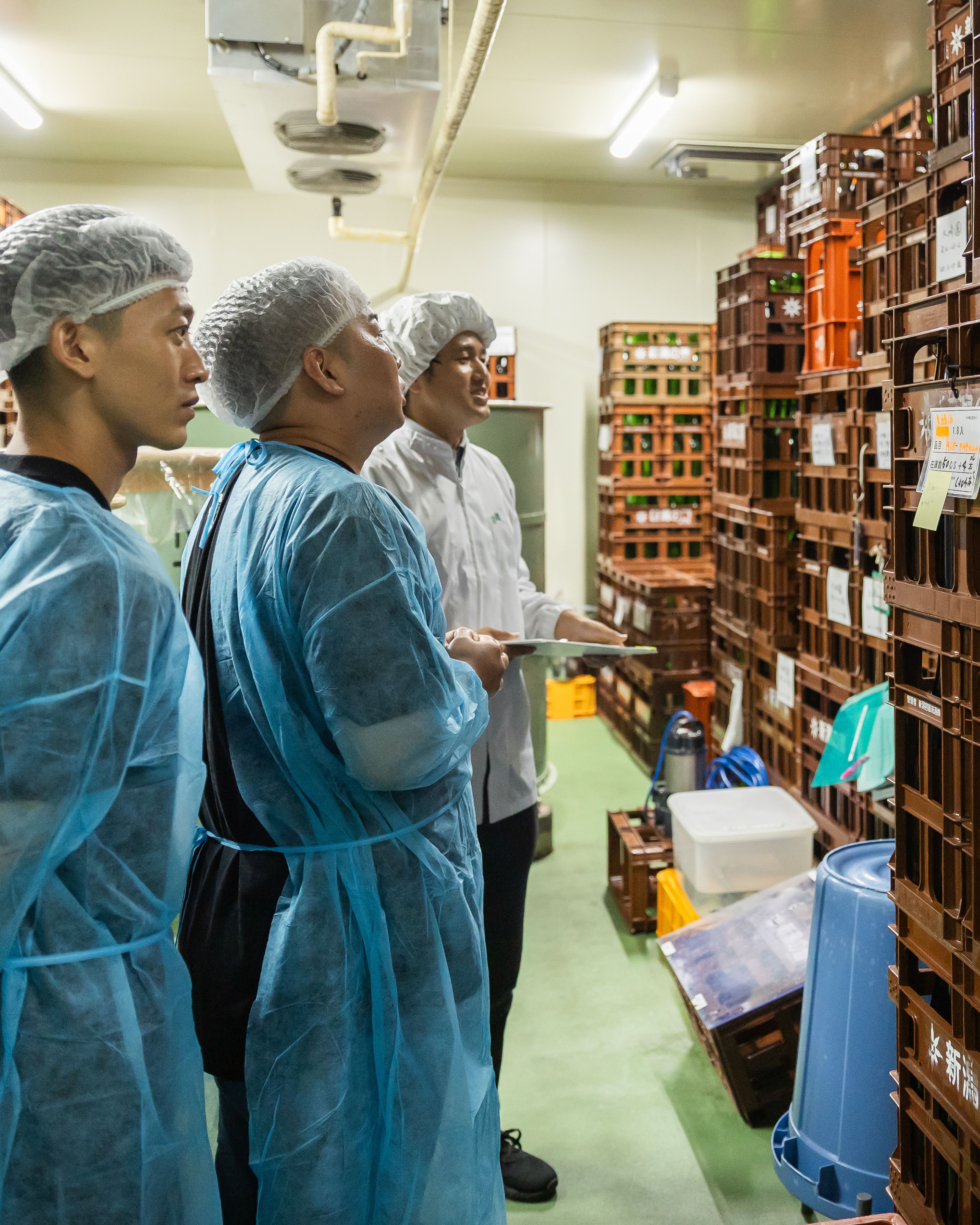
FUME’s been open for seven years now. While so many things have changed since they started, one constant has been the bond between Shōzō and Tatsuo. Again, this comes back to Shōzō’s insistence on having Tatsuo be a part of this profile. As he put it, “I consider FUME to be something I started with Tatsuo. That’s why I wanted him to be here”. When you’re with them you see it as well. The shishõ and deshi relationship is clear in the deep respect and admiration the two have for each other—when I asked of their greatest achievement so far, Tatsuo was the one to bring up Shōzō’s selection into the Escoffier Group. Besides that, this dynamic is apparent in how the two operate FUME itself. While Shōzō is in charge of creating the menu (which changes every forty-five days), he uses Tatsuo like a springboard from which to bounce ideas off of. However, that’s not to say Tatsuo is simply there to be a receptor, he’s in charge of desserts and FUME’s fermentation program which further demonstrates the trust Shōzō puts in him. Ultimately, their shishõ and deshi relationship is special because at times it’s more like a brotherhood. There’s an affection there, apparent in ways like how Shōzō refers to Tatsuo as Tat-chan, the suffix being a marker in Japan that indicates care and closeness, and one occasionally used by senpai (seniors) talking to their kouhai (juniors). More so than that, however, the two just enjoy each other’s company. It’s not all just business as so many shishõ and deshi dynamics are. While there’s mutual respect, there’s also fun—they go out for food and drinks together, they crack jokes like any pair of close friends would.
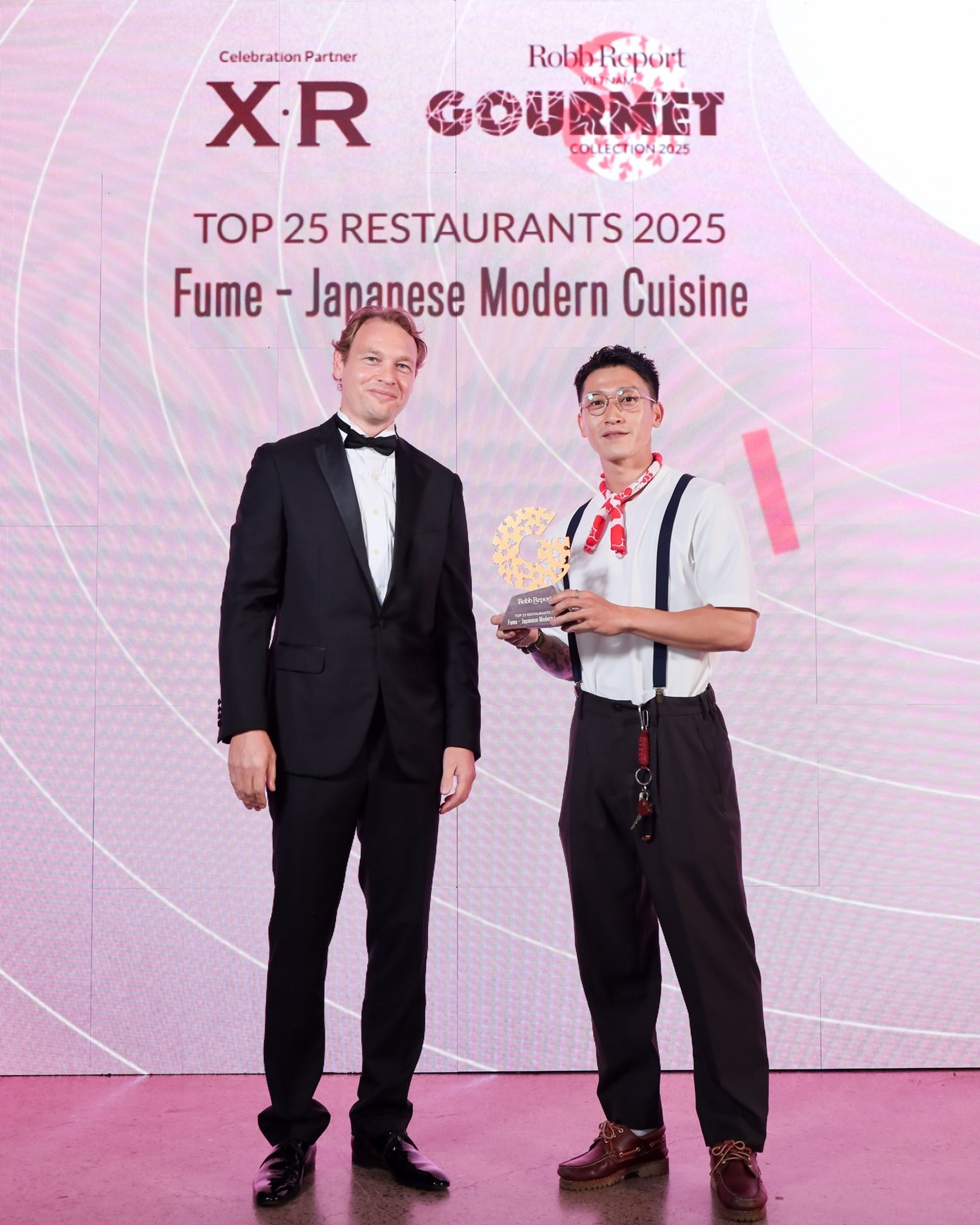
All of this culminates in an open, forward-thinking working environment. A large part of why this is possible is the fact that Shōzō and Tatsuo are creative and flexible individuals themselves, meaning they’re always willing to explore different avenues and take ideas as far as they see fit. More so than that, however, FUME is able to foster such working conditions because of one key ingredient that’s often missing in the high-intensity culture prevalent in most kitchens: kindness. Shōzō and Tatsuo excel at making you feel welcome. Coupling that with the fact that they don’t take themselves too seriously lets both FUME’s staff and customers know that while the dining experience might be high-end and fancy, that’s not to say you have to be stiff and rigid.
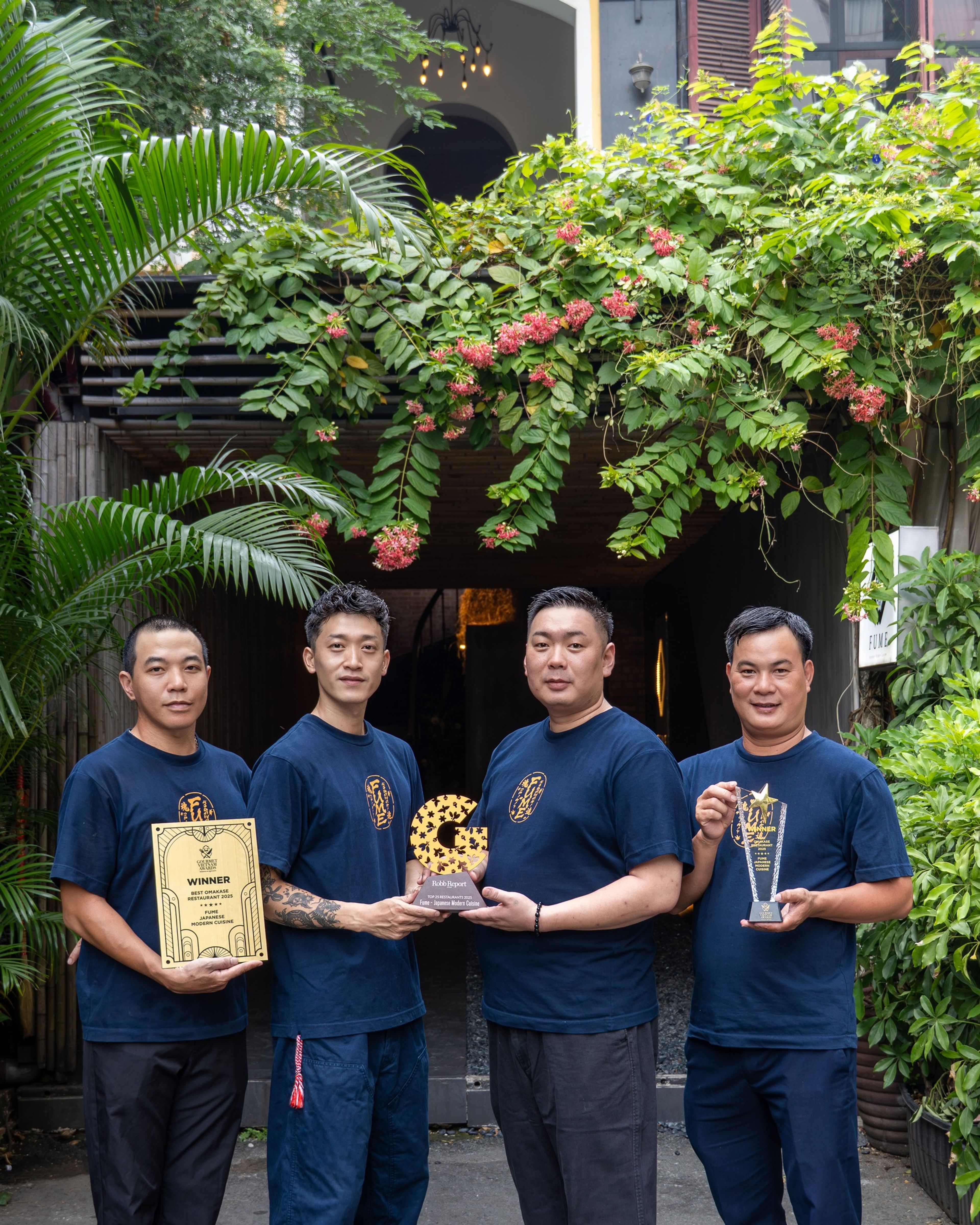
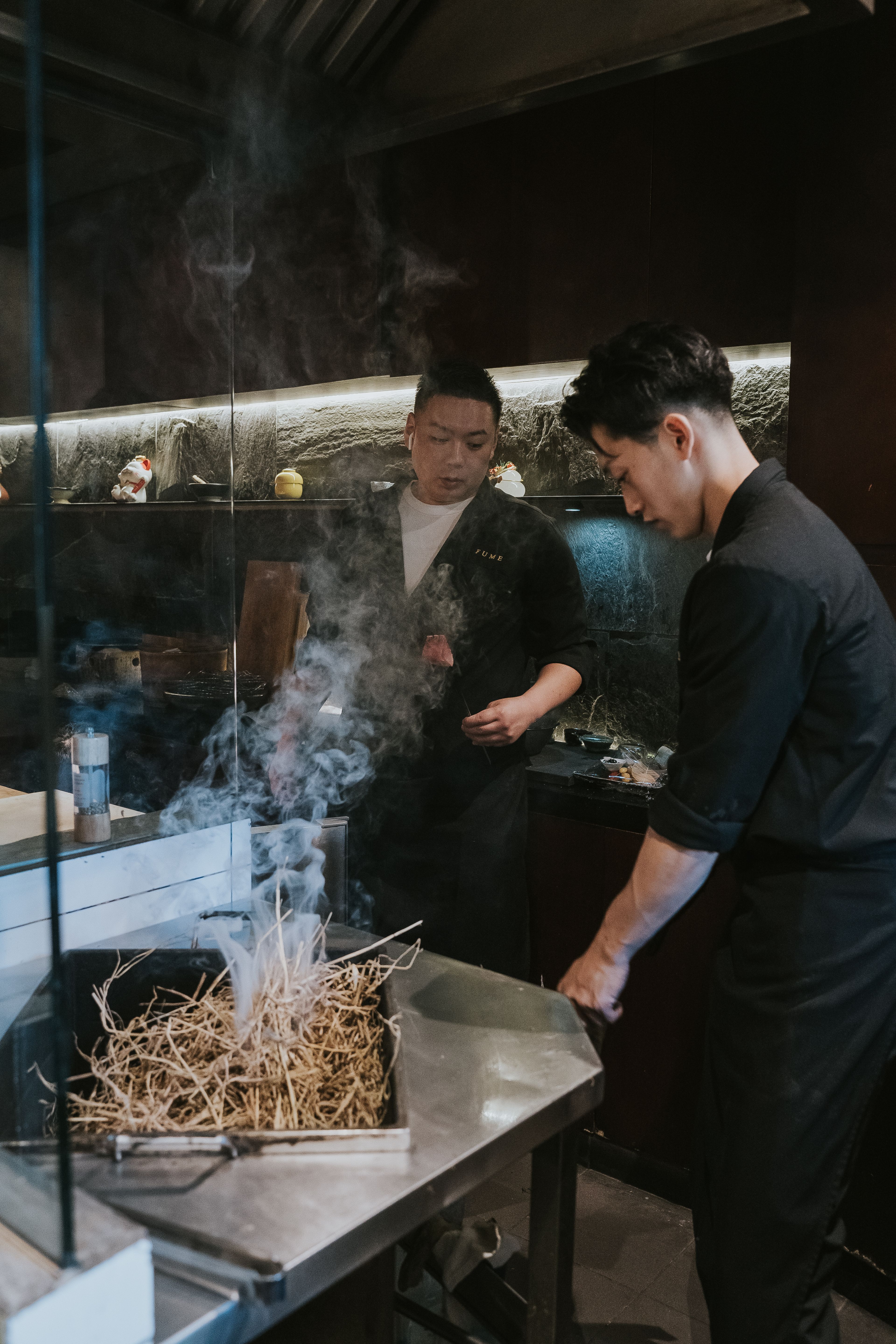
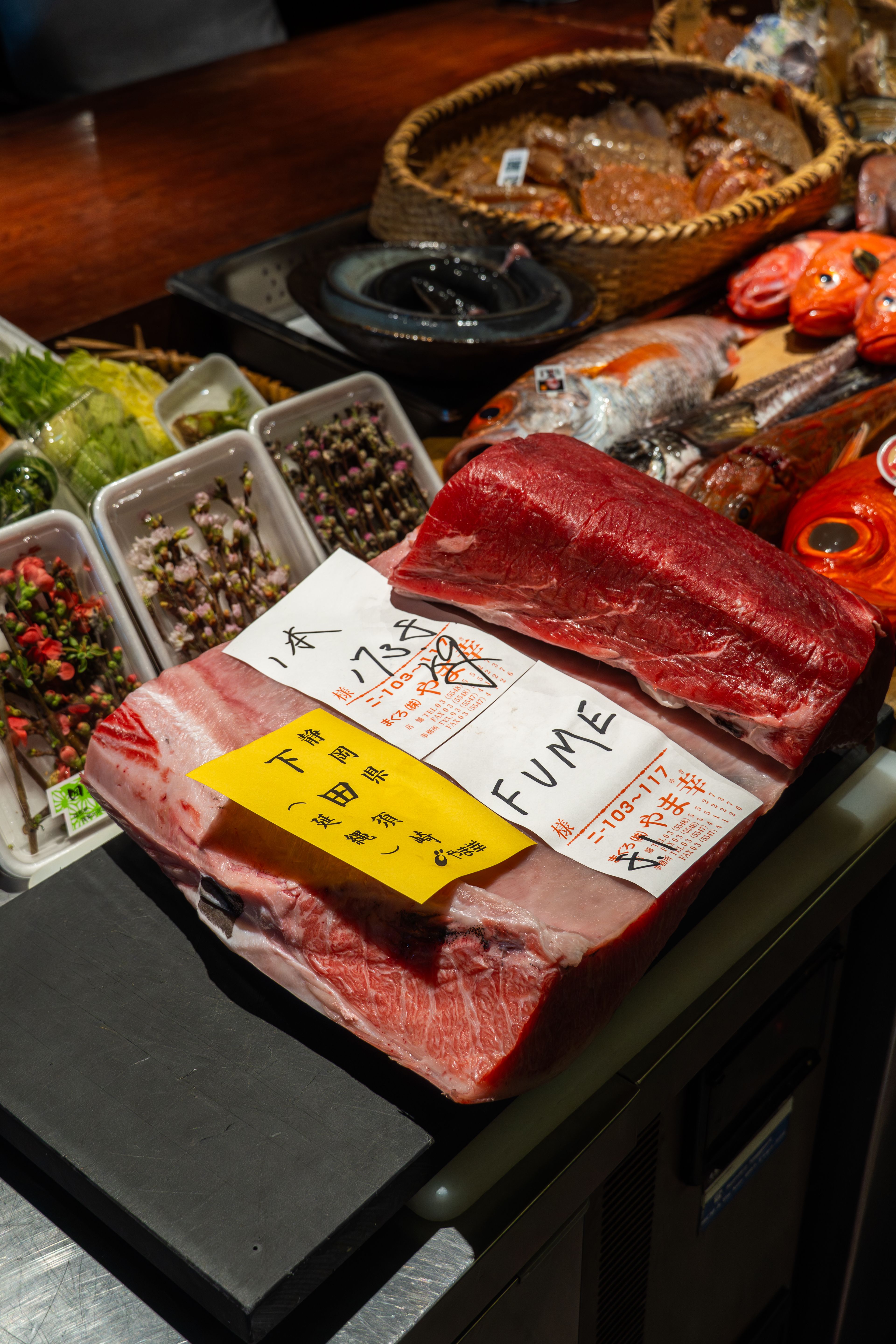
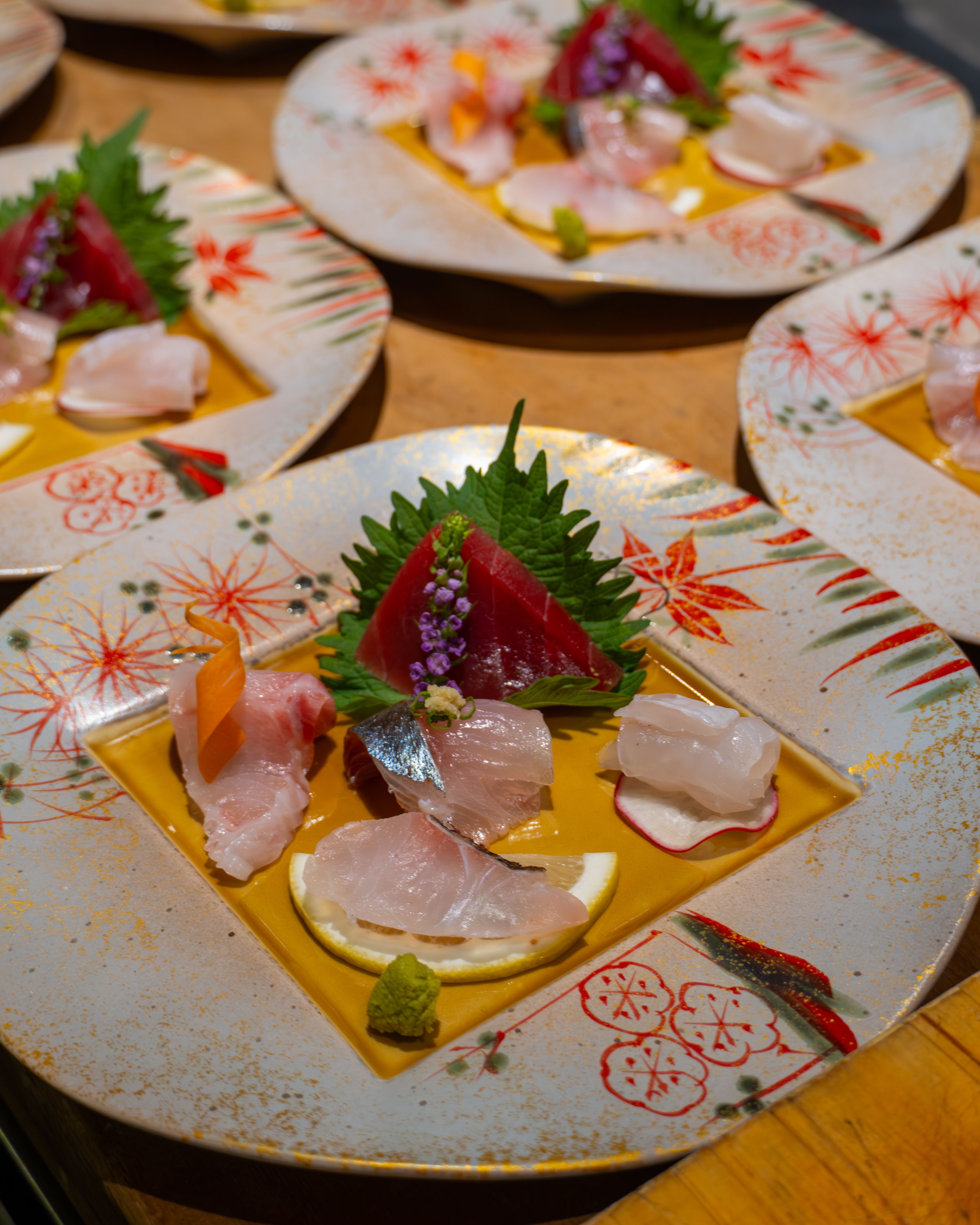
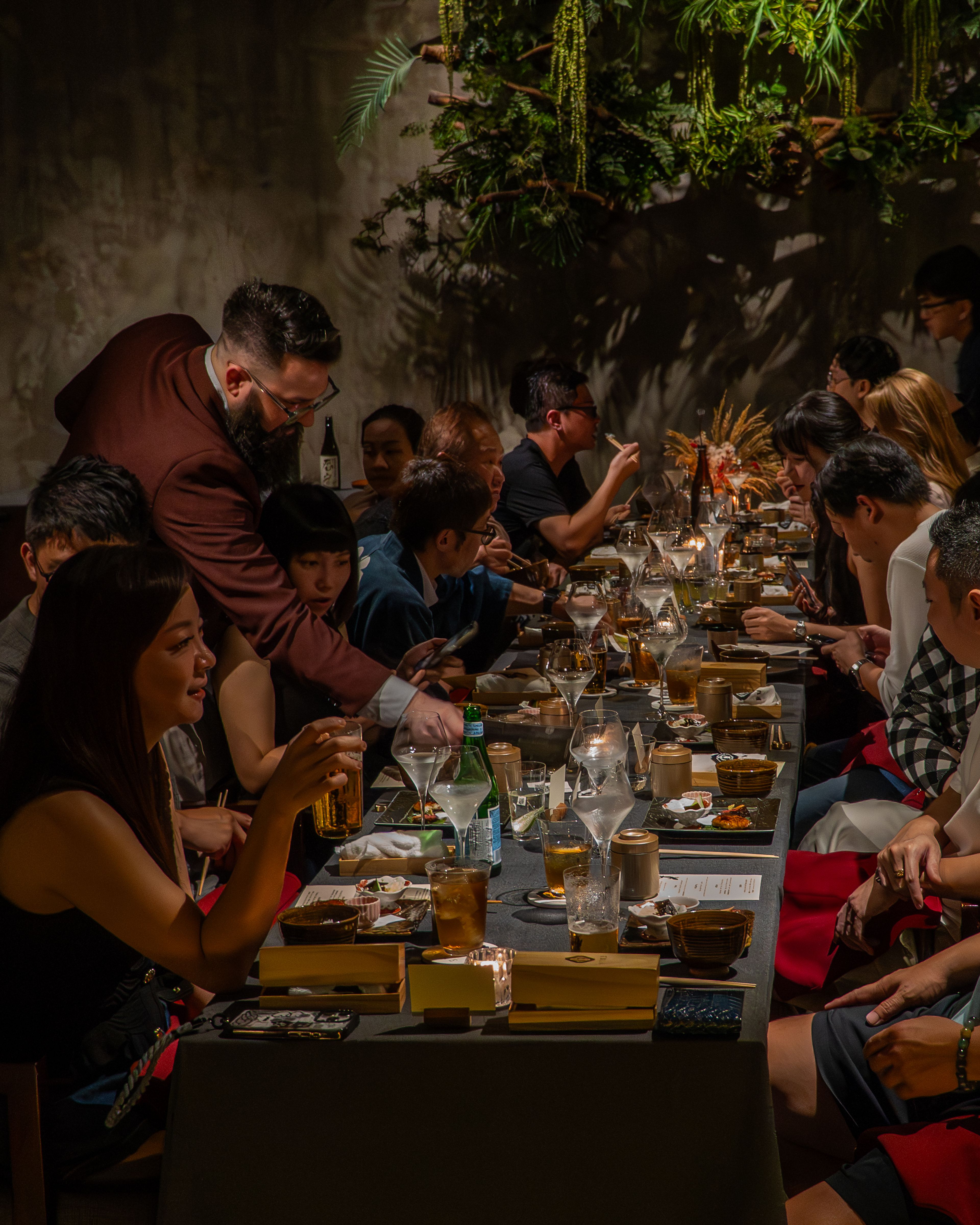
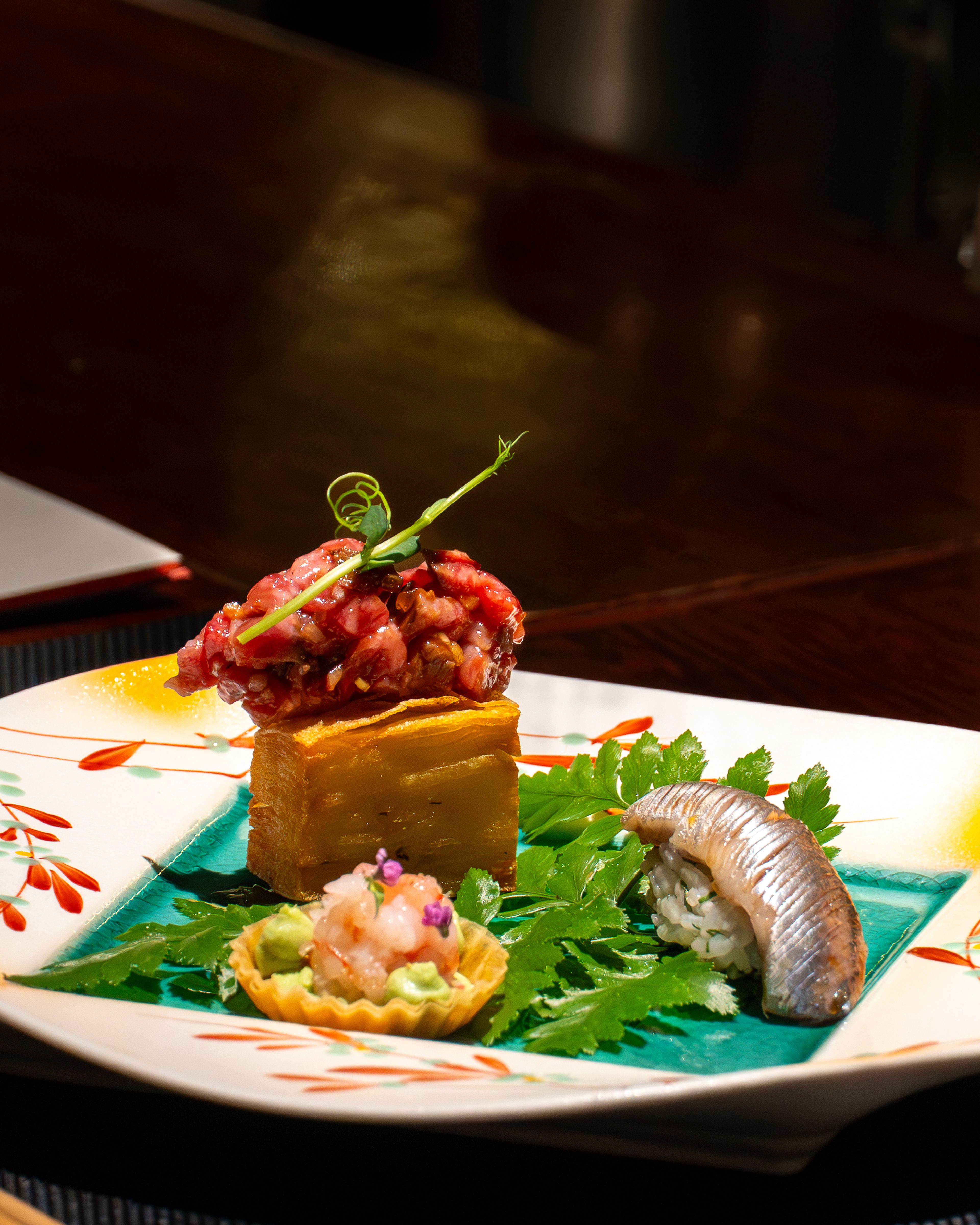
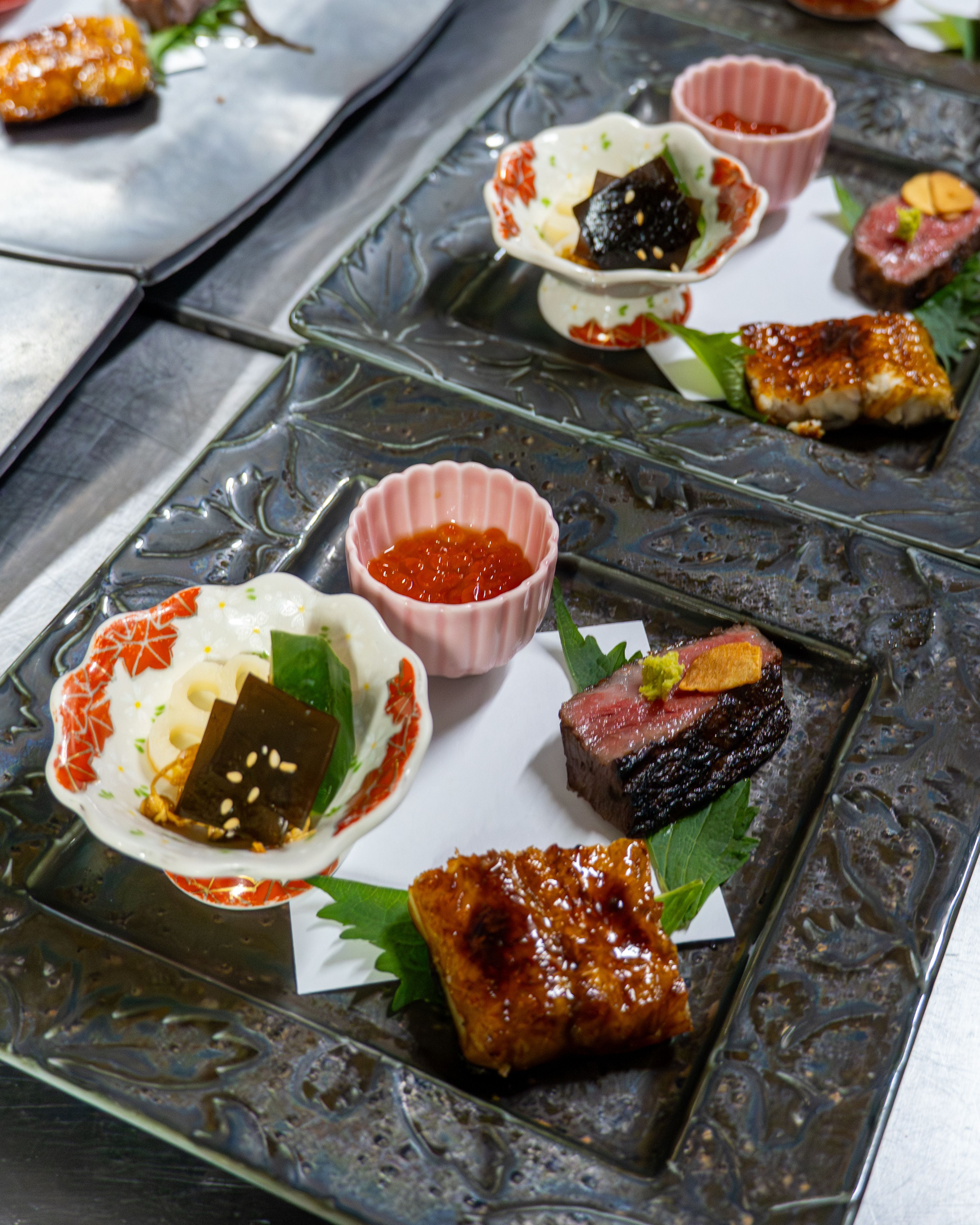
To end, there was nothing left to do but actually experience an evening at FUME. Unfortunately, due to scheduling conflicts, Tatsuo wasn’t working on the night I went to dine there. However, I still got to see Shōzō and the rest of the team, and the few hours I spent was a display of their concept and mission come to life. My girlfriend and I got to try their Early Spring Omakase menu which highlighted a variety of seasonal ingredients, from seafood imported from Japan all the way to broad beans harvested in Sapa. Each dish was a seamless blend that kept Japanese cuisine at the forefront while playing with ingredients, techniques, and ideas from other countries. Most notably was an iteration on their temaki dish. This time it featured a nori wrap lightly grilled over charcoal, then filled with wild flounder from Mie prefecture, rau thơm (Vietnamese fresh herbs), and FUME’s homemade ricotta cheese. The sake pairing that went along with the Omakase menu provided the perfect accompaniment to chef Shōzō’s creations, and each glass was explained to us by their energetic and passionate sommelier. This brings me to my next point. While dining at FUME was a pleasure for its food and drinks, the staff took everything to the next level.
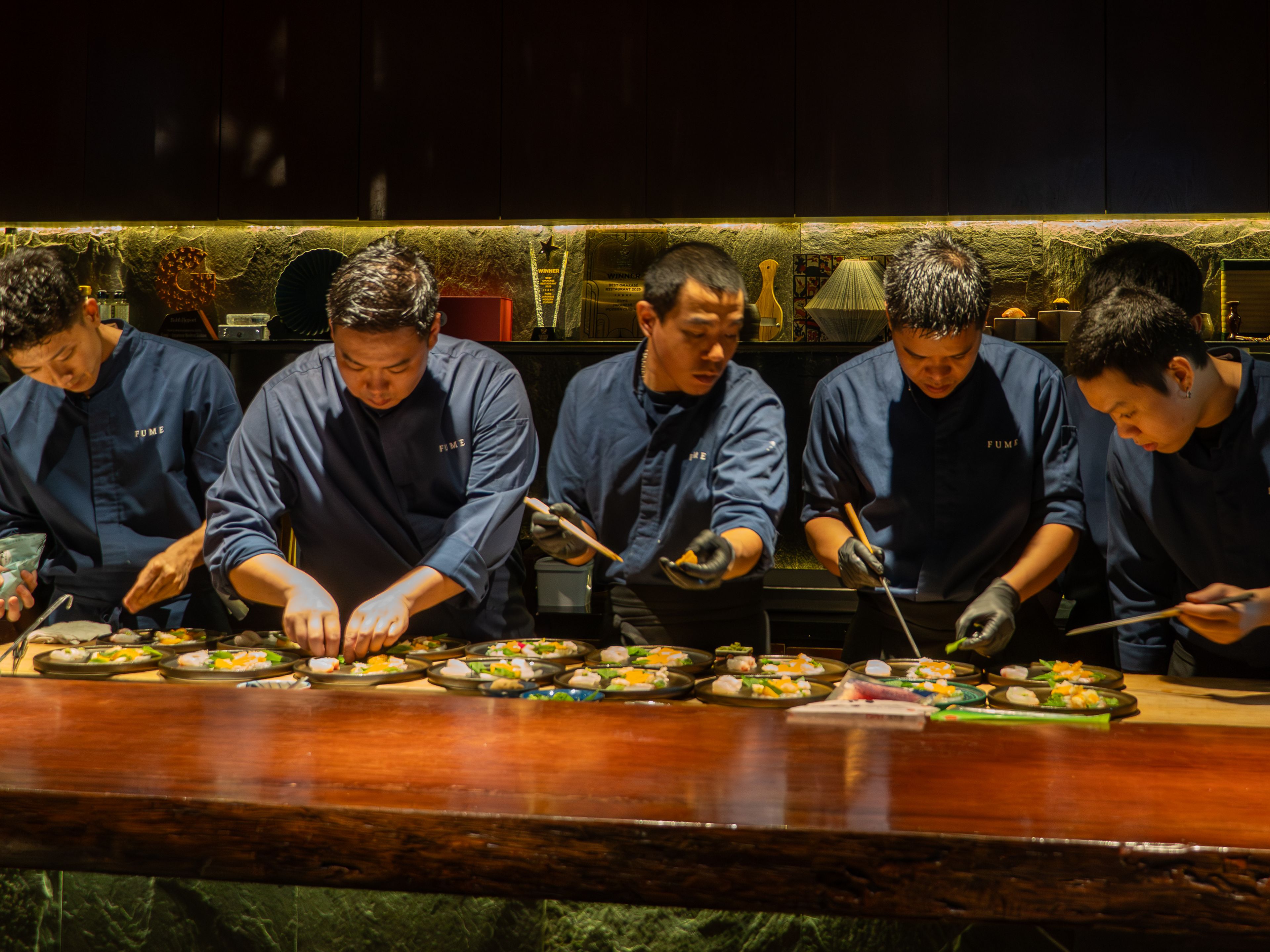
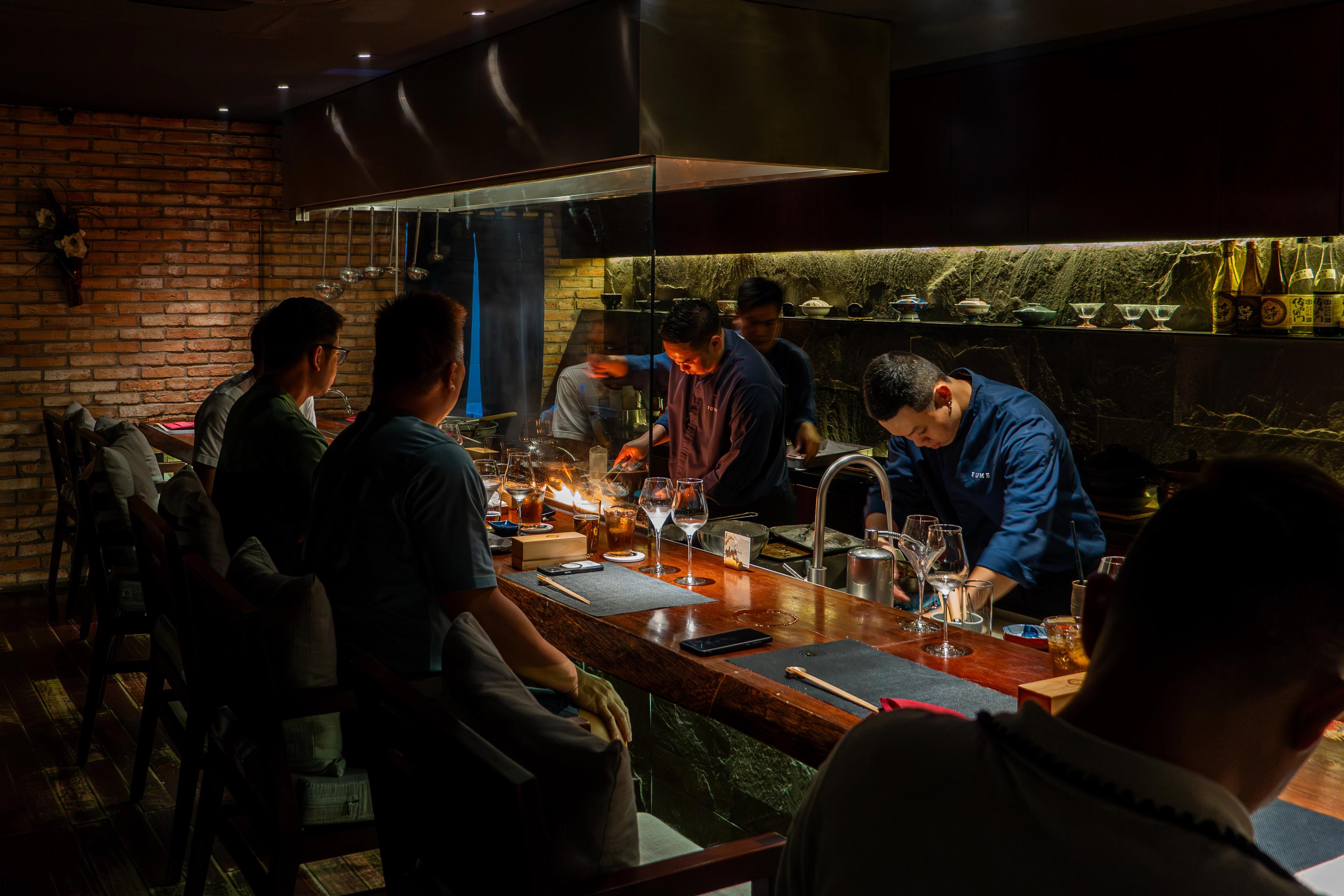
Once again, I believe this is possible because of who Shōzō and Tatsuo are themselves. They don’t rule with an iron fist. Their openness and friendliness is apparent from the instant you step through FUME’s doors, and is then reflected in how the rest of the staff behave. They aren’t afraid to joke around, they let you enjoy the evening without any worry of having to appear overly proper, which is usually what tends to happen whenever I frequent high-end dining establishments. One moment stands out the most. Our server, Aaron, joked about how the sign of a good restaurant is not only that its head chef is big, but also that its staff are big as well, promptly adding that when he first started at FUME he weighed around seventy kilograms. Now he's up to ninety. Moments like that humanise not only the staff but also the restaurant itself, making the overall dining experience that much more fun and memorable. Having said that, this never takes away from FUME’s standard which every member upholds. They enjoy themselves while also being great at what they’re doing. Shōzō is, naturally, at the center of this, quietly coordinating the flow of dishes being cooked and sent out, all the while engaging guests seated at the counter in conversation. Dining at FUME, I got the sense that he was aware of everything going on in the restaurant. He was in full control.
The story of Shōzō and Tatsuo is the story of a shishõ and a deshi. But more so than that, it’s the story of a brotherhood. It’s the story of how we can meet the people who end up changing our lives in the most random places, and that once you meet those people, it’s up for you to decide whether you want to keep them in your life. If you don’t, who knows, maybe you’ll meet a few more individuals like this, a few more people who for some reason you just click with, who seem to understand who you are and what you want to do without need for sense or explanation. But let’s say you decide to go all the way. Let’s say you take a leap of faith to pursue that dream because with that person by your side, you believe that you can actually make it a reality. What happens then? In the case of Shōzō and Tatsuo, FUME happens. Evenings like the one I enjoyed at their restaurant happen, where there’s good food, good drinks, but most importantly, good people.