







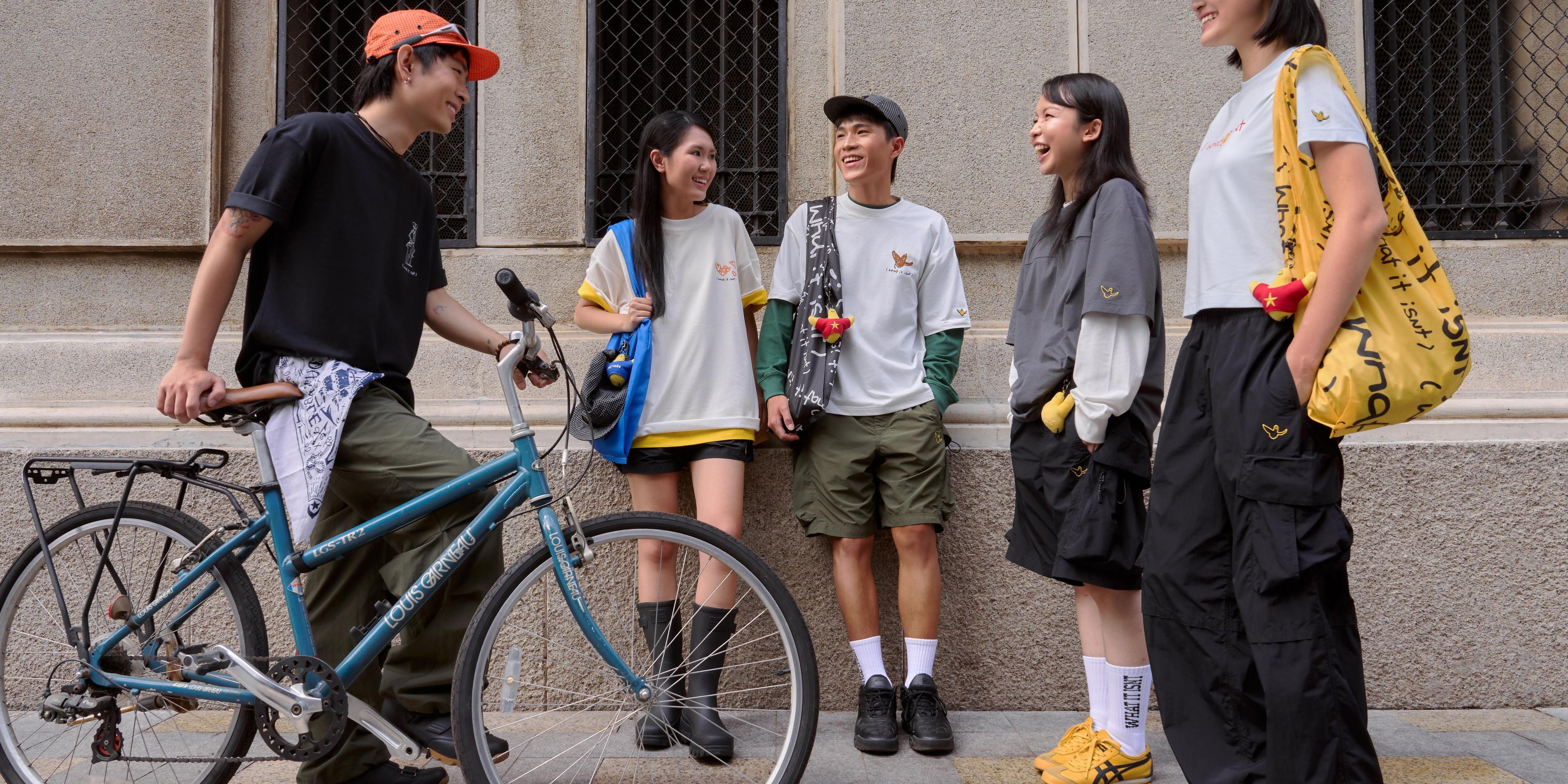
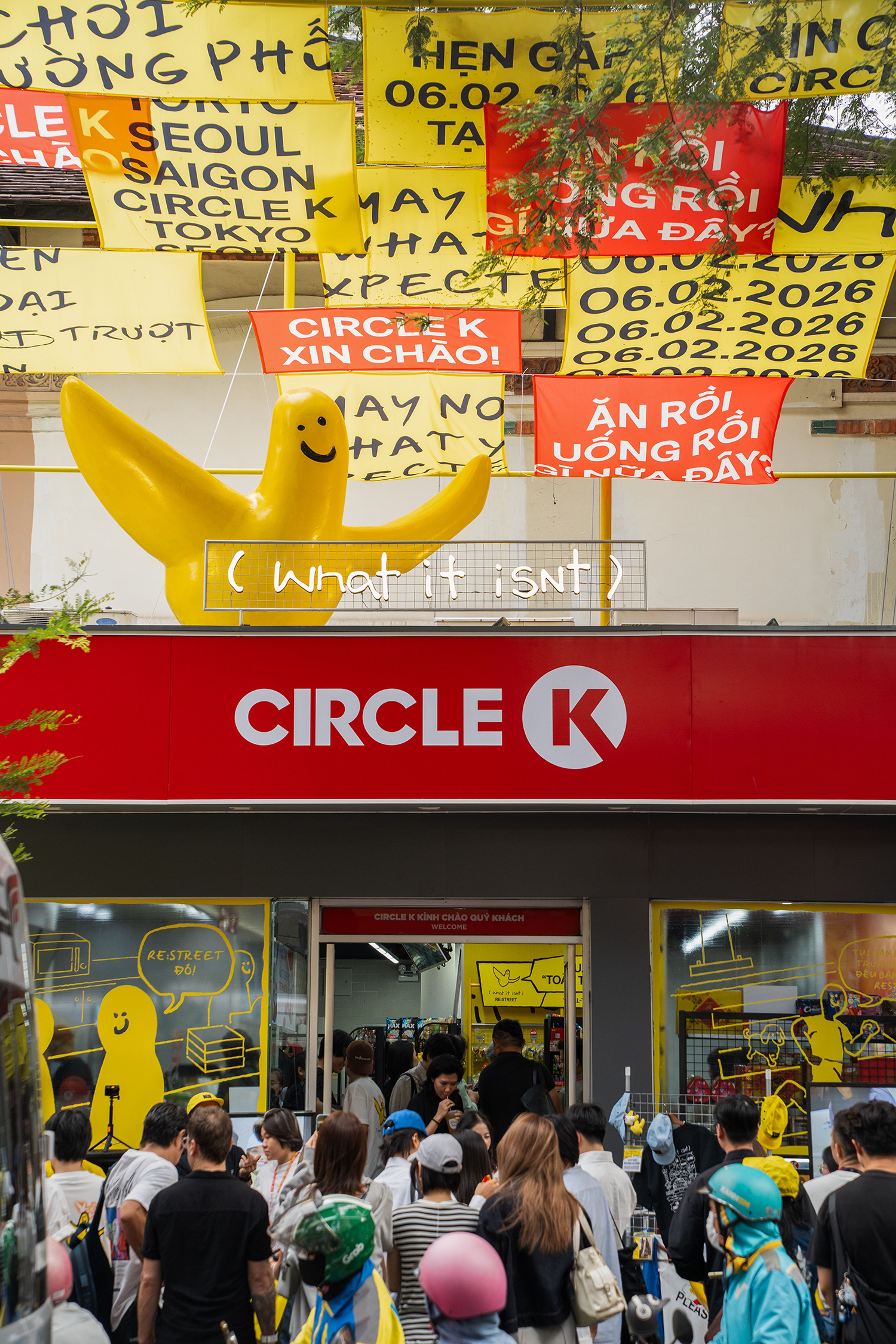
There are moments in Saigon that don’t need to be explained. You experience them first, and only later understand why they feel natural to the city. I recently stopped by the Circle K on Lý Tự Trọng street looking to buy a drink and a snack. It was another sweltering day in Saigon, and the cool air flowing from inside the store offered a peaceful escape from the heat.
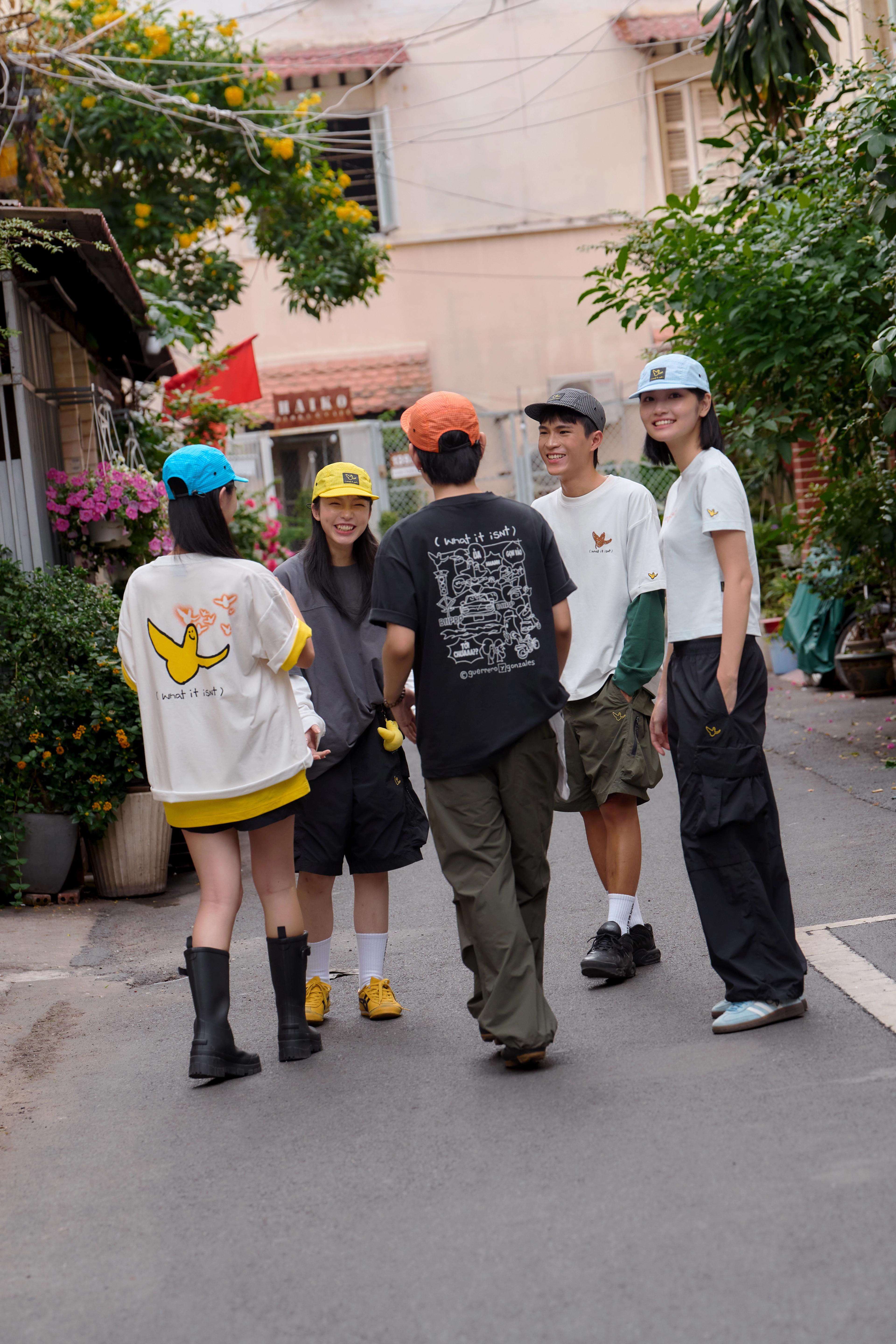
Upon entering, my eyes quickly darted to the bright yellow stand in the middle of the store. It seemed to be glowing amongst the others lined with candy and stationery, as well as refrigerators stocked with drinks of all flavors. Hanging neatly on display was an assortment of hats, t-shirts, tote bags, and yellow keychains. I had been craving a new hat for some time—something lightweight with minimal design that I can wear throughout the year. With that in mind, I picked out a black and white patterned hat, along with a drink and snack to pay for at the cash register.
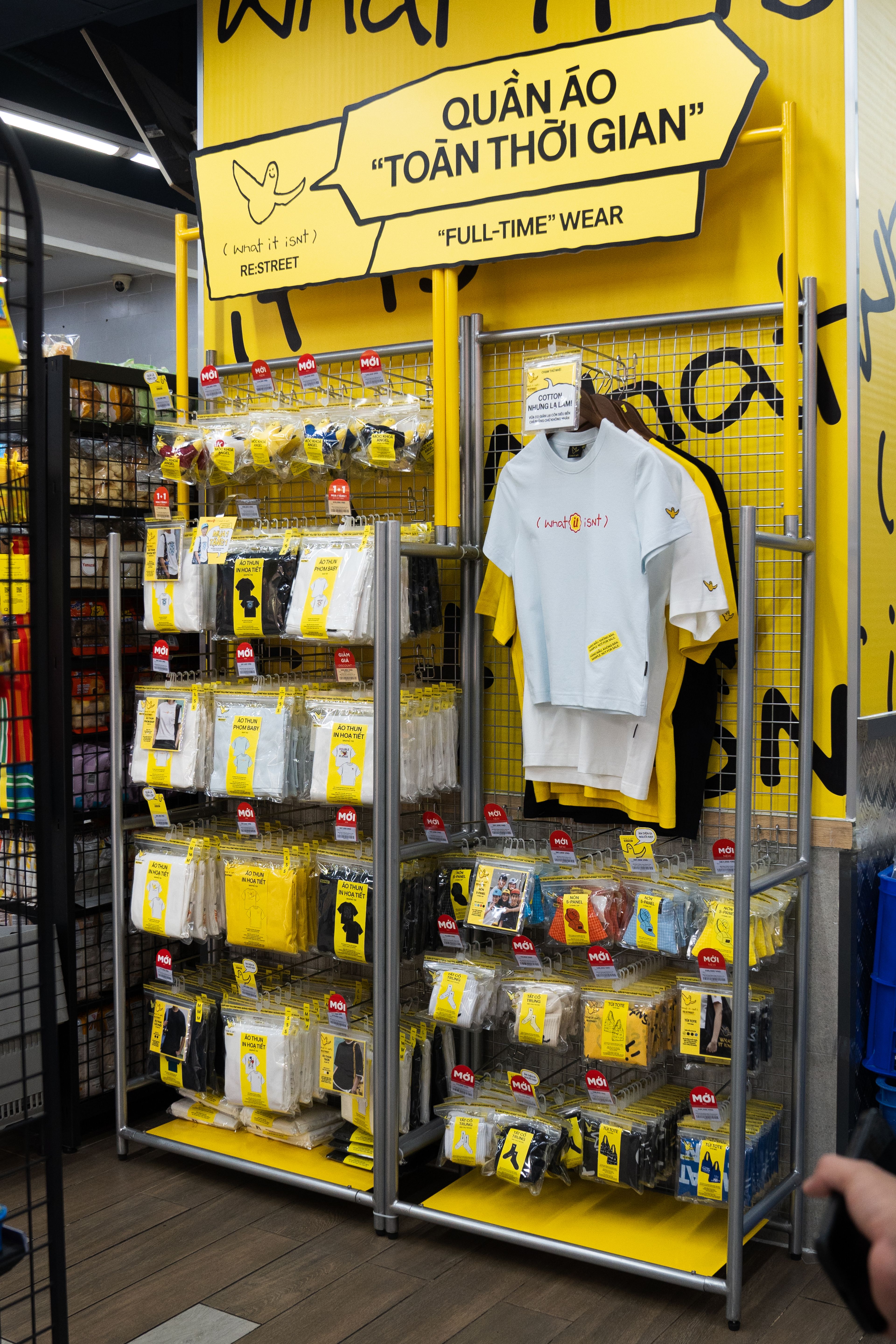
Even though I never expected to discover a hat or pieces of clothing for sale in a convenience store, purchasing some streetwear alongside everyday items felt seamless—as if this way of living has always been part of the rhythm of the city I’ve come to know. I looked back at the yellow sign above the stand. Below a yellow Angel logo, it reads RE:STREET by What it isNt.
At the turn of the millennium, the godfather of modern street skateboarding, Mark Gonzales, alongside friend and musician, Tommy Guerrero, coined the phrase, “What it isNt.” Gonzales described the phrase as a way of saying, “It may not be what you expected, but try to appreciate it.” Their philosophy of imperfection and spontaneity was first captured on an experimental album featuring Guerrero’s lo-fi, soulful instrumentals overlaid with Gonzales’ abstract spoken poetry.
Together they traveled from the US to Tokyo for the legendary street art event, “Untitled 2001.” Think graffiti, live music, and a sea of skaters flooding the streets for a week-long takeover of the city. To promote their concept, they created a small batch of t-shirts sporting their yellow Angel logo. The raw energy surrounding Tokyo’s creative community that week was the fuel necessary to ignite What it isNt into a legitimate brand. It did something others seldom can: unite nonconformists. From that event on, What it isNT started in Japan, then grew across Korea, and finally landed in Vietnam in late 2023.

Upon entering Vietnam, What it isNt collaborated with creative agency Rice Studios and photographer Tuan FR to establish a local identity. Their inaugural space at the Bình Thạnh House—an open-air sanctuary redesigned by Saigonese graffiti artist Daos501—served as a launchpad, eventually expanding into local hubs like Phú Mỹ Hưng, ABC-MART, Sneaker Buzz, and Thủ Đức.
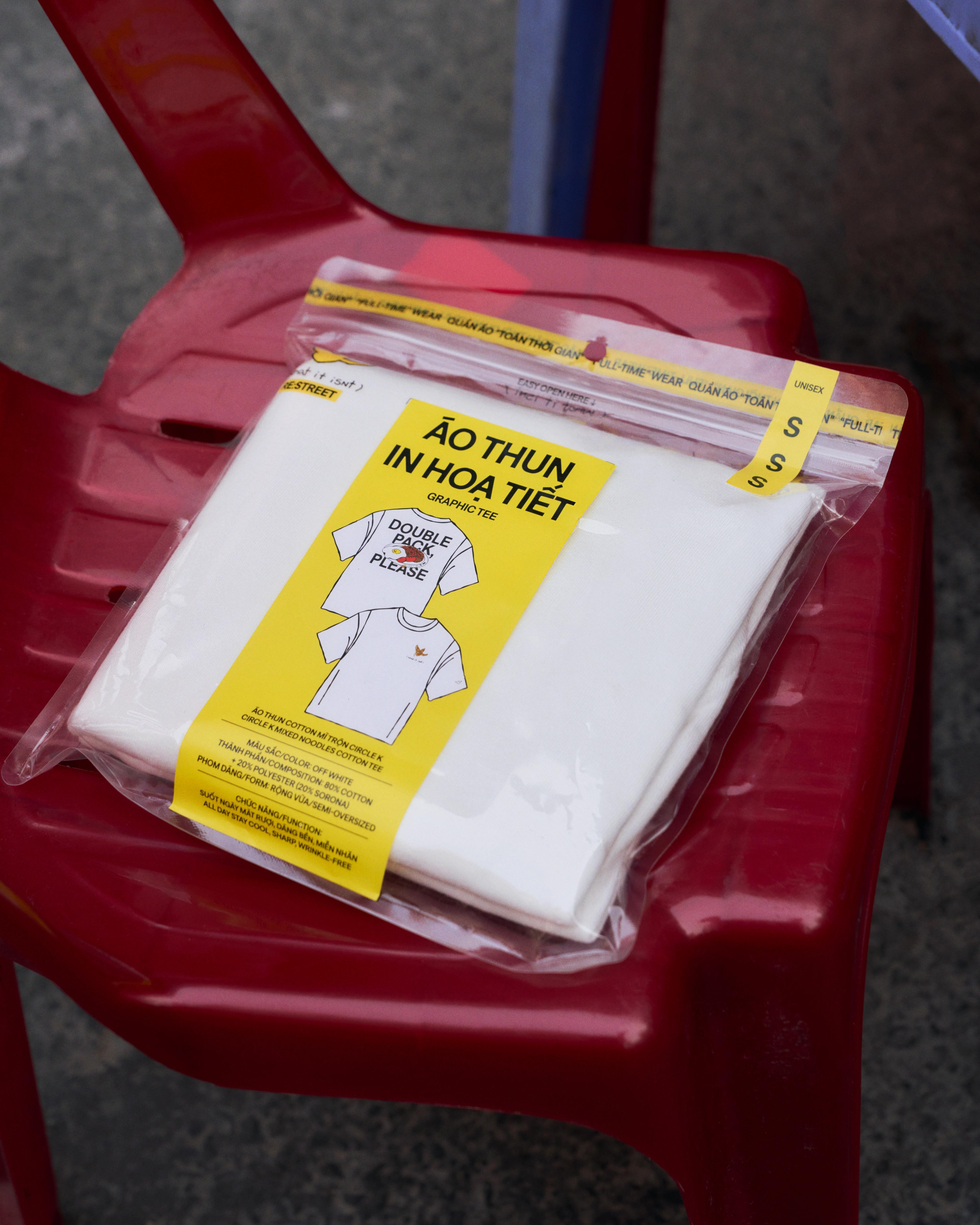
This integration was built on an observation of the city’s nhịp sống—a movement where people are constantly shifting between motorbikes, street stalls, and small stops along the way. In a place where daily life rarely follows a fixed plan, people are picking things up not always because they were looking for them, but because they happened to be there when they needed them. This mindset paved the way for their latest concept: the RE:STREET line. Launched in February 2026 in collaboration with Circle K, the project challenges how we think about where streetwear is made, what it’s made of, and how we access it.
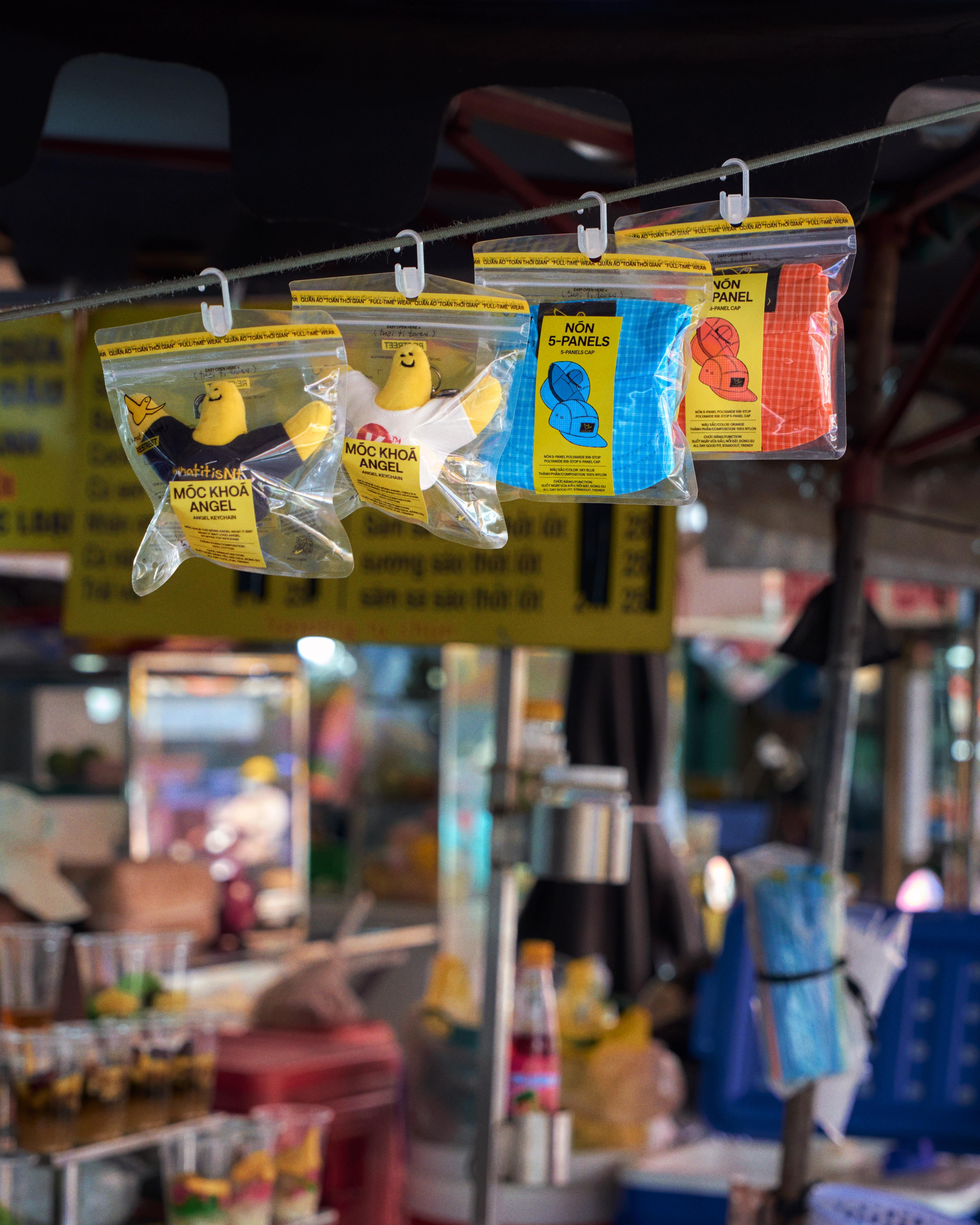
The longer you live in a city, the more you notice how quickly things can change. People. Places. Perspectives. In order to adapt, clothing must also be able to change. Rather than creating a space for people to come to, by bringing RE:STREET to Circle K, the brand places itself directly into the flow of people’s daily lives. Although it may feel unusual at first, this change fits the idea of streetwear in Vietnam.

Nowadays, streetwear in Saigon is no longer a niche subculture. It is the clothing of a city on the move. Customers are looking for pieces that offer the mobility needed to navigate high-paced cities like Saigon or Hanoi where much of its movement is the result of small, unplanned moments throughout the day. They want that same fluidity in how they encounter the things they wear. It isn’t something you necessarily go looking for. You stumble upon it. And when you do, you know you’re exactly where you need to be.

Furthermore, there is a quiet thoughtfulness to the collection. Designed and produced locally—from sustainable fabric development using recycled materials all the way to the final stitch—the line is built for the reality of full-time living in Saigon. Whether you are navigating traffic on a motorbike in the humidity, or ducking into a cafe to escape a sudden downpour, the clothes are made to be comfortable for different seasons, adapt to various occasions, and suit the styles of a wide audience.

At District 0, our mission has always been to build and connect communities through stories: stories of the people, places, and perspectives that shape our lives. Like District 0, RE:STREET feels like something that could fit anywhere and connect with people from all walks of life. This is why this new retail experience feels different. RE:STREET isn't trying to redefine fashion. It’s changing where style exists. As Mark Gonzales said over two decades ago, 'It may not be what you expected, but try to appreciate it.' Walking out of that Circle K with my new hat, drink, and snack, I realized he was right. It wasn't what I expected. But in the rhythm of this city, it didn’t need to be explained. It already felt right.
Follow RE:STREET on Instagram
Follow What it isNt on Instagram