







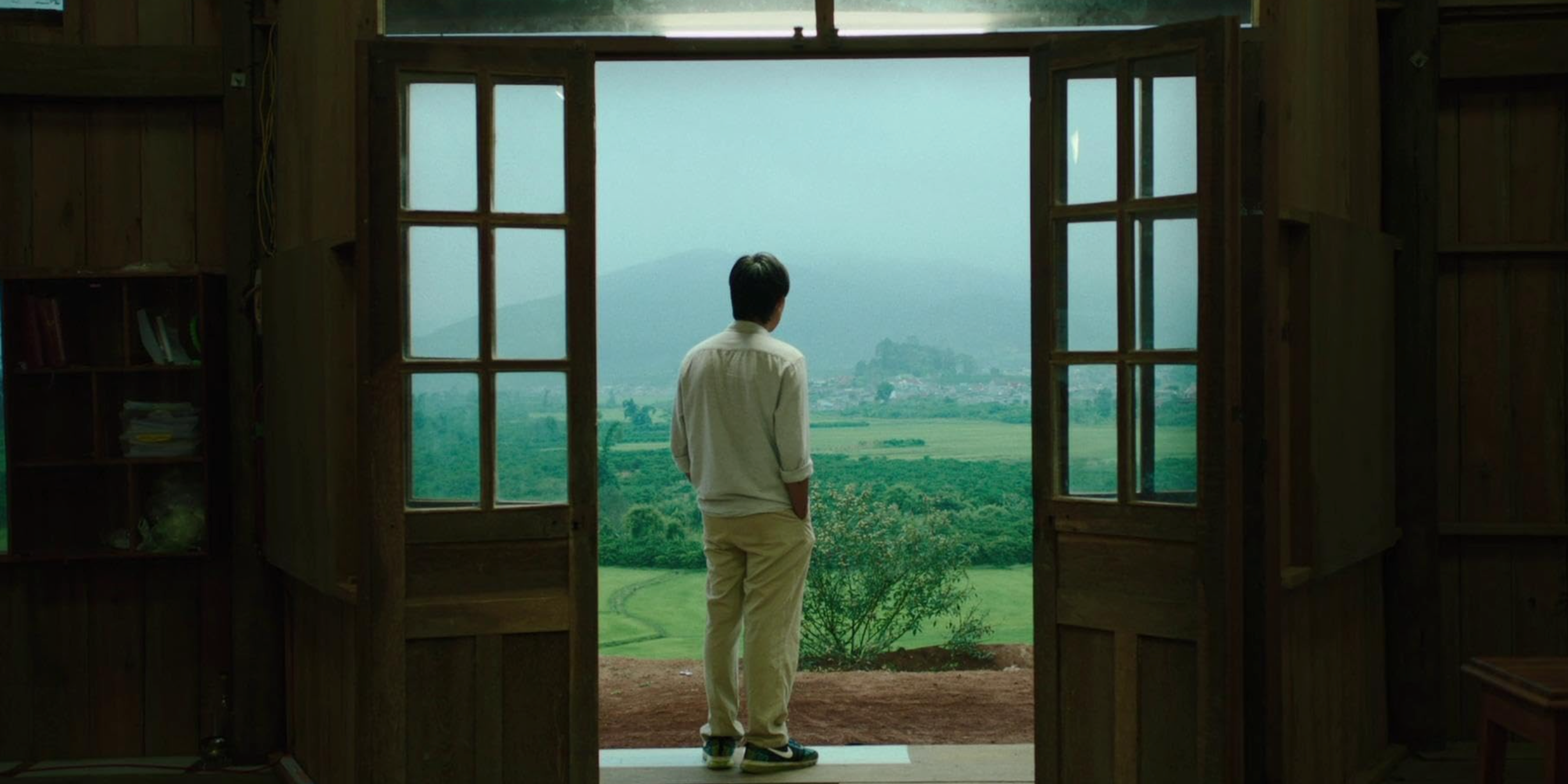
Metamorphosis is one of the most profound biological processes. It is also one of the most powerful philosophical metaphors. The transformation from worm to cocoon to a new, winged creature represents a complete process of life, death, and rebirth. It serves as the foundation of many great stories: the hero travels to the unknown world, experiences a great ordeal, a moment of resurrection, before finally returning to ordinary life as a new being. What if you could see inside that moment, inside the cocoon, and witness the chrysalis of another?
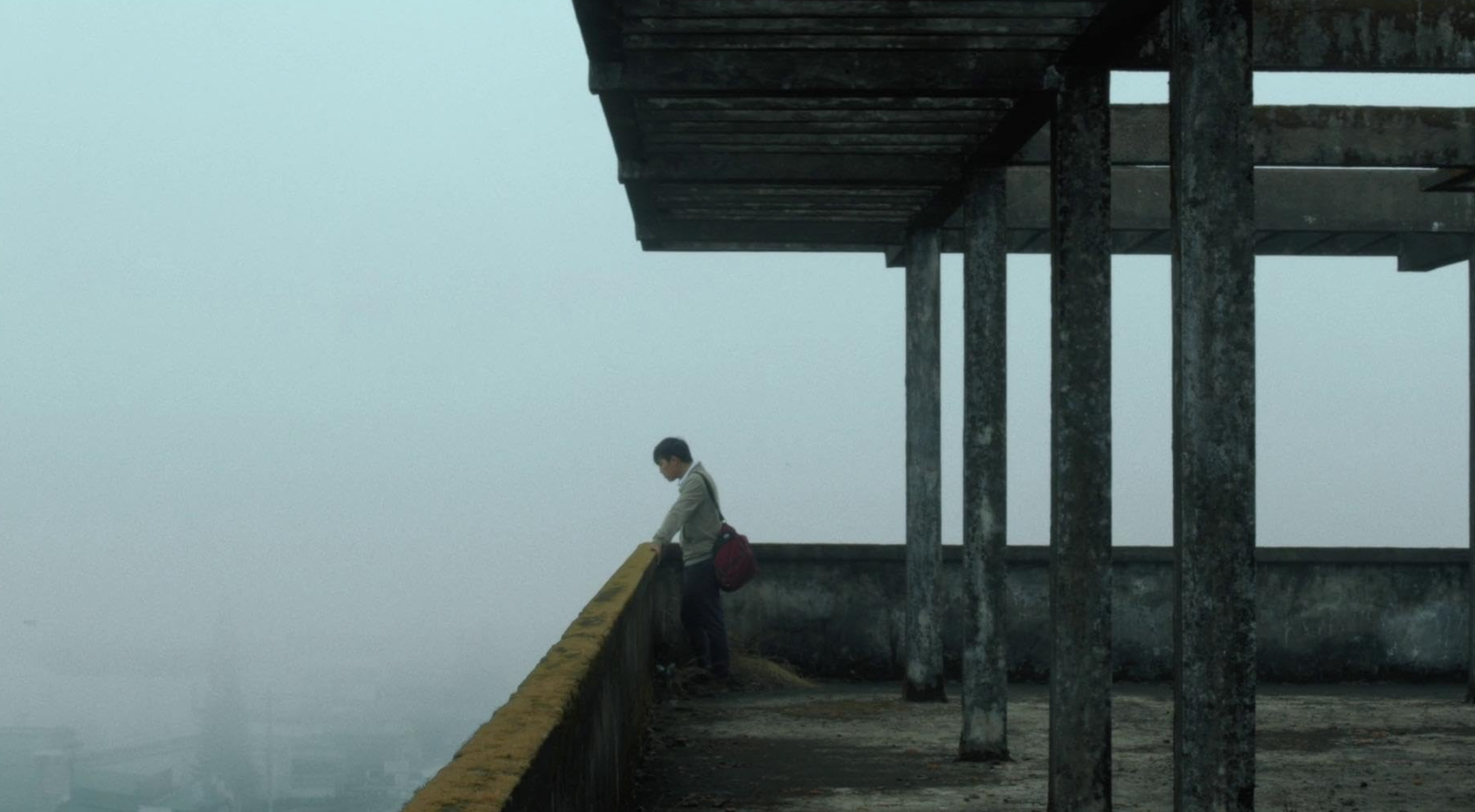
During an interview about his debut film, Inside the Yellow Cocoon Shell, director Phạm Thiên Ân explained that the "yellow cocoon" is a metaphor for the outer shell of a person in society—a cage of ambition that keeps us in an endless cycle. Watching the film you see the main character, Thien, struggling to rediscover his forgotten self, his forsaken soul, and ultimately, his life’s purpose.
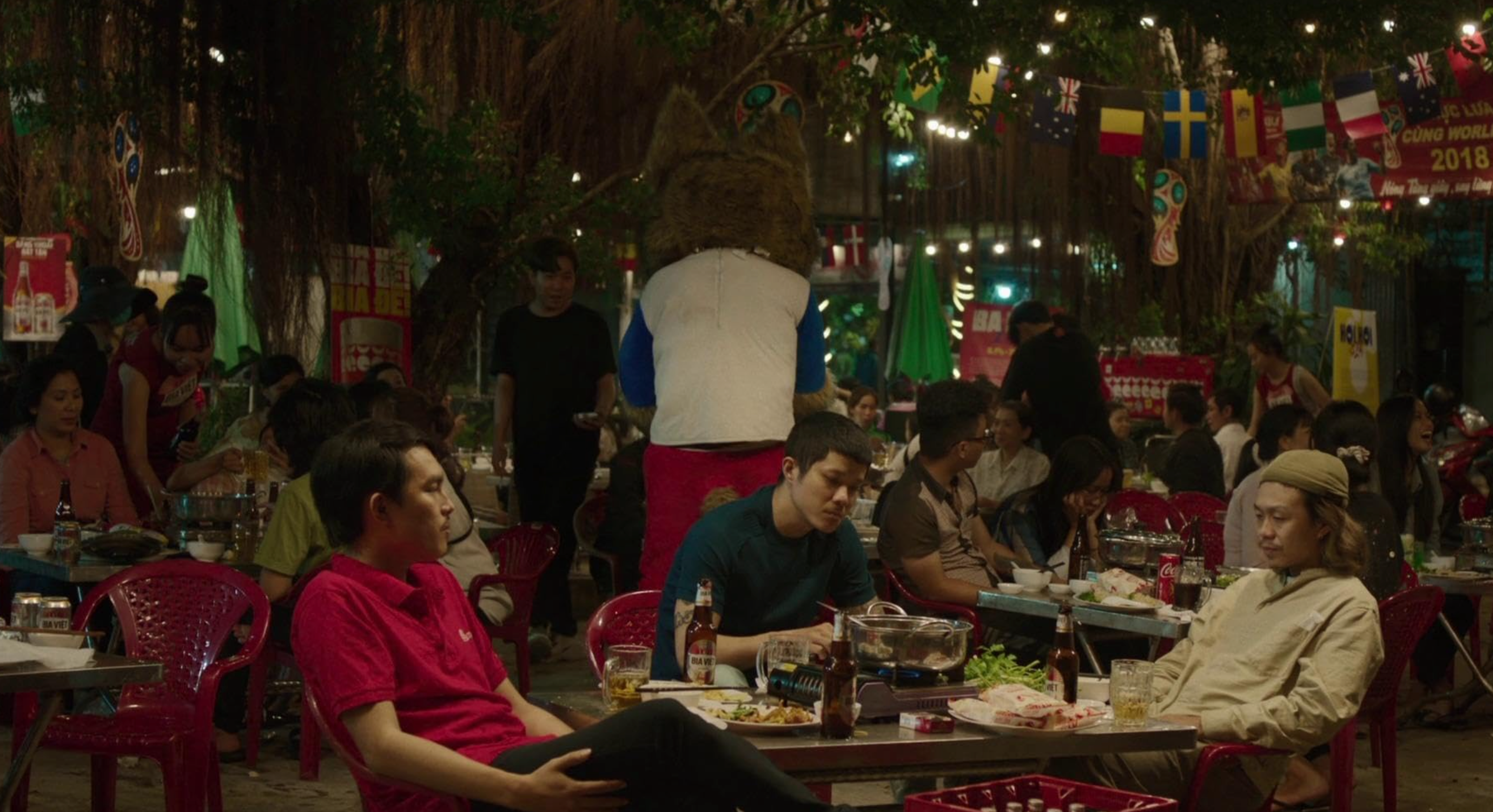
The film begins with a group of friends talking over dinner when suddenly, chaos strikes—a bike crash nearby. Many stop to spectate, but others, including Thien and his friends, carry on with their night. Soon after, Thien is at a massage parlor when his phone starts ringing. At first he ignores it, saying to the masseuse, “God is calling.” He soon learns the bike crash earlier resulted in his sister-in-law dying, leaving his nephew behind. Thien is now responsible for the child and for traveling to Vietnam’s Central Highlands to perform the burial service for the boy’s mother. It’s there in the countryside, you see through a series of loosely connected events Thien fighting to keep himself together while simultaneously breaking out of his cocoon.
As Ân also stated in the interview, the journey of the film revolves around a single question: what do you live for? In other words, what are you willing to die for? To really escape one must be willing to transform. Time inside the cocoon shell was only ever meant to be temporary.
Metamorphosis is a violent disintegration that takes place over a few weeks. A caterpillar literally dissolves into a kind of soup. In contrast, Ân’s film is a meditative journey that takes place over a few hours. Thien’s psyche also seems to dissolve within each scene. Three things stand out to me about this film and they operate on three different levels. Color, sound, and soul. The physical, psychological, and spiritual. In essence, life, death, and rebirth.
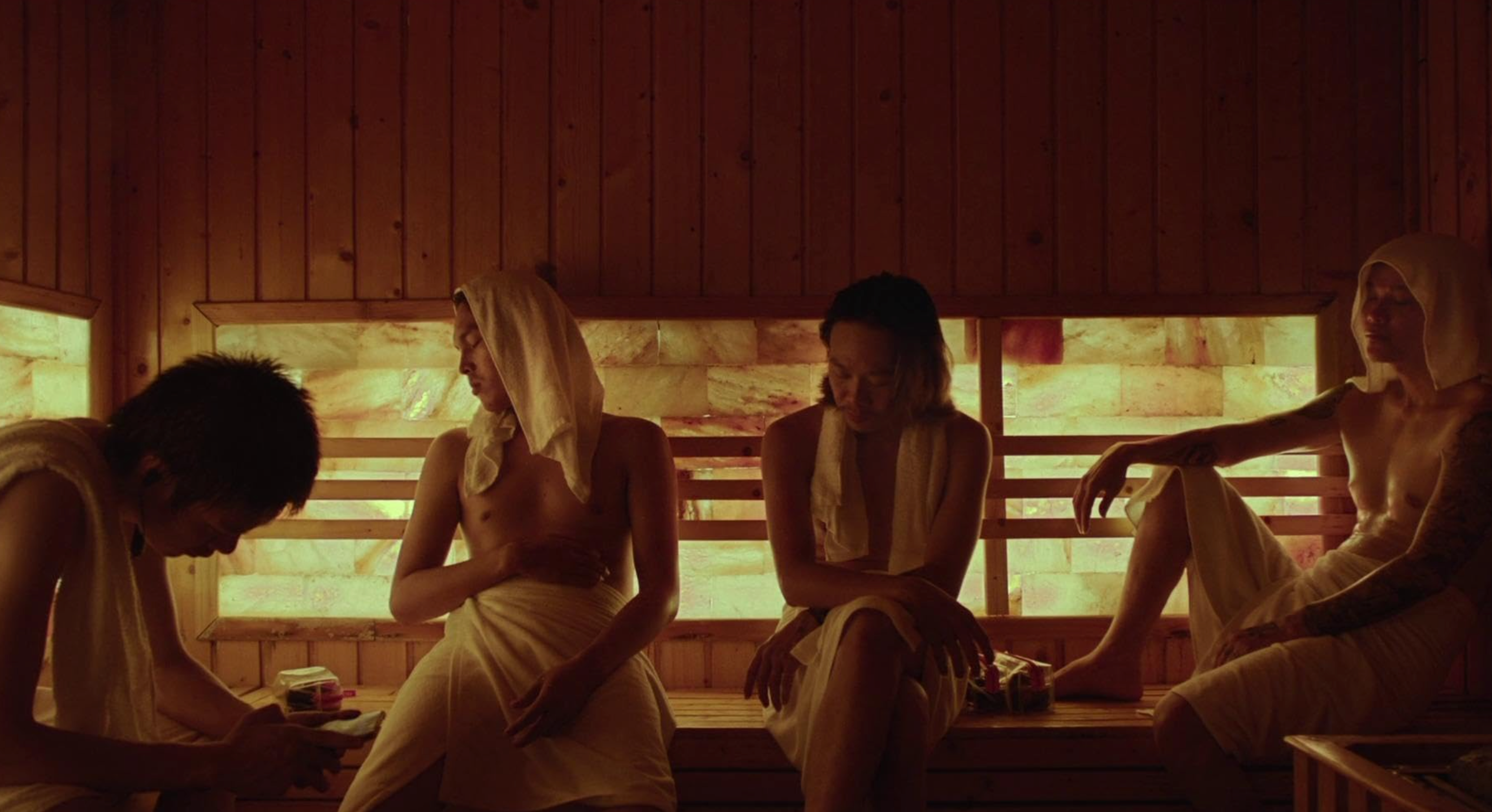
As Ân stated, the yellow cocoon is the outer shell of a person. It is a false gold cage representing the ambition of materialistic success. Money. Fame. Sex. Various scenes are saturated with a yellow hue, a seemingly irremovable filter, showing the inescapability of meaningless pursuits inherent in life. Wherever you go, you are trapped by desire, yet protected by the illusion of comfort.
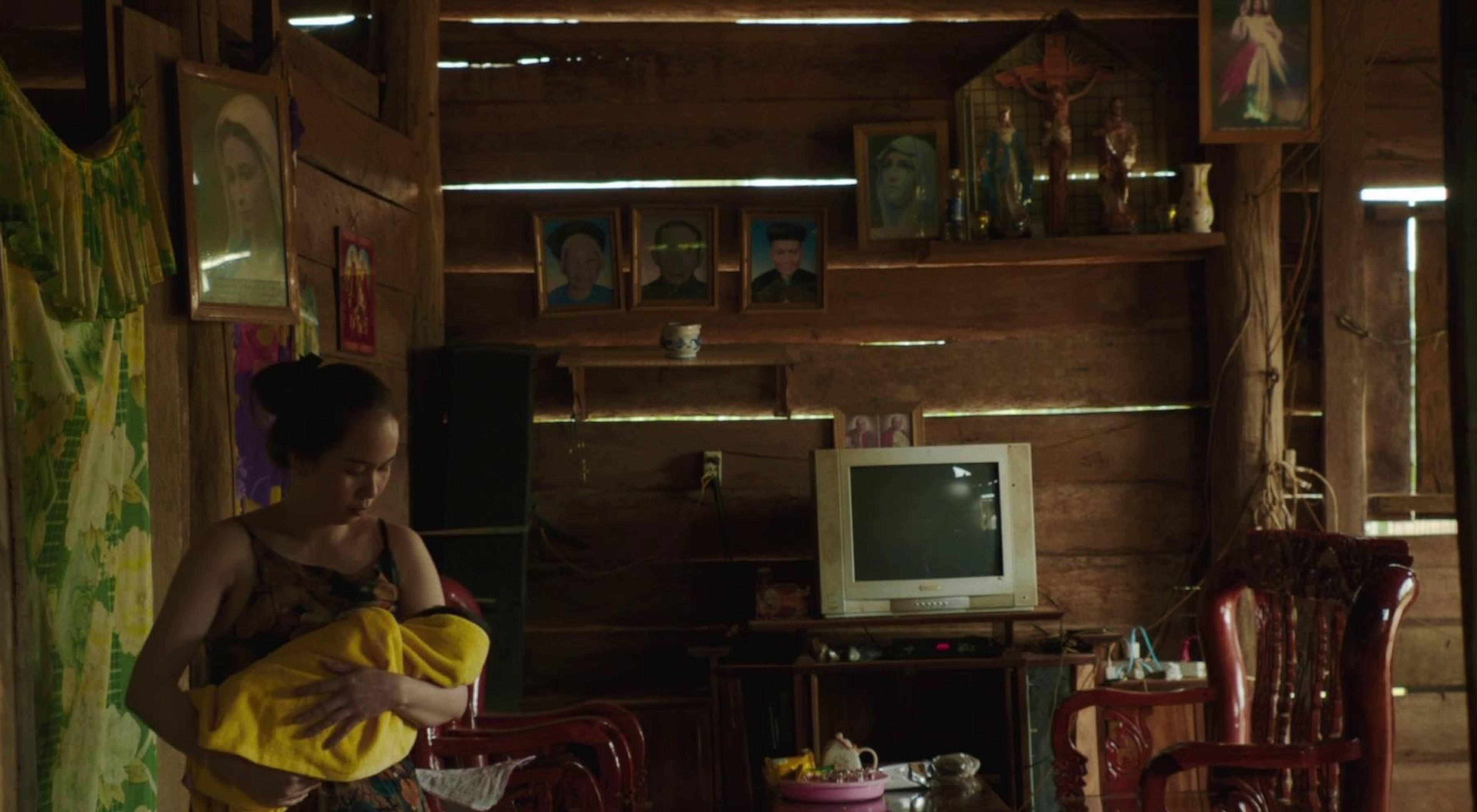
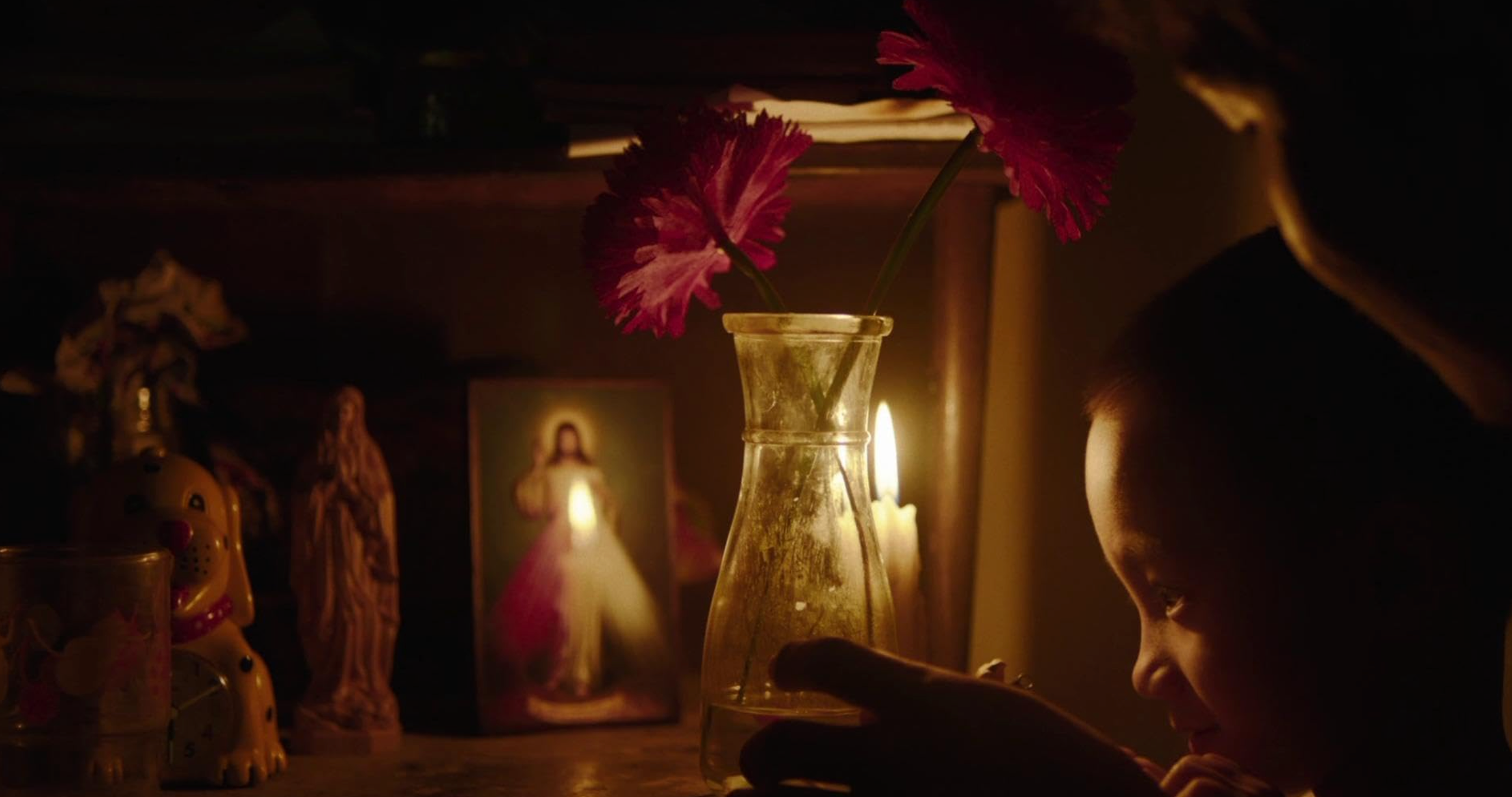
All throughout the film, the color represents this dichotomy. The yellow lights, silk blankets, and the humid atmosphere cling to viewers like a second layer of skin. In the hills, the yellow cages outside homes serve a dual purpose: they protect the roosters from nocturnal predators at night, yet they are the very structures that facilitate their confinement, with food dropped through the top so the birds never have a reason to escape. The yellow frames on the walls of all places Thien visits—filled with military certificates, photos of deceased loved ones, and paintings of religious figures—all show peoples’ desire to hold on to beliefs they believe are true, comforting, and meaningful. That is to say, preserving your faith in different ways, shapes, and forms can make life worth living for.
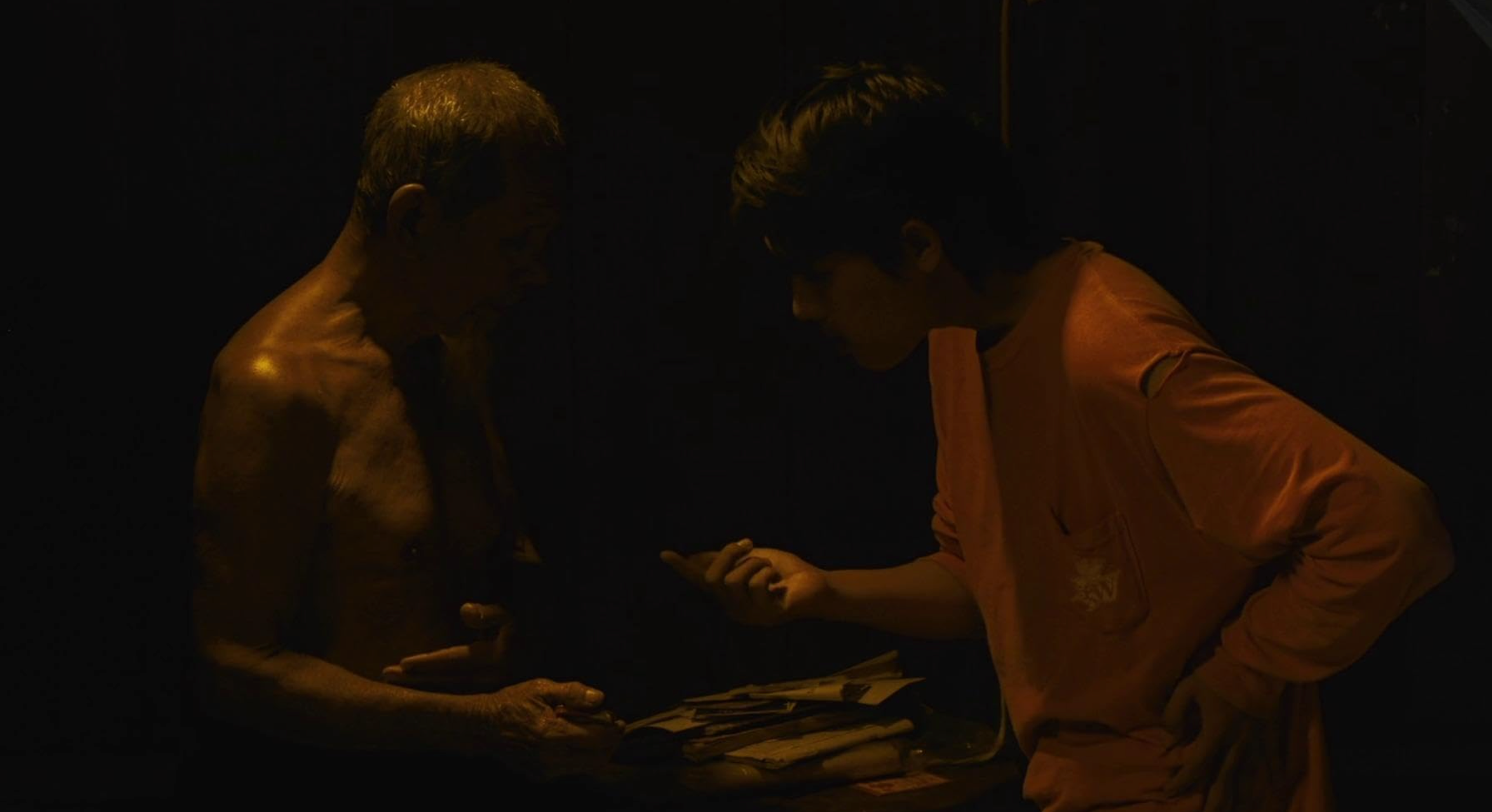
Then there’s the fact that from a biological standpoint, many silkworm cocoons are naturally yellow, a fact that deeply roots the film’s imagery in the Vietnamese silk industry. This industry is centered in the Central Highlands—specifically the Bảo Lộc region where Thien travels. In order to extract silk from the worm, the cocoon must be boiled, killing the creature inside before it can transform. This is where the biological represents the philosophical. The stress and pressure of the modern world—sacrificing your time and energy to work often to build someone else’s wealth—can kill the soul before it has a chance to take flight. In this context, yellow represents the comfort of the shell, but it is a comfort that ultimately marks our limitations for growth. To stay in your shell is to stay safe, but it also means dying before you are ever truly born.
If this yellow shell represents the physical "cage" of life, then sound represents the psychological "crack" that leads to death of old selves. As Thien says, “Every time a bell rings, an angel gets his wings.” By keeping the film relatively quiet—mimicking the muffled interior of a cocoon—Ân makes every intrusion of sound feel deafening.
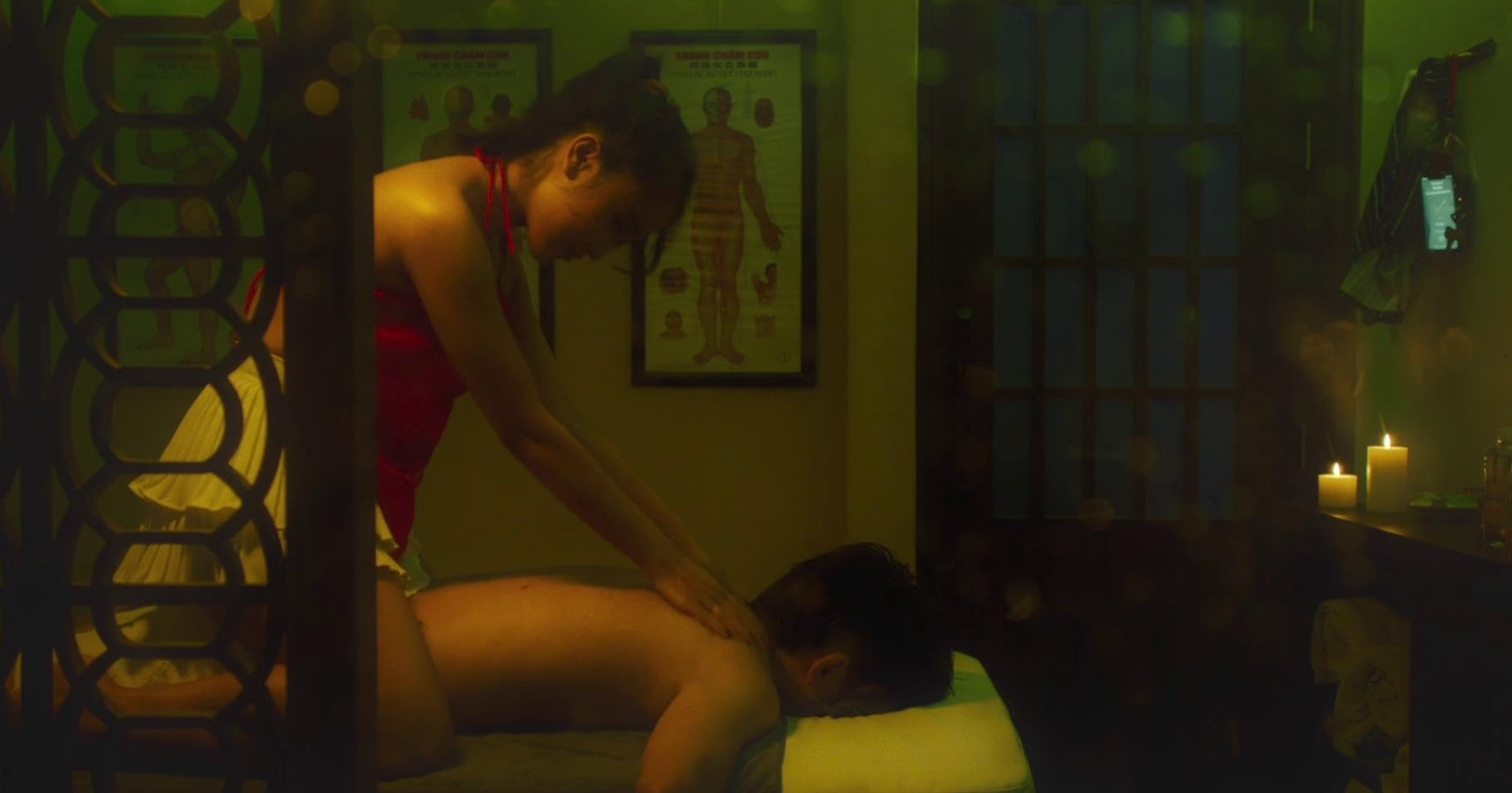
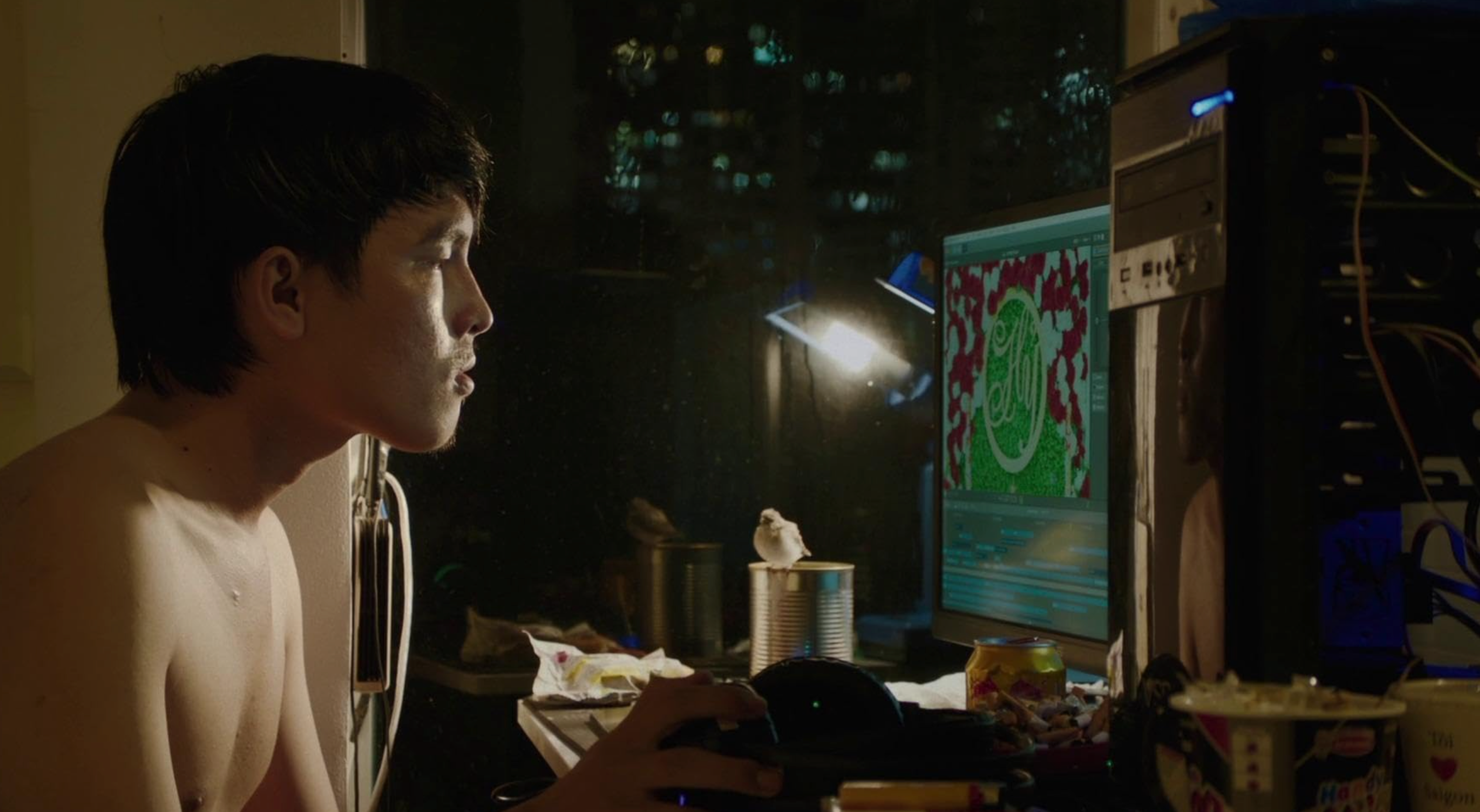
There are the sounds trying to pull Thien out of his normal life and put an end to life as he knows it. The opening bike crash at dinner. His phone ringing inside the massage room. The bird next to him chirping while he works at home.
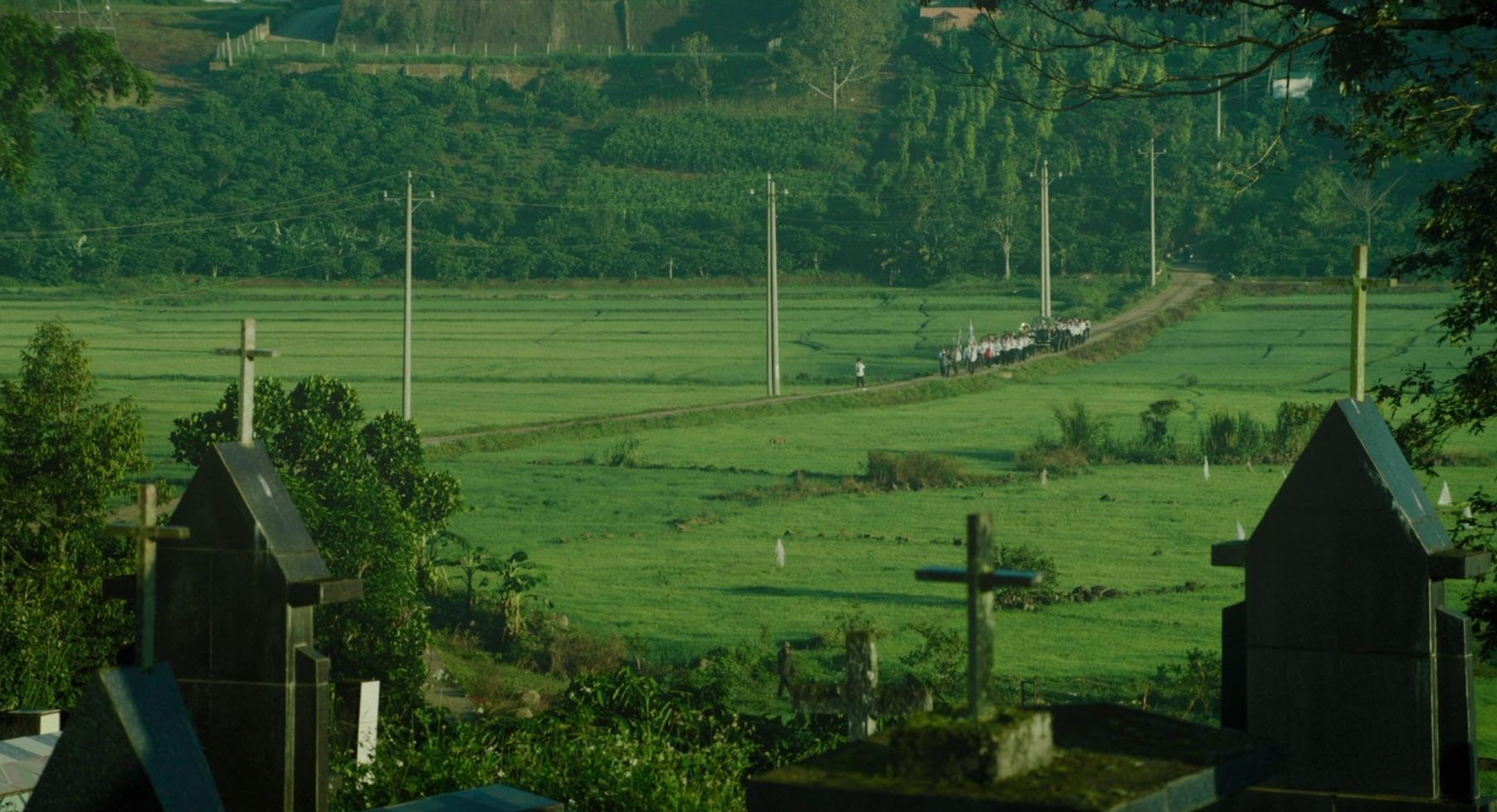
There are moments of soft music and chimes too, showing the transition points of leaving the old and entering the new. The music as Thien and his nephew leave Saigon and drive up into foggy mountains. The band thumping during the burial service, transporting the casket from the city, to the church, to the graveyard. The echoing church bells that wake up the valley from its slumber for morning service.
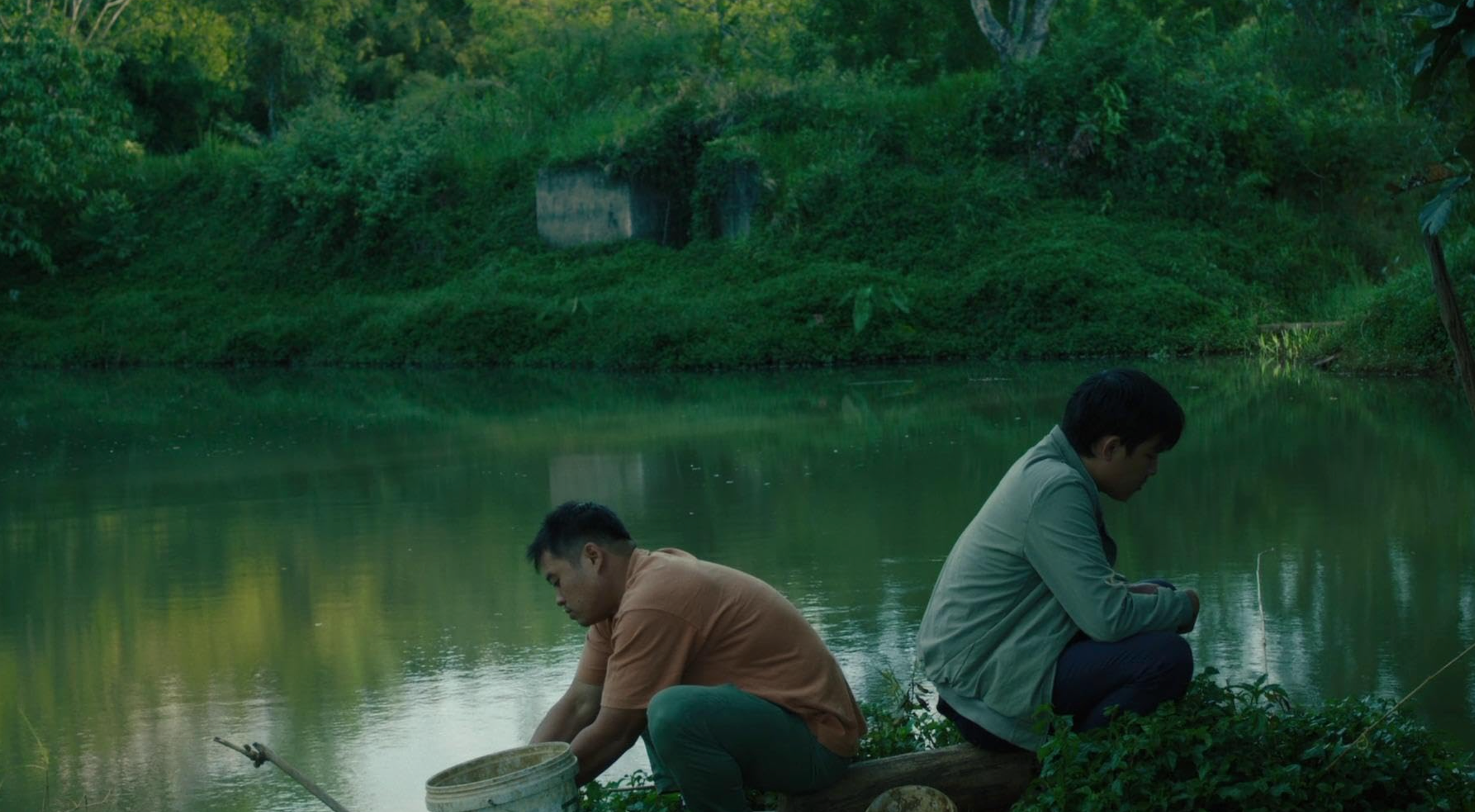
However, the moments that stand out are when the movie’s signature guitar plucks away. After Thien talks to the retired veteran about his war days. After Thien talks to his friend about accepting God’s plan for everything. After he talks to the farmer at the very end of the film, when he goes looking for his brother and husband of his deceased sister-in-law, only to fail and lie down in the stream nearby. I think these moments in particular are not just pulling him out of his old life or marking the transition phase, they are moments of death.
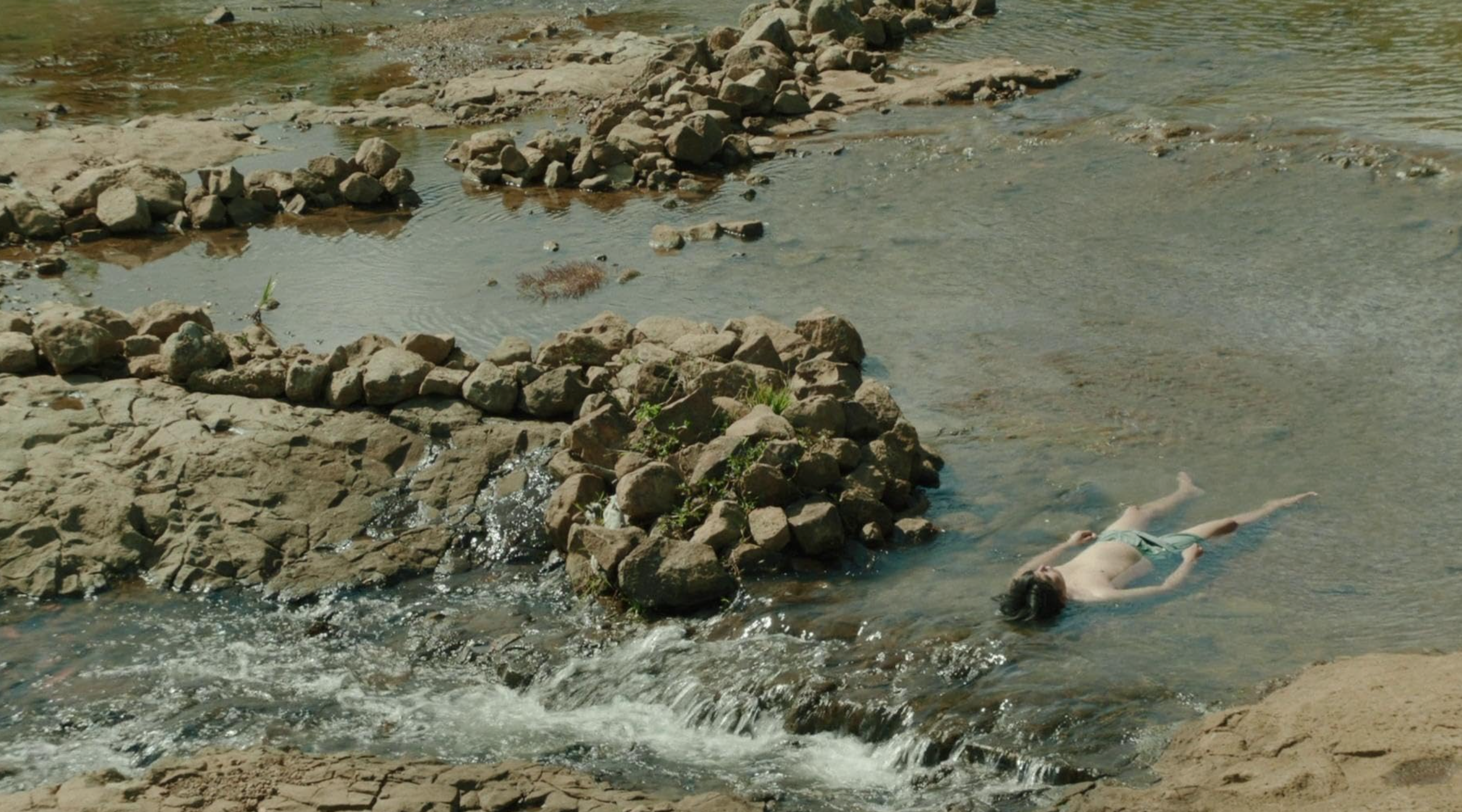
But it’s the last moment that marks the full surrender. He drives down to the trickling stream, sheds his clothes, the final layers of ego, and lies down in the water, as if he’s finally ready to plunge into the flow of it all. A complete dissolution of the self. It is at the final scene, he has finally surrendered. I think Ân’s story is showing that life, death, and rebirth are happening all of the time. To break out of your shell—your way of thinking and feeling—requires constant motion. However, paradoxically, having Thien lie down in the flowing water, shows one is required to be still to change. Therefore, surrender and transformation are one in the same. To take on a new shape, one must be like water. To become something new, one must first become nothing.
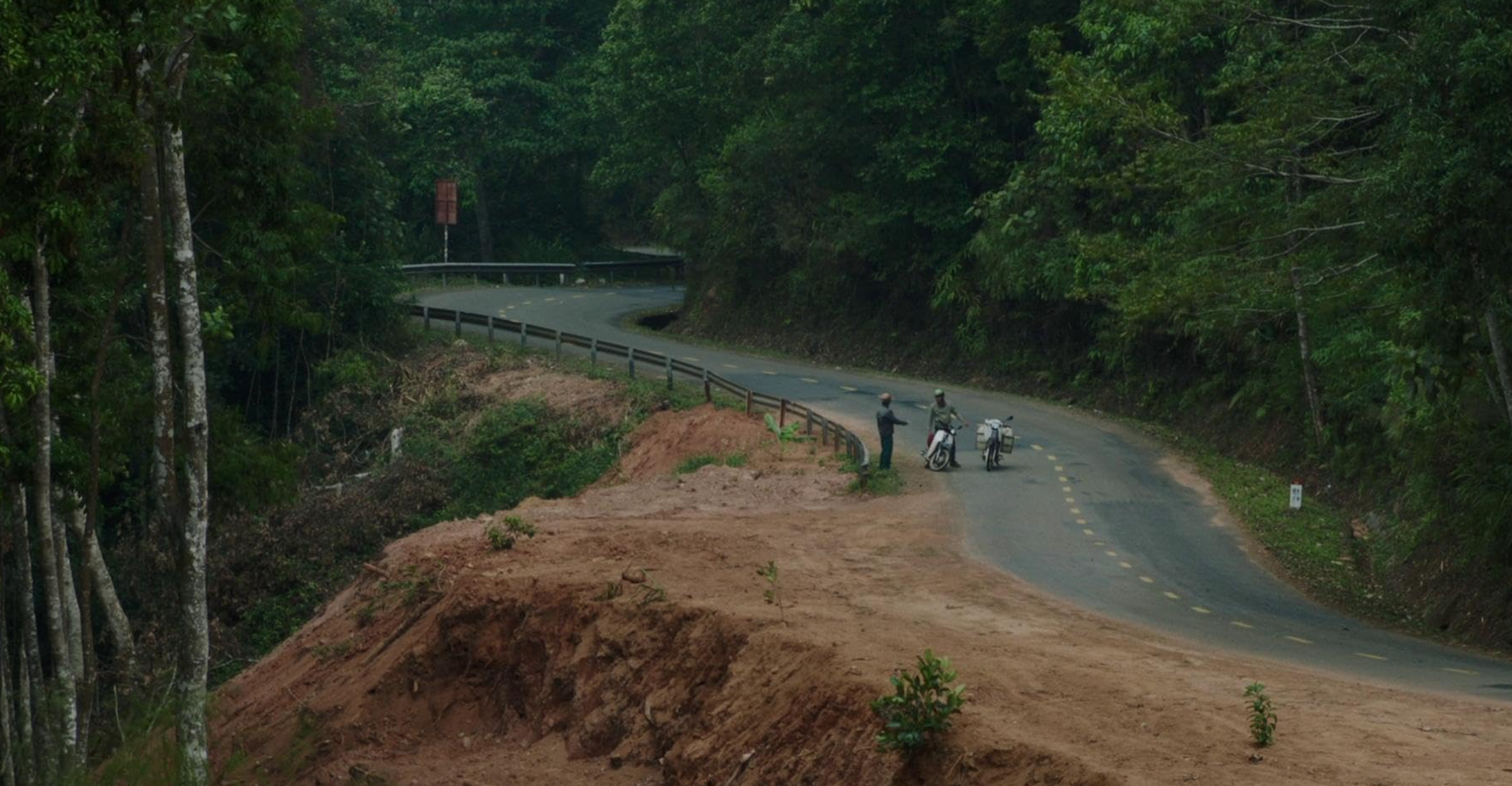
If the color is the shell and the sound is the vibration that cracks it, the soul is what emerges when the self dissolves. If there is one scene that stood out to me the most in this regard, it’s when Thien spoke with the old lady. Once Thien drops off his nephew at the school where the nuns take care of him, he goes off on a journey cycling through the hills where fog is thick like webs. Eventually, his bike breaks down. He pushes it to a repair shop, wanders inside and meets the old lady, who’s having tea by herself.
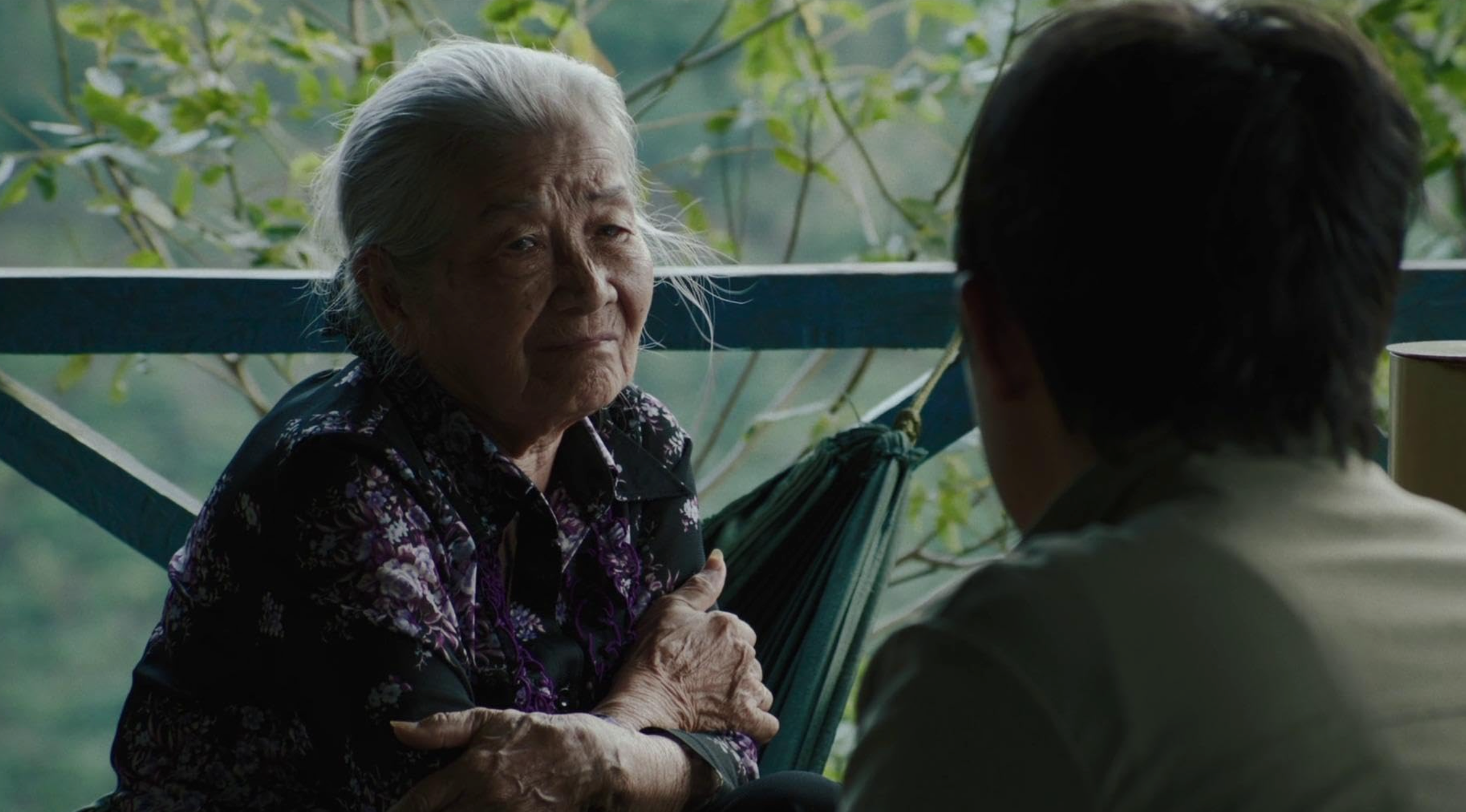
He asks her if she knows the man in the picture he carries with him, his long lost brother. She looks back and forth at him and the picture before finally asking, “Why are you only looking for him now?” Thien responds, “Do you know him?” She clarifies she’s not talking about him and says, “Have you forsaken your soul? You have too many burdens to bear. Sometimes all you need is one thing.” The other woman at the shop says not to worry. She talks like that to everyone. Yet, Thien does not move, nor does she. They are in this moment together. It’s here where I think the director is speaking of the soul through the old lady, acting as a spiritual mirror to Thien.
“No one can fully empathize with the soul. It’s beyond human comprehension” she says. She goes on to share a previous experience of when her soul briefly left her body and she witnessed the misery of other souls. “In this Earthly world,” she says, “I smelt a pungent, rotting odor.” A smell we’re so used to we can’t detect anymore, like the putrid air of a wet market that vendors no longer sense. “These souls,” she continues, “They are so delicate and weightless but they suffer when they inhale the scent of this earth. Yet for them, the greatest suffering was knowing I had to return to this flesh.”
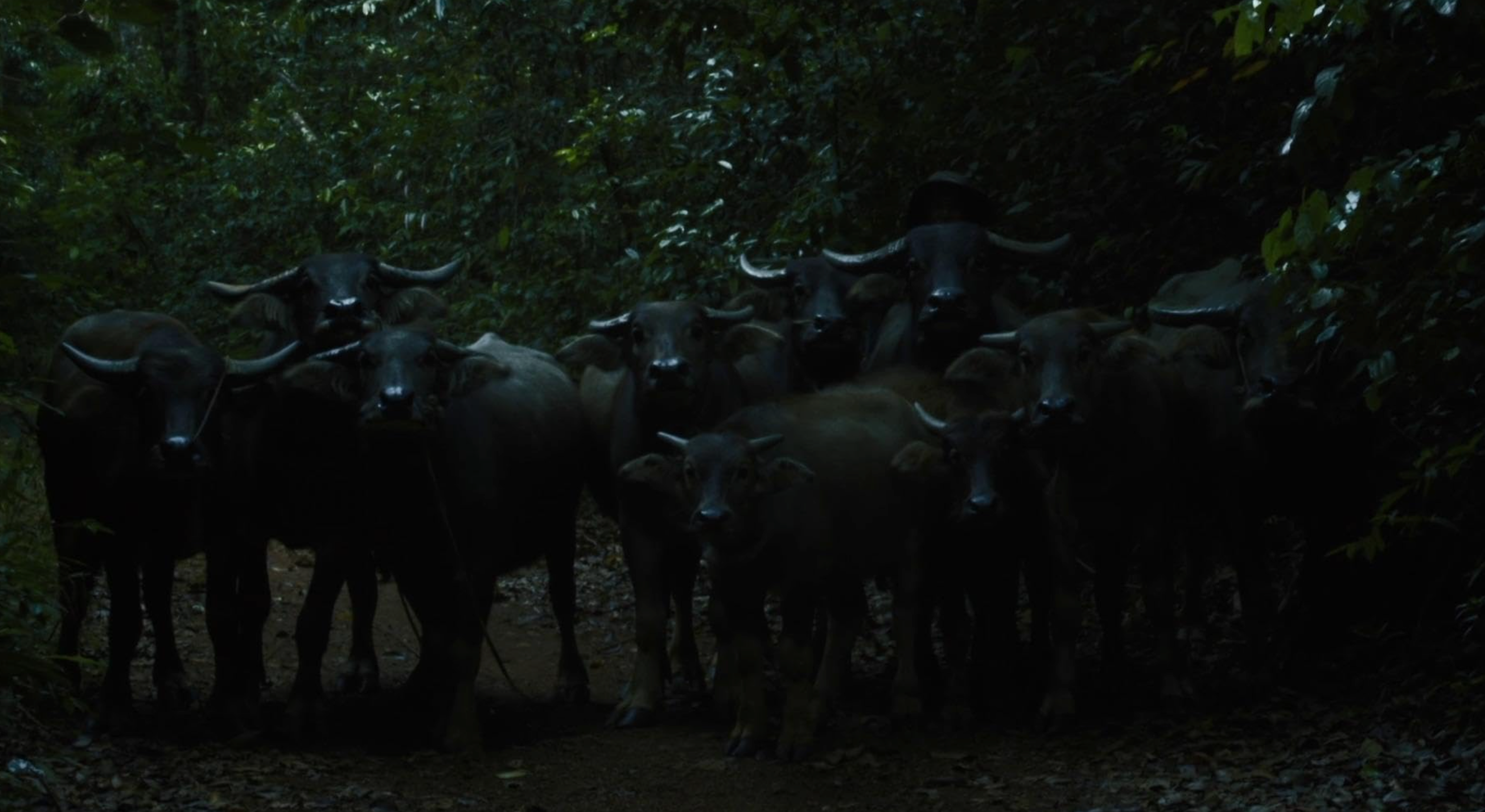
When she did return to her earthly form, she looked around at others who were deeply pious and full of virtue, yet filled with deep mourning and still being purged of their sins. They begged her to exhort their children to seek salvation. Thus, she felt miserable and decided to spend the rest of her life speaking up to others saying, “The brevity of suffering compared to eternity is but a fleeting moment, barely anything.” At the end of the conversation, she rocks back and forth before sharing her last words, “For what shall it profit a man, if he shall gain the whole world and lose his soul?”
Perhaps this is the deeper message Ân wishes his audience to receive. While living life inside your shell you become used to its smell: the odor from spiritual decay that’s a result of materialistic pursuits. Trapped by your ego, you are rotting and losing touch with eternity. The weightless soul within becomes weighed down by too many earthly burdens.
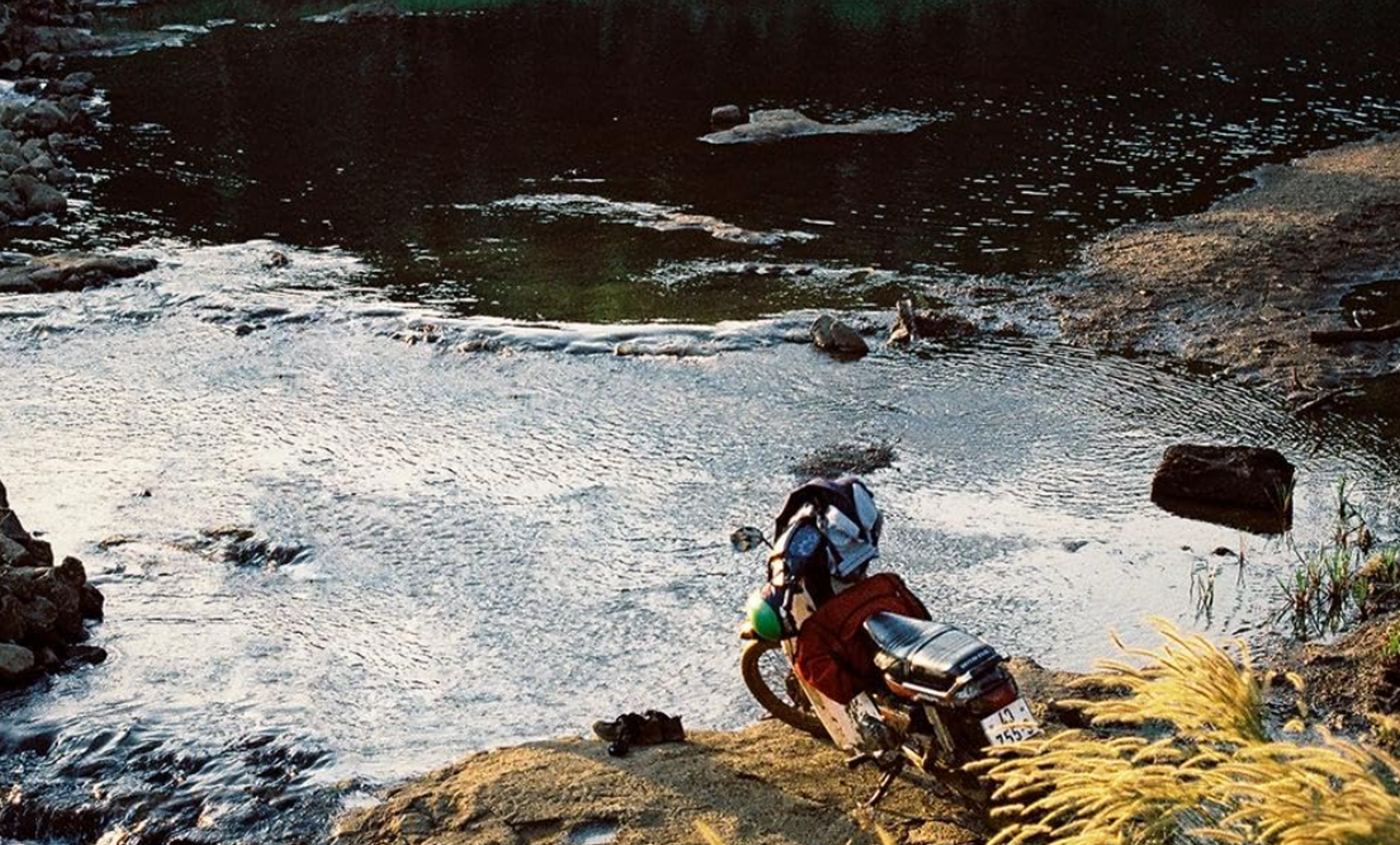
What is then, the one thing you need she speaks of? I think Ân answers that question in the final scene with Thien parking his bike—bringing his journey to end, taking off his clothes—shedding his flesh, and lying down in the water—accepting the brevity of his suffering. He is no longer a man trying to gain the world in exchange for his soul. The final pluck of the guitar at the end of the movie is the actual rebirth of Thien finally spreading his wings as a new being.
Inside the Yellow Cocoon Shell is a rare cinematic journey. Watching each scene is like taking a long look in the mirror. Through color, you see your physical shells. Through sound, you hear your spiritual deaths. Through the contemplation of the soul, you realize the necessity of rebirth. In the end, you take the old lady’s words with you, “The brevity of suffering compared to eternity is but a fleeting moment, barely anything.”