







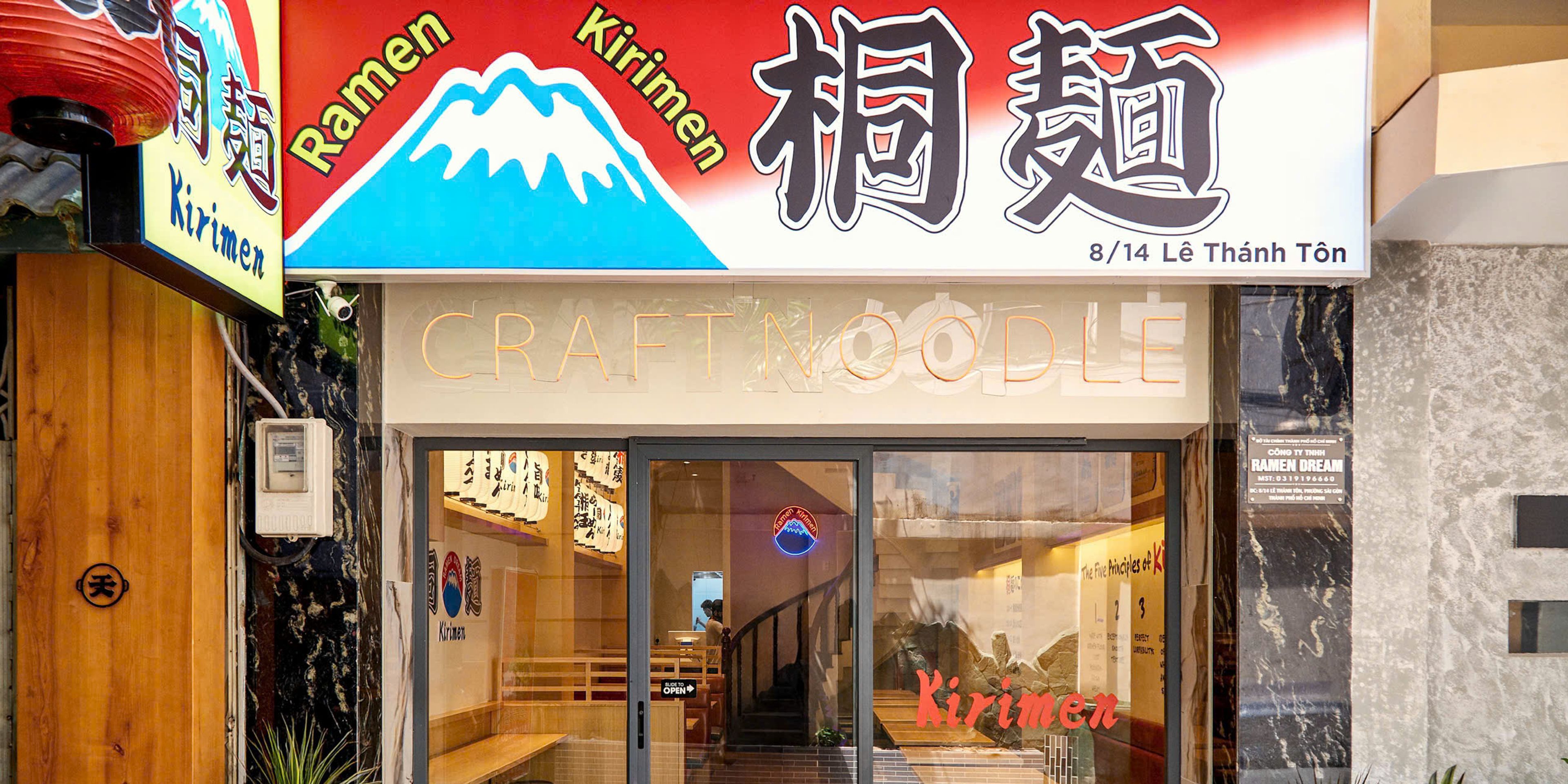
Society is becoming evermore drenched in a culture of excess. More is always merrier and bigger is considered better, leading to a collective consciousness whereby people expect—and desire—abundance. Think of the endless advertisements making sure you’ll never run out of things to buy: from the phone in your pocket to colossal billboards furnishing a city’s skyline as if it were just another commercial. Think of the neverending deluge of information. The overload of click-bait thoughts and rage-bait opinions mean that no one’s ever on the same page and everyone’s screaming to get their point across. Think of our diet. In this insatiable, rapacious drive towards what can only be described as gluttony, food has become another victim to excess. Super-size-me portions that always go to waste. Hyper-processed meals that are more chemical than what can be traced back to nature’s provisions. The bastardisation of food with unnecessary, pretentious fluff like gold flakes—ingredients which do little for flavour and only feign luxury. In such a landscape, places like Kirimen and dishes like their Kiritama are taking a stand.. They remind you of the possibilities when you strip something back to its core. Of the true soul and spirit that can be found at even the humblest root.
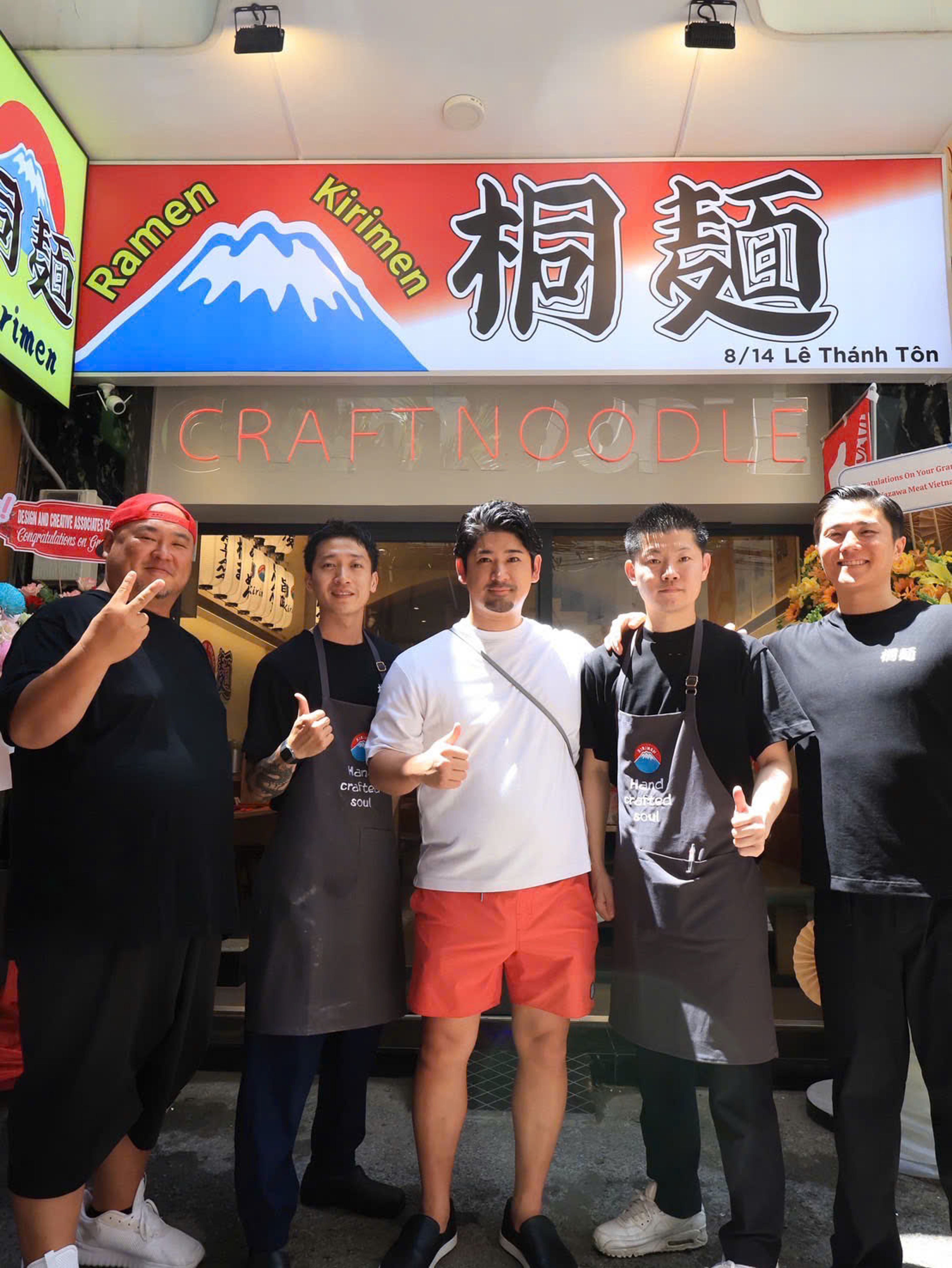
Kirimen is a chain of ramen establishments that first opened in Osaka, Japan. From the beginning, their approach has served as a stark contrast to a ramen culture that is becoming increasingly hypnotised by maximalism. Richer, fattier broths and an endless choice of toppings are commonplace nowadays, with ingredients like cheese, bacon, and even pesto blurring the lines between tradition and excessive experimentation. Despite all of the noise, Kirimen has remained steadfast with their mission. Prioritising men (noodles) above all else, they’ve developed a signature ‘Super Kirimen Flour’ which is a proprietary blend based off of Hokkaido’s premium wheat, Haruyokoi. With this foundation, they developed five pillars which serve as the brand’s guiding principles:
1) Made with Kirimen flour.
2) Exceptionally smooth texture.
3) Perfect slurpability.
4) An ideal balance of firmness with a clean, satisfying finish.
5) A rich and deep umami filled aroma of wheat.
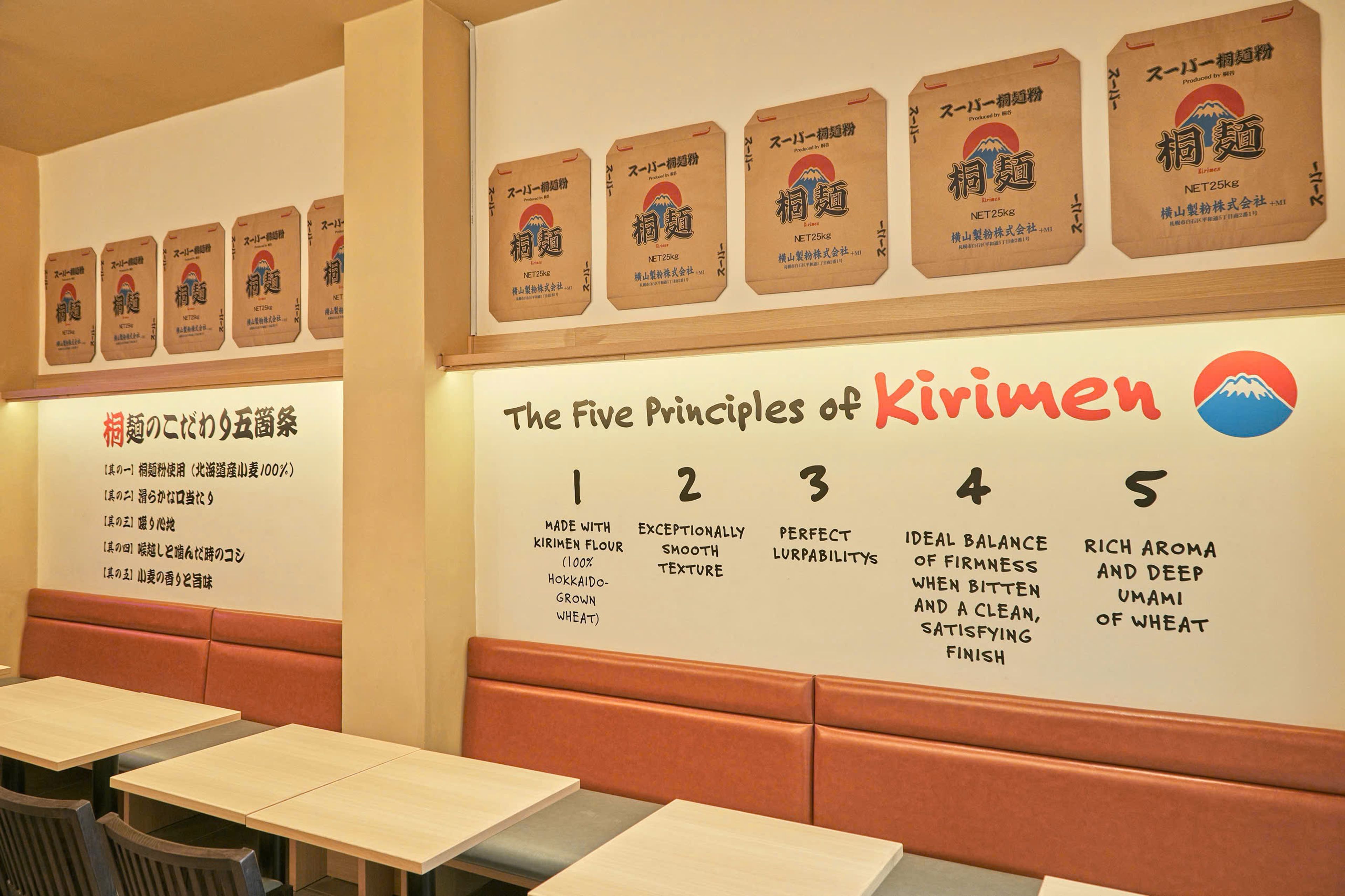
Adhering to these strict guidelines ensures that Kimrimen continues to deliver on its promise of a men-centric dining experience. Even their name itself points to this minimalist, concentrated approach. Kiri is the Japanese name for the Paulownia tree, symbolic in the country for prestige and refinement. However, there’s a double entendre here given that Kiri is also Japanese for cutting. In effect, Kirimen then signifies the goal of producing refined, premium men by cutting away at any excess and returning to the core of what makes ramen so beloved.
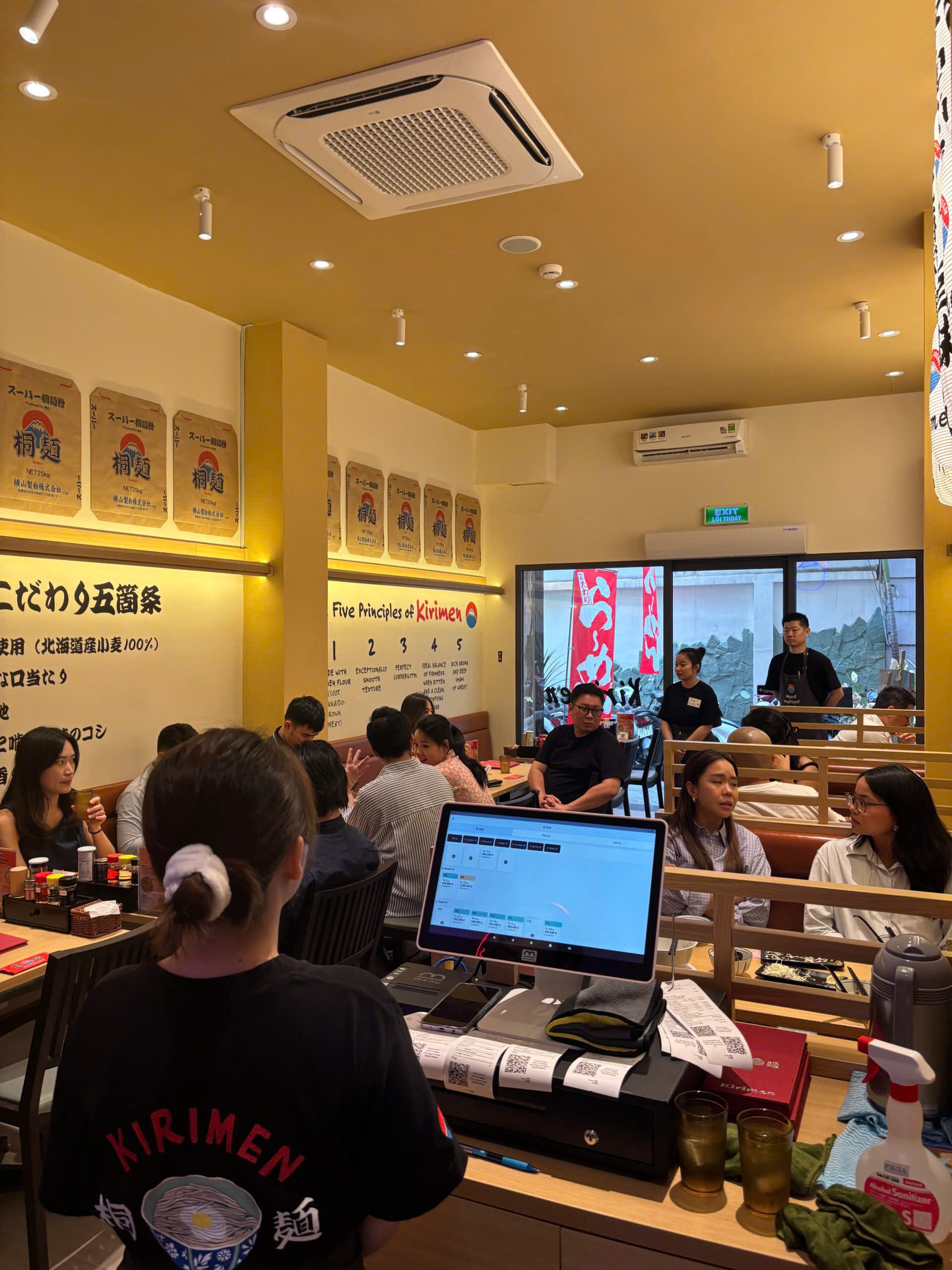
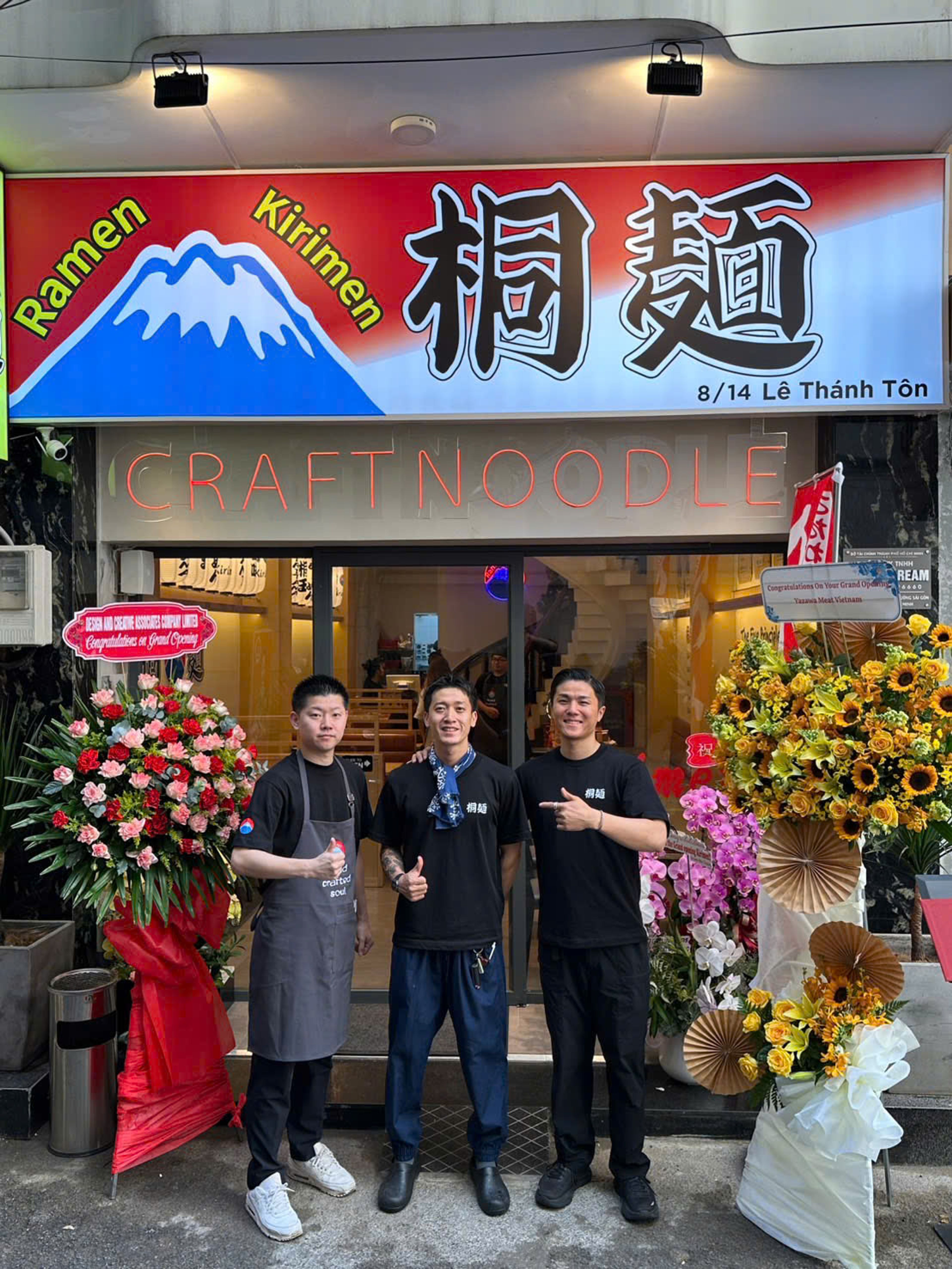
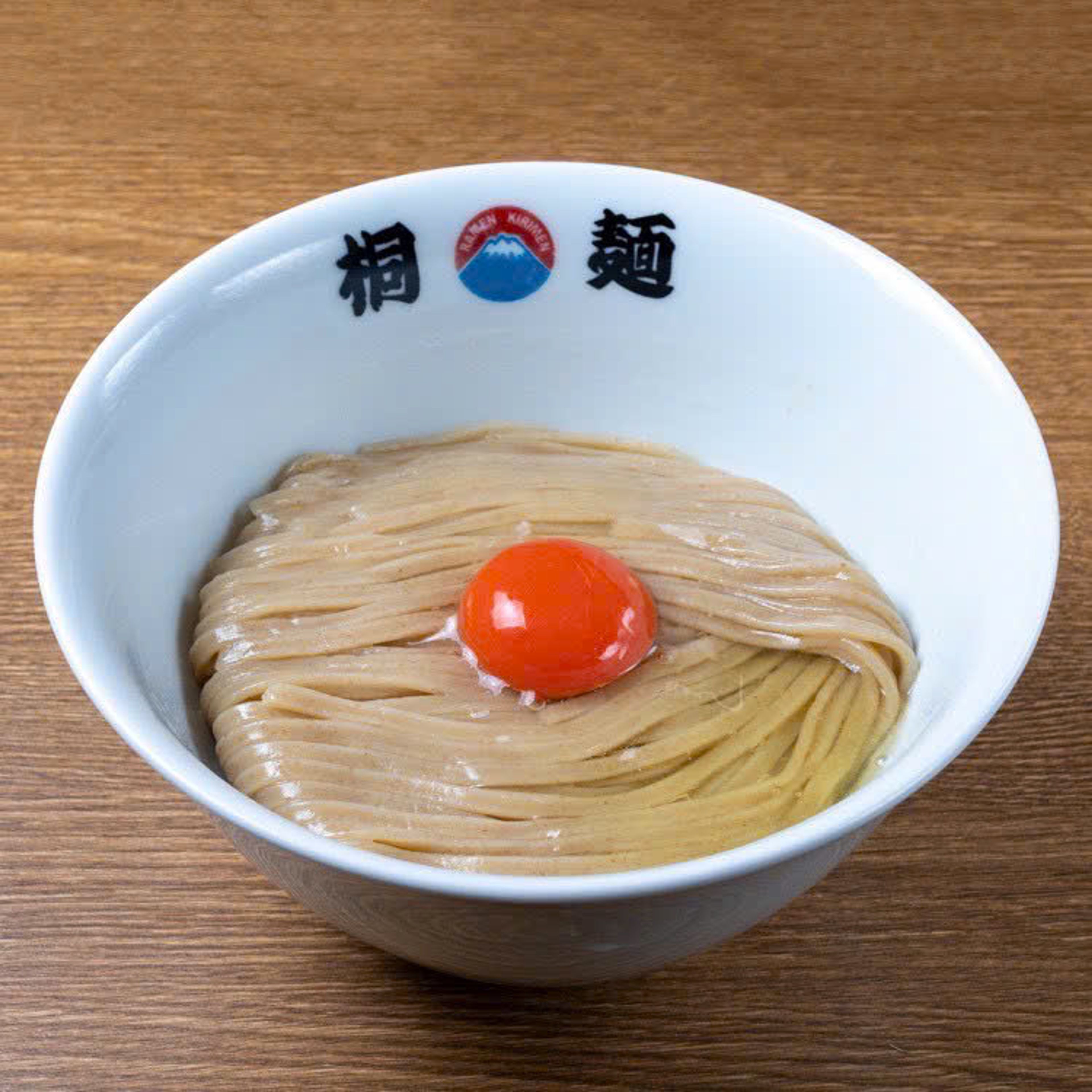
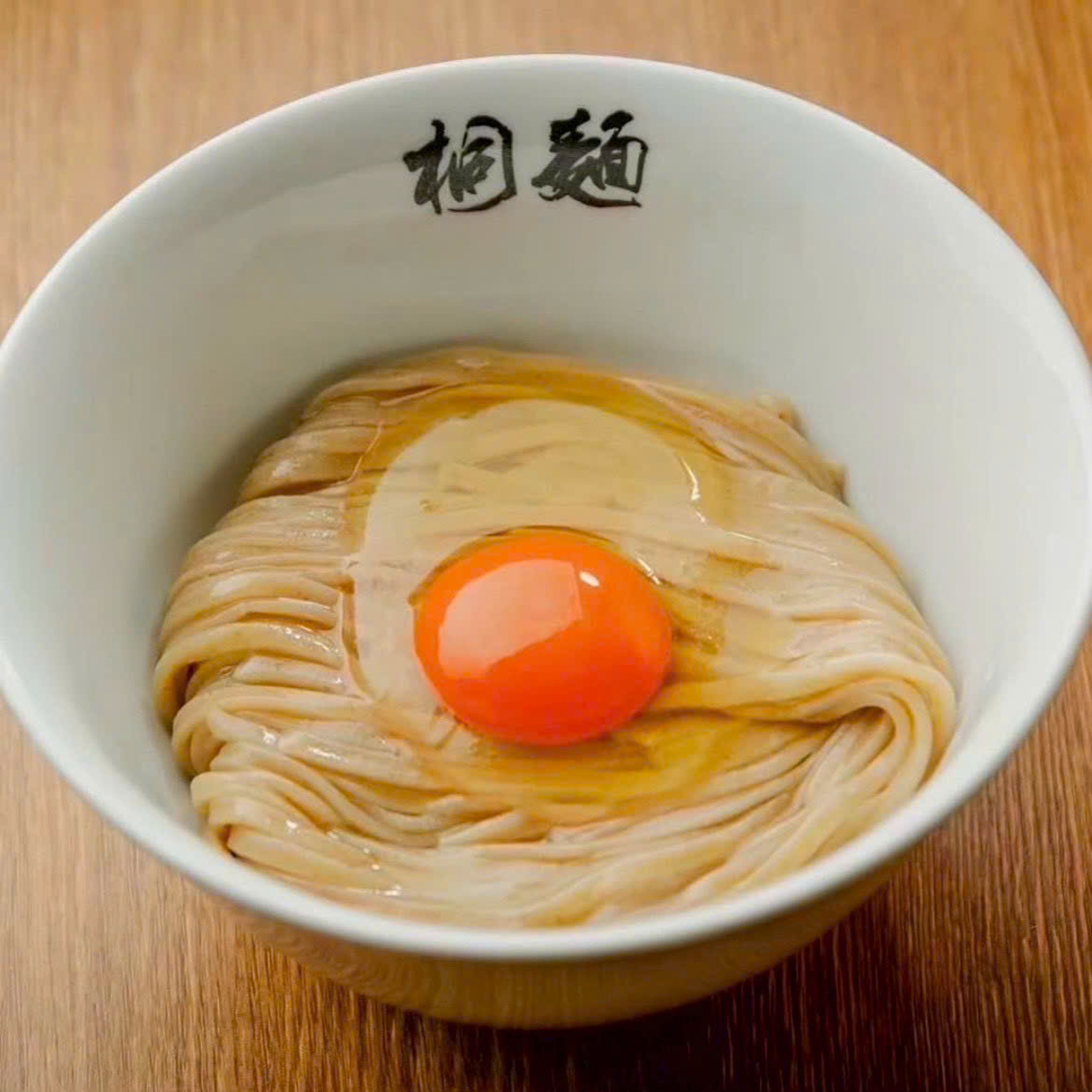
All of this talk of the noodles meant there was nothing to do but try them out. I visited with Aidan and Garrett during their soft opening. The place was a-buzz when we arrived, all the seats filled with hungry customers slurping and chatting away. While Aidan and Garrett took a moment to flip through the menu, I already knew my order: a bowl of their trademark Kiritama. The ultimate representation of Kirimen’s philosophy, the dish consists of only three ingredients: noodles, a salt-based sauce, and a raw egg. The dish has become legendary among ramen enthusiasts in Japan for a number of reasons. Not only is it supposed to be delicious, it actively swims against the zeitgeist—Kirimen goes so far as even branding the dish Hikizan no bigaku, or, ‘The beauty of subtraction’. Less is more, and Kirimen is out here to prove it.
In total, we ordered a Special Shōyu, Special Shio, gyōza (pan-fried dumplings), karaage (Japanese fried chicken), my Kiritama, and a bowl of rice. While waiting for the food to arrive, I started to doubt my decision. Aidan and Garrett didn’t join me in trying a Kiritama and once I thought about the toppings that their bowls would come with, I wasn’t sure if the simplicity of noodles, sauce, and an egg would cut it. After all, while Kirimen is actively swimming against the zeitgeist, I’ve been happily drifting along given that growing up, ramen’s various soups and toppings have played a role in shaping and cementing my love of the dish. There’s your big three shio (salt), shōyu (soy sauce), and tonkotsu (pork based) broths. There’s toppings like succulent chāshū (braised pork slices), crunchy menma (fermented bamboo shoots), and how could you ever forget the heavenly runniness of a perfectly prepared ajitama (marinated soft-boiled egg)? Ramen’s universal love stems from being greater than the sum of its parts—each element comes together to create a complete bowl. Once you remove many of those elements, would it ever be possible to have something as worthy?
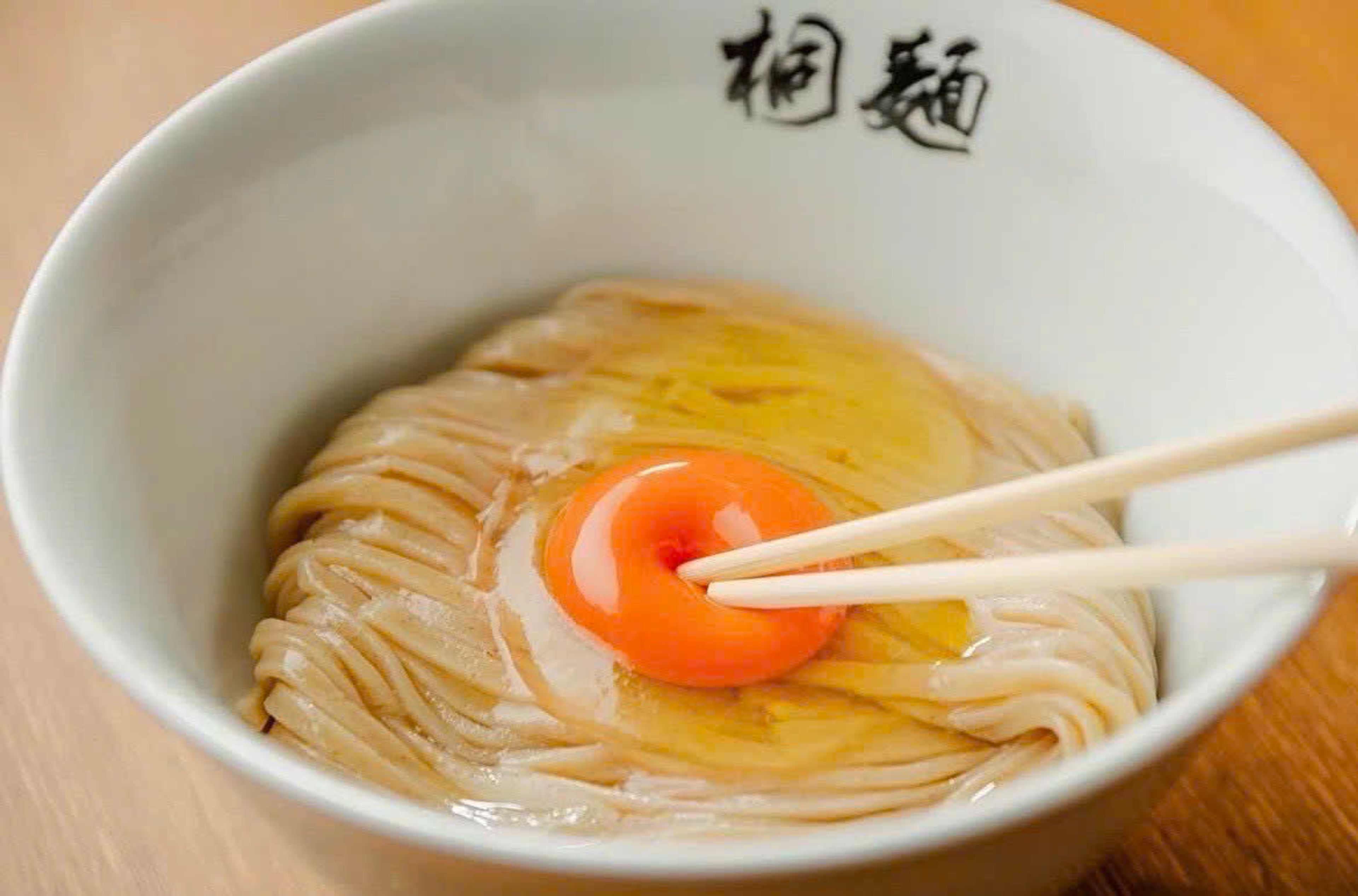
Our food arrived. Aidan and Garrett immediately tucked in. I paused, looked down at my Kiritama with the kind of confusion and curiosity a kid might have when presented a meal as of yet unfamiliar to them. Admittedly, the dish was pretty. While it was noticeably barer than the Special Shio or Special Shōyu, it possessed an unassuming confidence in its simplicity. The egg yolk was a beautiful golden, the beige noodles were neatly folded over each other and glossed with a light sheen. Taking my chopsticks, I poked a hole into the yolk and watched the gold trickle over the noodles, then mixing everything together, I lowered my head for my first bite.
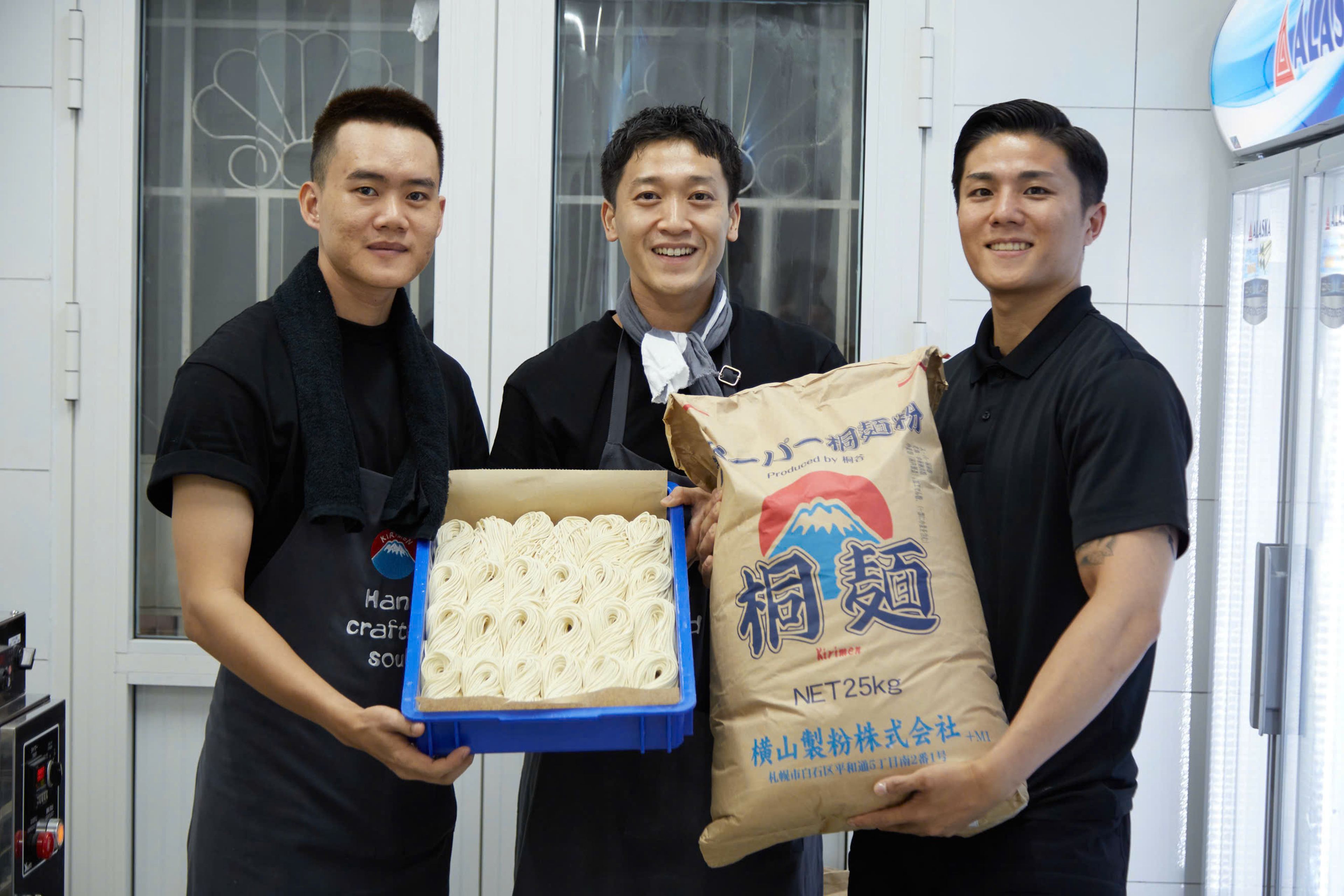
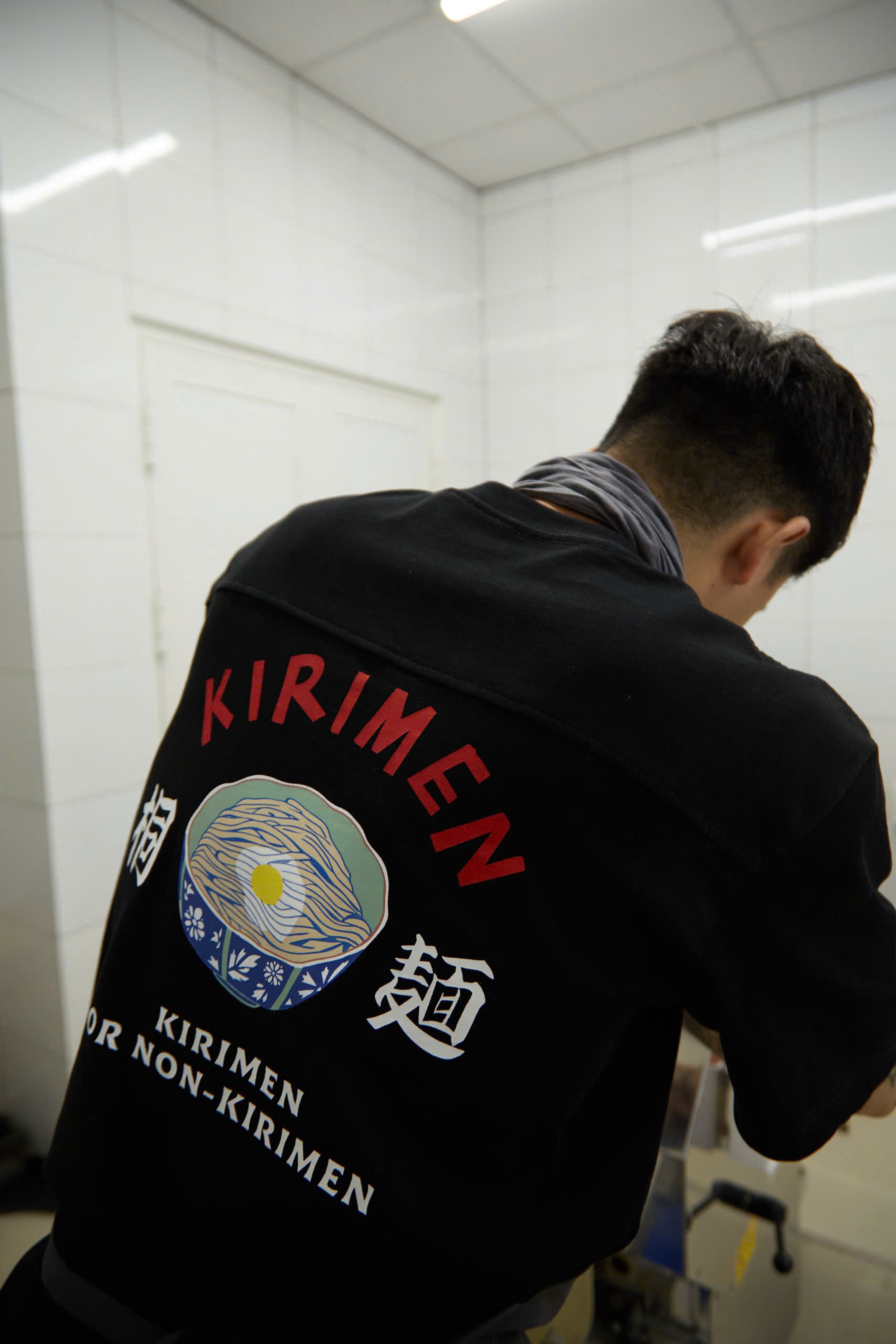
Bounce. That was the word that came to mind. Slurping and chewing the noodles, I got to appreciate why Kirimen placed so much emphasis on their flour that it went as far as becoming their brand’s core tenet. The noodles had a lively, springy texture and gave me the sense that they weren't there to merely function as a vessel for the sauce—a role pastas and noodles have occasionally been relegated to. Rather, they were their own special and valued ingredient. Not just a part of the ramen but an integral component that could even be considered the star of the show. This importance and regard for the men is a sentiment shared by many of the top ramen restaurants in the world. Frequent any of those establishments and you’ll find they often make their noodles in-house. Control of every step of the ramen-making process is vital.
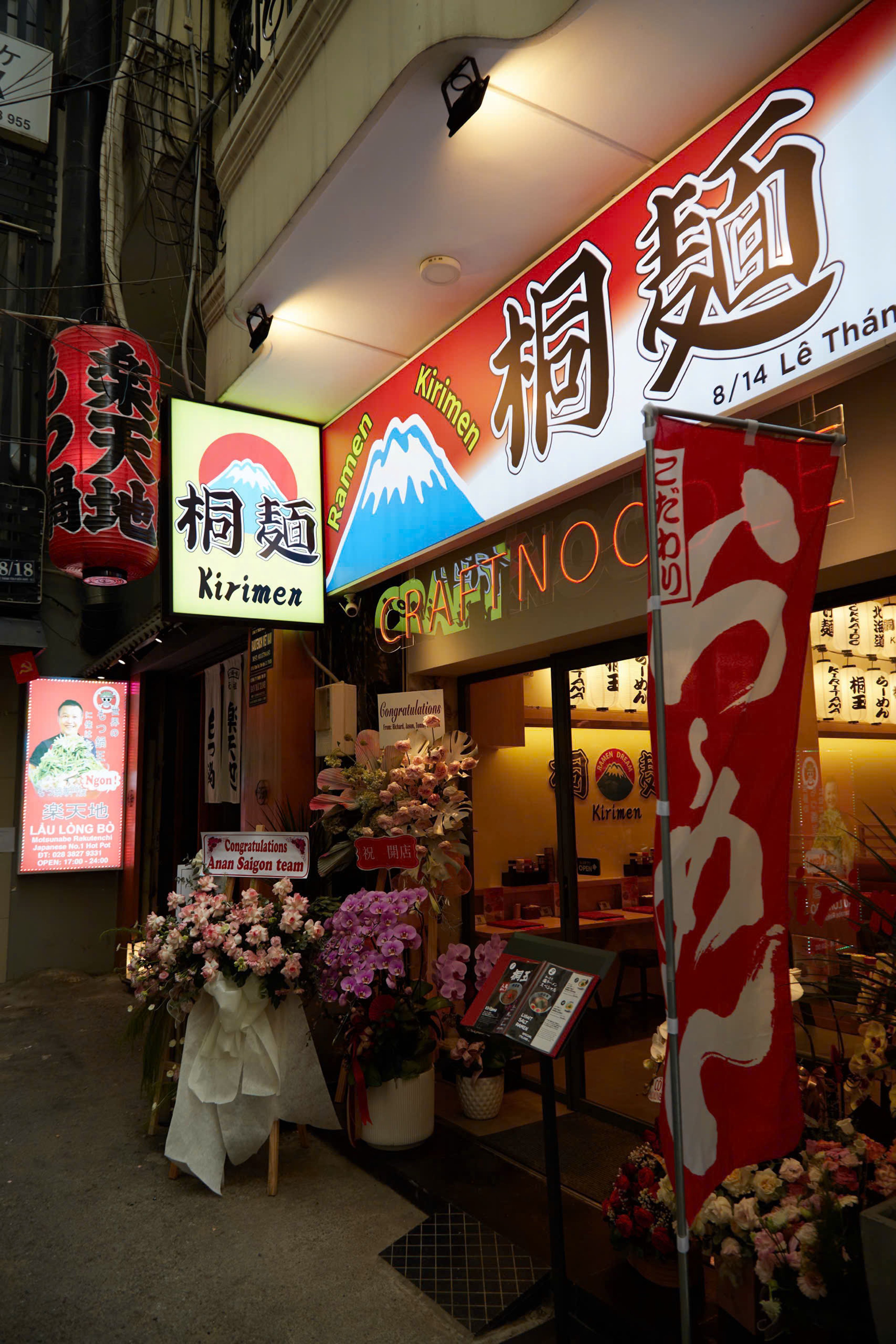
Another slurp. Licking my lips, I tasted the pleasant mix of the egg’s creaminess and the salt-based sauce cutting through the fat with a subtle yet sharp flavour. Beneath it all, a blooming, earthy aroma of wheat. Glancing over at Aidan and Garrett, I found it strange that I still had a craving for some toppings, but then taking another bite of the Kiritama, I was certain that the dish had everything it needed on its own. It was, despite only containing three ingredients, a complete product. Noodles, sauce, and an egg. That’s all that’s required. No more, no less. While the thought of a juicy chāshū or a crunchy menma were tempting, I was simultaneously aware that my desire for more was stirred largely because I’d grown up accustomed to bowls of ramen that appeared to have it all. But the Kiritama proved that there was indeed a beauty in subtraction. That by stripping something down to its essentials, you weren’t losing out on what could be—rather, you were gaining what already was. That is the power of the Kiritama. It’s about trusting the quality of your ingredients and letting them speak for themselves.
The promise of Kirimen is the promise of purity. In a world that’s becoming increasingly obsessed with adding rather than subtracting, Kirimen teaches the lesson of how much you lose in the pursuit of more. Their recently opened Saigon outlet on Lê Thánh Tôn is not merely a space to enjoy a bowl of tasty noodles—it’s a room to contemplate on what you can gain when you appreciate the beauty of less. The reality is, most good things in the world are fine just the way they are. So long as you focus on quality, what you’ll discover is the true essence at the heart of everything—whether that be a relationship, a philosophy, or a bowl of ramen done right.