







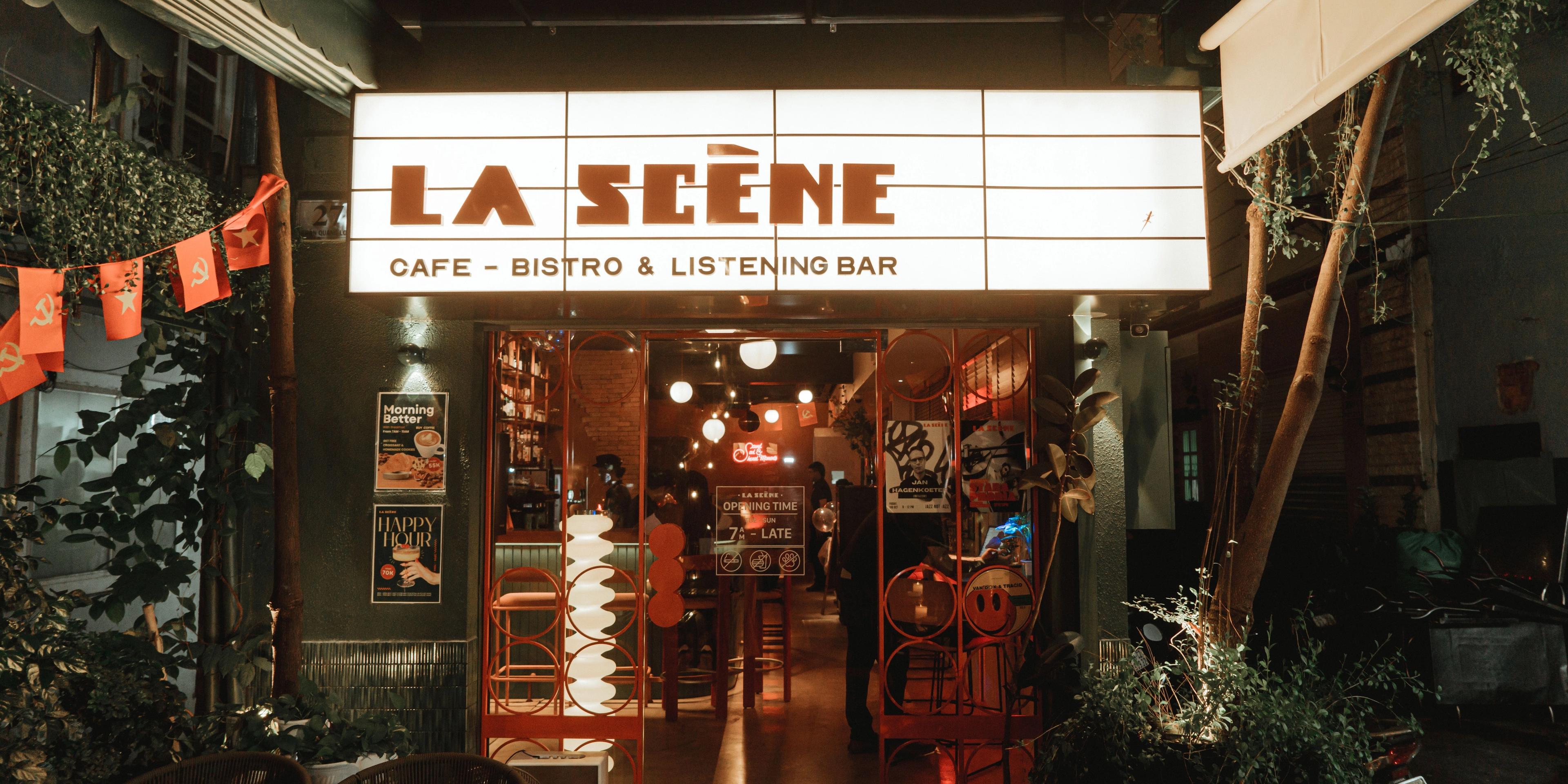
A single scene can change a whole story. Scenes can redefine values, shift intentions, and transform settings. For Toni, co-owner of La Scène, this place is only the beginning of a long journey. He dreams of expanding in the future, but this first spot represents a quest to preserve high-fidelity culture, merging food, wine, and music into a single experience destination.
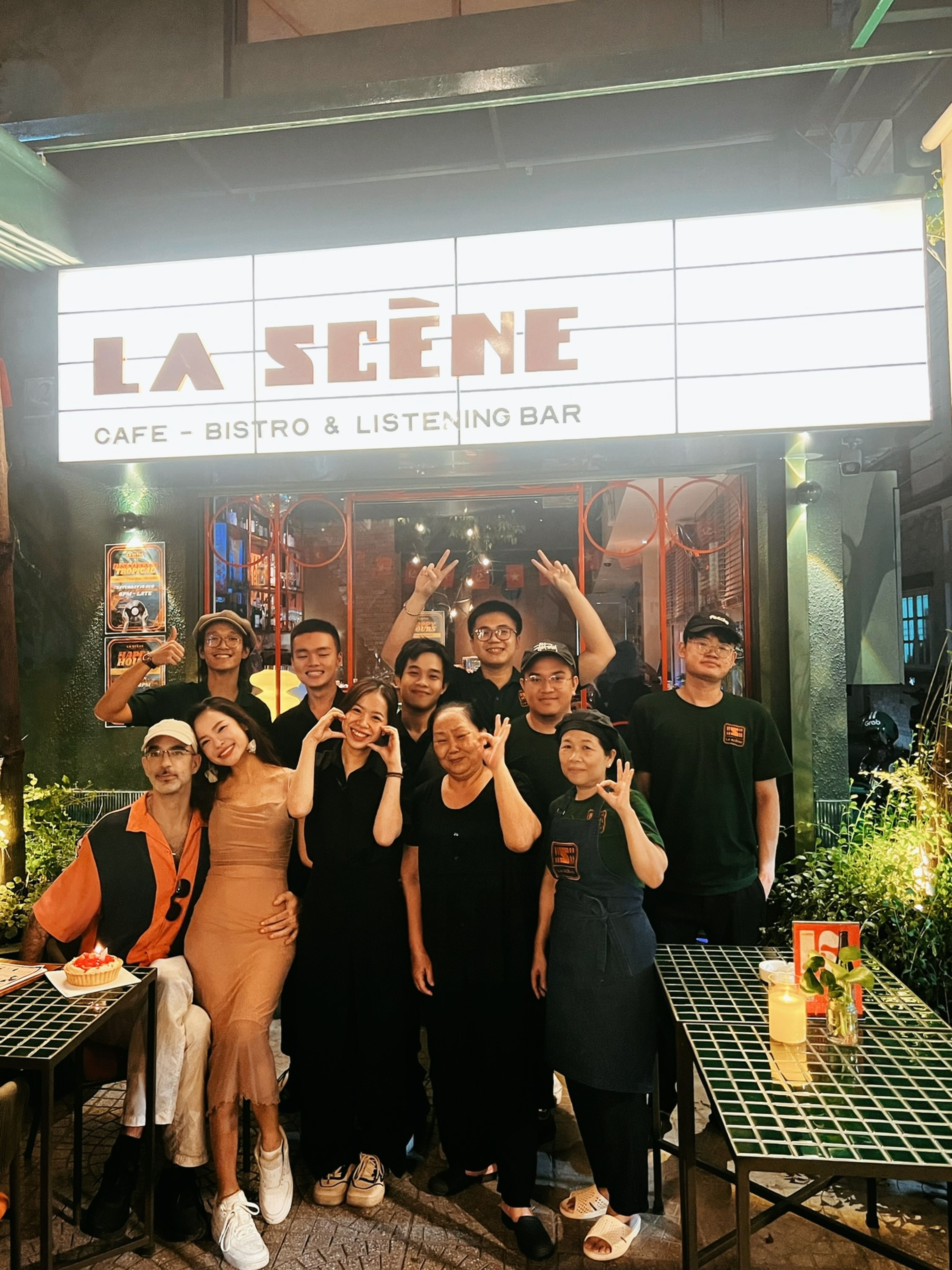
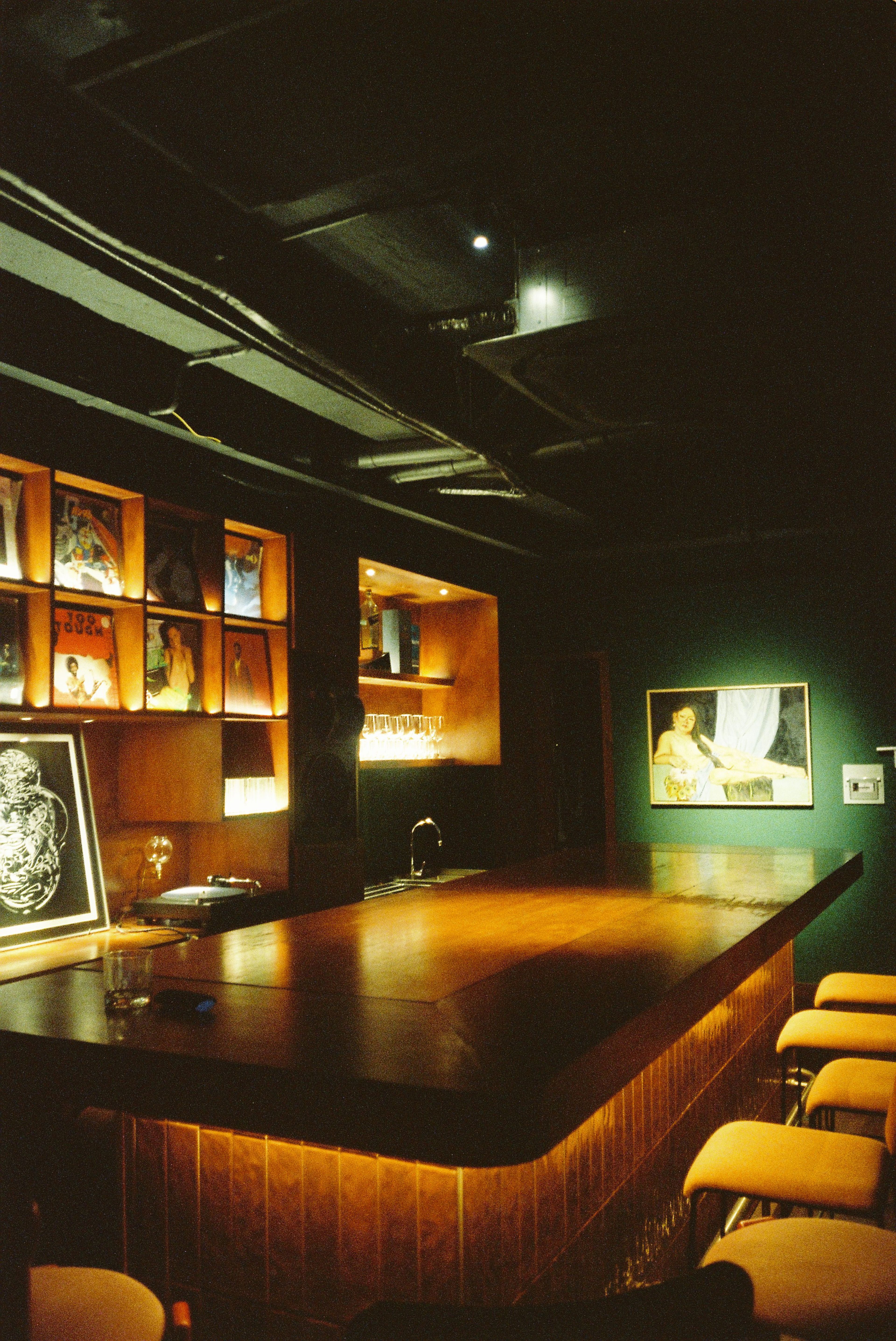
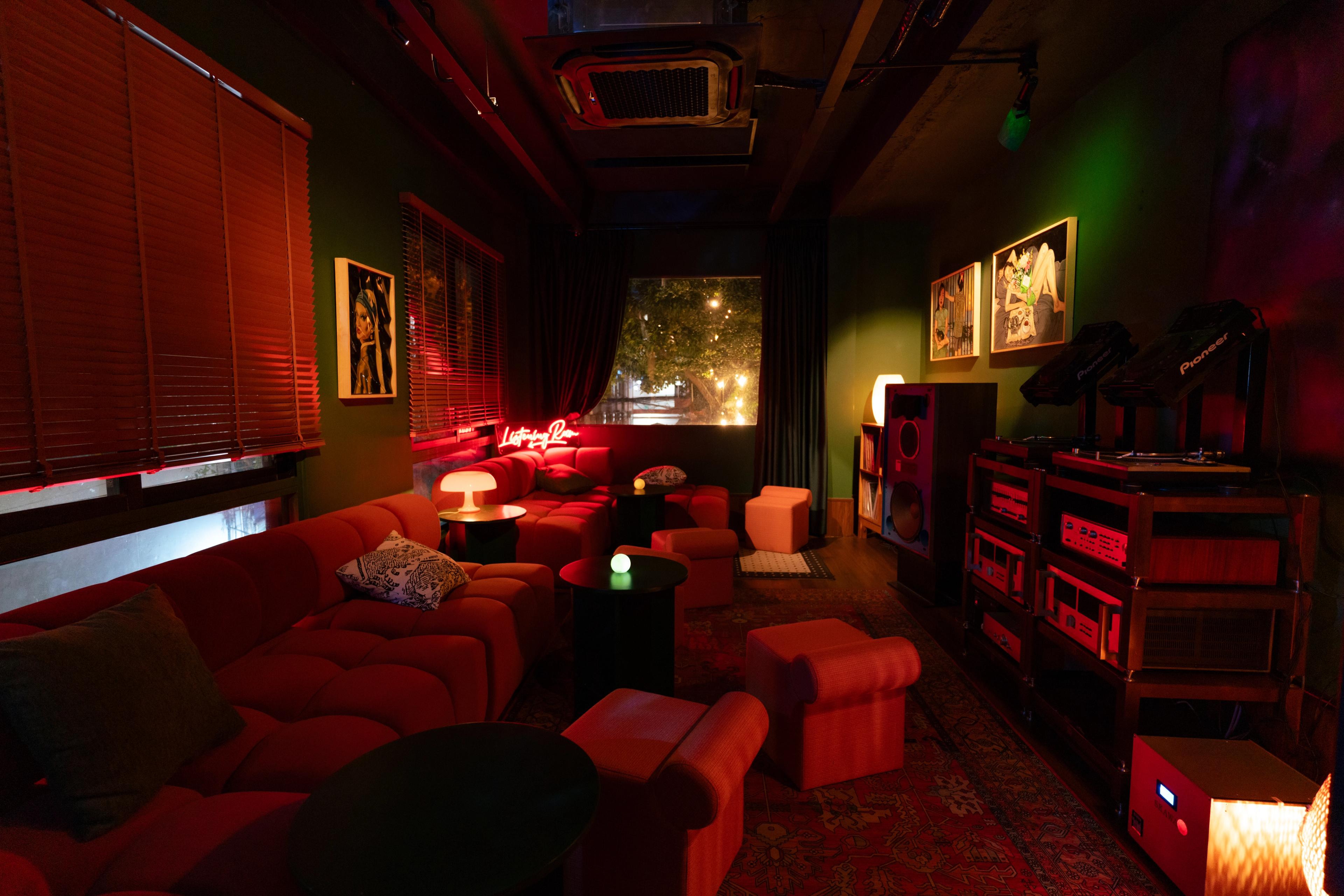
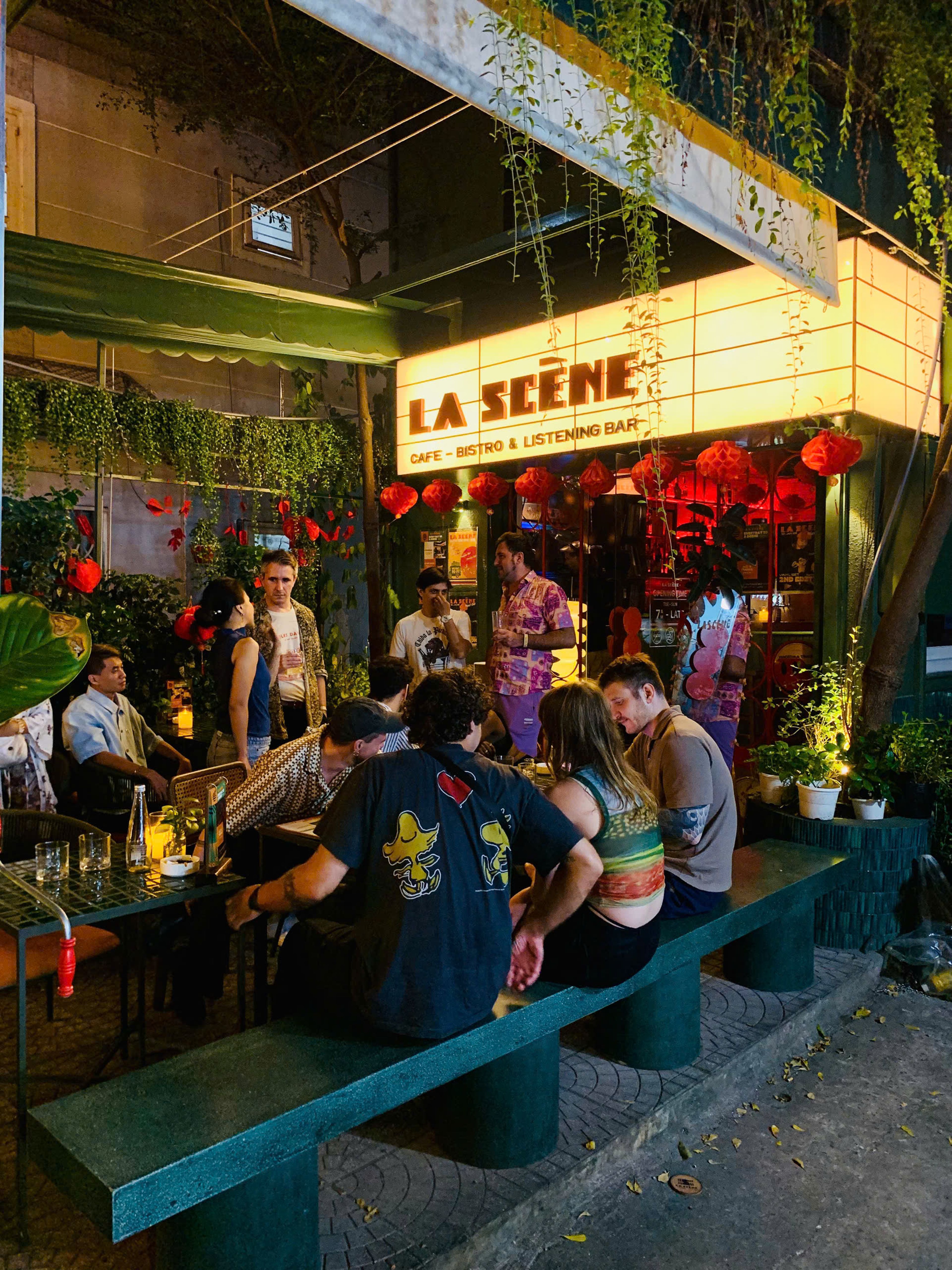
This quest is physically manifested on Trần Quang Long, where La Scène is split into two main spaces: the ground floor focused on serving Bistro fare, wine and cocktails, with a DJ station next to the bar, and a loungy style listening room on the first floor, for a more immersive music experience and private gatherings. The upper floors house a few Airbnb studios and a rooftop space that’s set to open later this year. The aesthetics of these distinct spaces draw on mid-century influences, blending warm modern-retro style with subtle references to the Parisian bistro. The design balances nostalgic charm and vibrant color, combining Vietnamese elements with a classic French sensibility. Wood textures and soft, intimate details create a welcoming, home-like ambience. Alongside Toni at the helm of La Scène is his partner and co-owner, Vi Nguyen, whom he describes as the project leader and main engine of the entire adventure.
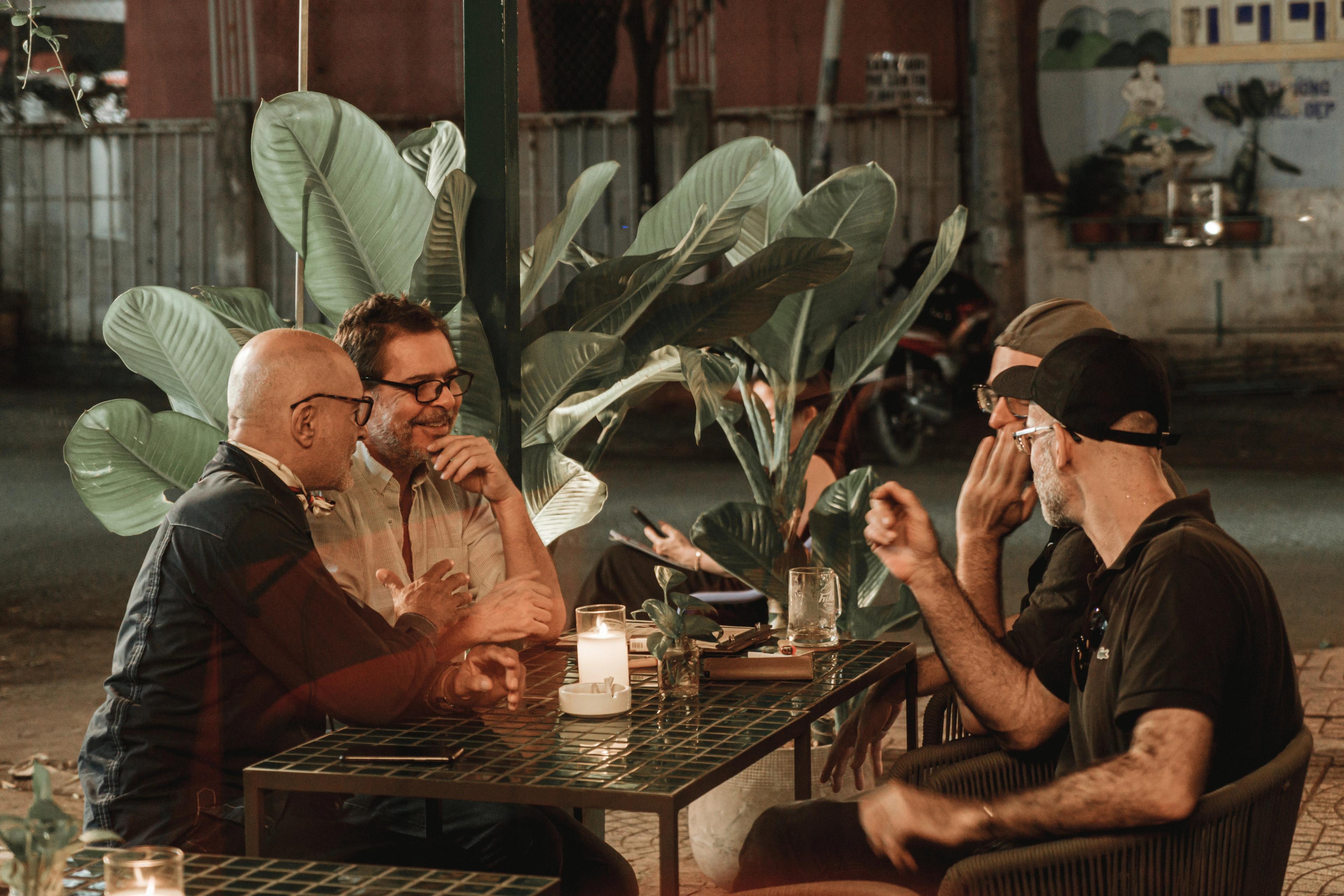
For Toni, La Scène is the culmination of a double life. Besides having been a lawyer for nearly two decades, he has also been a vinyl collector and DJ for many years, including a long-standing residency at the heralded club, The Observatory. La Scène is the point where those two worlds finally meet. La Scène brings together an almost perfectionist approach—a core pillar of which is a deep passion for sound and soulful music. It is at the intersection of this rigor and sensitivity that their vision behind the venue emerges, rooted in a deep appreciation for the finer things in life: natural wines, earthy cuisine, and authenticity in all forms.
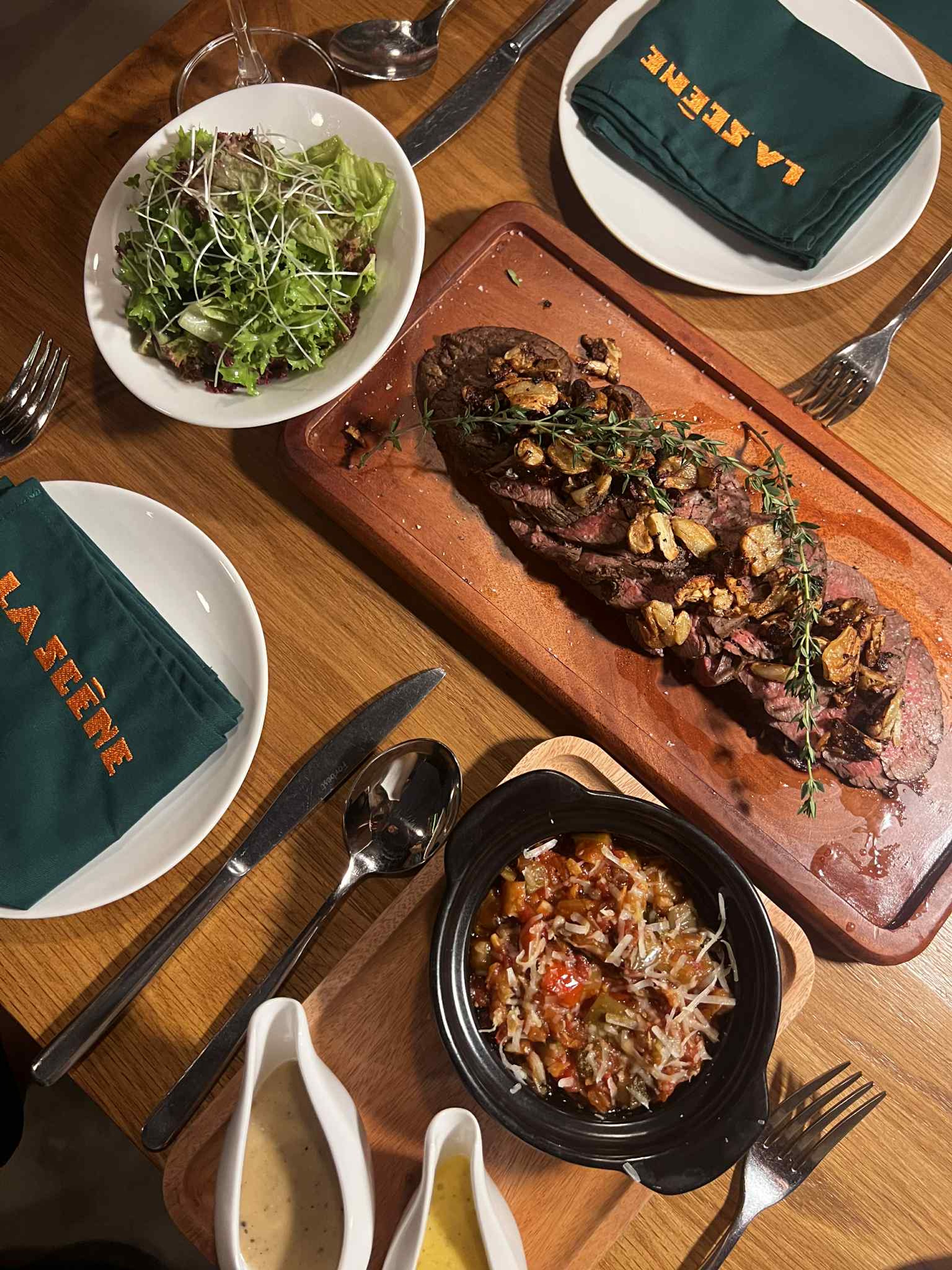
The philosophy guiding the kitchen mirrors that of the sound: as great meals begin with good ingredients and respect for their inherent qualities, music should be presented with the same restraint and integrity, free from unnecessary embellishment. In both cases, the goal is not to alter, but to reveal. This ethos is what naturally bridges the bistro and the vintage hi-fi direction. The bistro celebrates simplicity, seasonality, and depth of flavor, while the vintage sound system honors warmth, texture, and sonic truth. Both are expressions of the same underlying value system: a commitment to honest craftsmanship and emotional resonance. Whether through a dish or a record, the experience is designed to feel genuine, immersive, and quietly refined where nothing is overstated, yet everything is deeply felt.
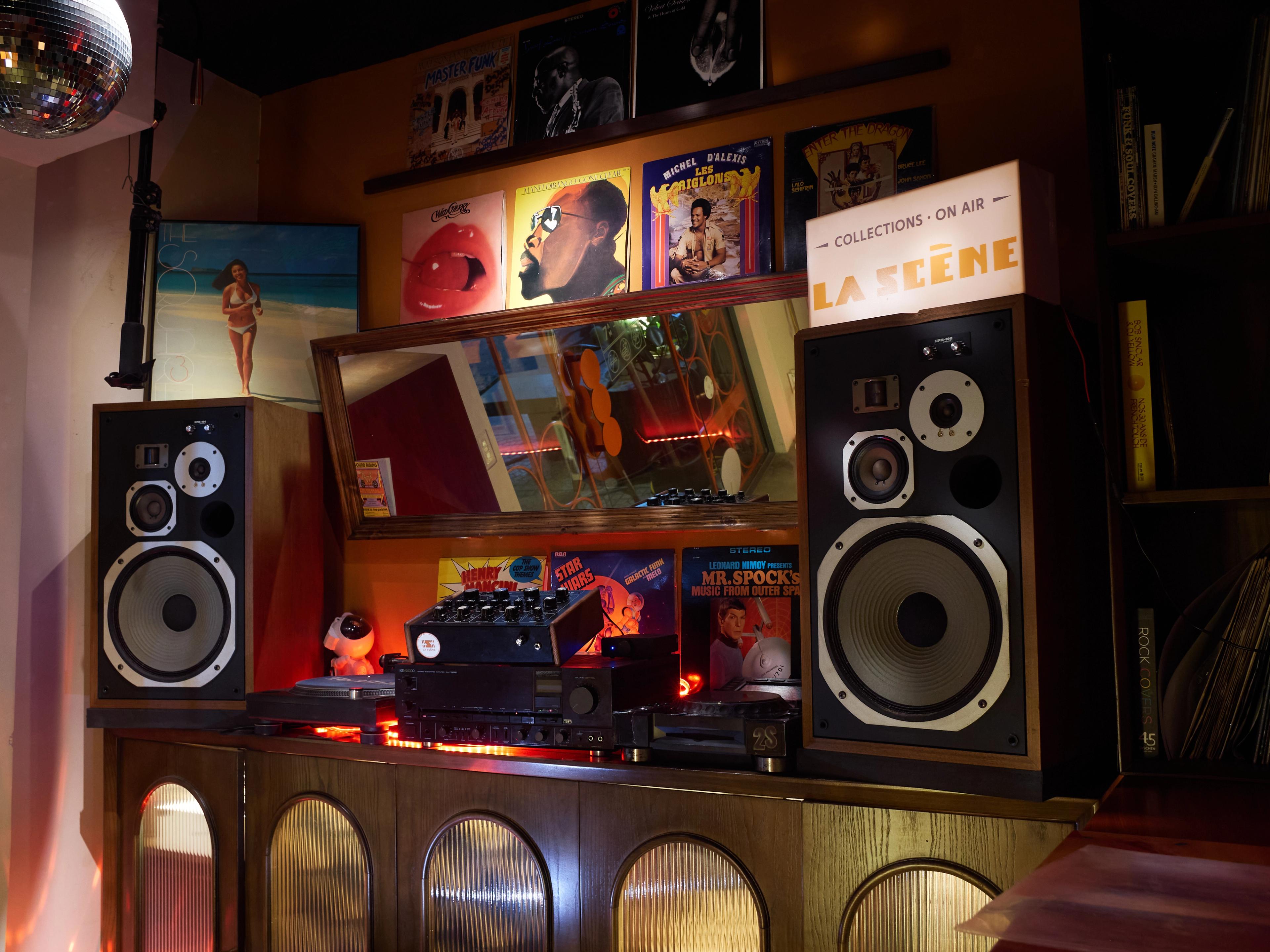
Hence Toni and Vi’s choice for selecting vintage Hi Fi audio equipment. In the 1970s and 1980s, the hi-fi audio industry was driven by a pursuit of fidelity in its purest sense—an accurate reproduction of sound as it was recorded. This era emphasized analog warmth, dynamic range, and meticulous engineering. Designers prioritized signal integrity over convenience or extravagance. This approach reflected a belief in listening as an immersive, quasi ritualistic experience: equipment was built not just as consumer electronics but as instruments inviting users to engage deeply with music. The result of these choices is felt immediately in the noise. Vocals come out rich and warm while instruments sound just as they were intended to be played. Finally, the bass—something Toni’s particularly mindful of—is deep and controlled, rather than sounding like just a thump in the room. Building La Scène around vintage speakers is an intentional act of favoring equipment that respects the music’s true depth. To bring this vision to life, sound system designer Adrien Fernandez helped shape the venue’s auditory experience, from the equipment selection down to the specific cabling required to maintain signal integrity. Simply put, Toni and his team believe a listening experience should feel alive, not just loud.
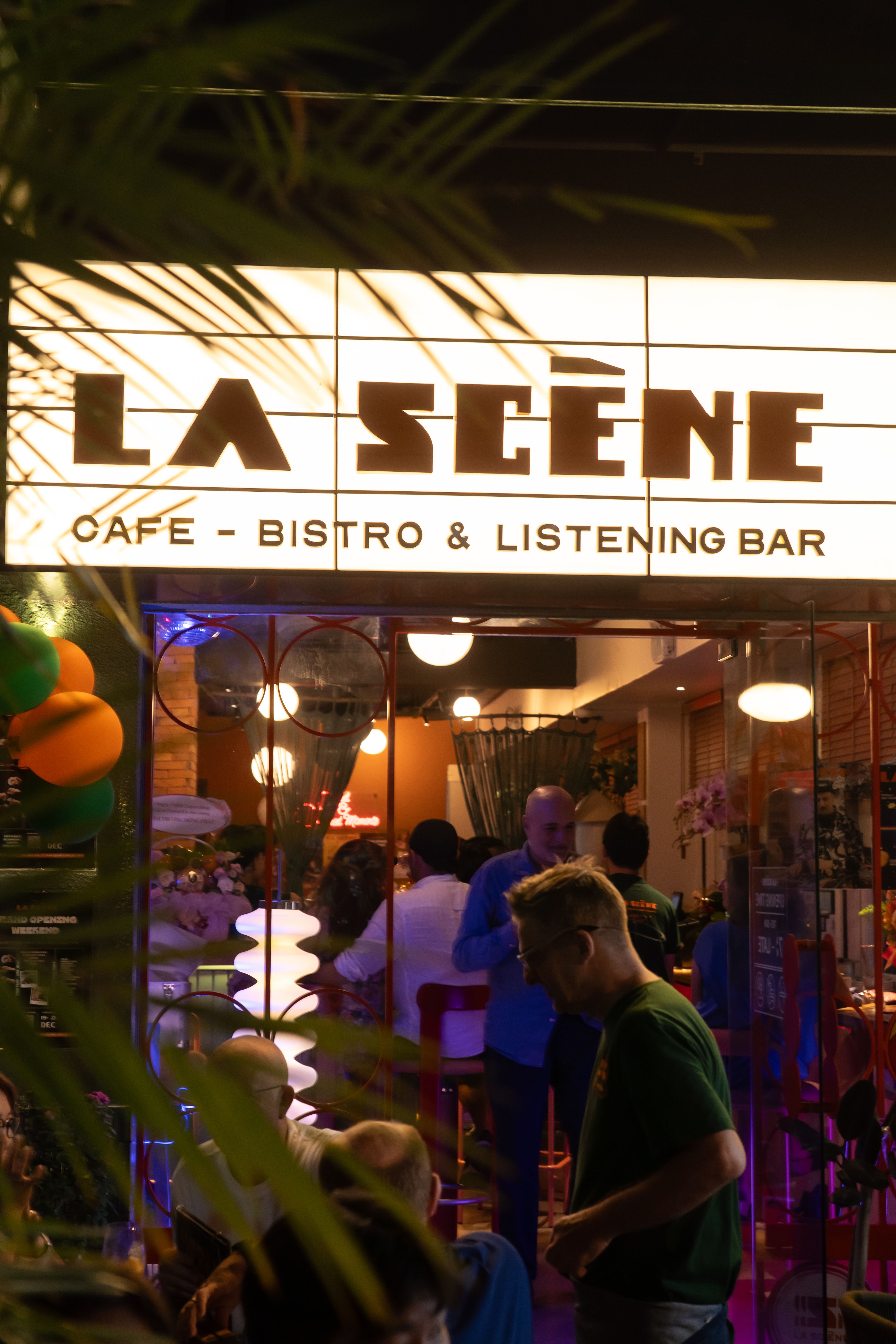
On any given night, La Scène’s street front signage shines bright, signaling showtime for all attendees. The venue constantly hosts artists from all over who support the vision behind the space. Since opening, it has welcomed young Vietnamese talents like DJ and Funk Talk Box performer Soju Peanut, the artist leading the revival of 1980s Vietnamese New Wave, Demon Slayer, and international acts like DJ Kerry (from The Basement LA). The venue is becoming a home for local DJs, artists, and passionate collectors who are always welcome to come and spin their records. Furthermore, La Scene’s is mindful of paying tribute to the city’s musical heritage. For example, they once had a full night dedicated to Nhạc Vàng, the Vietnamese golden age of pre-75 pop music, organized in collaboration with Jan Hagenkoetter, the producer of Saigon Soul Revival and the Saigon Supersound compilations. Worth noting as well, are the regular screenings that take place on the first floor, showcasing music documentaries and more experimental audiovisual projects, including a weekend presentation of work by ambient composer Thunder Tilman.
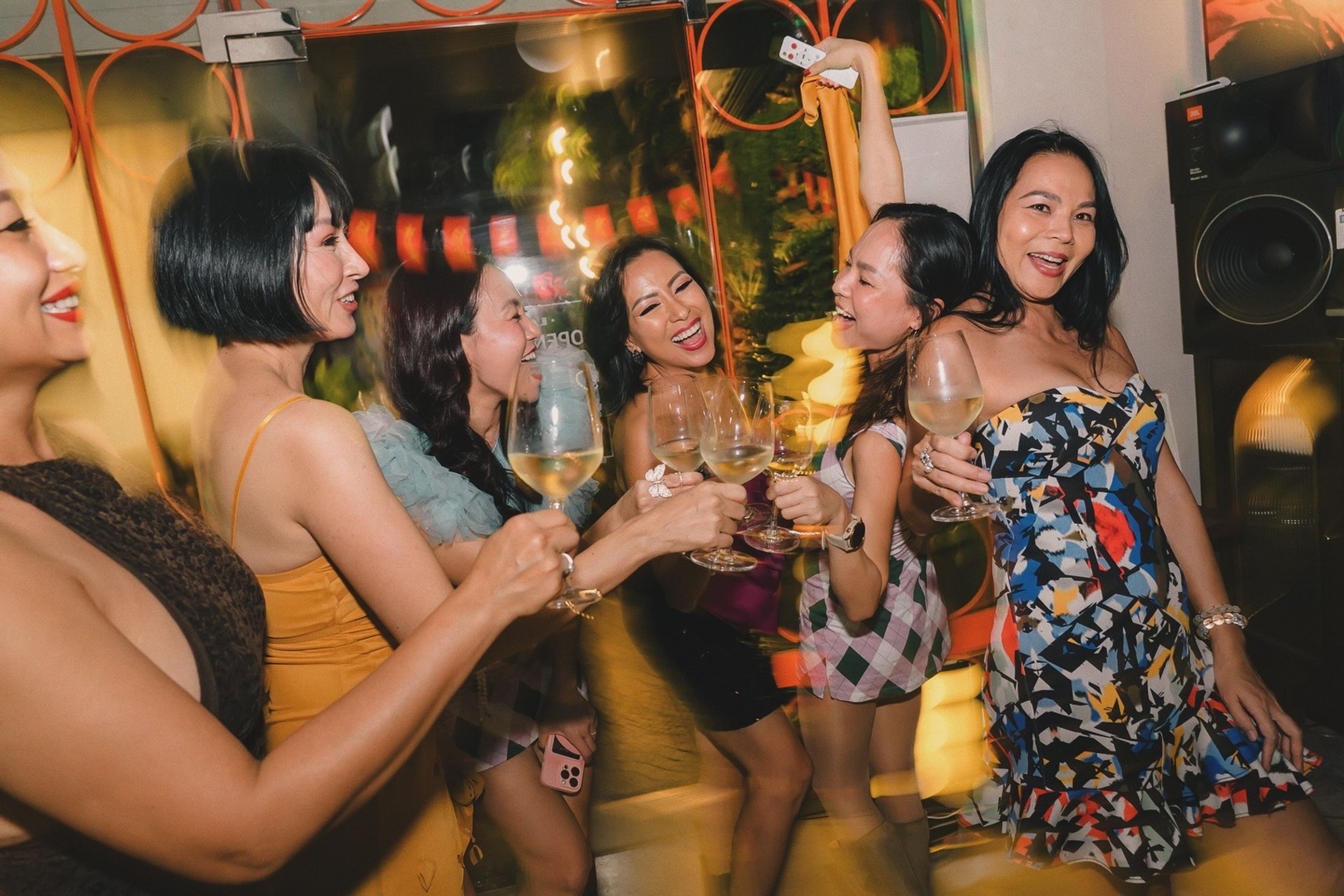
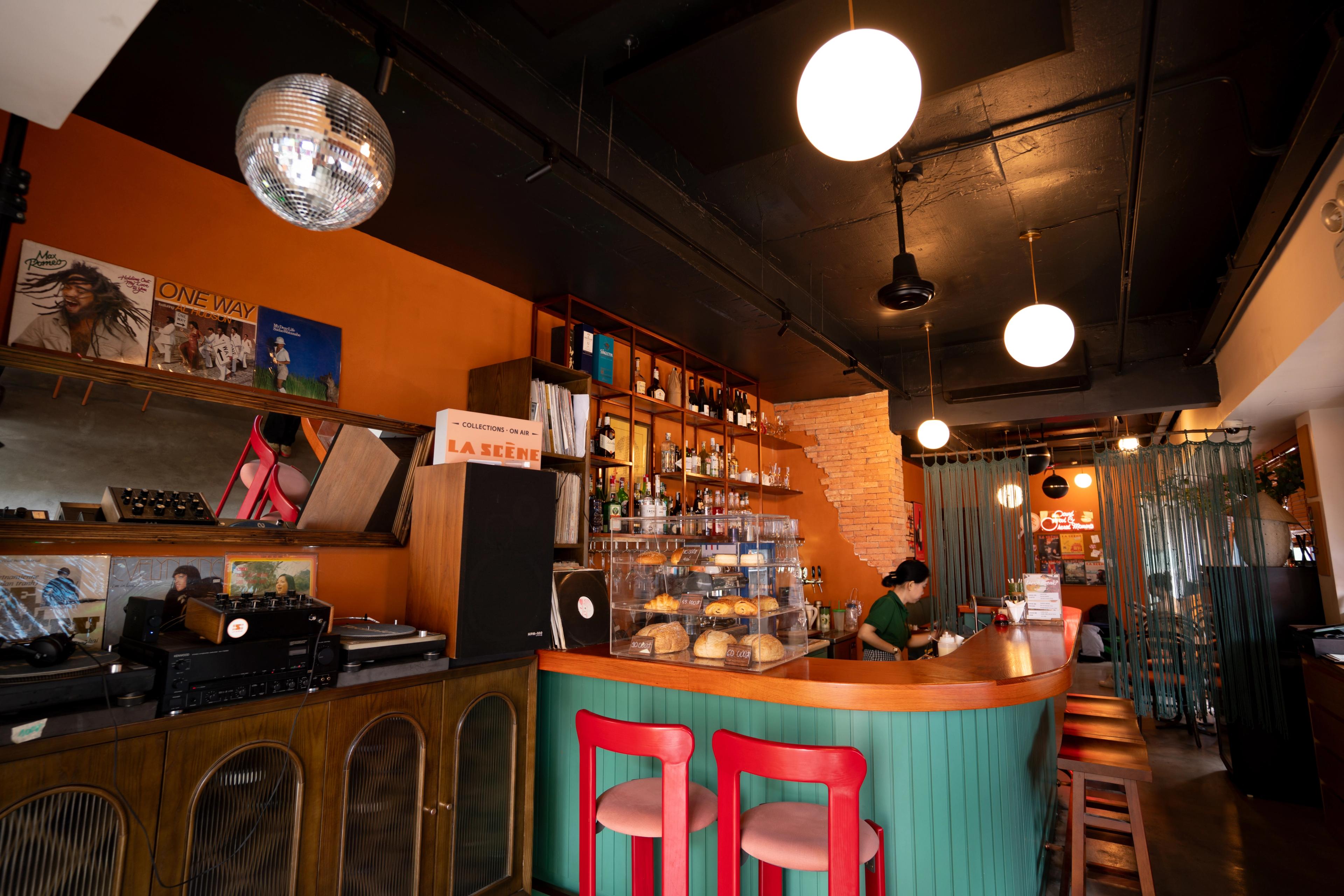
The ground floor scene is about connecting with others, enjoying conversations, or grooving on DJ sets through the Pioneer HPM-100 loudspeakers and a DJR 400 rotary mixer. This ensures a fully analog signal path for a warm punchy sound. This is also where the venue’s bistro spirit takes center stage. La Scène is leading the way in bridging the gap between a classic French wine bar and the focused, detail driven allure of a Tokyo listening bar. The menu adheres to the same mindset as the music—simple, intentional, and without excess. Bespoke cocktails. A wide selection of wine from France and around the world, including a good number of natural wines. While the team of chefs (first in line French Chef Thierry Faburel, responsible for the initial menu and kitchen setup) are constantly developing new dishes, classic French bistro staples like smoked ham croquettes, duck leg confit, and crepe suzette will always be on offer. Lastly, if you prefer a quiet morning over a late night, I suggest you stop by on a Sunday for a late breakfast and treat yourself to a croque madame with a double shot of espresso. All that said, whether it’s on the plate or in the sound, La Scène is a place that delivers sincerity at a high standard.
Ever since the District 0 crew stopped by during La Scène’s soft opening, we’ve had no shortage of good times. Personally, my first visit to La Scène felt like a departure from the city’s usual frequency. In a neighborhood defined by the high-pitched hum of motorbikes and the loud-for-the-sake-of-loud energy of many bars, La Scène had a rare sense of authority that immediately commanded respect. Walking in, I didn't just hear the difference because of their vintage equipment; I felt a shift—my intuition declared that this wasn't just another bar opening in the city, but a permanent stake being driven into the heart of Saigon’s music scene.
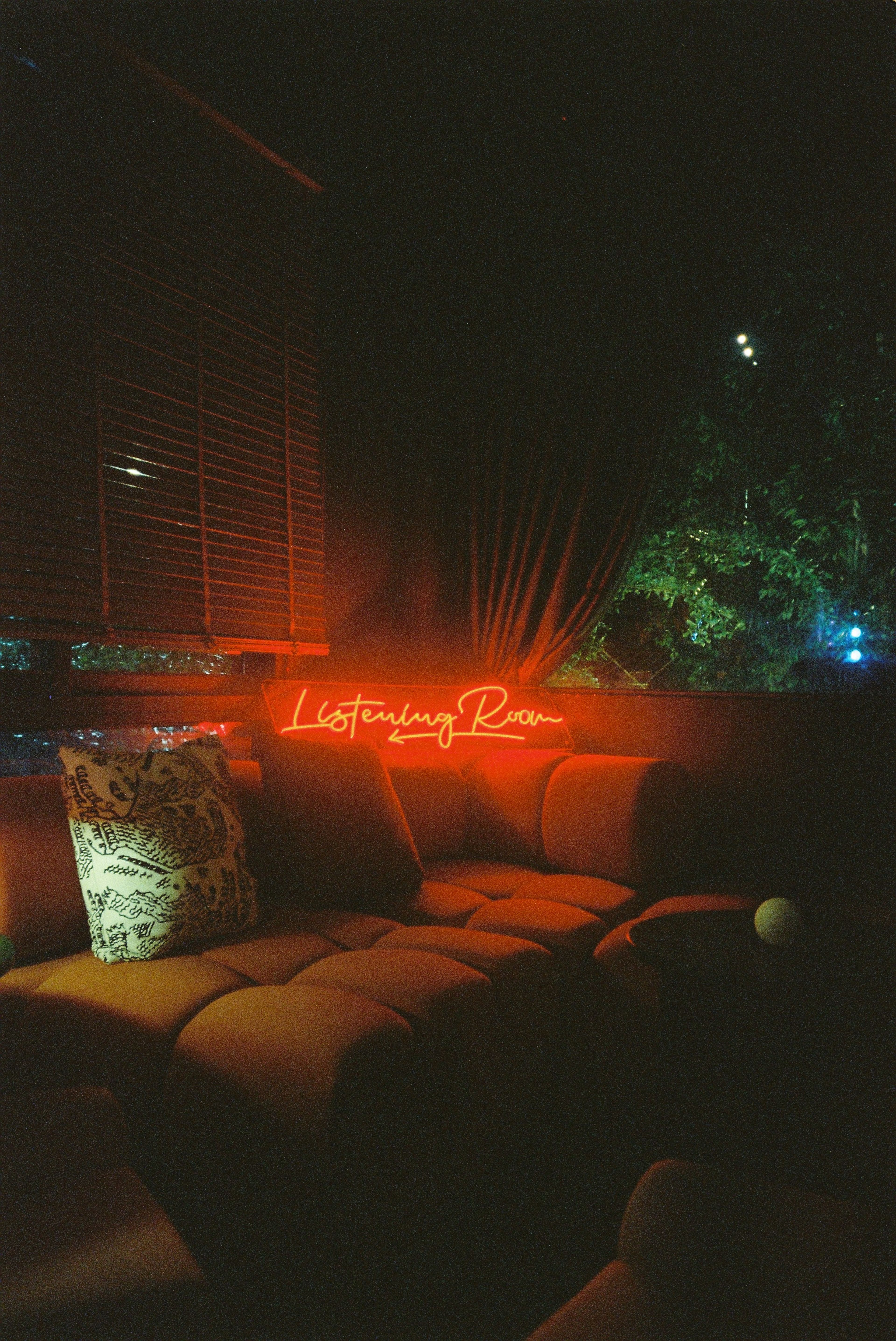
However, nothing could have prepared me for the first time Toni led Liam and I upstairs to experience the core of the brand concept: La Scène’s Listening Room. Liam and I sat down on the red sofa next to the glowing, neon red “Listening Room” sign in the corner, giddy with excitement. However, the most excited of all was by far Toni. For someone that is, at least in my own experience, mostly laid back, he was acting like a kid in a candy store, except for him the sweetest candy is also his most prized possession: his collection of over 3,000 vinyl records.
As we sat and sipped our drinks, Toni made his way to the shelf in the far corner to pick something out to play and set the mood for the night. I’d never seen someone flip so quickly through vinyl, reading and digesting cover after cover, deciphering what and what not to select. A moment later, he settled on his first pick: “Blossom” by India’s violinist icon, Lakshminarayana Subramaniam. After a few failed Shazam attempts, Toni warmly informed me I wasn’t going to be able to find this album.
It was here that the technical weight of the room began to make sense. Perhaps in a subtle way Toni’s hospitality inside the Listening Room was his attempt to showcase the wisdom famously bestowed by legendary film director Christopher Nolan: “Don’t try to understand it. Feel it.” The radiating sounds of Subramaniam’s violin that filled the room were a result of meticulous pairing of components. In this room, the JBL 4343 Studio Monitors are driven by Accuphase M-100 monoblock amplifiers—units DJ Waai, another friend of Toni’s, helped source to ensure absolute power. Toni explained that this first floor is a focused lounge centered around this high-end core. By using these monoblocks to give each speaker its own dedicated power supply, Toni is able to eliminate crosstalk—interference between left and right—and provide the immense power reserves needed to control the massive 15-inch JBL woofers. The result is a soundstage with such authority that you can point to exactly where the different musicians are “sitting in the room”.
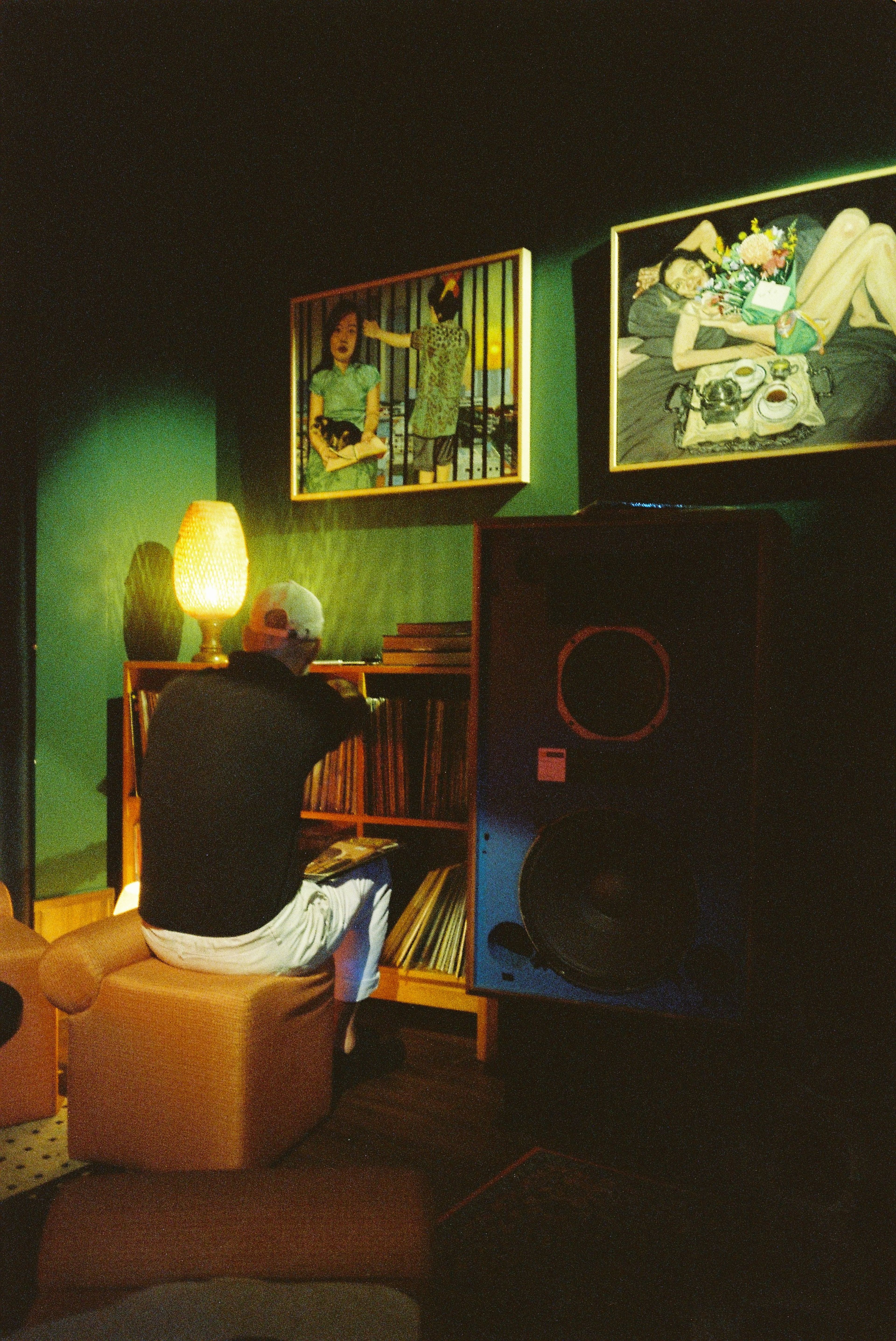
Liam stepped up next. He stood up and made his way to the vinyl shelf, wearing his trusted white tank top with one of his favorite artists on the front: Japanese musician, Masayoshi Takanaka, mid-flight in his yellow skydiving suit, smiling with his right thumb up in the air. It’s the same picture on the cover of Takanaka’s 1979 album, All of Me. All the while Toni was adjusting the equalizers, pacing the room to make sure each square inch received its share of quality sound. Taking a seat next to the vinyl shelf, Liam swiftly located another of Takanaka’s popular albums from 1976, Seychelles. “This is the one,” he said. He handed the record to Toni before sitting back down and having a sip from his glass of double Jameson, a satisfied look on his face. It was the first time I’d heard this album, which is also one of Liam’s favorites. In fact, he shared that it's the same one he always plays whenever he returns to Tokyo in the summer to reunite with family and childhood friends.
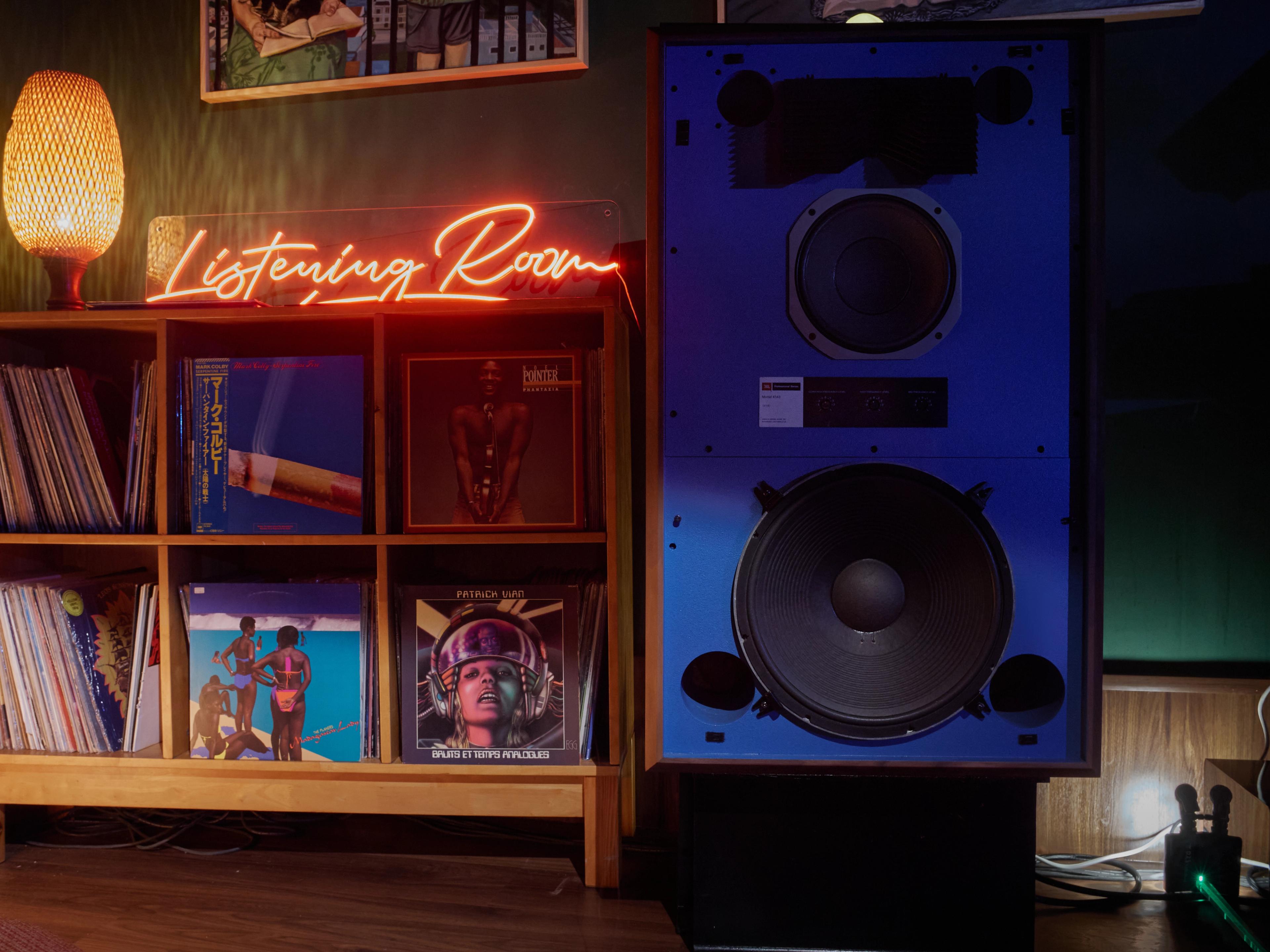
Once I heard that guitar kick in of “Oh! Tengo Suerte”, we were grooving. All three of us nodded in unison, bopping to the beat in the air that shimmered off the walls like sunlight dancing off the ocean. Sitting in that room, hearing the richness of the sound traveling out of the speakers quickly puts you in a trance. I kept wanting to turn to Liam and Toni to share my thoughts on how amazing the song felt to hear, but when I looked at them and saw how engrossed they were in the music, I had to resist the temptation. La Scène’s Listening Room is a different kind of atmosphere. Less talking and more listening is highly encouraged.
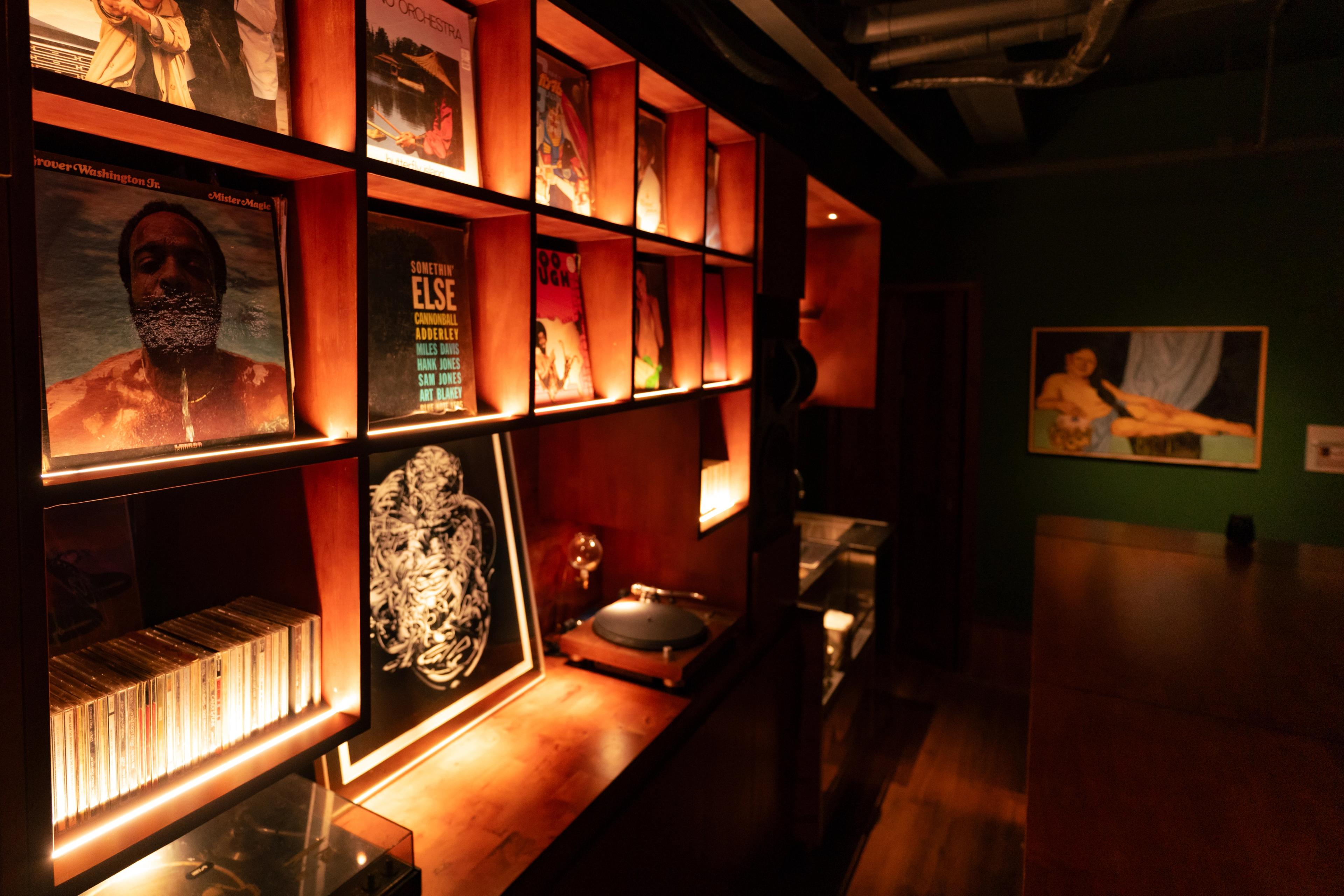
This immersive configuration prioritizes a level of aural purity rarely found in modern nightlife, making the Listening Room a sought-after destination for both audiophiles and private bookings looking for a more secluded, high-fidelity experience. The room's design is directly inspired by David Mancuso and his pioneering work at The Loft in New York. Mancuso believed every extra component was a lens that colored the artist's original intent; by removing the mixer, Toni presents the music as a finished piece of art. However, the room is also designed for versatility. On nights centered around the art of the transition, the team can use the DJR 400 rotary mixer upstairs. When used with care—in technical terms: keeping the master volume high and the individual channel gain limited—the analog signal remains remarkably transparent. As Toni noted after recent sessions, the result isn't just functional; it sounds absolutely fantastic. Either way, the goal remains the same in the end: maximum sonic integrity for a true sound.
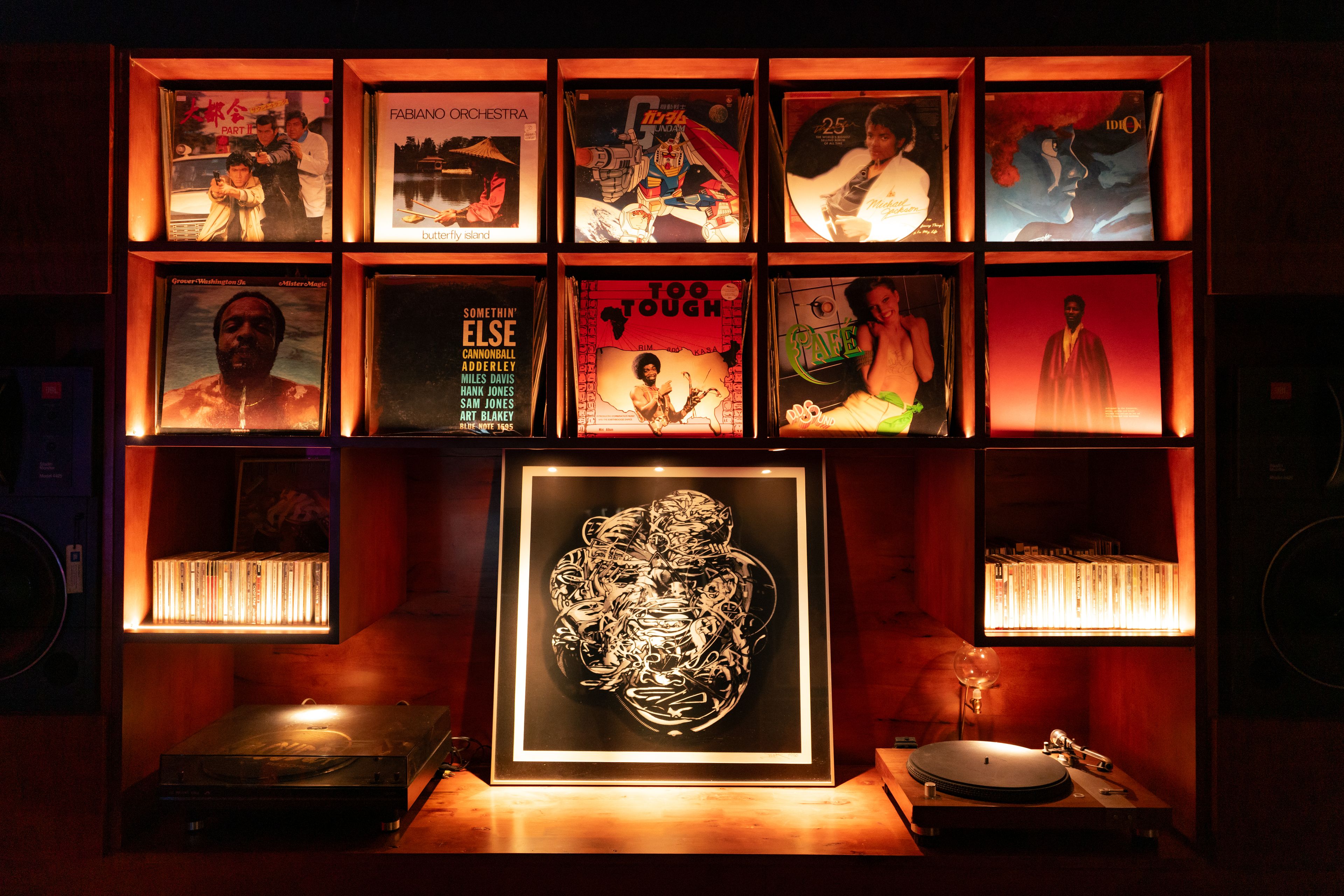
My turn. After Subramaniam and Takanaka, I was feeling the jazzy vibes and wanted to keep it going. Whenever I’m in the mood for jazz, I usually opt for Chet Baker—I like his vocals and soothing trumpet skills—but knowing Liam has a shared affinity for Miles Davis, it only seemed fitting to see if Toni was in the same company. “You got any Miles Davis?” I asked. Without hesitation, Toni assured me he had some Davis in the house. I took the same seat in the corner next to the shelf and began flipping through records. Toni, however, who had probably located Davis’ records countless times, knew exactly which tiny sliver amongst the hundreds on display, and picked him out with ease. With a flick of the wrist, he selected the room’s next tune: the 1958 Somethin’ Else by saxophonist Cannonball Adderley featuring Miles Davis, Hank Jones, Sam Jones, and Art Blakey.
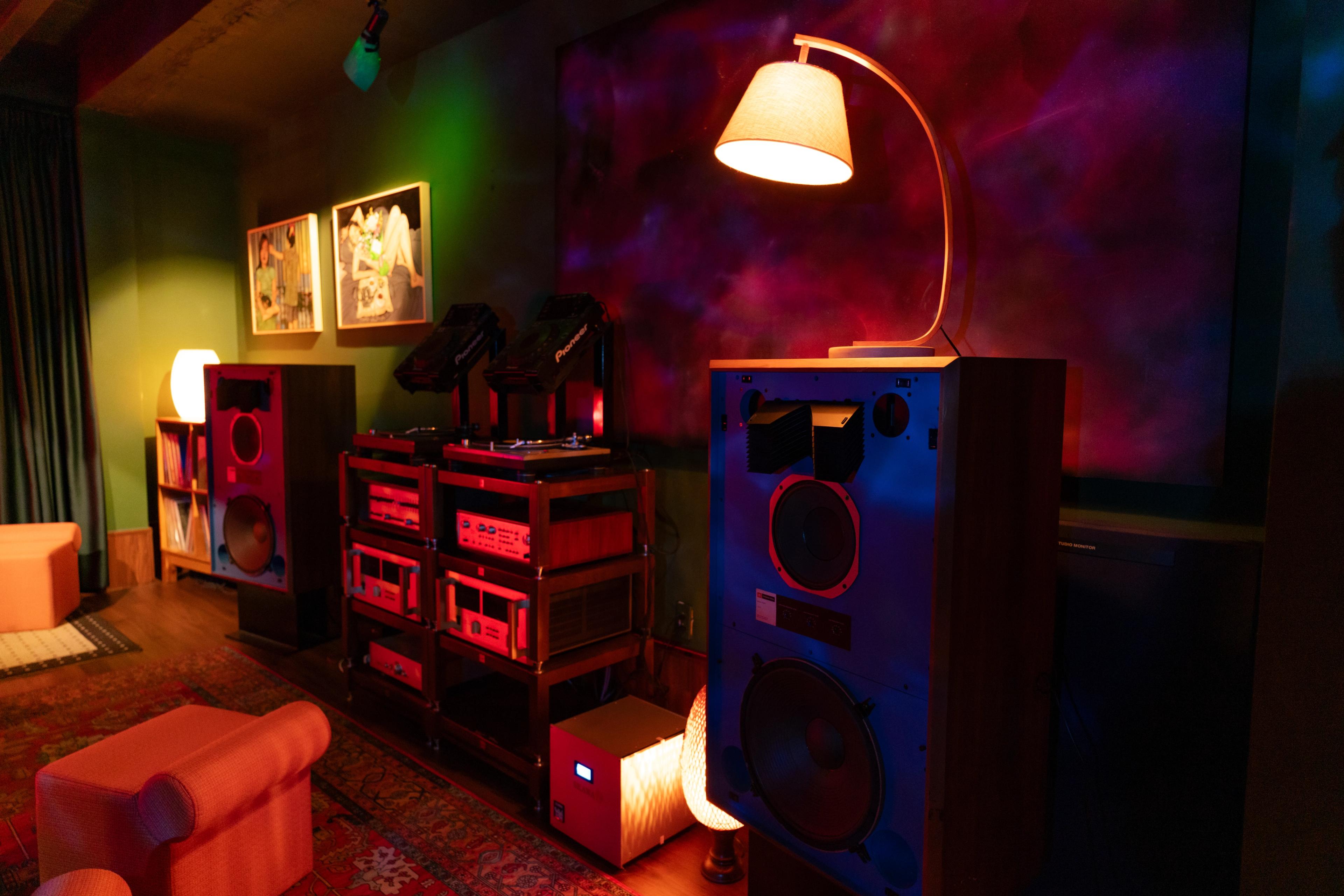
Listening to the 11-minute opening of “Autumn Leaves” inside La Scène felt like we were hearing a live session inside Rudy Van Gelder’s living room studio in Hackensack, New Jersey where the quintet recorded the whole thing in one afternoon at the end of winter that year. Toni constructed the room for precision listening, and, to reiterate, while you may not understand how each piece of equipment compliments each other, you can definitely feel it. The clarity at which you sense Miles Davis playing his trumpet off to the side of the room was uncanny. Toni instructed me to kick my feet up this time, close my eyes, and imagine the musicians performing right at arms length in front of me. The next time you stop by, you’ll find out for yourself that it’s not hard to imagine at all. Toni’s technical choices were designed for this exact moment of coherence. Between the high sensitivity of the monitors and the raw power of the monoblocks, there is an effortless control over the sound. Together, they create a sense of presence that makes you feel like you’re right there during the original recording session.
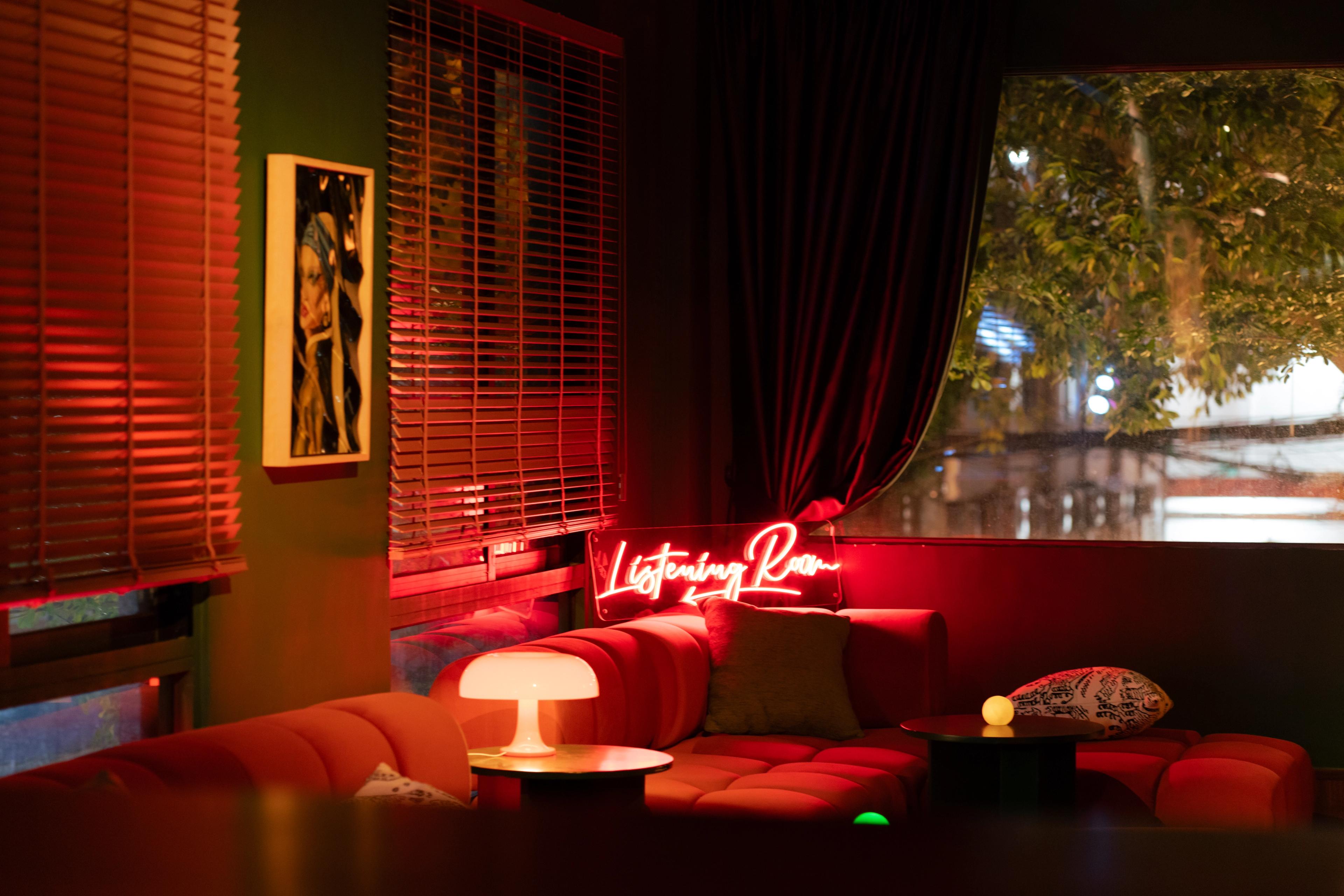
After that, Toni took back the reins and laid down more records I hadn’t heard. There was Jim Hall’s Concierto, Portishead’s Portishead, and 6th Borough Project’s Part Two. Before we knew it, we had been sitting in that listening room, fully engrossed in the experience, not even noticing that nearly three hours had passed. I felt so grateful that we got to have that much time in the La Scène’s Listening Room to ourselves—seated at the heart of the building and brand concept as a whole. Still, once I checked the time on my phone, it seemed it was time to step back outside of what felt like a vinyl-fueled time machine and return to civilization.
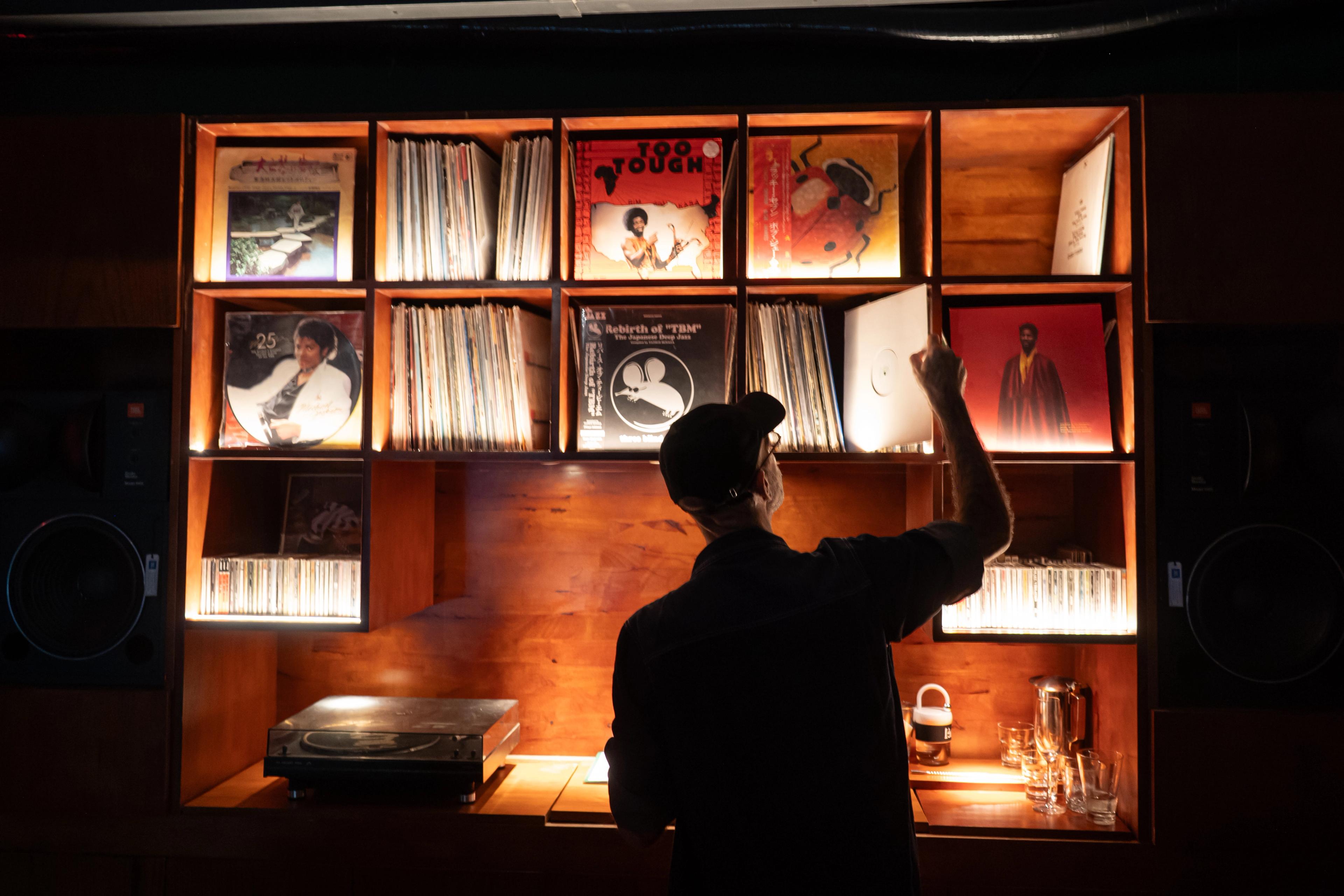
I walked back downstairs with Liam, leaving Toni to enjoy the room on his own. As we made our way out, he leaned back, plopped his feet up, and closed his eyes, surrendering to the listening room in isolation. We made our way past the kitchen, dining area, and bar on the way outside, stopping briefly to say hello to the DJ for the night: Tommy Sarng. It seemed like Tommy was inside his own time machine—dancing to the beat he had on then with his skullet in full form and a big smile on his face. Outside we met up with a few other friends to enjoy a final drink for the night, all the while musing over how a single room on Trần Quang Long manages to make the rest of Saigon feel like it’s playing in low-resolution.
If a scene can change a whole story, La Scène is in the process of changing the narrative of Saigon. It is a place where music is felt and taste is shared. Stepping out of the first-floor Listening Room for the first time is one of those moments that resets your standards. You might have thought you appreciated music before, but spending time in a space with someone like Toni changes your perspective on what is possible. He wants nothing more than to share his passion for good music with good people. Perhaps as time goes on, this single room may culminate in a change for everyone who attends. It may even end up shifting the entire music and art scene of Saigon and beyond. La Scène’s story is going to be a long-term quest over the next decade. It will be an adventure for Toni, his partner Vi, and the rest of the crew to infuse their level of sincerity into the city’s veins. But if there is anywhere to do so, La Scène is the place to be.
La Scène’s main page on Instagram
La Scène’s music page on Instagram
La Scène’s Listening Room page on Instagram